If you’re looking to cut down on energy costs and gain better control over your electricity usage, investing in a home energy monitor with circuit-level tracking might be the solution. These devices help you pinpoint energy-hogging appliances and manage your consumption effectively. With various models available, each offering unique features, you might wonder which one suits your needs best. Let’s explore the top options to help you make an informed choice.
Smart Home Energy Monitor with Circuit Sensors

If you’re a homeowner looking to take control of your energy consumption, the Refoss Smart Home Energy Monitor with Circuit Sensors is an excellent choice. This device tracks real-time energy usage with remarkable accuracy, incorporating two main circuit sensors and sixteen branch sensors for detailed insights. Installation is a breeze, and it’s compatible with various electrical systems. The Refoss app enables 24/7 monitoring, helping you identify energy hogs and optimize usage, potentially saving you 10%-20% on bills. With features like solar integration and personalized alerts, you can maximize efficiency and minimize costs effortlessly. Take charge of your energy today!
Best For: Homeowners looking to monitor and optimize their energy consumption while reducing electricity bills.
Pros:
- Real-time tracking: Provides accurate energy consumption data for better decision-making.
- Easy installation: Clamp-on design allows for straightforward setup without professional help.
- Solar integration: Designed for solar users to maximize energy savings by automating the use of solar surplus.
Cons:
- No API support: Limited integration options with third-party applications due to the lack of API.
- Requires app update: Users need to keep the Refoss app and firmware updated to access new features.
- Potential dependency on Home Assistant: Full functionality relies on compatibility with Home Assistant for data management.
SIEMENS Inhab Smart Home Energy Monitor

For homeowners looking to optimize their energy consumption, the SIEMENS Inhab Smart Home Energy Monitor stands out with its ability to track both whole-home and individual circuit energy usage in real time. With 16-50Amp circuit sensors and 2-200Amp main sensors, you’ll get accurate readings 24/7. It monitors up to 16 branch circuits, allowing you to manage energy effectively. Plus, advanced features like Time of Use Management and Peak Demand Management help you save even more. You can set personalized alerts for savings opportunities or unusual activity, ensuring you never miss a chance to enhance your energy efficiency.
Best For: Homeowners looking to optimize their energy consumption and manage their electricity usage effectively.
Pros:
- Real-time monitoring of whole-home and individual circuit energy usage for informed decision-making.
- Advanced features like Time of Use Management and Peak Demand Management promote energy savings.
- Customizable alerts for energy savings opportunities and abnormal activity enhance user engagement.
Cons:
- Installation may require professional assistance, potentially increasing initial costs.
- Compatibility with specific smart devices may be limited.
- Requires an internet connection for full functionality, which may not be ideal for all users.
Emporia Vue 3 Home Energy Monitor
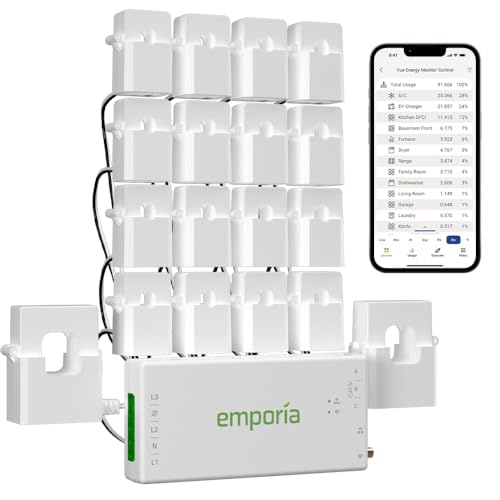
The Emporia Vue 3 Home Energy Monitor is perfect for homeowners who want to take charge of their energy usage and lower their electric bills. This UL Listed device guarantees safety while providing real-time electricity monitoring. Installation is straightforward, fitting into most circuit panels with clamp-on sensors. You can manage energy 24/7, track appliances, and even monitor solar usage via the Emporia Energy App. With accurate data updates and actionable insights, you’ll find ways to save. Plus, the improved screw terminals help keep your panel organized. Enjoy peace of mind with a 1-year warranty on your investment!
Best For: Homeowners seeking to monitor and manage their energy usage effectively to reduce electric bills.
Pros:
- UL Listed for safety and reliability, ensuring compliance with rigorous electrical standards.
- Easy installation with clamp-on sensors that fit most circuit panels.
- Real-time monitoring and actionable insights available through the Emporia Energy App.
Cons:
- Requires a 2.4 GHz Wi-Fi connection for real-time data access.
- Additional sensors may be needed for certain system types, which could increase overall costs.
- Limited data retention for minute-level details (only 7 days).
Smart Home Energy Monitor with 16 50A Circuit Level Sensors

Looking to take control of your energy consumption? The Smart Home Energy Monitor with 16 50A Circuit Level Sensors lets you do just that. It’s compatible with Home Assistant and provides real-time power usage data through an app, allowing you to track consumption anytime. Installation is a breeze, using clamp-on sensors compatible with various electrical systems. With 16 sensors, you can monitor appliances like air conditioners and water heaters. Enjoy actionable notifications that help lower your electric bills while protecting the environment. Plus, its Super Privacy Mode keeps your data secure by running without cloud access.
Best For: Homeowners and small business owners looking to monitor and manage their energy consumption effectively.
Pros:
- Real-time power usage monitoring allows users to track energy consumption anytime, leading to potential cost savings.
- Easy installation with clamp-on sensors makes it accessible for various electrical systems without professional help.
- Super Privacy Mode ensures data security by allowing operation without cloud access, using a personal MQTT server.
Cons:
- Requires WiFi connection, which may not be suitable for all users or locations with poor internet service.
- Limited to specific electrical systems, which may exclude some users with unique setups.
- Initial cost may be high for those on a tight budget, despite potential long-term savings.
Smart Home Energy Monitor with 8 Circuit Level Sensors

If you want precise energy monitoring for your home or small business, the Smart Home Energy Monitor with 8 Circuit Level Sensors is an ideal choice. This monitor features easy installation with clamp-on sensors, making it compatible with various systems, including Home Assistant. You can track real power usage in real-time with 1% accuracy via 2.4GHz WiFi. With the ability to monitor up to eight appliances, including your air conditioner and water heater, you’ll gain insights to help lower your electric bills. Plus, you can expand your monitoring by adding up to eight more sensors for extensive coverage.
Best For: Homeowners and small businesses seeking precise energy monitoring to optimize electricity usage and reduce costs.
Pros:
- Easy installation with clamp-on sensors that seamlessly integrate into existing circuit panels.
- Real-time monitoring of energy usage with 1% accuracy, allowing for immediate insights into consumption patterns.
- Expandable system that allows the addition of up to eight more sensors for comprehensive appliance monitoring.
Cons:
- Initial setup may require some technical knowledge, especially for those unfamiliar with electrical systems.
- Limited compatibility with three-phase systems, as it does not support Delta configurations.
- Privacy mode may limit some cloud features, which could be a drawback for users who prefer remote access.
Smart Energy Monitor with 3 Circuit Level Sensors

For homeowners seeking to optimize energy efficiency, the Smart Energy Monitor with 3 Circuit Level Sensors stands out as an ideal choice. This power monitor tracks electricity in real-time, thanks to its three 200A sensors that accurately monitor major appliances like air conditioners and water heaters. You can manage your energy usage from anywhere, helping you conserve power and cut costs. With the SmartLife app, setup is straightforward, and you can easily export consumption data by hour, day, or month. Just remember, for safety, always have qualified personnel handle installation and servicing.
Best For: Homeowners looking to optimize energy efficiency and monitor their electricity usage in real-time.
Pros:
- Accurate monitoring of major appliances with three 200A sensors.
- Real-time power consumption tracking accessible from anywhere via the SmartLife app.
- Supports data export for detailed analysis of energy usage over various time periods.
Cons:
- Installation and servicing require qualified personnel, which may incur additional costs.
- Limited to 2.4 GHz WiFi, potentially affecting connectivity in areas with only 5 GHz networks.
- May require additional sensors for specific setups like 3-phase systems, increasing overall investment.
Emporia Vue 3 Home Energy Monitor
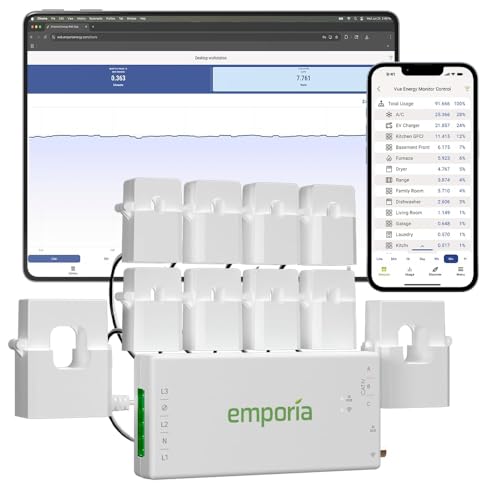
The Emporia Vue 3 Home Energy Monitor is an ideal choice for homeowners enthusiastic to take control of their electricity usage. This UL Listed device guarantees safety, while its easy installation in circuit panels makes it compatible with various systems. You can monitor your energy consumption 24/7 and automate settings through the Emporia Energy App. With real-time data and notifications, you’ll uncover savings opportunities and manage peak demand effectively. Plus, it supports solar monitoring, helping you optimize energy use. Simply connect to your 2.4 GHz Wi-Fi for accurate data collection and enjoy insights that lead to lower electric bills.
Best For: Homeowners looking to monitor and manage their electricity usage efficiently while optimizing for cost savings.
Pros:
- UL Listed for safety, ensuring compliance with rigorous electrical standards.
- Enables 24/7 energy monitoring and automation via the Emporia Energy App for convenience.
- Supports solar monitoring to help users optimize energy consumption and savings.
Cons:
- Requires a 2.4 GHz Wi-Fi connection for functioning, which may limit compatibility with some home networks.
- Additional sensors may need to be purchased for full compatibility with certain electrical systems.
- Real-time data retention is limited to 3 hours, which may not be sufficient for all users’ needs.
Sense Energy Monitor – Track Electricity Usage in Real Time
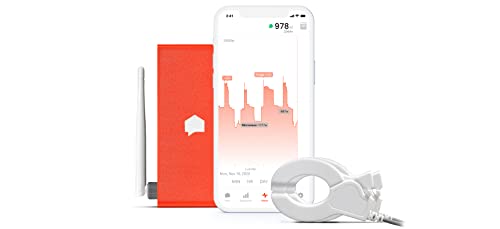
Homeowners looking to gain real-time insights into their electricity usage will find the Sense Energy Monitor an invaluable tool. This device tracks your energy consumption, allowing you to save money and optimize efficiency. It meets stringent safety standards for installation inside electrical panels, ensuring reliable operation. With Sense, you can monitor your usage via iOS, Android, or web apps, helping you keep tabs on energy patterns, especially during peak times. Custom notifications alert you to critical device usage, preventing potential issues. Currently, it’s only available in the United States and Canada, making it a smart choice for local homeowners.
Best For: Homeowners in the United States and Canada looking to monitor and optimize their electricity usage in real time.
Pros:
- Tracks real-time electricity usage, helping users save money and improve energy efficiency.
- Offers custom notifications for critical devices to prevent potential issues.
- Accessible monitoring through iOS, Android, and web apps allows for convenient tracking from anywhere.
Cons:
- Currently only available for installation in the United States and Canada.
- Requires installation inside electrical panels, which may necessitate professional assistance.
- Limited compatibility with devices outside of the specified regions.
Emporia Vue 3 Home Energy Monitor

If you’re looking to take control of your energy consumption, the Emporia Vue 3 Home Energy Monitor is an excellent choice. It’s UL Listed, ensuring safety and compliance with strict electrical standards. Installation’s a breeze, fitting most circuit panels with clamp-on sensors. You can monitor real power 24/7 through the Emporia Energy App, which provides real-time data accurate to ±2%. Plus, you can configure settings for peak demand and solar management to save on bills. With the option to add up to sixteen branch sensors, you can keep an eye on key appliances, optimizing your energy usage seamlessly.
Best For: Homeowners looking to monitor and optimize their energy consumption effectively.
Pros:
- UL Listed for safety, ensuring compliance with electrical standards.
- Real-time monitoring available through the Emporia Energy App, providing accurate data to help manage energy usage.
- Expandable system allows for monitoring of up to sixteen additional appliances, enhancing energy management.
Cons:
- Requires a 2.4 GHz WiFi connection, which may not be suitable for all households.
- Additional sensors sold separately can increase overall costs.
- May require professional installation for some users, especially in complex circuit panels.
Smart Home Energy Monitor with Circuit Level Sensors

For tech-savvy individuals looking to optimize their energy consumption, a Smart Home Energy Monitor with Circuit Level Sensors offers an advanced solution. This monitor features 16 50A and 3 200A or 300A sensors, allowing you to track power usage in real-time via a 2.4 GHz WiFi connection. It effectively monitors various appliances like air conditioners and water heaters, updating data every 2 seconds with ±2% accuracy. Installation is straightforward—just attach the clamp to the power cable. With compatibility for SmartLife and Tuya apps, you can easily manage your energy consumption and identify potential savings to reduce your electric bills.
Best For: Tech-savvy homeowners who want to optimize their energy consumption and lower their electric bills.
Pros:
- Real-time monitoring allows users to track energy consumption, voltage, current, and power factor every 2 seconds.
- User-friendly installation with simple clamp attachment to power cables, making it accessible for most users.
- Compatibility with SmartLife and Tuya apps enables easy management and monitoring of energy usage from a smartphone.
Cons:
- Requires 2.4 GHz WiFi for full functionality, which may limit use in homes with only 5 GHz connections.
- Installation must be performed by qualified personnel to ensure safety, which could incur additional costs.
- Accuracy of ±2% may not be sufficient for users needing highly precise energy measurements.
Factors to Consider When Choosing a Home Energy Monitor With Circuit Level Tracking
When you’re choosing a home energy monitor with circuit level tracking, consider how easy it is to install. You’ll also want to look at sensor accuracy and whether it provides real-time monitoring. Don’t forget to check its compatibility with your existing systems and its data privacy features.
Installation Ease
Choosing a home energy monitor with circuit level tracking can be straightforward, especially since many models feature easy installation options. Most monitors come with clamp-on sensors that attach directly to your existing circuit panel, eliminating the need for extensive rewiring. They often support various electrical system configurations, making them compatible with both single-phase and three-phase setups in your home. You’ll typically need just basic tools, allowing you to handle the installation yourself and save on professional service costs. Some models even offer flexible sensors to fit panels with limited access, ensuring a hassle-free experience. Plus, user-friendly designs and mobile app integration guide you through the process, enhancing accessibility and making installation a breeze.
Sensor Accuracy
While evaluating home energy monitors with circuit level tracking, you can’t overlook the importance of sensor accuracy. Accurate sensors, often boasting ±1% to ±2% accuracy rates, are essential for providing reliable energy consumption data. With high accuracy, you can effectively identify energy usage patterns, leading to better decision-making and potential savings on your electricity bills. The reported accuracy of a monitor greatly impacts its ability to identify inefficient appliances or track solar energy contributions. Additionally, accurate sensors allow you to set personalized usage targets and receive alerts for unusual energy spikes, enhancing your energy management and conservation efforts. Trusting the data from your monitor hinges on the precision of its sensors, so choose wisely for best results.
Real-Time Monitoring
Real-time monitoring is essential for anyone looking to optimize their energy consumption effectively. With continuous tracking, you can gain immediate insights into your usage patterns and spot spikes in electricity demand. Many energy monitors update data every few seconds, ensuring you’re always in the loop about your power consumption. The accuracy of this monitoring typically falls within ±1% to ±2%, so you can trust the data to make informed decisions. Accessing real-time data through mobile apps allows you to manage and optimize your energy usage from anywhere with an internet connection. Plus, features like alerts for unusual energy spikes help you identify and address inefficiencies promptly, leading to better energy management and savings.
Compatibility With Systems
Understanding how your energy monitor interacts with your home’s electrical system is essential for effective energy management. First, verify the monitor is compatible with your electrical system configuration—whether it’s single-phase, split-phase, or three-phase. Look for models that support various wire configurations, like two-wire and four-wire systems, to fit different setups. Check if the monitor can handle different circuit capacities, such as up to 200A for main sensors and 50A for branch sensors, for thorough monitoring. Choose devices with easy installation options, like clamp-on sensors, to simplify setup across electrical panels. Finally, if you have solar panels, verify the device supports solar net metering for efficient tracking of energy production and consumption.
Data Privacy Features
How can you guarantee your personal data stays secure when using a home energy monitor? Look for models that feature a Super Privacy Mode, allowing you to operate without internet access, which greatly boosts your data security. Some devices store user data locally, minimizing risks associated with cloud processing. It’s also wise to choose monitors that let you export historical energy usage data in various formats, enabling better management without third-party reliance. Confirm the device complies with privacy standards and regulations for responsible data handling. Additionally, opt for solutions that allow you to customize data-sharing settings, giving you control over what information you share and with whom, further enhancing your overall data privacy.
Custom Alerts
What factors should you consider when selecting a home energy monitor with circuit-level tracking? Custom alerts are essential for optimizing your energy usage. Look for monitors that let you set personalized notifications for specific energy thresholds. This feature can notify you if a high-energy appliance is left running, helping you avoid unnecessary waste. Additionally, alerts for peak demand periods can help you adjust your usage, preventing higher rates during those times. You’ll also benefit from notifications when your energy usage exceeds your goals, fostering awareness and encouraging energy-saving habits. By customizing alerts, you’ll engage more with your energy consumption, empowering you to take control and make informed decisions about your energy use.
Energy Management Capabilities
When selecting a home energy monitor with circuit-level tracking, consider the energy management capabilities that will help you optimize your consumption effectively. Look for monitors that provide real-time tracking, enabling continuous visibility into your power usage. This immediate feedback allows you to make informed decisions. Make sure the device can monitor multiple circuits simultaneously, giving you detailed insights into individual appliance demands. Features like Time of Use Management and Peak Demand Management can greatly cut costs by controlling energy use during high-rate periods. If you have solar panels, opt for systems that support solar net metering to track generated energy. Finally, choose monitors that offer customizable alerts for abnormal usage, helping you quickly address inefficiencies.