Choosing the right battery monitor can make boating power management far simpler. The best units help you track voltage, current, and state of charge before a flat battery leaves you stranded.
In this roundup of the best battery monitors for boats, we focus on practical features that matter on the water: durability, readability, alarms, and installation flexibility.
Best 10 Battery Monitors for Boats Picks for 2026
Shunt-Style Power Tracking
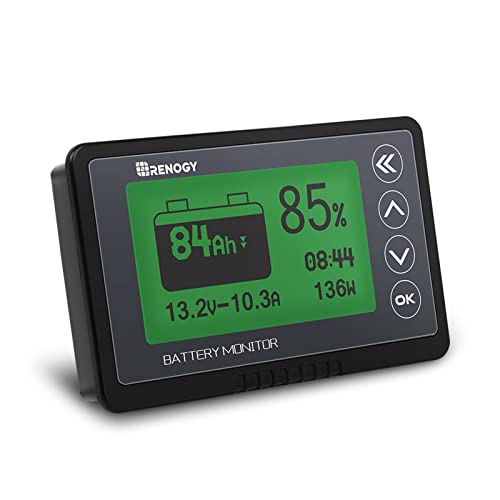
- 1% accuracy shunt monitor
- Works with 12V/24V/48V systems
- High/low alarms and remote display
Best For: Boat owners who want a shunt monitor with detailed readouts and capacity alarms.
Waterproof Alarm Display

- IPX7 waterproof sealed shell
- Voltage, capacity, and temperature display
- Low/high voltage buzzer alarm
Best For: Marine users who want a waterproof voltage-and-capacity display with basic alarms.
Backlit Current Monitor

- Tracks SOC, capacity, voltage, and current
- 8-120V support with 500A peak
- Backlit display with auto-save memory
Best For: Boat owners who want a compact shunt monitor with current and capacity tracking.
Low-Drain Capacity Gauge

- IP68 waterproof display
- Shows voltage and remaining capacity
- Very low power consumption
Best For: Buyers who want a low-draw waterproof battery gauge for simple marine monitoring.
Waterproof LED Voltmeter
Blue Round Marine Battery Display

- Waterproof round voltmeter for marine and damp environments
- Blue LED display helps with night-time visibility
- Supports DC 8-48V with 0.1V accuracy
Best For: Boaters who need a compact, waterproof voltage-only monitor
Bluetooth Battery Tracker
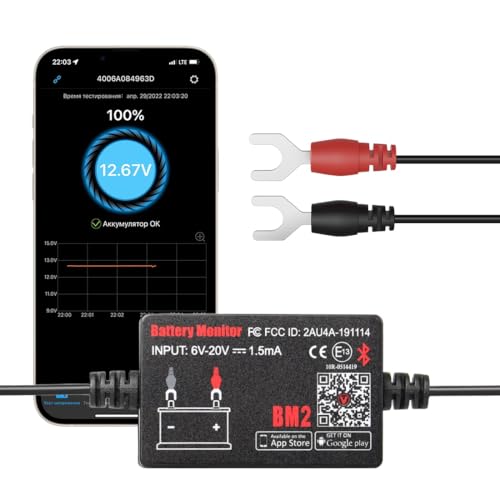
- Bluetooth 4.0 app monitor for iPhone and Android
- Tracks voltage, charge, cranking power, and starting system status
- Low-voltage alarm triggers when in Bluetooth range
Best For: Boat owners who want phone-based monitoring for 12V lead acid batteries
Compact Shunt Monitor
AILI Battery Monitor with Shunt for 8-120V

- Tracks SOC, voltage, current, and capacity
- Includes 100A shunt for accurate coulomb counting
- Works with LiFePO4, AGM, gel, and sealed lead-acid
Best For: Smaller boats and battery banks under 100A
Bluetooth App Monitor
ANCEL BM200 Bluetooth 12V Battery Monitor

- Bluetooth app monitoring with real-time alerts
- Includes cranking and charging system tests
- Works with 12V lead-acid and lithium batteries
Best For: 12V boat owners who want app-based monitoring and alerts
Waterproof Panel Display
DROK Waterproof Battery Monitor Color Screen

- Shows voltage, capacity, and remaining percentage
- Waterproof panel with reverse polarity protection
- Works with 8V to 100V marine systems
Best For: Boats needing a waterproof, easy-read panel meter
Shunt-Style Power Tracking – Renogy 500A Battery Monitor
If you want one of the more accurate battery monitors for boats, this Renogy shunt-based unit is built for real-time voltage and current tracking. It works with 12V, 24V, and 48V systems, supports several battery chemistries, and adds programmable high/low alarms to help prevent over-discharging on the water.
Best For: Boat owners who want a shunt monitor with detailed readouts and capacity alarms.
Pros:
- Shunt design offers 1% accuracy for voltage and current measurement.
- Displays voltage, current, consumed power, battery capacity, and degradation rate.
- Compatible with AGM, gel, LiFePO4, lithium-ion, and nickel-metal hybrid batteries.
- 20ft shielded cable makes remote viewing easier in larger boats.
Cons:
- Requires shunt installation, so setup is more involved than simple voltage-only meters.
- Best suited to users who want detailed battery data rather than a basic display.
Overall, this is a strong choice if you need a more complete picture of battery health and usage on a marine electrical system. The alarm features and wide voltage support make it especially practical for boat setups that demand close monitoring.
Waterproof Alarm Display – IPX7 7-100V Battery Monitor
For boat owners who need a simple, sealed option, this IPX7 battery monitor covers a wide 7-100V range and is listed for marine use. It shows battery voltage and remaining capacity percentage, adds buzzer alarms for low and high voltage, and includes a temperature view for extra situational awareness.
Best For: Marine users who want a waterproof voltage-and-capacity display with basic alarms.
Pros:
- IPX7 waterproof shell is designed for indoor and outdoor use.
- Supports marine, RV, boat, and other vehicle applications.
- Works with lead-acid, AGM, LiFePO4, and ternary lithium batteries.
- Includes buzzer alarm, temperature display, and power-off memory.
Cons:
- Needs a simple setup step after installation or the percentage may show incorrectly.
- Only measures voltage/capacity, so it is less detailed than shunt-based monitors.
This model makes sense if weather resistance matters more than advanced current tracking. It is a practical pick for boat installations where a compact, waterproof display and warning alarms are the main priorities.
Backlit Current Monitor – BINTA 8-120V Battery Monitor
If you want battery monitors for boats that go beyond simple voltage reading, this BINTA shunt monitor adds state-of-charge, remaining capacity, current, and voltage tracking. It supports up to 500A peak, includes a backlit display for dark cabins, and is compatible with boat electrical systems using lead-acid, LiFePO4, or lithium-ion batteries.
Best For: Boat owners who want a compact shunt monitor with current and capacity tracking.
Pros:
- Tracks state of charge, remaining capacity, voltage, and current.
- Supports 8-120V systems with up to 500A peak handling.
- Backlit screen is easier to read in low light or sunlight.
- Includes shielded cables and auto-save memory for easier use.
Cons:
- Like other shunt monitors, installation is more involved than a basic plug-in meter.
- Best suited to users who want more than a simple voltage-only display.
This is a versatile choice for boat owners who want a fuller picture of battery behavior without moving to a larger system. The compact design, backlight, and memory features make it a practical upgrade for marine setups.
Low-Drain Capacity Gauge – IP68 Battery Voltage Meter
This IP68-rated battery monitor is a straightforward pick for boat owners who mainly want a bright voltage-and-capacity gauge. It supports many common battery types and voltage ranges, adds a low-voltage warning, and keeps power draw low for systems where every milliamp matters.
Best For: Buyers who want a low-draw waterproof battery gauge for simple marine monitoring.
Pros:
- IP68 waterproof cover adds strong protection for marine use.
- Shows voltage and remaining capacity on a bright blue-backlit display.
- Supports custom mode from 7-100V plus common 12V to 84V battery setups.
- Very low power consumption helps reduce battery drain.
Cons:
- Measures voltage and capacity only, not current or amp draw.
- Best for users who prefer a simple gauge rather than full system diagnostics.
For a boat that needs a compact, weather-resistant status display, this model keeps things simple. It is best viewed as a basic monitoring tool rather than a full-featured battery management solution.
Color Screen Shunt Monitor – 500A Battery Monitor with 3.5" Display
If you want one of the more informative battery monitors for boats, this 500A shunt-based unit is built for real-time tracking of voltage, current, battery percentage, remaining time, and historic data. The 3.5″ color screen and backlit display make it easy to read on board, while the 16ft shielded cable gives you flexibility in where you mount the display.
Best For: Boat owners who want a large, easy-to-read shunt monitor with detailed battery data and programmable alerts.
Pros:
- High-precision current detection for more accurate real-time readings
- 3.5″ color screen shows voltage, percentage, current, remaining time, and data history
- Programmable alarms help warn against over-discharging
- Works with a wide 8V-120V range and multiple battery types
Cons:
- More involved than a simple voltmeter-style monitor
- Requires shunt installation and wiring
For buyers who want more than just a voltage number, this monitor offers a fuller picture of battery health. Its combination of screen clarity, saved data, and alarm features makes it a practical pick for marine setups where monitoring matters.
Waterproof LED Voltmeter – Blue Round Marine Battery Display
For a simple, space-saving option among battery monitors for boats, this round LED voltmeter focuses on quick voltage checks in DC systems. It supports 12V and 24V use, has a blue LED display for low-light visibility, and includes a waterproof design that suits damp marine environments.
Best For: Boaters who want a compact waterproof voltage display for fast, at-a-glance battery checks.
Pros:
- Waterproof design for moist and marine environments
- Blue LED readout is easy to see in dark conditions
- Supports DC 8-48V with 0.1V accuracy
- Includes panel, nylon nut, screws, and wiring for installation
Cons:
- Shows voltage only, not amp draw or battery percentage
- Less informative than shunt or Bluetooth monitors
This is a straightforward monitor for buyers who mainly want a reliable voltage readout. It is best viewed as a practical visual gauge rather than a full battery management tool.
Bluetooth Battery Tracker – BM2 12V Lead Acid Monitor
If you prefer app-based battery monitors for boats, this Bluetooth model gives you mobile access to battery voltage, charge status, cranking power, and starting system checks. It works with 12V lead acid batteries and sends a low-voltage alarm when your phone is within Bluetooth range, making it useful for checking battery condition without a built-in display.
Best For: Boat owners who want smartphone-based battery monitoring and low-voltage alerts for 12V lead acid systems.
Pros:
- Bluetooth 4.0 connectivity works with iPhone and Android
- Low-voltage alarm alerts you when the battery drops in range
- Reports voltage, charge, cranking power, and starting-system data
- Designed for 12V lead acid batteries used in boats and other vehicles
Cons:
- Limited to 12V lead acid batteries
- Requires use of the mobile app for readings
This monitor fits users who want battery information on their phone instead of a fixed dashboard display. It is a good match for simple marine electrical setups where app-based checks and automatic alerts are more important than a mounted screen.
Compact Shunt Monitor – AILI Battery Monitor with Shunt for 8-120V
If you want a straightforward battery monitor for boats with real-time state of charge, voltage, current, and remaining capacity, this AILI unit is built for smaller systems under 100A. It uses a 100A shunt for coulomb counting and supports a wide range of 12V to 48V setups, making it practical for compact marine installs as well as RV and solar use.
Best For: Boat owners with smaller battery banks who want accurate shunt-based monitoring without a complicated install.
Pros:
- Tracks state of charge, voltage, current, and remaining capacity in real time
- Includes a 100A shunt and supports systems from 8V to 120V
- Compatible with LiFePO4, lithium-ion, AGM, gel, and sealed lead-acid batteries
- Low standby power and memory function help preserve data when idle
Cons:
- Best suited for smaller systems under 100A
- Wired shunt setup is less convenient than simple clip-on monitors
- Not a Bluetooth app-based monitor
This is a strong fit if you want a no-frills, shunt-based battery monitor that delivers detailed readings and broad battery compatibility. For smaller boats, it covers the core information most owners need.
Bluetooth App Monitor – ANCEL BM200 Bluetooth 12V Battery Monitor
For boat owners looking for a Bluetooth battery monitor with app-based checking, the ANCEL BM200 focuses on 12V lead-acid and lithium batteries. It adds real-time battery monitoring, abnormal alerts, trip records, and support for cranking and charging system tests, which makes it useful if you want more than a basic voltage readout.
Best For: 12V boat owners who want Bluetooth monitoring, alerts, and history in an app.
Pros:
- Bluetooth 4.2 lets you monitor battery data from a 15-30 ft range
- Supports real-time monitoring, abnormal alarms, and trip records
- Includes cranking and charging system tests for added diagnostics
- Compatible with iOS and Android and can monitor up to 4 devices
Cons:
- Designed for 12V systems only
- Seek car function requires GPS permission
- Installation is intended as a one-time setup
The BM200 is a good pick if you want app visibility and alerting instead of a fixed panel display. Its waterproof casing and smart notifications make it appealing for everyday 12V marine use.
Waterproof Panel Display – DROK Waterproof Battery Monitor Color Screen
If you want a waterproof battery monitor for boats with a larger screen and simple at-a-glance readings, this DROK meter is designed to show voltage, capacity, and remaining percentage without switching interfaces. It supports a wide voltage range and is suitable for marine, RV, and other battery-based setups where quick status checks matter.
Best For: Boat owners who want a waterproof, easy-read panel monitor with a color display.
Pros:
- Displays voltage, capacity, and remaining battery percentage on a bigger screen
- Waterproof panel helps protect internal components from moisture and corrosion
- Supports 8V to 100V systems, including 12V, 24V, 36V, 48V, and 72V
- Includes reverse polarity protection, auto-save on power loss, and low voltage alarm
Cons:
- Wired panel-style installation may not suit every boat layout
- Calibration adjustment is manual from the back
- No Bluetooth or app connectivity listed
Overall, this DROK unit is a practical choice if you prefer a mounted display and want waterproof construction with broad voltage support. It is especially useful when you want the battery status visible at a glance.
How We Picked the Best Battery Monitors for Boats
We prioritized monitors that balance accuracy, weather resistance, and ease of use. For marine use, a good display should be readable in bright light, a shunt-based design should provide more reliable current tracking than basic voltage-only meters, and waterproofing is a major plus for exposed installs. We also looked for models that support common battery systems, including lead-acid and lithium options.
Quick Comparison: What Types Stand Out
Some Battery Monitors for Boats are simple voltage gauges, which are best for quick status checks. Others use a shunt to measure current in and out of the battery, giving a much better picture of remaining capacity. Bluetooth models add app-based monitoring, which is useful if your battery bank is mounted in a hard-to-reach compartment. Color displays, backlights, and audible alarms also improve day-to-day usability.
Key Buying Factors for Battery Monitors for Boats
Compatibility with Your Battery Bank
Match the monitor to your system voltage and chemistry. Many boat owners run 12V systems, but multi-voltage monitors are helpful for larger setups or mixed-use vessels. If you use LiFePO4, make sure the monitor supports lithium charging behavior and capacity tracking.
Shunt Rating and Accuracy
For most marine setups, a shunt monitor is the better choice because it measures actual current flow. Check the amperage rating against your system so the monitor can handle peak loads from inverters, trolling motors, pumps, and other accessories.
Display Visibility and Alerts
On a boat, a screen that is easy to read from a distance matters. Backlit LCDs and color displays help, while low-voltage alarms or buzzer alerts can warn you before battery reserve gets too low.
Water Resistance and Mounting
Salt spray, humidity, and occasional splashes make waterproofing important. Look for sealed or IP-rated designs if the monitor will be exposed in the cockpit, near the helm, or in a damp battery compartment. Consider cable length and bracket options for a cleaner install.
Who Should Buy Which Battery Monitors for Boats?
If you want the most dependable readout for a house bank, choose a shunt-based monitor with clear capacity and current data. If your priority is convenience, a Bluetooth model may be the easiest to live with. For smaller boats or simpler systems, a compact voltage-only monitor can still provide a useful at-a-glance check. For the broadest range of buyers, the best Battery Monitors for Boats are the ones that fit your voltage, installation space, and the level of detail you actually need.