Choosing the right energy meter for a solar setup can make a big difference in tracking generation, spotting waste, and understanding real savings.
From whole-home monitors to handheld solar testers, the best options give you clearer data, easier troubleshooting, and more confidence in your system.
Best 10 Energy Meters for Solar Systems Picks for 2026
Safety-first whole-home solar monitor
Emporia Vue 3 with 16 Circuit Sensors
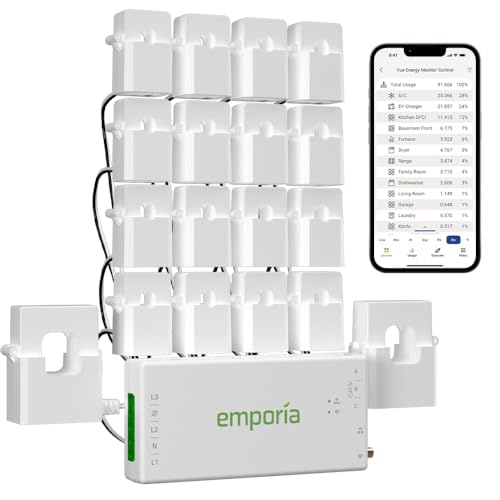
- UL Listed and CE Listed safety certification
- Monitors solar, net metering, and appliance loads
- Includes 16 branch sensors for circuit-level tracking
Best For: Homeowners wanting safe, app-based whole-home solar monitoring
3-phase solar generation tracker
Eyedro 3-Phase Energy Meter 200A WiFi/Ethernet
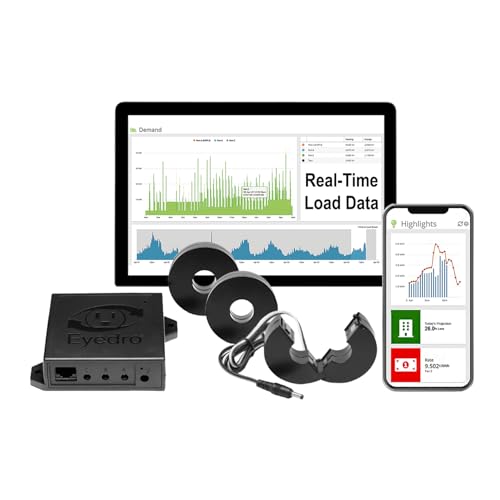
- Tracks solar generation vs. consumption in real time
- WiFi or Ethernet connection options
- No subscription cloud software included
Best For: 3-phase solar and net-metering users who want detailed usage data
Private circuit-level solar monitor

- Supports solar and net metering monitoring
- Runs locally with MQTT and no cloud required
- Includes 16 sensors for room or circuit tracking
Best For: Shared homes and privacy-focused users
Portable solar site measurement tool

- Measures solar irradiance up to 1999 W/m²
- Dual-unit display with MAX/MIN tracking
- Portable handheld tool for site testing
Best For: Installers checking sunlight conditions and panel sites
Whole-Home Solar Monitoring
Eyedro Smart Home Energy Monitor 200A

- Tracks home consumption and solar production in real time
- Supports WiFi, Ethernet, solar, grid, and net metering
- Includes two 200A sensors and no-subscription cloud access
Best For: Homeowners and DIY users wanting detailed whole-home and solar tracking
PV Testing Tool
ZIBOO FT-1000W Solar Panel Tester
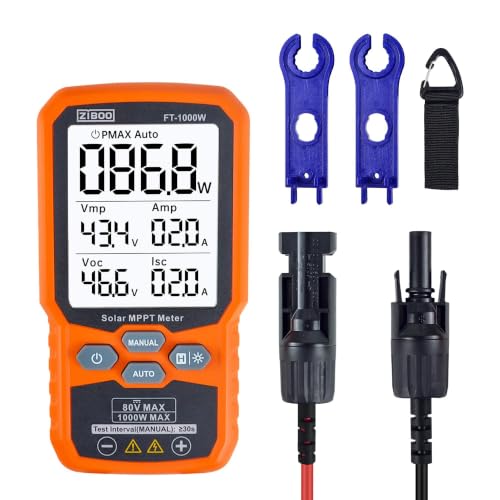
- Measures Pmax, Voc, Isc, Vmp, and Amp for PV checks
- Built with CAT III/CAT IV safety ratings and double-insulated probes
- Backlit LCD, data hold, and IP54 design suit field work
Best For: Solar technicians and installers needing a portable PV module tester
Irradiance Measurement
Digital Solar Irradiance Meter

- Measures sunlight in W/m² or Btu/(ft2-h)
- Includes data hold and a large LCD display
- Useful for solar installation, research, and maintenance
Best For: Users needing a portable meter for solar irradiance and site checks
Best with Extra Features
Emporia Vue 3 Smart Home Energy Monitor
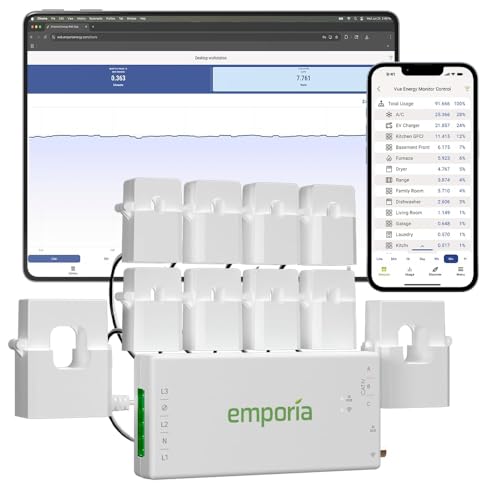
- UL Listed whole-home energy monitor
- Tracks solar and net metering
- Clamp-on sensors with app-based data
Best For: Homeowners wanting certified whole-home solar monitoring
Solar Site Testing
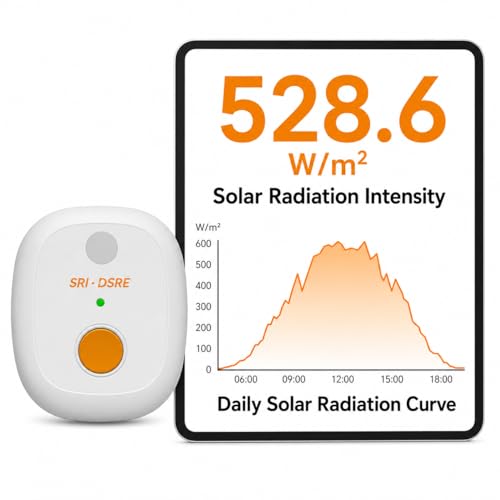
- Measures solar radiation intensity
- Logs daily solar energy history
- Exports CSV data for analysis
Best For: Installers and off-grid users who need irradiance data
Advanced Home Solar Tracking
Emporia Vue 3 Whole Home Monitor

- UL Listed whole-home monitor
- Tracks solar and net metering
- Expandable with branch sensors
Best For: Homeowners needing detailed whole-home and appliance monitoring
Safety-first whole-home solar monitor – Emporia Vue 3 with 16 Circuit Sensors
If you want energy meters for solar systems that can also handle whole-home tracking, the Emporia Vue 3 is built for practical daily monitoring. It supports solar and net metering, gives real-time usage data through the app, and includes 16 branch sensors for watching major loads around the panel.
Best For: Homeowners who want UL-listed whole-home monitoring with solar and net metering support.
Pros:
- UL Listed and CE Listed for added safety confidence
- Tracks real-time electricity usage, solar, and net metering
- Includes sixteen 50A branch sensors for appliance-level monitoring
- Works with iPhone, Android, and web app access over 2.4 GHz WiFi
Cons:
- Requires a 2.4 GHz WiFi connection and internet access
- Some supported system types need an additional 200A sensor sold separately
- 1-second data is only retained for 3 hours in the app
For buyers who want a safety-focused monitor with strong solar and net-metering visibility, this is one of the most capable options in the group. It is especially useful when you want both whole-home insight and detailed branch-level tracking in a single setup.
3-phase solar generation tracker – Eyedro 3-Phase Energy Meter 200A WiFi/Ethernet
Among energy meters for solar systems, the Eyedro 3-Phase Meter stands out for installations that need directional monitoring and flexible networking. It reports usage and solar generation versus consumption in real time, with support for many 3-phase voltage setups and no subscription cloud software.
Best For: 3-phase solar, grid-tie, and net metering setups that need detailed cost and production data.
Pros:
- Shows solar generation vs. consumption with instant readings
- Supports WiFi or wired Ethernet connections
- No subscription required for cloud software, alerts, or reports
- Includes split-core sensors and is non-invasive to install
Cons:
- Best suited to 3-phase systems rather than simple single-phase homes
- Net meter plugin needs two EB6-EW-E3 units for grid and solar breakout
- Setup requires configuring voltage, amperage, and rate settings
This model is a strong fit if you need more than basic monitoring and want real-time insight into both consumption and generation. It is particularly appealing for users who value flexible connectivity and a no-fee software platform.
Private circuit-level solar monitor – SEM-Meter with 16 Sensors
If you need energy meters for solar systems and want strong privacy controls, the SEM-Meter is built around flexible monitoring and local-first options. It supports solar and net metering, tracks multiple circuits, and can run on your own MQTT server without relying on the cloud or app.
Best For: Renters, shared homes, and privacy-minded users who want circuit-level solar monitoring.
Pros:
- Supports solar and net metering with real-time monitoring
- Can run in LAN mode with your own MQTT server only
- Includes 16 50A sensors for multiple circuits and rooms
- Works with Home Assistant when MQTT is used
Cons:
- Home Assistant integration needs MQTT support
- Requires 2.4 GHz WiFi for standard app-based use
- Panels with busbar-only access may need flexible sensors sold separately
This is a good pick when you want the flexibility to monitor several circuits while keeping control over where the data goes. Its rental-home billing features also make it useful for dividing electricity costs fairly across multiple occupants.
Portable solar site measurement tool – 2000 W/m² Irradiance Meter
This handheld solar power meter is useful when you need a simple field tool rather than a permanent monitor. It measures solar irradiance for panel evaluation and site testing, with dual units, max/min tracking, and manual zeroing for straightforward comparisons.
Best For: Solar installers and testers who need quick irradiance readings at the panel or site.
Pros:
- Measures 0–1999 W/m² with stated ±10 W/m² accuracy
- Supports W/m² and BTU/(ft²·h) unit switching
- MAX/MIN tracking helps capture changing sunlight conditions
- Compact handheld format for on-site testing
Cons:
- It measures irradiance, not home electricity usage or solar output directly
- Requires a 9V battery
- Manual scale selection may be less convenient than automatic sensing
For field work, this is a practical tool for checking sunlight strength before or during solar evaluation. It is not a full system monitor, but it does the measurement job it is designed for in a simple, portable form.
Whole-Home Solar Monitoring – Eyedro Smart Home Energy Monitor 200A
If you want energy meters for solar systems that do more than just show a number, the Eyedro Smart Home Energy Monitor gives you real-time visibility into what your home consumes and produces. It works as a whole-home energy monitor or solar meter, supports grid, solar, and net metering setups, and presents data through the MyEyedro cloud in watts, amps, volts, and dollars.
Best For: Homeowners and DIY users who want one monitor for whole-home power tracking, solar production, or net metering.
Pros:
- Includes two 200A sensors, Ethernet cable, power adapter, and cloud access with no subscription.
- Supports WiFi or wired Ethernet and works with 2.4 GHz networks.
- Shows usage and production in real time to help spot waste and optimize energy costs.
- Built for North American safety standards and indoor use.
Cons:
- A single unit can monitor grid energy, solar, or net metering, but not all at the same time.
- Breaking out grid usage from solar generation requires two EYEDRO-HOME units and the net meter plugin.
For buyers who want a practical monitoring tool rather than a basic display, Eyedro stands out for detailed tracking and cloud-based reporting. It is a strong fit if your goal is to understand household consumption, solar output, or net metering performance over time.
PV Testing Tool – ZIBOO FT-1000W Solar Panel Tester
Among energy meters for solar systems, the ZIBOO FT-1000W is aimed at hands-on PV testing rather than everyday home monitoring. It measures Pmax up to 1000W, Voc, Isc, and real-time Vmp/Amp values, making it useful for checking panel performance, shading issues, and MPPT behavior in the field.
Best For: Solar technicians, installers, and R&D users who need a portable tester for PV module validation.
Pros:
- Measures Pmax, Voc, Isc, Vmp, and Amp for panel diagnostics.
- Rated for CAT III 1000V and CAT IV 600V safety with double-insulated probes.
- Backlit LCD and data hold make readings easier on rooftops or in dim areas.
- Auto-ranging and IP54 resistance support outdoor field use.
Cons:
- Designed for solar testing, not whole-home energy monitoring.
- Best suited to professionals who need to interpret PV electrical measurements.
If your priority is validating solar panel output instead of tracking household electricity, this tester fits the job well. Its measurement range and safety ratings make it a more specialized tool for installation, maintenance, and module troubleshooting.
Irradiance Measurement – Digital Solar Irradiance Meter
If you need energy meters for solar systems that measure sunlight rather than circuit output, this digital solar meter is built for irradiance testing. It reads in W/m² or Btu/(ft2-h), supports data hold, and is intended for solar installation, research, maintenance, meteorology, and other light-intensity checks.
Best For: Users who need a portable irradiance meter for solar site checks, research, or maintenance work.
Pros:
- Measures solar irradiance with selectable W/m² and Btu/(ft2-h) units.
- Claims drift under 1.5% per year for stable readings.
- Includes a hold function for recording and reviewing measurements.
- Large LCD display and straightforward operation make it easy to use.
Cons:
- It measures sunlight intensity, not household electricity usage or panel electrical output.
- Best suited to site assessment and testing rather than routine energy monitoring.
This is a focused tool for anyone who wants to quantify sunlight levels and compare solar conditions across locations or times. It is most useful when paired with other PV test equipment during installation or performance assessment.
Best with Extra Features – Emporia Vue 3 Smart Home Energy Monitor
If you want energy meters for solar systems that track both household use and net metering, the Emporia Vue 3 is built for that job. It installs in your circuit panel with clamp-on sensors and provides real-time electricity data through the Emporia app, so you can see where power is going and where solar is offsetting usage.
Best For: Homeowners who want a UL-listed whole-home monitor with solar and net metering visibility.
Pros:
- UL Listed and CE Listed for added safety confidence
- Monitors solar and net metering in the Emporia app
- Clamp-on sensors support whole-home panel installation
- Real-time data and cloud export options help with analysis
Cons:
- Requires 2.4 GHz WiFi and an internet connection
- Some system types need an additional 200A sensor sold separately
- Branch-circuit monitoring sensors are sold separately
For buyers comparing solar system monitoring tools, this model stands out for its practical mix of safety certification, live data, and app-based energy management. It is a strong fit if you want visibility into usage, excess solar, and cost-saving opportunities from one monitor.
Solar Site Testing – Solar Radiation Power Meter
This solar power meter is a useful pick if your goal is to measure sunlight conditions rather than household electricity. Among energy meters for solar systems, it focuses on solar radiation intensity and daily solar radiation energy, giving installers and off-grid users a clearer picture of how much sunlight a panel location actually receives.
Best For: Solar installers, technicians, and off-grid users who need irradiance readings and daily sunlight history.
Pros:
- Measures solar radiation intensity in real time
- Tracks daily solar radiation energy over time
- Real-time graphs help show sunlight peaks and dips
- CSV export supports reporting and deeper analysis
Cons:
- Focused on sunlight measurement, not household power usage
- Uses AAA batteries
- Best suited to testing and evaluation rather than whole-home monitoring
For solar testing projects, the combination of live curves, historical logging, and exportable data makes this meter especially practical. It is best when you need to compare panel placement, sunlight availability, or seasonal changes with straightforward data.
Advanced Home Solar Tracking – Emporia Vue 3 Whole Home Monitor
If you need energy meters for solar systems that can handle both whole-home usage and detailed appliance tracking, this Emporia Vue 3 version is designed for that role. It installs in the circuit panel, supports solar and net metering, and lets you add branch sensors for more detailed monitoring through the app.
Best For: Homeowners who want panel-level solar visibility plus optional appliance-level monitoring.
Pros:
- UL Listed and CE Listed for safety assurance
- Tracks solar and net metering in real time
- Supports up to sixteen branch sensors sold separately
- App-based reporting helps identify usage and savings opportunities
Cons:
- Requires 2.4 GHz WiFi and internet access
- Branch sensors are extra
- Some installations may need an additional 200A sensor sold separately
This monitor is a strong option if you want more than just a basic solar readout. Its combination of real-time data, exportable cloud history, and expandable branch monitoring makes it useful for households trying to understand both solar production impact and everyday electricity use.
How We Picked the Best Energy Meters for Solar Systems
We focused on monitoring accuracy, installation practicality, supported phases and amperage, data visibility, and whether the meter is useful for solar production, household load tracking, or both. We also considered app quality, export options, and how well each device fits common residential and light commercial solar setups.
Quick Comparison: Which Type Do You Need?
Not all Energy Meters for Solar Systems do the same job. Whole-home monitors are best for seeing net usage, circuit-level systems help you isolate specific loads, and handheld solar meters are better for testing panels, irradiance, or PV performance during install and maintenance.
Whole-Home Monitoring
Choose this if you want a broad view of solar offset, grid import/export, and household consumption over time.
Circuit-Level Monitoring
Choose this if you need to identify energy-hungry appliances, compare zones, or manage rental and multi-load properties.
Solar Testing and Diagnostics
Choose this if your priority is measuring irradiance, voltage, current, or panel output during system checks.
Key Buying Factors for Energy Meters for Solar Systems
Phase and service compatibility: Make sure the meter matches your electrical setup, whether you need single-phase or 3-phase support, and confirm the maximum current and voltage ratings.
Measurement purpose: Some units are designed for live household monitoring, while others are specialized for PV testing. Pick the one that matches your goal instead of assuming one meter can do everything well.
Connectivity and data access: Wi-Fi, Ethernet, local dashboards, app alerts, CSV export, and long-term logging can make the difference between useful insights and basic readings.
Sensor count and circuit coverage: If you want appliance-level insight, look for enough clamps or sensors to cover the circuits you care about without forcing compromises.
Ease of installation: Panel space, clamp fit, wiring complexity, and whether professional installation is recommended should all factor into your decision.
Durability and field use: For handheld testers, LCD readability, hold functions, zeroing, and data retention matter more than app integrations.
Who Should Buy Which Energy Meters for Solar Systems?
If you want whole-home solar monitoring and simple app-based tracking, a smart home monitor is usually the best fit. If you manage a 3-phase property or need higher electrical capacity, choose a meter built for that service type. If your focus is panel testing, installation verification, or irradiance checks, a handheld solar meter is the better tool. For homeowners trying to reduce bills and understand how solar offsets usage, the best Energy Meters for Solar Systems are the ones that match your electrical setup and reporting needs first, not just the one with the longest feature list.