Solar arrays are vulnerable to lightning, switching surges, and utility disturbances that can damage inverters, charge controllers, and battery equipment. The right surge protector helps reduce that risk.
Below, we’ve rounded up 10 surge protection devices for solar systems to help you match protection level, voltage rating, and installation style to your setup.
Best 10 Surge Protection Devices for Solar Systems Picks for 2026
Outdoor DC SPD
MidNite Solar MNSPD-300-DC 300V

- 300VDC rating for DC solar use
- Type 4X outdoor-rated enclosure
- Made in the USA; 5-year warranty
Best For: Outdoor DC solar arrays needing a weather-rated SPD
High-Current DIN Rail SPD

- 40kA max discharge current
- 500V DC photovoltaic rating
- DIN rail mount with visual window
Best For: DIN rail PV installs needing high-capacity DC protection
Outdoor AC SPD
- Type 4X outdoor-rated AC SPD
- ETL listed for US and Canada
- 240V output with 5-year warranty
Best For: Outdoor AC solar and inverter-side surge protection
Type 1 Dual-Use SPD
- Type 1 per UL1449 rev3
- Compatible with AC and DC systems
- Built for panels, combiners, and inverter inputs
Best For: Broad AC/DC solar protection at panels, combiners, or inverter inputs
Compact Rail-Mount SPD

- 2P rail-mounted design for simple installation
- 40KA max discharge current with <2.0KV residual voltage
- Flame-retardant PC shell for PV systems
Best For: Compact solar installs needing basic DIN-rail overvoltage protection
High-Capacity PV Protector

- DC 1000V rating for PV systems
- 40KA surge protection with fast response
- 35mm DIN rail mount with flame-retardant housing
Best For: Photovoltaic systems needing a higher-voltage rail-mounted protector
Budget DC Solar Arrester

- 2P DC photovoltaic surge protector
- 20KA maximum discharge current
- Lightweight, basic overvoltage protection
Best For: Entry-level solar systems needing a simple DC arrester
Premium 1000V Option
2P 40KA DC Surge Protector, 2-Pack

- DC 1000V rating for PV systems
- 40kA surge protection capacity
- Flame-retardant PC with DIN rail mount
Best For: Solar owners needing a 1000V DIN rail SPD in a 2-pack
Best 600V Value
DC 600V 2P 40KA Solar Surge Protector

- Type 2 SPD for DC 600V systems
- 20kA In and 40kA Imax ratings
- Status window with green/red indicator
Best For: 600V PV systems needing a compact, monitored SPD
Easy-Maintenance Pick
DC 1000V 2P 40KA Surge Protector
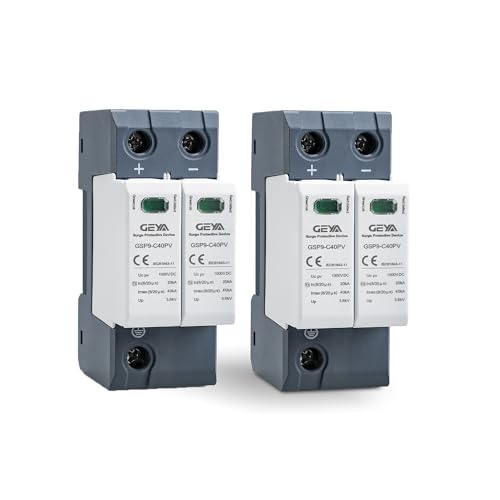
- DC 1000V rating for PV protection
- 40kA maximum discharge current
- Visual window and plug-and-pull design
Best For: Buyers wanting easy inspection and replacement on a 1000V SPD
Outdoor DC SPD – MidNite Solar MNSPD-300-DC 300V
If you need surge protection devices for solar systems on a DC side, the MidNite Solar MNSPD-300-DC is built for outdoor use and sized for straightforward installation. Its 300VDC rating, Type 4X enclosure, and compact form make it a practical fit for PV setups where weather resistance matters.
Best For: Outdoor DC solar arrays that need a compact, weather-rated surge protector.
Pros:
- Type 4X environmental rating for outdoor locations
- 300VDC surge protection rating for DC solar applications
- Compact size and 1 lb weight make placement easier
- Made in the USA with a 5-year warranty
Cons:
- DC-focused model, so it is not the right fit for AC-only needs
- Specific installation compatibility should be checked against your system voltage
Overall, this is a solid choice if you want a purpose-built outdoor DC SPD from a known solar brand. It is best suited to installations where durability and a clean, compact footprint matter.
High-Current DIN Rail SPD – 2P 40KA DC PV Arrester 500V
For buyers comparing surge protection devices for solar systems, this 2P DC photovoltaic arrester is aimed at higher-current PV protection and simple DIN rail mounting. It combines a 40kA maximum discharge rating, a 500V DC rating, and a visual status window for quick checks.
Best For: DIN rail PV installations that need a 500V DC arrester with high discharge capacity.
Pros:
- 40kA maximum discharge current rating
- 500V DC rating for photovoltaic systems
- DIN rail mount with 2-pole design for simple installation
- Visual window helps show power status at a glance
Cons:
- Product details are less established than major branded solar SPDs
- Application fit should be verified against your exact system voltage and panel setup
This model makes sense if you want a straightforward DIN rail arrester with a strong discharge rating and an easy-to-read indicator. It is more about functional PV protection than premium branding or extra system features.
Outdoor AC SPD – MidNite Solar MNSPD-300-AC
The MidNite Solar MNSPD-300-AC is a practical option if you’re shopping for surge protection devices for solar systems on the AC side. It is rated for 240 volts, carries a Type 4X outdoor rating, and is ETL listed for the US and Canada.
Best For: Outdoor AC solar and inverter-side protection where listing and weather resistance matter.
Pros:
- Type 4X outdoor environmental rating
- ETL listed for US and Canada
- 240V output voltage suits AC applications
- Made in the USA and backed by a 5-year warranty
Cons:
- AC model, so it is not intended for DC-only protection
- Installation still needs to match the system’s voltage and wiring method
For AC-side solar protection, this model offers a strong mix of weather resistance, certification, and brand credibility. It is a sensible fit when you want an outdoor-rated SPD for inverter or service-panel use.
Type 1 Dual-Use SPD – MidNite Solar MNSPD600
The MidNite Solar MNSPD600 is designed as a Type 1 surge protector for both AC and DC systems, making it a versatile option in the surge protection devices for solar systems category. It is intended for service panels, load centers, grid-tie PV combiners, and inverter input circuits.
Best For: AC or DC solar installations that need Type 1 protection at panels, combiners, or inverter inputs.
Pros:
- Type 1 device per UL1449 rev3
- Works with both AC and DC systems
- Suitable for service panels, load centers, and grid-tie PV combiners
- Also designed for inverter input circuits
Cons:
- No outdoor enclosure rating is listed in the supplied details
- Older documentation style may require extra attention when verifying fit
This is the most flexible option in the group if you need one SPD family for different points in a solar electrical system. Its main strength is broad AC/DC coverage with a Type 1 design focus.
Compact Rail-Mount SPD – 2P 40KA Lightning Arrester
If you need surge protection devices for solar systems that fit neatly into a distribution box, this 2P rail-mounted arrester is built for straightforward photovoltaic protection. It’s designed to handle lightning current and other instantaneous overvoltage events in new energy solar power generation systems, with a compact structure and simple wiring.
Best For: Solar installs that want a compact 2-pole DIN-rail style arrester for PV overvoltage protection.
Pros:
- 2P rail installation with simple internal wiring
- 40KA maximum discharge current and less than 2.0KV residual voltage
- Flame-retardant PC shell for added durability
- Designed for solar power generation systems and distribution box use
Cons:
- Limited to a 2-pole format
- No detailed compatibility list beyond solar and related low-voltage use
- Basic product presentation with minimal installation guidance
Overall, this is a practical choice if you want a compact PV surge arrester with clear 40KA protection specs and easy rail mounting. It looks best suited to standard solar setups where space, wiring simplicity, and basic lightning protection matter most.
High-Capacity PV Protector – 1000V 40KA DIN Rail SPD
For buyers comparing surge protection devices for solar systems, this DC 1000V protector is aimed at photovoltaic setups that need fast response to lightning strikes and sudden voltage surges. It uses a 35mm DIN rail mount, flame-retardant PC materials, and copper components to support stable performance in compatible PV systems.
Best For: 1000V photovoltaic systems that need a DIN-rail-mounted 40KA surge protector.
Pros:
- DC 1000V rating for photovoltaic systems
- 40KA surge protection rating with fast transient response
- 35mm DIN rail mounting for easy installation
- Flame-retardant, corrosion-resistant PC housing
Cons:
- Product description is broad and not very detailed on installation specifics
- Compatibility is centered on photovoltaic systems rather than general use
- Some listing details are inconsistent in the supplied specs
This model stands out if you want a higher-voltage DC protector with standard rail mounting and a clear 40KA surge rating. It’s a solid fit for PV systems where quick installation and durable enclosure materials are priorities.
Budget DC Solar Arrester – 2P 20KA PV SPD
If you’re shopping for surge protection devices for solar systems and want a simpler low-voltage option, this 2P DC photovoltaic arrester is built for overvoltage protection in PV circuits. Its supplied specs point to a 20KA maximum discharge current, making it a basic fit for solar setups that need straightforward lightning and surge defense.
Best For: Entry-level PV systems looking for a simple 2-pole DC surge protector.
Pros:
- 2P design for DC photovoltaic protection
- 20KA maximum discharge current
- Purpose-built for dc overvoltage protection in PV systems
- Lightweight at 6.7 ounces
Cons:
- Lower surge capacity than the 40KA models in this roundup
- Supplied notes provide limited installation and housing details
- Minimal feature set compared with more fully specified units
This is the most basic option of the three, so it makes sense when you want a simple PV surge protector rather than a feature-heavy unit. The 20KA rating is suitable for smaller or more budget-conscious solar protection plans.
Premium 1000V Option – 2P 40KA DC Surge Protector, 2-Pack
If you need surge protection devices for solar systems that can handle higher DC input, this 1000V model is built for photovoltaic setups and lightning-prone installations. It combines 40kA discharge capacity with a DIN rail format, making it a practical fit for RV, home, and solar protection panels.
Best For: Solar owners wanting a 1000V, 2-pack DIN rail surge protector for PV and home protection.
Pros:
- Designed for DC 1000V photovoltaic systems.
- 40kA surge protection rating for lightning and transient over-voltage events.
- Flame-retardant PC housing with corrosion-resistant, stable construction.
- 35mm DIN rail mounting for easy integration with circuit breakers.
Cons:
- Basic two-piece hardware focus, not a full kit with extras.
- No operational indicator is mentioned in the supplied notes.
This is a straightforward high-voltage option for buyers who want a durable, DIN-rail-mounted SPD for solar PV protection. The 2-pack format also suits installs that need more than one protection point.
Best 600V Value – DC 600V 2P 40KA Solar Surge Protector
For shoppers comparing surge protection devices for solar systems at a lower DC voltage, this 600V Type 2 protector is aimed at PV inverters and modules exposed to atmospheric discharges and switching surges. Its compact DIN rail design and clear status indicator make it easy to place inside a distribution panel or PV junction box.
Best For: 600V photovoltaic systems that need a compact Type 2 SPD with visible status monitoring.
Pros:
- Type 2 surge protector for DC systems up to 600V.
- 20kA rated discharge current and 40kA maximum discharge current.
- Low protection voltage of ≤2.2 kV for added system protection.
- Operational indicator shows green for normal and red for replacement.
Cons:
- Lower voltage rating than 1000V models.
- Single-unit listing may not suit multi-point installs.
This model stands out for buyers who want a compact, clearly monitored SPD for 600V solar setups. The flame-retardant PBT housing and DIN rail compatibility make it a practical choice for tidy panel integration.
Easy-Maintenance Pick – DC 1000V 2P 40KA Surge Protector
This 1000V model is another strong option for surge protection devices for solar systems, especially if you want a simple setup with easier maintenance. It uses a visual window and plug-and-pull design, plus a 35mm DIN rail mount for clean installation in a distribution box.
Best For: Users who want a 1000V solar SPD with a visual status window and easy replacement design.
Pros:
- Supports DC 1000V photovoltaic systems.
- 40kA maximum discharge current for surge events.
- Visual window helps check product status quickly.
- Plug-and-pull design simplifies maintenance and replacement.
Cons:
- Supplied notes do not mention an operational indicator light.
- Only basic compatibility details are provided beyond inverter and charge controller use.
For buyers who value fast inspection and straightforward swapping, this is a practical solar surge protector. Its durable flame-retardant PC shell and copper components round out a simple, installation-friendly package.
How We Picked These Surge Protection Devices for Solar Systems
We focused on practical buyability: DC or AC compatibility, voltage rating, surge current rating, mounting style, and whether the device fits common residential or RV solar layouts. We also looked for options that make sense for panel strings, inverter inputs, and distribution points, since Surge Protection Devices for Solar Systems need to be placed where risk actually enters the system.
Quick Comparison
Use the lineup to narrow by system voltage first, then by application. Lower-voltage units are a fit for smaller arrays or specific protection points, while 600V and 1000V DC models are better suited to many modern string PV systems. AC models belong on the load side or at service-connected equipment, not in the PV string path.
Key Buying Factors for Surge Protection Devices for Solar Systems
Voltage Rating
Match the protector to the maximum continuous voltage of the circuit it will serve. A device that is undersized for the array or inverter input can fail or create an unsafe installation.
DC Vs. AC
PV strings and battery-side protection usually require DC-rated devices, while output panels and grid-tied service points may need AC-rated protection. Do not substitute one for the other.
Surge Current Capacity
Higher kA ratings generally indicate greater ability to absorb repeated surge events. For exposed rooftops, long cable runs, or lightning-prone regions, stronger ratings can be worth prioritizing.
Installation Format
Many Surge Protection Devices for Solar Systems are DIN-rail mounted, which simplifies integration in combiner boxes and enclosures. Confirm physical size, terminal access, and enclosure space before buying.
System Location
Protection works best when installed at the points most exposed to incoming surges: array entry, combiner box, inverter input, and AC distribution as needed. One device is rarely enough for a whole system.
Who Should Buy Which Surge Protection Devices for Solar Systems?
If you have a smaller rooftop or RV setup, choose a compact DC protector with the correct voltage class and easy DIN-rail mounting. For larger string systems, prioritize higher-voltage and higher-surge-current models that fit combiner or inverter enclosures. If you’re protecting both solar generation and grid-connected equipment, consider pairing a DC unit for the PV side with an AC unit for the service side.
In short, the best choice depends less on brand hype and more on matching the device to your circuit, installation point, and local lightning exposure. That approach will give you the most useful protection for the money.