Self-watering raised garden beds make growing vegetables, herbs, and flowers easier by combining elevated planting space with a built-in reservoir or wicking system. The right model can reduce daily watering while improving access and drainage.
We selected 10 options spanning compact planters, large metal beds, elevated designs, rolling models, and covered systems. Use the guide below to match capacity, height, mobility, and maintenance requirements to your garden.
Best 10 Self Watering Raised Garden Beds Picks for 2026
Compact Water-Gauge Pick

- Built-in water gauge
- Reservoir and controllable drainage
- Compact elevated design
Best For: Balconies, patios, and herb gardens
Elevated Root-Protection Design

- Soil platform above standing water
- Water-level indicator and drain valve
- Shelf and wheels included
Best For: Accessible patio or indoor-outdoor gardening
Season-Extending Covered Bed

- Integrated root-directed drip system
- Pitched PE weather-protection cover
- 12-inch-deep open-bottom bed
Best For: Seasonal outdoor vegetable and herb growing
Compact Classic
Keter Splendor Self-Watering Raised Bed

- 31.7-gallon raised bed with built-in reservoir
- Water gauge and adjustable drainage system
- Suitable for indoor or outdoor herbs and vegetables
Best For: Patios, balconies, and indoor gardening
Mobile Heavy-Duty
Wheeled Self-Watering Raised Garden Bed
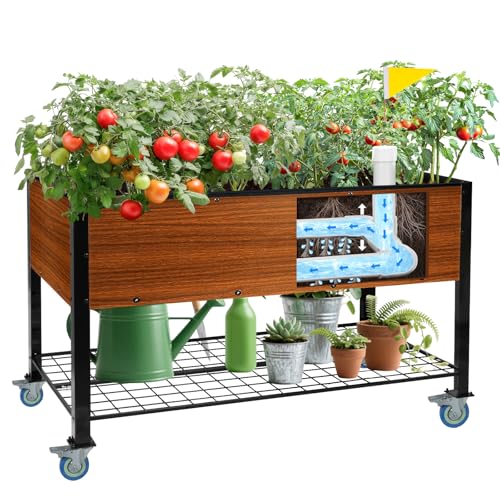
- 48-by-24-inch bed with 30-inch elevated height
- Wicking system designed to reduce watering frequency
- Four lockable casters for easier movement
Best For: Large plantings and movable garden setups
Protected Grower
Garden Elements Elevated Raised Bed

- 45-liter self-watering planter with water indicator
- Ventilated grow dome with adjustable vents
- 31-inch height and weather-resistant polypropylene
Best For: Seed starting and protected small-space growing
Best Overall
Aoodor 63-Inch Self-Watering Garden Bed

- Wicking reservoir with water-level gauge
- Galvanized steel resists rust and corrosion
- Removable plugs allow drainage control
Best For: Spacious patio, balcony, backyard, or indoor growing
Best Elevated Option
Rolling Self-Watering Planter with Storage

- 33.66-inch height reduces bending
- Locking wheels simplify repositioning
- Storage shelf keeps supplies nearby
Best For: Accessible gardening on patios and balconies
Best Rolling Steel Bed
Aoodor 47.2-Inch Wicking Planter

- Built-in reservoir supports root-level wicking
- Lockable casters make repositioning easy
- Galvanized steel with protective rubber trim
Best For: Mobile patio, balcony, and backyard gardening
Compact Water-Gauge Pick – Keter Urban Bloomer
The Keter Urban Bloomer is a compact choice for anyone comparing self watering raised garden beds for herbs, flowers, or balcony gardening. Its built-in water gauge helps indicate when plants need moisture, while the reservoir and controllable drainage system help manage watering.
Best For: Apartment balconies, patios, and small herb gardens.
Pros:
- Built-in water gauge helps monitor moisture needs.
- Water reservoir is designed to help prevent overwatering and root decay.
- Drainage plug can be opened or closed for watering control.
- Compact, elevated design suits urban outdoor spaces.
Cons:
- Its compact size provides less growing space than full-size garden beds.
- Designed primarily for smaller plantings such as herbs and flowers.
This planter emphasizes convenience and water monitoring rather than maximum capacity. It is a practical fit when space is limited and you want a straightforward raised container with simple assembly.
Large Cooling Irrigation Bed – Quictent 6×3-Foot Oval
The Quictent kit is a large option among self watering raised garden beds, combining a 6-by-3-foot metal bed with a misting irrigation system and netting. The mist is intended to distribute water evenly while helping cool plants in hot weather.
Best For: Larger outdoor vegetable, herb, and flower gardens that need broad coverage and pest protection.
Pros:
- Misting system provides broad, uniform watering coverage.
- Included mesh cover helps protect plants from birds.
- Open base supports drainage and helps prevent excess water around roots.
- Rolled edges and reinforcing crossbars improve usability and stability.
Cons:
- The large footprint requires substantial outdoor space.
- Its open-base design does not provide a built-in water reservoir.
- Assembly is required.
This kit is better suited to gardeners who want irrigation and coverage across a broad planting area. Its metal construction, open drainage, and included mesh make it a more complete outdoor setup than a simple planter box.
Elevated Root-Protection Design – Permasteel EnGrow Bed
The Permasteel EnGrow bed takes a specialized approach to self watering raised garden beds. Its soil platform keeps soil above the Eco-Chamber instead of allowing it to sit directly in standing water, while the water-level indicator helps signal when drainage is needed.
Best For: Gardeners wanting an elevated steel planter with organized watering management and storage.
Pros:
- Soil platform is designed to reduce soggy soil and support healthier roots.
- Eco-tubing and Eco-Chamber allow air to move through the soil system.
- Water-level indicator helps identify when drainage is needed.
- Includes a storage shelf, drain valve, and wheels.
Cons:
- At 50 pounds, it is heavier than many compact planters.
- The 40-by-20-inch growing area is smaller than full-size garden beds.
- Proper care includes draining water at the indicated level.
This model stands out for its raised soil platform and drainage-focused system. The elevated working height, powder-coated steel construction, shelf, and wheels make it useful where accessibility and tidy organization matter.
Season-Extending Covered Bed – Garvee 6×3-Foot Greenhouse
The Garvee combines a 6-by-3-foot galvanized metal bed, pitched PE greenhouse cover, and integrated drip irrigation. For shoppers comparing self watering raised garden beds, this setup adds root-directed watering along with protection from frost, wind, pests, and changing weather.
Best For: Outdoor gardeners who want a covered growing space with drip irrigation and seasonal protection.
Pros:
- Integrated drip system delivers water directly toward plant roots.
- Pitched cover sheds rain and snow while providing room for taller plants.
- PE cover helps protect against frost, wind, and pests.
- 12-inch-deep open-bottom bed supports drainage and root growth.
Cons:
- The 72-by-36-inch footprint needs a sizable outdoor area.
- The greenhouse cover adds setup and management considerations compared with an uncovered bed.
- Open-bottom construction does not include a water reservoir.
This is a versatile choice for gardeners who want more than automated watering alone. The removable cover supports seasonal flexibility, while the metal bed and drip system provide a practical foundation for vegetables, herbs, and flowers.
Compact Classic – Keter Splendor Self-Watering Raised Bed
The Keter Splendor is a practical choice for gardeners seeking self watering raised garden beds for a patio, balcony, or indoor growing area. Its built-in reservoir, water gauge, and controllable drainage system help make moisture management more straightforward.
Best For: Year-round herbs, vegetables, and flowers in compact indoor or outdoor spaces.
Pros:
- Water gauge shows when plants need additional moisture.
- Reservoir helps reduce overwatering and root decay.
- Drainage can be opened or closed for watering control.
- Simple assembly and a raised 29.8-inch height.
Cons:
- Plastic construction may offer less load-bearing strength than metal beds.
- Its 44.8-inch width may be limiting for larger plantings.
With a 31.7-gallon capacity and versatile indoor/outdoor design, this bed suits small-space gardeners who want a tidy, low-maintenance setup with visible water-level monitoring.
Mobile Heavy-Duty – Wheeled Self-Watering Raised Garden Bed
This large self watering raised garden bed combines a wicking system with an elevated, wheeled design. The 48-by-24-inch planting area provides room for larger crops, while lockable casters make it easier to reposition the bed around an indoor or outdoor growing space.
Best For: Gardeners who need a roomy raised bed that can be moved and locked in place.
Pros:
- Wicking design is intended to use up to 50% less water than conventional beds.
- Four lockable heavy-duty casters improve mobility.
- Metal frame supports soil, water, and mature plants.
- Drainage holes and included liner help manage excess water and soil spill.
Cons:
- Its large footprint requires more space than compact planter boxes.
- Outdoor materials are described as designed to withstand sun, rain, and wind for up to two years.
The elevated 30-inch height can reduce the need to bend, while the wheels add flexibility. It is a strong fit for growers prioritizing capacity and mobility over a compact footprint.
Protected Grower – Garden Elements Elevated Raised Bed
The Garden Elements elevated bed is a versatile option among self watering raised garden beds, pairing a built-in reservoir with a ventilated grow dome. Its compact 45-liter planting area works for vegetables, herbs, flowers, and starter plants while the cover helps shield them from pests and weather.
Best For: Small-space gardeners who want moisture control and a protective cover for seedlings.
Pros:
- Water-level indicator makes reservoir maintenance easier.
- Ventilated dome has adjustable vents for monitoring and airflow.
- 31-inch elevated design can reduce bending and back strain.
- Weather-resistant polypropylene resists fading, cracking, and warping.
Cons:
- The 29.5-by-15-inch footprint offers less planting space than larger beds.
- The grow dome adds an extra component to assemble and manage.
This bed stands out for combining self-watering functionality with a ventilated cover in a relatively compact format. It is especially useful for seed starting and protecting smaller crops in indoor or outdoor locations.
Best Overall – Aoodor 63-Inch Self-Watering Garden Bed
If you want a spacious option among self watering raised garden beds, this 63-inch Aoodor planter combines a built-in reservoir with galvanized steel construction. The water inlet and level gauge make refilling and monitoring straightforward, while removable drainage plugs let you control water retention.
Best For: Gardeners who want a long, rectangular bed for patios, balconies, backyards, or indoor growing areas.
Pros:
- Wicking reservoir helps provide consistent moisture while reducing overwatering and underwatering.
- Water-level gauge makes reservoir monitoring easier.
- 0.6 mm galvanized steel panels resist rust, corrosion, and outdoor exposure.
- Folded edges and rubber trim provide added protection around the planter.
Cons:
- Its 63-inch length may be too large for very small spaces.
- The bed is only 11.2 inches high, so it does not offer elevated, standing-height gardening.
Choose this model when capacity and adjustable drainage matter more than portability or an elevated design. Its reservoir features are especially useful for keeping moisture more consistent between waterings.
Best Elevated Option – Rolling Self-Watering Planter with Storage
This elevated self watering raised garden bed is designed for easier access, with a 33.66-inch height that reduces bending and kneeling. Its locking wheels help you adjust sun exposure, while the lower shelf adds storage for gardening accessories.
Best For: Gardeners who prefer an elevated planter for balconies, patios, or other limited spaces.
Pros:
- Elevated design makes planting and maintenance more comfortable.
- Locking wheels allow the planter to be repositioned as needed.
- Lower storage shelf helps organize garden supplies.
- Includes a drain plug and water monitor for reservoir management.
Cons:
- Its stated capacity is 21 gallons, with a load-bearing capacity listed as up to 12 gallons, so buyers should confirm their intended soil load.
- The 43.31-by-17.72-inch footprint may still require considerable balcony or patio space.
- Assembly is required.
This is a practical pick when accessibility and mobility are priorities. The elevated frame and storage shelf add convenience, while the wheels make it easier to manage changing light conditions.
Best Rolling Steel Bed – Aoodor 47.2-Inch Wicking Planter
For gardeners who need mobility without giving up durable construction, this Aoodor model is a versatile choice among self watering raised garden beds. Its built-in reservoir supports wicking, while lockable casters let you move the bed toward sun or shade and secure it in place.
Best For: Patio, balcony, and backyard gardeners who want a movable steel planter with adjustable placement.
Pros:
- Self-watering reservoir feeds plant roots on demand.
- Lockable casters support easy movement and stable positioning.
- Galvanized steel resists rust, warping, and weakening outdoors.
- Rubber edge trim helps protect hands from sharp metal edges.
Cons:
- At 13.96 inches high, it is not a standing-height raised bed.
- Wheels may be less useful on uneven ground than on patios or decks.
- The supplied details do not specify a water-level gauge.
This model balances a manageable 47.2-inch size with rolling convenience and galvanized steel durability. It is particularly suitable when your growing area receives changing light or when seasonal repositioning is important.
How We Picked the Best Self Watering Raised Garden Beds
We compared these beds by looking at reservoir design, drainage controls, usable planting space, construction materials, working height, mobility, and included accessories. We also considered how well each style suits different growing conditions, from patios and balconies to larger outdoor gardens.
A self-watering feature is most useful when it is easy to monitor and refill. Models with water-level gauges or visible indicators simplify maintenance, while drainage plugs give you more control during heavy rain or when a plant needs drier soil. Covers, netting, and greenhouse-style protection can also add value for gardeners dealing with pests or cool weather.
Quick Comparison
- Best for compact spaces: Small resin or elevated beds fit balconies, patios, and entryways.
- Best for larger harvests: Six-foot metal beds provide more room for vegetables and companion planting.
- Best for accessibility: Tall raised beds with legs reduce bending and kneeling.
- Best for mobility: Wheeled or rolling designs can be repositioned for sunlight and seasonal cleanup.
- Best for season extension: Models with PE covers, netting, or grow domes offer added protection.
Key Buying Factors for Self-Watering Raised Garden Beds
Reservoir and Drainage Design
Check how much water the reservoir holds and whether you can see its level. A drainage plug is important for storms, overwatering, and winter storage. Wicking systems should separate standing water from the main soil area so roots receive moisture without remaining saturated.
Size and Planting Depth
Measure the available footprint before buying. Compact beds work well for herbs and salad greens, while wider and deeper models are better for tomatoes, peppers, root crops, and multiple plants. Confirm the listed dimensions and interior planting depth rather than judging capacity by exterior size alone.
Height, Stability, and Access
Legged beds are easier to reach, but they need a stable base and may have less soil volume. Lower beds offer more growing capacity but require more bending. If you choose a tall or wheeled design, consider wind exposure and the weight of wet soil.
Materials and Maintenance
Galvanized steel is durable and suitable for larger beds, while resin is generally lighter and easier to move. Look for rust-resistant finishes, sturdy supports, accessible drainage controls, and clear assembly instructions. A cover or netting system is worthwhile if insects, birds, or temperature swings are recurring problems.
Who Should Buy Which Self Watering Raised Garden Beds?
Apartment and patio gardeners should prioritize compact resin beds or smaller elevated planters with simple water-level monitoring. Vegetable growers will benefit from larger galvanized beds with deeper planting space and dependable drainage. Gardeners with limited mobility should look for legged models around a comfortable working height, while frequent rearrangers should choose a wheeled or rolling bed.
If you want a longer growing season, select a bed with a fitted cover, netting, or grow dome. For the lowest maintenance, choose a reservoir that is easy to refill, a visible water indicator, and a drain plug you can access without dismantling the planter.