Gardening from a wheelchair is easier when plants are positioned at a comfortable reach height and the bed leaves enough room for approach and maneuvering. The best accessible planters also combine stable construction, dependable drainage, and mobility features that suit the growing space.
We compared 10 raised garden beds for wheelchair users, including rolling wood, metal, resin, and cedar designs. Use the guide below to match each style to your chair clearance, planting needs, and available patio, balcony, or garden space.
Best 10 Raised Garden Beds for Wheelchair Users Picks for 2026
Best ADA-Ready Pick
Wheelchair Accessible Cedar Garden Bed

- ADA-compliant design with 29-1/4-inch wheelchair clearance
- Two shelves support shallow and deep-rooted plants
- Cedar and rust-resistant aluminum construction
Best For: Purpose-built seated gardening and wheelchair access
Best Mobile Large-Capacity Pick
Garvee Rolling Raised Garden Bed

- Lockable wheels support movement and stability
- 32-inch height reduces bending and strain
- 5-cubic-foot planting area with storage shelf
Best For: Mobile gardening with ample planting space
Best Compact Rolling Pick

- 31.6-inch height supports standing-height gardening
- Two wheels, handle, and stabilizing feet aid movement
- Drainage system and shelf suit patio growing
Best For: Compact, maneuverable container gardening
Best Traditional Wooden Pick
Yaheetech Wheeled Fir Garden Bed

- 33-inch height helps reduce bending
- Four casters include two locking brakes
- Two-tier fir design includes storage and drainage
Best For: Mobile wooden gardening on patios and balconies
Best Mobile Value

- 31.5-inch standing height
- Six-inch wheels and storage shelf
- 400-pound galvanized-steel capacity
Best For: Compact patios, balconies, and mobile herb gardening
Best Weight Capacity
Reinforced Rolling Steel Garden Bed

- 35-inch working height
- 540-pound reinforced frame
- Four lockable casters
Best For: Tall, stable planting on patios, decks, and porches
Best Wood Design
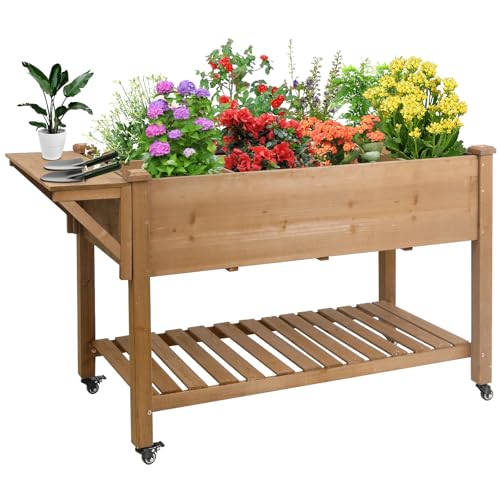
- 33-inch waist-high planting height
- Lockable wheels and storage shelf
- Fir wood with reinforced brackets
Best For: Accessible gardening where a natural wood look matters
Best Mobile Wood Option

- 33-inch elevated working height
- Lockable wheels and storage shelf
- Reinforced fir-wood construction
Best For: Gardeners seeking a tall, mobile planter with a natural wood look
Best Slim Metal Pick
InSideOut 40-Inch Elevated Planter

- 31.5-inch raised working height
- Narrow profile for patios and balconies
- Steel body with wheels and shelf
Best For: Small-space gardeners growing herbs, greens, and compact vegetables
Best Low-Maintenance Design

- 33.7-inch ergonomic standing height
- Lockable 360-degree wheels
- Weather-resistant resin with storage shelf
Best For: Gardeners wanting a tall, mobile planter with minimal outdoor maintenance
Best ADA-Ready Pick – Wheelchair Accessible Cedar Garden Bed
For gardeners specifically seeking raised garden beds for wheelchair users, this ADA-compliant cedar model is designed around seated access. Its two-level layout combines a shallow front shelf with a deeper rear planting area, while 29-1/4 inches of clearance accommodates a wheelchair underneath.
Best For: Wheelchair users who want a purpose-built bed for herbs, greens, root vegetables, and larger plants.
Pros:
- Shallow front shelf leaves room for a wheelchair to roll underneath.
- Two planting depths support both low-growing crops and larger plants.
- Designed to reduce uncomfortable or unsafe overreaching.
- Cedar and rust-resistant aluminum construction suit outdoor use.
Cons:
- Its 3.5-cubic-foot capacity is smaller than some larger raised beds.
- The fixed floor-standing design does not provide rolling mobility.
This is the strongest accessibility-focused option in the group. Choose it when seated reach and wheelchair clearance matter more than portability or extra storage.
Best Mobile Large-Capacity Pick – Garvee Rolling Raised Garden Bed
This Garvee model is a practical choice among raised garden beds for wheelchair users when mobility is a priority. Its 32-inch elevated design reduces bending, while lockable wheels let you reposition the bed for sunlight or shelter and then secure it in place.
Best For: Gardeners who need a movable bed with a generous planting area and accessible storage.
Pros:
- Lockable wheels make it easier to move and stabilize.
- Elevated height helps reduce bending and straining.
- Integrated lower shelf stores tools, pots, or soil bags.
- 48-by-24-inch growing area and 5-cubic-foot capacity provide ample room.
Cons:
- Wheels provide mobility but do not create dedicated wheelchair-under clearance.
- The bed weighs 32.6 pounds before soil and plants are added.
With its combination of height, storage, and rolling mobility, this bed offers flexible patio or backyard gardening. It is best for users who value repositioning rather than a specialized roll-under design.
Best Compact Rolling Pick – LEETOLLA Metal Garden Bed
The LEETOLLA is a compact rolling option for raised garden beds for wheelchair users, particularly on patios, balconies, and decks. It stands 31.6 inches high and uses two wheels plus stabilizing feet, with a handle for repositioning the planter and a shelf for supplies.
Best For: Small-space gardeners who want a maneuverable bed for herbs, greens, flowers, and vegetables.
Pros:
- Handle and two universal wheels make repositioning easier.
- 31.6-inch standing height helps limit kneeling and back strain.
- Five drainage holes and two cross-channels help excess water escape.
- Detachable lower shelf provides tool and supply storage.
Cons:
- Its 2.5-cubic-foot capacity is more limited than the larger beds.
- Two wheels and stabilizing feet may be less convenient than four-wheel mobility.
- The iron finish requires attention to scratches and outdoor corrosion care.
This bed suits accessible container gardening where footprint and maneuverability matter. Its drainage features are useful for outdoor growing, while the smaller capacity keeps planting focused and manageable.
Best Traditional Wooden Pick – Yaheetech Wheeled Fir Garden Bed
For shoppers comparing raised garden beds for wheelchair users, this Yaheetech planter offers elevated access with a familiar wooden design. Its 33-inch height reduces bending, while four casters—including two with brakes—make the bed easier to move around patios, balconies, backyards, or greenhouses.
Best For: Gardeners who prefer a natural fir bed with rolling mobility and a lower storage shelf.
Pros:
- 33-inch raised height supports more comfortable gardening.
- Four casters provide mobility, with two brakes for locking.
- Two-tier design includes storage for tools, pots, or small plants.
- Non-woven fabric liner and drainage hole support container planting.
Cons:
- It does not specify wheelchair-under clearance or a dedicated seated-access shelf.
- The 3.5-cubic-foot capacity is moderate.
- Unfinished fir may require more outdoor care than a specialized accessible bed.
This is a versatile middle-ground choice for gardeners who want a wooden appearance, elevated planting, and casters. Consider it when general mobility is sufficient and dedicated ADA-style clearance is not essential.
Best Mobile Value – Tall Rolling Steel Garden Bed
For gardeners comparing raised garden beds for wheelchair users, this elevated steel planter offers a practical combination of standing height, mobility, and compact patio-friendly dimensions. Its 31.5-inch height can reduce the need to kneel or bend, while the handle and 6-inch wheels make repositioning easier.
Best For: Compact patios, balconies, and gardeners who want a mobile metal bed with storage.
Pros:
- 31.5-inch standing height supports more comfortable tending.
- Six-inch wheels and a built-in handle allow repositioning.
- 400-pound capacity and galvanized, powder-coated steel provide a sturdy outdoor structure.
- Lower shelf keeps tools, pots, and soil within reach.
Cons:
- Its 15.7-inch width provides less planting space than wider beds.
- The single-level design offers no adjustable planting height.
This is a sensible choice when maneuverability and a compact footprint matter most. The drainage channels and 2.5-cubic-foot capacity suit herbs, greens, flowers, and other relatively compact plantings.
Best Weight Capacity – Reinforced Rolling Steel Garden Bed
This reinforced rolling bed is a strong option among raised garden beds for wheelchair users, with a 35-inch working height that can make planting, pruning, and harvesting more accessible. Four lockable casters let you move it for sun or cleaning, then secure it in place.
Best For: Wheelchair users and other gardeners seeking a tall, stable bed for patios, decks, porches, or greenhouse edges.
Pros:
- 35-inch height reduces routine bending and kneeling.
- Four lockable wheels support repositioning and parking.
- Reinforced frame is rated for up to 540 pounds.
- 18-inch depth, 48-inch length, and 13-inch soil depth provide useful growing room.
Cons:
- The 48-inch length may require more clearance than a compact planter cart.
- Metal construction may offer less visual warmth than a wood planter.
Choose this model when stability, taller access, and load capacity take priority. Its four drainage holes and galvanized, powder-coated steel body are suited to outdoor flowers, herbs, and vegetables.
Best Wood Design – Rolling Fir Garden Planter
For shoppers who prefer a warmer appearance, this elevated fir planter is a practical contender among raised garden beds for wheelchair users. Its 33-inch height helps limit bending and kneeling, while lockable wheels provide mobility and brakes help keep the bed stable when parked.
Best For: Backyards, balconies, and patios where a wood finish, work surface, and organized storage are priorities.
Pros:
- 33-inch waist-high design supports more comfortable gardening.
- Lockable wheels make the bed easier to move and secure.
- Fir wood construction and W-shaped metal brackets add structural support.
- Bottom shelf, side hooks, and work platform provide useful organization.
Cons:
- At 55 by 24 inches, it needs more floor space than narrower beds.
- Unfinished wood may require more upkeep than a powder-coated metal body.
- The supplied notes do not specify a maximum soil-load capacity.
This model fits gardeners who want accessible height without giving up a traditional wooden look. Four drainage holes, a removable liner, and storage features make it well suited to flowers and vegetables in outdoor spaces.
Best Mobile Wood Option – Fir Wood Rolling Garden Bed
For shoppers comparing raised garden beds for wheelchair users, this elevated fir-wood planter combines a 33-inch working height with mobility. Its rolling design can help gardeners reposition plants for sunlight while the lockable wheels provide stability when the bed is in place.
Best For: Gardeners who want a warm, wood-finish planter with a tall working height, storage shelf, and mobile placement.
Pros:
- 33-inch height helps reduce bending and kneeling.
- Lockable wheels support repositioning and secure placement.
- Reinforced W-shaped metal brackets add stability.
- Includes a liner, drainage holes, and a bottom storage shelf.
Cons:
- At 55 inches long and 36 pounds, it may require considerable space and assistance to move.
- Fir wood may require more care than a weather-resistant metal or resin alternative.
This is a practical choice when comfort, mobility, and a natural outdoor appearance matter. The elevated layout and rolling base are useful accessibility features, while the included liner and drainage holes support straightforward planting.
Best Slim Metal Pick – InSideOut 40-Inch Elevated Planter
This elevated metal planter is a space-conscious option among raised garden beds for wheelchair users. Its 31.5-inch height, built-in wheels, and narrow 11.5-inch depth suit patios, decks, balconies, and other compact growing areas.
Best For: Gardeners needing a durable, narrow planter for herbs, leafy greens, flowers, or compact vegetables in a small outdoor space.
Pros:
- Raised design helps reduce bending and back strain.
- Built-in wheels make repositioning easier.
- Powder-coated steel is designed to resist rust and weather.
- Includes a plant shelf and built-in drainage.
Cons:
- The 11.5-inch depth limits the volume of soil and the size of crops it can accommodate.
- The notes do not specify lockable wheels, so secure positioning may be less convenient than with locking-caster models.
Choose this model when footprint is a priority. Its slim rectangular profile can fit tighter spaces, though its planting capacity is better suited to herbs, greens, flowers, and compact vegetables than to large crops.
Best Low-Maintenance Design – Elevated Resin Planter
With a 33.7-inch standing height and lockable rotating wheels, this resin planter is designed for comfortable access and flexible positioning. It also adds a bottom storage shelf and pre-drilled drainage holes, making it a well-equipped option for raised garden beds for wheelchair users.
Best For: Gardeners who prioritize a tall, weather-resistant planter with storage, mobility, and simple assembly.
Pros:
- 33.7-inch height helps reduce bending, kneeling, and waist strain.
- Four 360-degree casters include two brakes for repositioning and stability.
- Thickened resin resists fading, rust, cracking, and deformation.
- Includes a storage shelf, stake support, and pre-drilled drainage holes.
Cons:
- The 17.7-gallon capacity may be limiting for larger or deep-rooted plants.
- Its polypropylene-and-metal construction may offer less natural visual appeal than a wood planter.
This model balances accessibility-focused height with low-maintenance materials and useful mobility features. It is especially appealing for patios, balconies, and backyards where storage and easy repositioning are important.
How We Picked the Best Raised Garden Beds for Wheelchair Users
We focused on features that affect comfort, access, and everyday usability rather than judging appearance alone. Our comparison considered planter height, usable planting depth, bed width, open clearance, wheel quality, locking mechanisms, drainage, storage, materials, and stated weight capacity. We also looked for practical details such as liners, rust resistance, reinforced frames, and shelves that can hold tools or supplies.
Because wheelchair dimensions and reach ranges vary, no single height works for everyone. Measure your chair and preferred working position before ordering, and confirm the product’s actual dimensions rather than relying only on its marketing description.
Quick Comparison
| Feature | What to compare | Why it matters |
|---|---|---|
| Height | About 30–33 inches is common | Can reduce bending, but should match your seated reach |
| Mobility | Lockable casters or fixed legs | Allows repositioning while keeping the bed stable |
| Material | Cedar, steel, aluminum, wood, or resin | Affects durability, weight, maintenance, and weather resistance |
| Storage | Lower shelf or open base | Keeps tools, pots, and watering supplies nearby |
| Planting depth | Depth suited to herbs, vegetables, or flowers | Determines which crops can grow successfully |
Key Buying Factors for Raised Garden Beds for Wheelchair Users
Height, Reach, and Clearance
Choose a bed that lets you work without leaning too far forward. A raised box should also provide adequate knee or foot clearance if you need to roll close to the planting area. Wide beds may hold more plants, but an overly deep design can make the center difficult to reach from a seated position.
Wheels and Stability
Wheels are useful on patios, balconies, and smooth paths, but they add little value if the casters are difficult to operate or do not lock securely. Look for four lockable wheels when repositioning is important. On uneven ground, a fixed or reinforced base may be safer and more stable than a lightweight rolling frame.
Drainage, Weight, and Weather Resistance
Drainage holes help prevent waterlogged roots, while a liner can keep soil contained and protect the planter. Account for the substantial weight of wet soil before moving the bed. Steel should be rust-resistant, wood may need periodic care, and resin typically offers lower maintenance.
Who Should Buy Which Raised Garden Beds for Wheelchair Users?
- For a durable, purpose-built option: Consider the cedar wheelchair-accessible bed with aluminum corners.
- For frequent repositioning: Choose a rolling model with lockable wheels and a reinforced frame.
- For herbs and compact vegetables: A narrower elevated planter with a shelf can provide convenient access without taking over the space.
- For heavier plantings: Prioritize the highest stated weight capacity, sturdy construction, and securely locking casters.
- For low maintenance: Resin or rust-resistant metal can be preferable to untreated wood.
Before buying, measure the route to the growing area, the space around the bed, and your comfortable seated reach. Those measurements are often more important than the advertised soil capacity when choosing among Raised Garden Beds for Wheelchair Users.