The best wire strippers make electrical work faster, cleaner, and safer by removing insulation without nicking the conductor. This roundup compares 10 options, from compact manual tools to self-adjusting models and powered cable-stripping machines.
Use the guide below to match stripping range, tool design, durability, and project type with the wire you handle most often.
Best 10 Wire Strippers Picks for 2026
Versatile Hand Tool
IRWIN VISE-GRIP 8-Inch Wire Stripper
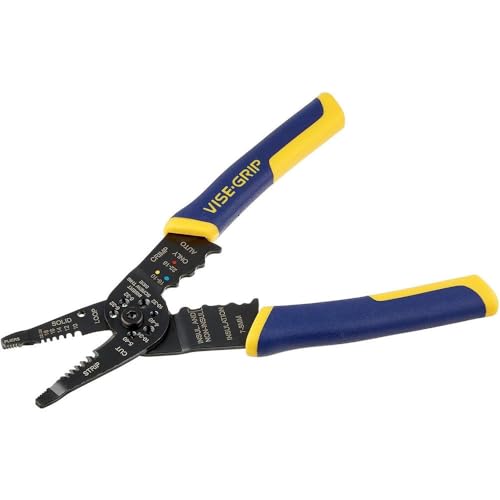
- Strips and cuts 10–22 AWG wire
- Crimps insulated and non-insulated terminals
- Includes bolt-cutting and wire-looping functions
Best For: DIY electrical work and general-purpose wiring
Heavy-Duty Precision
KNIPEX Forged 8-Inch Wire Stripper
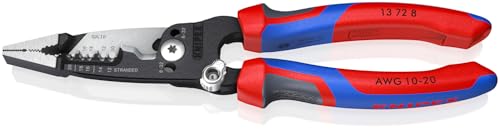
- Strips solid and stranded 10–20 AWG wire
- Cuts cable, NM-B, BX, and MC
- Includes screw-cutting and locating-ridge features
Best For: Fleet, plant, and maintenance applications
Budget-Friendly Multitasker

- Strips and cuts 10–22 AWG wire
- Crimps insulated and non-insulated terminals
- Features a non-slip ergonomic rubber handle
Best For: DIY projects and routine electrical work
Automatic Adjustment
haisstronica Self-Adjusting Wire Stripper

- Combines stripping, cutting, and crimping
- Adjustable strip length for varied tasks
- Handles listed solid and stranded wire ranges
Best For: Electronics repairs and mixed-wire DIY projects
Best Overall Handheld
Klein Tools 11055EP Wire Cutter and Stripper

- Strips 10-18 AWG solid and 12-20 AWG stranded wire
- Includes cutting, looping, and screw-shearing functions
- Made in the USA with comfort grips
Best For: Professional everyday wiring and copper-wire work
Best for High-Volume Stripping
VEVOR Electric Wire Stripping Machine

- Handles wire from 0.06 to 0.98 inches
- Uses a 60W geared motor for hands-free stripping
- Offers seven channels and an adjustable blade
Best For: Industrial stripping, cable processing, and copper recycling
Best for Tight Spaces
Klein Tools K11095 Klein-Kurve Wire Stripper

- Narrow head reaches confined work areas
- Strips 8-18 AWG solid and 10-20 AWG stranded wire
- Adds looping, cutting, and screw-shearing features
Best For: Professional wiring in cramped or hard-to-reach locations
Heavy-Duty Romex Pick
Self-Adjusting Wire Stripper/Cutter

- Strips 10–20 AWG solid wire
- Supports 12/2 and 14/3 Romex
- Ergonomic dual-material grips
Best For: Professional residential wiring work
Versatile Connector Tool
Klein Kurve Stripper/Crimper/Cutter
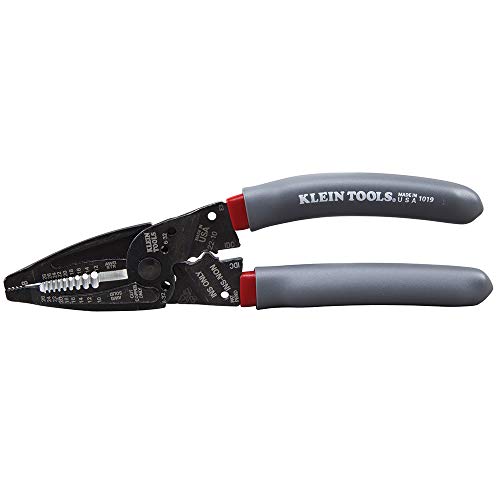
- Strips solid and stranded wire
- Crimps terminals and B/IDC connectors
- Includes screw-shearing capability
Best For: Multi-step electrical installation and repair
Durable Automatic Pick
Heavy-Duty Wire Cutter/Stripper

- Strips 8–20 AWG solid wire
- Handles 10–22 AWG stranded wire
- Cast alloy chassis resists corrosion
Best For: Demanding electrical work with common wire sizes
Versatile Hand Tool – IRWIN VISE-GRIP 8-Inch Wire Stripper
IRWIN VISE-GRIP Wire Stripping Tool / Wire Cutter, 8 inch, Cuts 10-22 AWG, ProTouch Grip (2078309)
Check Price On AmazonFor a dependable pair of wire strippers that also handles cutting, crimping, and light bolt work, the IRWIN VISE-GRIP 2078309 is a practical multipurpose choice. Its 10–22 AWG range suits many common wiring tasks, while the ProTouch rubber grip supports comfortable handling.
Best For: DIY electrical work and general-purpose wire preparation involving 10–22 AWG conductors.
Pros:
- Strips and cuts 10–22 AWG wire.
- Induction-hardened cutting edge is designed to stay sharp longer.
- Also crimps insulated and non-insulated terminals and cuts bolts.
Cons:
- Its listed wire range may not suit conductors outside 10–22 AWG.
- The multipurpose design may be more tool than needed for simple stripping.
This is a well-rounded option when you want one compact hand tool for several common wiring jobs. The pliers-style nose, ergonomic grip, and integrated functions make it especially useful for home projects and routine maintenance.
Heavy-Duty Precision – KNIPEX Forged 8-Inch Wire Stripper
The KNIPEX 13 72 8 is a forged wire stripper built for demanding maintenance work. It strips solid and stranded wire from 10–20 AWG and adds cable-cutting and screw-cutting functions, making it a strong candidate for professional tool kits.
Best For: Fleet, plant, and maintenance work where a durable multifunction wire stripper is valuable.
Pros:
- Strips both solid and stranded wire from 10–20 AWG.
- Forged construction with multi-component handles.
- Handles cable, NM-B, BX, and MC, plus 6-32 and 8-32 screw cutting.
Cons:
- The 10–20 AWG stripping range is narrower than some competing tools.
- At 9.76 ounces, it is relatively substantial for an 8-inch stripper.
Choose this model when durability and broader maintenance capability matter more than minimal weight. Locating ridges help identify stripping holes, while the screw-cutting feature adds convenience on installation and repair jobs.
Budget-Friendly Multitasker – WGGE WG-015 Wire Stripper
The WGGE WG-015 combines wire stripping, cutting, looping, and crimping in an 8-inch hand tool. Its high-carbon alloy steel construction and 10–22 AWG range make it a practical choice for routine electrical tasks without carrying several separate tools.
Best For: DIY users and professionals who want an ergonomic, all-in-one tool for common 10–22 AWG wiring jobs.
Pros:
- Strips, cuts, and loops 10–22 AWG solid copper or aluminum wire.
- Crimps both insulated and non-insulated terminals.
- Curved non-slip rubber handle is designed to reduce hand fatigue.
Cons:
- The stated stripping range does not cover wire gauges outside 10–22 AWG.
- It is a general-purpose tool rather than a specialized stripper.
For buyers seeking straightforward versatility, the WG-015 covers the core functions most home electrical projects require. Its ergonomic grip and included 24-month warranty add practical appeal for frequent DIY use.
Automatic Adjustment – haisstronica Self-Adjusting Wire Stripper
The haisstronica self-adjusting wire stripper is designed to simplify wire preparation by combining stripping, cutting, and crimping. Its adjustable strip length and broad stated AWG coverage make it useful for electronics repairs, home projects, and mixed solid or stranded conductors.
Best For: Home DIY users and technicians who want a self-adjusting tool for varied wire sizes.
Pros:
- Self-adjusting design supports multiple wire sizes from the listed AWG ranges.
- Works with solid and stranded conductors, including copper and aluminum wire.
- Combines stripping, cutting, and crimping with an ergonomic rubber handle.
Cons:
- The supplied specifications present several overlapping AWG ranges rather than one simple range.
- Self-adjusting mechanisms may be less direct than fixed stripping holes for users who prefer manual control.
This model is a convenient fit when projects involve different wire sizes and you value adjustable strip length. Heat-treated alloy steel blades and the three-in-one layout give it useful flexibility for electronics and household electrical work.
Best Overall Handheld – Klein Tools 11055EP Wire Cutter and Stripper
For everyday electrical work, these wire strippers combine cutting, stripping, looping, and screw shearing in one compact hand tool. They handle 10-18 AWG solid wire and 12-20 AWG stranded wire, making them a practical choice for common copper-wire tasks.
Best For: Professional users who want a durable, versatile handheld tool for routine wiring jobs.
Pros:
- Strips, cuts, and loops several common wire sizes.
- Precision-ground stripping holes support clean, consistent stripping.
- Serrated nose, screw-shearing holes, and curved comfort grips add versatility.
- Made in the USA with a metal body and one-year manufacturer warranty.
Cons:
- Its wire-size range may not cover every heavier or lighter cable.
- Manual operation is less efficient than an electric stripping machine for high-volume work.
The 11055EP is a strong all-purpose option when you need more than basic stripping. Its combination of wire manipulation features and ergonomic grips makes it well suited to repeated professional use.
Best for High-Volume Stripping – VEVOR Electric Wire Stripping Machine
This electric wire stripping machine is designed for faster, hands-free processing of scrap copper and other cables. Its 60W geared motor, seven channels, and adjustable blade accommodate wire diameters from 0.06 to 0.98 inches.
Best For: Recycling, cable manufacturing, and other industrial settings that process substantial quantities of wire.
Pros:
- Electric, hands-free operation can improve efficiency for high-volume stripping.
- Seven channels include six round openings and one flat slot.
- Adjustable blade and marked hole sizes help accommodate different cable diameters.
- Cast-iron body, transparent cover, gloves, and user manual are included.
Cons:
- At 15.5 kg, it is substantially less portable than handheld wire strippers.
- Its industrial design may be excessive for occasional household wiring.
- It requires an electrical power source for operation.
With its broad size range and geared motor, the VEVOR is better suited to production or recycling workflows than small repair jobs. The clear cover and included instructions also make the stripping process easier to monitor.
Best for Tight Spaces – Klein Tools K11095 Klein-Kurve Wire Stripper
These Klein-Kurve wire strippers use a narrower head to reach confined areas while covering 8-18 AWG solid and 10-20 AWG stranded wire. They also add clean cutting, looping, and screw-shearing capabilities for common electrical work.
Best For: Installers and repair technicians who frequently work in tight or difficult-to-access spaces.
Pros:
- Narrower head geometry improves access in confined areas.
- Six precision-ground holes support reliable stripping across common wire gauges.
- Shear-like blades and holes handle wire cutting and 6-32 and 8-32 bolt shearing.
- Dual looping holes and ergonomic TPE handles aid wire manipulation.
Cons:
- Manual stripping is slower than powered equipment for large batches.
- The listed gauge range may not suit wire outside 8-18 AWG solid or 10-20 AWG stranded.
The K11095 is a focused choice when access matters as much as stripping performance. Its slim head and useful built-in functions make it convenient for professional wiring tasks where workspace is limited.
Heavy-Duty Romex Pick – Self-Adjusting Wire Stripper/Cutter
For electricians and DIYers handling common residential wiring, this self-adjusting wire stripper covers a useful range of solid and stranded conductors while also supporting specified Romex wire. Its dual-material grips are designed for controlled use during longer jobs.
Best For: Professional electrical work involving solid, stranded, and compatible 12/2 or 14/3 Romex wire.
Pros:
- Self-adjusts for 10–20 AWG solid and 12–22 AWG stranded wire.
- Handles 12/2 and 14/3 Romex wire.
- Dual-material ergonomic grips support comfort and control.
- Heavy-duty professional design with a one-year manufacturer warranty.
Cons:
- Its listed wire range may not suit very small or very large conductors.
- At 12.6 ounces, it is heavier than some compact stripping tools.
This is a focused choice when automatic adjustment and Romex compatibility matter more than having a broad crimping feature set.
Versatile Connector Tool – Klein Kurve Stripper/Crimper/Cutter
This wire stripper is built for jobs that involve more than stripping insulation. It combines stripping, cutting, terminal crimping, and B or IDC connector crimping in a compact tool, making it practical for electrical work and DIY projects.
Best For: Users who need one tool for wire preparation, terminal crimping, connector work, and screw shearing.
Pros:
- Strips 10–26 AWG solid and 12–28 AWG stranded wire.
- Crimps 10–22 AWG insulated and non-insulated terminals.
- Crimps B connectors and Scotchlok IDC connectors.
- Reinforced head reduces flex, while precision shear blades support clean cutting.
Cons:
- Its terminal-crimping range is narrower than its wire-stripping range.
- It may be more tool than needed for basic stripping-only tasks.
Choose this model when versatility is a priority. Its Made-in-USA construction and multiple functions make it especially useful for recurring electrical installation and repair work.
Durable Automatic Pick – Heavy-Duty Wire Cutter/Stripper
For demanding electrical work, this automatic wire cutter/stripper combines a broad wire-size range with a cast alloy chassis. It is designed for stripping 8–20 AWG solid and 10–22 AWG stranded wire while emphasizing durability and corrosion resistance.
Best For: Heavy-duty electrical work where a durable automatic stripper is needed for common solid and stranded wire sizes.
Pros:
- Strips 8–20 AWG solid and 10–22 AWG stranded wire.
- Cast alloy chassis is designed for durability and corrosion resistance.
- Ergonomic grip and heavy-duty Ecoat-finished cast-alloy handle.
- Automatic stripping design supports consistent wire preparation.
Cons:
- It does not list Romex handling or crimping functions in the supplied specifications.
- At 12 ounces, it may feel substantial for light-duty tasks.
This is a strong fit for users who value a rugged build and automatic operation. Its wire range covers many everyday electrical applications without adding unrelated functions.
How We Picked the Best Wire Strippers
We focused on the features that matter during real electrical, automotive, DIY, and recycling work: supported wire gauges, stripping accuracy, cutting performance, grip comfort, construction quality, and versatility. The selection includes conventional manual strippers, self-adjusting tools, multifunction models with crimping capability, and a powered machine for higher-volume cable processing.
Gauge coverage was especially important because a tool designed for household conductors may not suit thin electronics wire or larger cable. We also considered whether each design is best for occasional repairs, professional installation, repetitive work, or specialized copper recovery.
Quick Comparison
| Best For | Tool Type | What to Look For |
|---|---|---|
| General household wiring | Manual stripper/cutter | Clear gauge markings and comfortable handles |
| Fast mixed-gauge work | Self-adjusting stripper | Reliable adjustment and controllable strip length |
| Crimping and stripping | Multifunction tool | Compatible terminals and accessible crimping jaws |
| High-volume cable processing | Powered stripping machine | Adjustable channels, stable feeding, and safety guards |
Key Buying Factors for Wire Strippers
Wire Gauge Range
Check the tool’s stated AWG range against both solid and stranded wire. These ratings can differ, so confirm the exact type you use. A broader range adds flexibility, but a tool that closely matches your usual wire may provide cleaner, more predictable results.
Manual or Self-Adjusting Mechanism
Manual strippers are simple, compact, and often give excellent control when the correct notch is selected. Self-adjusting models can speed up work across mixed gauges, although they may require adjustment for unusual insulation or very short strips.
Build Quality and Comfort
Forged or hardened steel construction generally withstands repeated cutting and stripping better than lightweight designs. Look for sharp, accurately aligned jaws, non-slip handles, a return spring, and a locking mechanism that works smoothly. Comfortable grips matter when making dozens of strips in one session.
Extra Functions
Integrated cutters and crimpers can reduce the number of tools needed, but combination tools may be less specialized than dedicated equipment. For connectors, verify that the crimping section matches the terminals you plan to install.
Powered Cable Stripping
A powered machine makes more sense for bulk cable preparation than occasional household repairs. Consider its usable cable diameter, adjustment range, feed stability, blade access, electrical safety, and whether its channels accommodate your material.
Who Should Buy Which Wire Strippers?
Choose a traditional manual stripper if you want a durable everyday tool for outlets, switches, automotive repairs, or general maintenance. It is usually the best value for occasional users and professionals who prefer precise tactile control.
A self-adjusting model suits installers and DIY users who work with several wire sizes and want faster, more consistent stripping. A multifunction stripper is useful when space or budget limits your tool kit and you also need basic cutting and crimping.
For demanding professional use, prioritize forged construction, precise jaws, comfortable handles, and a gauge range that matches your regular workload. Choose a powered stripping machine only when processing larger quantities of cable justifies its size, setup, and maintenance requirements.