The best motion sensor light switches turn lights on when you enter and off when you leave, helping reduce wasted energy while making hallways, bathrooms, garages, and utility rooms more convenient.
This roundup compares 10 options with different wiring requirements, sensor modes, load capacities, and smart-home features so you can choose the right switch for your space.
Best 10 Motion Sensor Light Switches Picks for 2026
Best Overall
Lutron Maestro Motion Sensor Switch

- Occupancy and vacancy modes
- Daylight sensing with learning
- No-neutral installation option
Best For: Flexible automatic lighting in bathrooms, garages, closets, and laundry rooms
Best Multi-Pack
TOPGREENER No-Neutral Sensor Switches
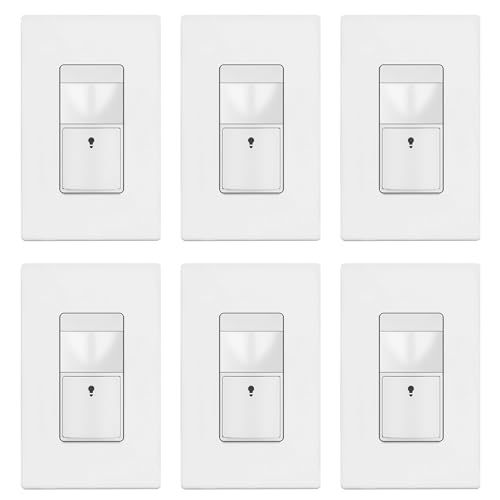
- Six switches with wall plates
- No neutral wire required
- 180-degree, 1,200-square-foot coverage
Best For: Outfitting multiple single-pole rooms with matching sensors
Best Smart Option
Kasa Wi-Fi Motion Sensor Switch

- App and voice control
- Daylight, smart, and away modes
- Works with major smart-home platforms
Best For: Connected homes with neutral wiring and 2.4GHz Wi-Fi
Best High-Load Pick
ELEGRP No-Neutral Motion Switch
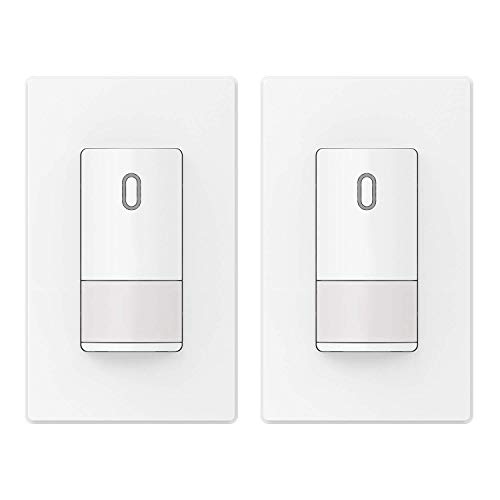
- 300W LED/CFL capacity
- 600W incandescent capacity
- Adjustable sensitivity and 120-degree view
Best For: Single-pole rooms with higher lighting loads and a working ground wire
Best for Easy Setup
Lutron Maestro Motion Sensor Switch

- XCT sensing helps detect subtle movement
- Occupancy and vacancy modes
- Optional daylight detection
Best For: Reliable hands-free lighting in frequently used rooms
Best for Everyday Use
BESTTEN 5-Pack Motion Sensor Switches

- Five switches for multi-room projects
- Adjustable PIR sensitivity and timer
- Wallplates included
Best For: Installing matching sensors throughout a home
Best for No-Neutral Wiring

- Works without neutral or ground wire
- Occupancy and vacancy modes
- Wallplates included
Best For: Single-pole replacements in older wiring setups
Best No-Neutral Value Pack
ELEGRP 10-Pack Occupancy Sensor Switch

- No neutral wire required; grounding is required
- Supports LED, CFL, and incandescent bulbs
- Automatic or manual control for single-pole circuits
Best For: Outfitting multiple rooms in homes without neutral wiring
Best Adjustable Coverage
TOPGREENER In-Wall PIR Sensor Switch

- 180-degree coverage up to 980 square feet
- Adjustable sensitivity from 30% to 100%
- Multiple delay settings and manual override modes
Best For: Single-pole rooms with neutral wiring and customizable detection
Best Single-Switch Pick
ELEGRP 120-Degree Occupancy Sensor

- Works without a neutral wire when grounded
- Adjustable 120-degree PIR coverage
- Automatic or manual control for single-pole circuits
Best For: One-off replacements in older homes with a usable ground wire
Best Overall – Lutron Maestro Motion Sensor Switch
The Lutron Maestro is a versatile choice among motion sensor light switches for rooms where automatic lighting can simplify daily routines. It supports occupancy or vacancy modes, detects daylight, and offers several adjustable shutoff delays. Its no-neutral-wire installation option adds flexibility for some existing wiring setups.
Best For: Bathrooms, garages, laundry rooms, closets, and households wanting flexible automatic or manual-on operation.
Pros:
- Supports occupancy mode and vacancy mode.
- Adjustable shutoff delay of 1, 5, 15, or 30 minutes.
- Daylight sensing helps prevent unnecessary activation.
- Can use a ground wire when no neutral wire is available.
Cons:
- Single-pole installation only.
- Coordinating wallplate is sold separately.
- Limited to a 2-amp load rating.
With its configurable modes and daylight-learning feature, this Lutron switch is a strong all-around option for practical hands-free lighting. Verify the load and wiring requirements before installation.
Best Multi-Pack – TOPGREENER No-Neutral Sensor Switches
This six-pack gives you a practical way to outfit multiple rooms with motion sensor light switches at once. Each switch uses a 180-degree PIR sensor, supports occupancy or vacancy operation, and does not require a neutral wire. The included wall plates and broad coverage make it suited to larger household projects.
Best For: Installing sensors throughout several bathrooms, closets, garages, or other single-pole rooms.
Pros:
- Six white switches are included with wall plates.
- No neutral wire is required.
- 180-degree field of view with coverage up to 1,200 square feet.
- Offers time delays from 15 seconds for testing to 30 minutes.
Cons:
- Single-pole only.
- Requires copper wire in the specified #12–14 AWG range.
- Limited to a 5-amp rating and 150W for LED/CFL loads.
The TOPGREENER pack is especially compelling when multiple rooms need matching controls. Check each circuit’s wiring, load type, and box compatibility before replacing existing switches.
Best Smart Option – Kasa Wi-Fi Motion Sensor Switch
The Kasa KS200MP2 adds app and voice control to the motion sensor light switch category. It can turn lights on with detected motion, switch them off after a preset period, sense daylight, and support routines through the Kasa ecosystem. A neutral wire and 2.4GHz Wi-Fi connection are required.
Best For: Smart homes that want motion-based lighting plus control through Kasa, Alexa, Google Assistant, or Samsung SmartThings.
Pros:
- Motion detection and daylight detection work together.
- Supports app, voice, smart, and away modes.
- Compatible with incandescent, halogen, CFL, and MLV/ELV loads within its ratings.
- Includes wall plates and carries a two-year warranty.
Cons:
- Neutral wire is required.
- Requires a 2.4GHz Wi-Fi connection.
- Designed for single-pole installation.
This is the most connected choice in the group, offering more scheduling and ecosystem features than a standard sensor switch. It is best suited to installations with compatible wiring and reliable Wi-Fi.
Best High-Load Pick – ELEGRP No-Neutral Motion Switch
The ELEGRP SP17OS is a straightforward motion sensor light switch for single-pole applications, with capacity for up to 300W LED or CFL and 600W incandescent loads. It provides a 120-degree detection area, adjustable sensitivity, and automatic or manual operation. A working ground wire is required.
Best For: Single-pole rooms needing a durable, no-neutral sensor with higher listed incandescent capacity.
Pros:
- Supports up to 300W LED/CFL or 600W incandescent lighting.
- Adjustable 120-degree motion detection and sensitivity.
- Offers automatic or manual on/off modes.
- Uses a flame-resistant thermoplastic housing and is UL/cUL listed.
Cons:
- A ground connection is required for operation.
- Not suitable for three-way circuits.
- Only a one-year warranty is listed.
The ELEGRP is a good fit when load capacity and a simple rocker-style control matter more than smart-home connectivity. Confirm that the box has a functional ground and that the circuit is single-pole.
Best for Easy Setup – Lutron Maestro Motion Sensor Switch
The Lutron Maestro is a versatile choice among motion sensor light switches for rooms where reliable detection matters. Its XCT sensing technology helps keep lights on during small movements, while occupancy and vacancy modes let you choose automatic or manual activation.
Best For: Bathrooms, garages, laundry rooms, closets, and task areas where lights should respond reliably to occupancy.
Pros:
- XCT sensing helps detect subtle movement, such as reading or typing.
- Offers occupancy and vacancy modes with 1-, 5-, 15-, or 30-minute shutoff delays.
- Optional daylight detection can prevent unnecessary activation.
- Can be installed without a neutral wire when using the ground wire.
Cons:
- Designed for single-pole installations only.
- Wallplate is sold separately.
- Limited to a 2-amp load and specified wattage ratings.
The Lutron stands out for its sensing performance and flexible settings. Confirm your wiring and load type before installation, particularly if you need a three-way switch or a wallplate included in the package.
Best for Everyday Use – BESTTEN 5-Pack Motion Sensor Switches
The BESTTEN five-pack is a practical way to outfit several rooms with motion sensor light switches at once. PIR detection, adjustable sensitivity, two operating modes, and included wallplates provide useful flexibility for a multi-room installation.
Best For: Homeowners replacing several single-pole switches in one project, especially where a neutral wire is available.
Pros:
- Five switches are included for multi-room installations.
- Supports occupancy and vacancy operation.
- Adjustable sensitivity and shutoff delays from 15 seconds to 30 minutes.
- Wallplates are included, and the switches are UL listed.
Cons:
- Requires a neutral wire.
- Single-pole installations only.
- Does not offer the no-neutral installation described for some competing models.
Choose this pack when you need several matching switches and want wallplates included. Check the electrical box for a neutral wire and verify that your connected load fits the listed ratings before buying.
Best for No-Neutral Wiring – TOPGREENER PIR Sensor 2-Pack
The TOPGREENER two-pack is a useful option among motion sensor light switches when the installation lacks a neutral or ground wire. Its universal wiring design, selectable occupancy and vacancy modes, and included wallplates simplify fitting the switches into compatible single-pole locations.
Best For: Single-pole rooms with no neutral or ground wire, including homes where adding new wiring is impractical.
Pros:
- Designed to operate without a neutral or ground wire.
- Two switches and wallplates are included.
- Offers occupancy and vacancy modes with 15-second, 10-, 20-, or 30-minute delays.
- Provides a 180-degree field of view and up to 1,200 square feet of stated coverage.
Cons:
- Single-pole only and not suitable for three-way wiring.
- Compatible load limits vary by bulb or equipment type.
- Operating temperature is limited to 32–104°F.
This two-pack makes sense for straightforward single-pole replacements where wiring options are limited. Confirm the switch type, load rating, and available space before installation, especially when controlling fans or motors.
Best No-Neutral Value Pack – ELEGRP 10-Pack Occupancy Sensor Switch
For homes without a neutral wire, this 10-pack gives you a practical way to add motion sensor light switches throughout compatible rooms. The switches support automatic or manual operation and work with LED, CFL, and incandescent bulbs, but they require a functioning ground wire and are intended for single-pole use.
Best For: Buyers outfitting several rooms in older homes without neutral wiring.
Pros:
- No neutral wire required, although grounding is required for operation.
- Works with up to 300W LED or CFL and 600W incandescent loads.
- Includes wall plates and offers automatic or manual ON/OFF modes.
- UL and CUL listed with a slim, matte-finish design.
Cons:
- Not suitable for three-way circuits.
- The 10-pack may be more than needed for a single installation.
This is a strong bulk option when you need multiple single-pole sensors and want to avoid running a neutral wire. Confirm the box has a usable ground connection before purchasing.
Best Adjustable Coverage – TOPGREENER In-Wall PIR Sensor Switch
This two-pack is a versatile choice among motion sensor light switches when the electrical box includes hot, neutral, ground, and load wiring. Its adjustable sensitivity, broad 180-degree view, and selectable time delays make it suitable for rooms where sensor behavior needs fine-tuning.
Best For: Single-pole rooms where you want adjustable coverage, sensitivity, and shutoff timing.
Pros:
- Covers up to 980 square feet with a 180-degree field of view.
- Adjustable sensitivity and detection range from 30% to 100%.
- Offers 15-second test mode plus 10-, 20-, and 30-minute time delays.
- Auto, ON, and OFF modes provide sensor operation or manual override.
Cons:
- Requires a neutral wire and proper hot, ground, and load wiring.
- Designed for single-pole use, not three-way or multi-way circuits.
Choose this model when adjustability matters more than no-neutral installation. Its two-pack format is useful for installing matched controls in separate rooms, provided the wiring is compatible.
Best Single-Switch Pick – ELEGRP 120-Degree Occupancy Sensor
For a single installation, this ELEGRP model combines PIR motion detection with a manual push control. It is one of the more straightforward motion sensor light switches for compatible single-pole circuits without a neutral wire, provided a working grounding wire is available.
Best For: Replacing one standard switch in a single-pole circuit where neutral wiring is unavailable.
Pros:
- No neutral wire is required, but a functioning ground wire is essential.
- Provides adjustable 120-degree coverage and sensitivity settings.
- Supports up to 300W LED or CFL and 600W incandescent loads.
- Offers automatic and manual ON/OFF operation and carries UL/CUL listings.
Cons:
- Not compatible with three-way circuits.
- Requires an unobstructed sensor view and careful placement for reliable detection.
- Potential interference can come from small animals, air-conditioning drafts, or window wind.
This single-pack is a sensible fit when you need one replacement rather than a multi-pack. Check for a dependable ground connection and install the sensor at the recommended height with a clear view of occupants.
How We Picked the Best Motion Sensor Light Switches
We focused on practical differences that affect installation and daily use: neutral-wire requirements, grounding requirements, single-pole compatibility, sensor coverage, occupancy and vacancy modes, bulb-load support, certifications, and smart-home connectivity. The selection includes both standalone wall switches and a Wi-Fi model, along with multipacks for whole-home upgrades.
Because electrical boxes and lighting circuits vary, we prioritized products that clearly identify their wiring needs and intended applications. Always turn off power at the breaker and follow the manufacturer’s instructions, or hire a qualified electrician if you are unsure about the wiring.
Quick Comparison
| Feature | What to Look For | Best For |
|---|---|---|
| Wiring | Neutral required, no-neutral, or grounding requirements | Matching existing electrical boxes |
| Detection | PIR motion sensing and stated coverage angle | Reliable activation in the intended room |
| Operating mode | Occupancy, vacancy, or both | Automatic or manual-on control |
| Load support | LED wattage and bulb compatibility | Preventing flicker or overload issues |
| Connectivity | Standalone controls or Wi-Fi app integration | Simple operation or smart-home automation |
Key Buying Factors for Motion Sensor Light Switches
Check the Wiring First
The most important compatibility question is whether your electrical box has a neutral wire. Many older homes do not. A no-neutral model may be the simplest choice, while some products still require a ground wire. Confirm the circuit type, voltage, and whether the switch is single-pole before buying.
Choose Occupancy or Vacancy Mode
Occupancy switches turn lights on automatically when motion is detected. Vacancy switches require a manual press to turn the lights on but can switch them off automatically. Occupancy works well in bathrooms and laundry rooms; vacancy mode can help prevent unwanted activation in bedrooms or areas with pets.
Match the Lighting Load
Review the switch’s supported LED, incandescent, fluorescent, or mixed load ratings. LED bulbs can behave differently from traditional bulbs, so stay within the stated wattage and bulb compatibility limits. A timer or adjustable shutoff delay is also useful for rooms where you may remain still for several minutes.
Consider Placement and Controls
Look for adequate detection coverage and adjustable sensitivity when possible. Manual override buttons, wall plates, indicator lights, and multi-way compatibility can improve convenience. For connected homes, a Wi-Fi model may add schedules, remote control, and integration with other devices, but it also requires setup and a compatible network.
Who Should Buy Which Motion Sensor Light Switches?
Choose a no-neutral model if you are updating an older home and want to avoid rewiring. Multipacks make sense for hallways, bathrooms, closets, garages, and other frequently used areas. Select a model with occupancy and vacancy options if you want more control over automatic activation. A higher-capacity switch is preferable for larger LED installations, while a Wi-Fi model is best for buyers who want app control and smart-home routines. For a basic, dependable upgrade, prioritize correct wiring compatibility and proven sensor coverage over extra features.