Standing water can damage floors, walls, equipment, and stored belongings quickly. The right automatic utility pump starts draining as water rises, helping reduce monitoring and cleanup time.
We compared 10 popular submersible models across flow rate, sensor operation, cord length, drainage performance, portability, and value to help you choose the right pump for routine maintenance or emergency use.
Best 10 Automatic Utility Pumps Picks for 2026
Reliable High-Lift Choice

- 1,800 GPH flow with 25-foot lift
- Handles solids up to 1/8 inch
- Includes 10-foot cord and hose adapter
Best For: High-lift utility and emergency pumping
Hands-Free Water Removal

- Automatic start and stop sensor
- 2,160 GPH flow with 1/4-inch removal depth
- Includes check-valve adapter and 3-year warranty
Best For: Pools, hot tubs, and flooded basements
Compact Automatic Drainage
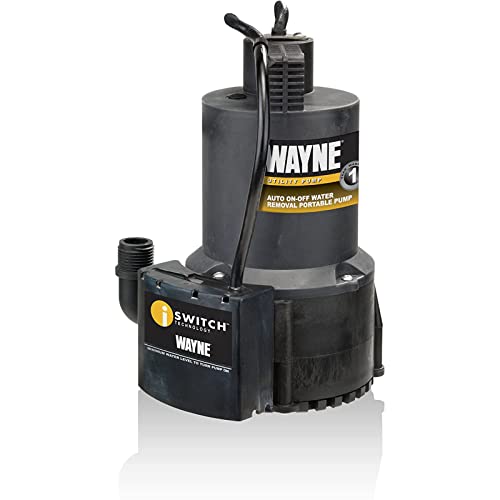
- iSwitch starts above 1-3/4 inches
- Shuts off below 1/2 inch
- Designed for flat areas and tight spaces
Best For: Window wells, basements, and flat surfaces
High-Flow Smart Sensor

- 2,790 GPH flow with 30-foot lift
- Automatic and manual operating modes
- Multiple motor and safety protections
Best For: Rapid drainage of pools, basements, and tanks
Best Automatic Shutoff
LEO 1/3 HP Automatic Sump Pump

- Automatically turns on and off by water level
- Pumps up to 2,250 GPH at zero feet
- Lifts water up to 33.5 feet
Best For: Hands-off drainage around the home
Best High-Flow Choice

- 1 HP motor pumps up to 4,500 GPH at 5 feet
- Removes water down to 1/5 inch
- Includes multiple hose adapters
Best For: Fast drainage of large flooded areas
Best for Last-Inch Drainage
Green Expert 1/3HP Sensor Pump

- Drains down to 1/25 inch on flat surfaces
- Automatic and manual operating modes
- Includes adapters, lifting rope, and check valve
Best For: Basements, garages, hot tubs, and flat areas needing minimal residual water
Best for High-Volume Automatic Pumping

- Rated up to 3,159 GPH at a 5-foot lift
- Six adjustable automatic start levels
- 26-foot maximum lift and 10-foot cord
Best For: High-volume basement, pool, pond, and garden drainage
Best for Protection Features
1/3HP Auto Sensor Utility Pump
- Automatic and manual modes for flexible use
- Dry-run, overload, overheating, and tip-over protection
- Handles solids up to 3/8 inch
Best For: Versatile residential and tougher outdoor drainage tasks
Reliable High-Lift Choice – Superior Pump 91250
Superior Pump 91250 1800GPH Thermoplastic Submersible Utility Pump with 10-Foot Cord, 1/4 HP
Check Price On AmazonIf you need automatic utility pumps for demanding water-removal jobs, the Superior Pump 91250 offers a practical combination of lifting capacity, solid handling, and flexible hose connections. Its 1/4 HP motor moves up to 1,800 gallons per hour and can lift water up to 25 feet.
Best For: Emergency water removal, construction areas, lawn irrigation, and jobs requiring a higher lift.
Pros:
- Moves up to 1,800 gallons per hour and lifts water up to 25 feet.
- Removable suction screen handles solids up to 1/8 inch.
- Includes a 10-foot cord and 3/4-inch garden hose adapter.
- Quality-tested thermoplastic construction with a one-year limited warranty.
Cons:
- It is not described as having an automatic on/off sensor.
- The 1-1/4-inch discharge may require additional hose or fittings for some setups.
This is a strong utility-focused option when lift height and basic debris handling matter more than hands-free operation. Choose it for manual pumping tasks where dependable construction and broad applications are priorities.
Hands-Free Water Removal – Acquaer 1/3 HP Automatic Pump
Among automatic utility pumps, this 1/3 HP Acquaer model stands out for its built-in electronic sensor and low-level water removal. It starts when water reaches 1-1/2 inches and shuts off below 1/4 inch, making it useful for recurring cleanup tasks.
Best For: Pools, hot tubs, flooded basements, pool covers, and other areas where automatic operation is helpful.
Pros:
- Automatic sensor starts at 1-1/2 inches and stops below 1/4 inch.
- Moves up to 2,160 gallons per hour with a bottom-suction design.
- Temperature control helps protect the motor from dry burning.
- Includes a 10-foot cord, check-valve adapter, and three-year warranty.
Cons:
- The automatic cycle does not begin until water reaches 1-1/2 inches.
- Its 1-inch NPT discharge may require an adapter or compatible hose setup.
With automatic sensing, a stable strainer base, and a three-year warranty, this pump is a convenient choice for water that accumulates repeatedly. Its low shutoff level also helps reduce standing water after drainage.
Compact Automatic Drainage – WAYNE EEAUP250
WAYNE EEAUP250 1/4 HP Reinforced Thermoplastic Submersible Multi-Use Pump, Black
Check Price On AmazonThe WAYNE EEAUP250 is one of the more convenient automatic utility pumps for flat surfaces and confined areas. Its iSwitch technology turns the pump on above 1-3/4 inches and off below 1/2 inch, so it can manage water without requiring constant unplugging.
Best For: Window wells, basements, driveways, flat roofs, crawl spaces, and fish tanks.
Pros:
- Automatic iSwitch activation and shutoff reduce hands-on monitoring.
- Removes water down to 1/2 inch on the surface.
- Works in flat areas and tight spaces such as window wells.
- Reinforced, sealed design is assembled in the USA.
Cons:
- Water must reach 1-3/4 inches before automatic operation begins.
- Automatic shutoff leaves approximately 1/2 inch of water.
- The supplied notes list a 13-foot maximum lift, which is lower than some utility pumps.
This pump is best when easy automatic operation and access to narrow spaces are more important than maximum flow or lift. Its shutoff feature also helps prevent dry running after the water level drops.
High-Flow Smart Sensor – 1/3 HP EUTP33 Pump
For shoppers comparing automatic utility pumps by speed and protection features, the EUTP33 combines a 1/3 HP motor with up to 2,790 gallons per hour of flow. Its smart mode starts at 1-1/5 inches and stops at 1/5 inch, while manual mode supports on-demand pumping.
Best For: Rapid drainage of flooded basements, pools, ponds, tanks, hot tubs, and garden areas.
Pros:
- High-flow performance of up to 2,790 gallons per hour with a 30-foot lift.
- Offers both automatic sensor mode and manual pumping mode.
- Features dry-run, overheating, overload, tip-over, and air-lock protections.
- Includes a 10-foot cord, elbow fitting, and dual garden-hose adapters.
Cons:
- The supplied notes do not specify a warranty period.
- Its larger 1-1/4-inch connections may require setup adjustments for garden hoses.
- The pump weighs about 3.8 kg, making it less lightweight than some compact options.
This model is appealing when fast drainage and flexible operating modes are priorities. Its broad protection system and included fittings make it well suited to varied indoor and outdoor water-removal tasks.
Best Compact Water Remover – WAYNE WaterBUG Submersible Pump
For smaller cleanup jobs, the WAYNE WaterBUG is a practical option among automatic utility pumps, though this model itself requires manual unplugging when the water is gone. Its Multi-Flo design supports top or side discharge, and it can pump up to 1,350 gallons per hour while removing water down to 1/16 inch.
Best For: Window wells, buckets, flooded basements, yards, boats, hot tubs, and other small-scale water-removal tasks.
Pros:
- Multi-Flo technology provides top- and side-discharge options for different spaces.
- Removes water down to 1/16 inch and pumps up to 1,350 GPH.
- Debris-filtering suction strainer helps reduce blockages.
- Non-corrodible outlets fit a standard garden hose, and the pump is assembled in the USA.
Cons:
- It is not an automatic pump and must be unplugged to prevent dry running.
- The 1/6 HP motor and 30-foot maximum lift are better suited to lighter-duty jobs than high-volume drainage.
The WaterBUG stands out for flexible discharge positioning and very low water removal. Choose it when compact cleanup and a nearly dry surface matter more than automatic operation or maximum pumping capacity.
Best Automatic Shutoff – LEO 1/3 HP Automatic Sump Pump
The LEO is a strong fit for shoppers specifically comparing automatic utility pumps. Its switch turns the pump on when water reaches about 1-1/2 inches, then continues running for roughly 60 seconds after the level drops to approximately 1/4 inch before shutting off.
Best For: Automatic drainage of basements, pools, pits, ponds, window wells, rain barrels, hot tubs, and other household areas.
Pros:
- Automatic switch handles startup and shutoff without constant monitoring.
- 1/3 HP motor pumps up to 2,250 GPH at zero feet and lifts water up to 33.5 feet.
- Removable suction screen handles solids up to 1/8 inch.
- Includes a 10-foot cord, thermal overload protection, and UL certification.
Cons:
- Its automatic cycle begins at about 1-1/2 inches of water, so it is not designed for ultra-shallow removal.
- Performance is specified at up to 2,250 GPH at zero feet; flow decreases with lift height.
With automatic water-level control, a useful 33.5-foot lift rating, and broad household applications, the LEO is the most directly aligned with hands-off utility pumping in this group.
Best High-Flow Choice – AQUASTRONG 1 HP Sump Pump
For large-volume drainage, the AQUASTRONG delivers substantially more power than many automatic utility pumps, with a 1 HP motor and a rated flow of up to 4,500 GPH at a 5-foot lift. It uses a bottom-suction design to remove water down to 1/5 inch and is operated by plugging in or unplugging the unit.
Best For: Fast removal from flooded basements, swimming pools, hot tubs, ponds, gardens, and window wells.
Pros:
- 1 HP motor provides high-volume drainage up to 4,500 GPH at 5 feet.
- Bottom suction removes water down to 1/5 inch and handles solids up to 1/5 inch.
- Includes multiple adapters for 3/4-, 1-, and 1-1/4-inch hose connections.
- Reinforced thermoplastic housing, mechanical seal, thermal overload protection, and a 10-foot UL power cord support durability and convenience.
Cons:
- It is plug-operated rather than an automatic water-level pump.
- The stated 4,500 GPH rate is measured at a 5-foot lift, while maximum lift is 30 feet.
- Its higher power is more than needed for small, occasional water-removal jobs.
The AQUASTRONG is the clear capacity pick when rapid drainage is the priority. Its broad adapter set and bottom-suction design add versatility, but buyers wanting automatic activation should consider the LEO instead.
Best for Last-Inch Drainage – Green Expert 1/3HP Sensor Pump
For buyers seeking automatic utility pumps that remove nearly every trace of standing water, the Green Expert combines a water sensor with manual operation. Its 1/3HP motor delivers up to 2,000 GPH, while the low-profile drainage design reaches down to 1/25 inch on suitable rigid, flat surfaces.
Best For: Flooded basements, garages, hot tubs, window wells, and other flat areas where low residual water is important.
Pros:
- Automatic sensor mode shuts off after 15 seconds when water is no longer detected.
- Drains to a stated minimum suction level of 1/25 inch and includes a non-return valve.
- Supports both automatic and manual operation with multiple hose adapters.
- Lightweight 8.8-pound design includes a lifting rope and one-year warranty.
Cons:
- Best performance requires a rigid, flat surface; soft pool covers may block the intake.
- Low-conductivity water should be pumped in manual mode with monitoring.
- Expandable or retractable hoses may restrict flow.
This is a practical choice when final water removal matters more than maximum flow. The automatic/manual flexibility and included adapters make setup straightforward, although surface and hose compatibility require attention.
Best for High-Volume Automatic Pumping – Aquastrong 1/2HP Sump Pump
The Aquastrong is one of the stronger automatic utility pumps in this lineup, pairing a 1/2HP motor with a rated flow of up to 3,159 GPH at a 5-foot lift. Its electronic sensor offers six adjustable start levels and shuts off when water falls to 0.4 inch.
Best For: Faster water removal from basements, pools, ponds, gardens, wells, and other areas requiring higher flow.
Pros:
- Moves up to 3,159 GPH at 5 feet and lifts water up to 26 feet.
- Six adjustable activation levels provide more control over automatic operation.
- Thermoplastic housing resists corrosion and abrasion.
- Includes a 10-foot UL power cord, elbow, and multiple hose adapters.
Cons:
- The automatic start level can be set as low as 1 inch, so it is not designed for last-inch drainage.
- Its 1-1/4-inch NPT discharge may require adapter selection for some hoses.
- The supplied notes do not specify a manual operating mode.
Choose this model when flow rate, lift height, and adjustable automatic activation are the priorities. Its durable housing and thermal protection add reassurance for recurring water-removal jobs.
Best for Protection Features – 1/3HP Auto Sensor Utility Pump
These automatic utility pumps are especially useful when unattended operation and built-in safeguards matter. This 1/3HP submersible pump delivers up to 2,790 GPH, includes automatic and manual modes, and adds dry-run, overheating, overload, air-lock, and tip-over protections.
Best For: Flooded basements, yards, hot tubs, ponds, gardens, and tougher drainage jobs involving solids up to 3/8 inch.
Pros:
- Automatic mode starts at about 1-2/5 inches and stops at about 2/5 inch.
- Triple protection helps address dry running, overheating, and overload conditions.
- One-touch air-lock clearing requires no tools or disassembly.
- Handles solids up to 3/8 inch and includes a 10-foot power cord and adapters.
Cons:
- Automatic shutoff at about 2/5 inch leaves more residual water than last-inch models.
- The supplied notes give different maximum-lift figures: 28 feet in the feature text and 30 feet in the details.
- Its automatic sensor start level is higher than the lowest-water applications.
This pump stands out for users who value operational safeguards and easier troubleshooting. It is a versatile pick for clean or harsher drainage environments, but buyers should account for its higher automatic shutoff level.
How We Picked the Best Automatic Utility Pumps
We focused on pumps suited to common residential water-removal tasks, including flooded basements, pools, hot tubs, window wells, yards, and sump pits. Our comparison considered advertised gallons per hour (GPH), motor horsepower, automatic sensor features, low-water performance, power-cord length, portability, and the flexibility to operate manually when needed.
Because advertised flow is measured under specific conditions, we treated GPH as a useful reference rather than a guarantee of real-world output. Hose diameter, lift height, discharge distance, debris, and power supply can all reduce performance.
Quick Comparison
| Best For | What to Look For |
|---|---|
| Routine utility work | 1/4- to 1/3-horsepower pump with a manageable size and standard outlet |
| Faster emergency drainage | Higher advertised GPH, a larger discharge outlet, and adequate lifting capacity |
| Hands-off operation | Reliable water sensor or automatic float switch with a clear activation range |
| Shallow water removal | Low-water shutoff or last-inch drainage capability |
| Large flooded areas | Higher horsepower, strong flow, and a long enough cord for safe placement |
Key Buying Factors for Automatic Utility Pumps
Automatic Sensor or Float Switch
Automatic models activate when water reaches a set level and stop when it falls. Water sensors are compact and useful for flat surfaces, while float switches may be better suited to pits or deeper water. Check whether the automatic mode requires a minimum water depth and whether manual operation is available.
Flow Rate and Lift
GPH indicates how quickly a pump can move water in ideal conditions. For practical comparisons, also check maximum lift, discharge-hose compatibility, and how much flow remains at the height you need to pump. A pump with a lower headline GPH can outperform a faster-rated model if it handles your hose and lift requirements better.
Drainage Depth and Debris Handling
If you need to clear shallow puddles, choose a model designed for low-level drainage. For dirty water, look for a suitable intake design and follow the manufacturer’s limits on solids. These pumps are generally not intended for sewage, corrosive liquids, or heavily contaminated water.
Power, Cord, and Safety
Confirm the voltage, outlet requirements, and cord length before buying. Use a grounded, GFCI-protected outlet and keep electrical connections away from standing water. Never lift a running pump by its cord, and follow the instructions for submersion depth and continuous operation.
Who Should Buy Which Automatic Utility Pumps?
Choose a compact 1/4- or 1/3-horsepower model for occasional pool, hot-tub, basement, or utility-sink drainage. If you regularly face heavy flooding or need to move water over a longer distance, consider a higher-capacity pump such as a 1/2- or 1-horsepower option. For unattended areas, prioritize a dependable sensor or float switch; for final cleanup, prioritize low-water drainage. If your needs vary, a pump offering both automatic and manual modes provides the most flexibility.