Low well pressure can make showers, appliances, irrigation, and multiple fixtures frustrating to use. The right booster pump can improve flow and stabilize pressure, but the best choice depends on your well setup, plumbing, power supply, and demand.
We selected 10 water pressure booster pumps for well systems across several use cases, from whole-house constant-pressure systems to compact transfer pumps and automatic shallow-well packages. Use the guide below to narrow the options by performance, installation needs, and intended application.
Best 10 Water Pressure Booster Pumps for Well Systems Picks for 2026
Best Integrated Constant-Pressure Option

- Variable-speed constant-pressure control
- 22–80 PSI adjustment range
- Built-in protection and pressure tank
Best For: Homes and shallow-well systems needing steady automated pressure
Best Compact RV and Utility Pick
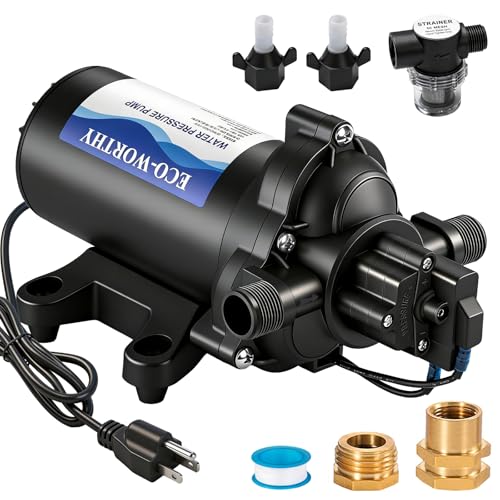
- 4.0 GPM diaphragm-pump capacity
- Automatic 45–70 PSI pressure range
- 110V AC operation with thermal protection
Best For: RV, marine, faucet, and light irrigation applications
Best Shallow-Well Pump Package
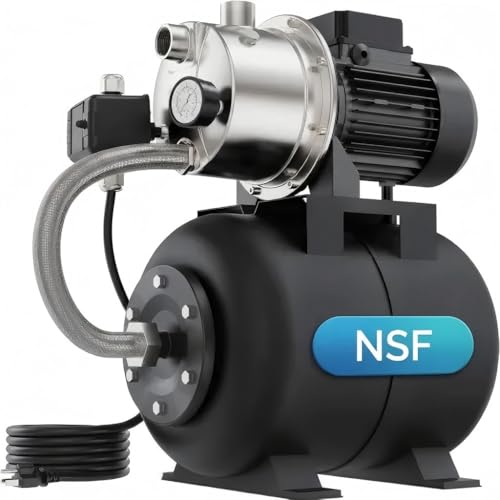
- 1.6 HP pump with 5-gallon pressure tank
- 20/40 PSI automatic pressure switch
- Stainless steel, NSF-certified housing
Best For: Shallow wells, homes, cabins, farms, and irrigation systems
Best High-Flow On-Demand Booster

- 5.5 GPM diaphragm-pump flow
- 70 PSI automatic pressure switch
- 110V AC with thermal overload protection
Best For: Irrigation, cleaning, outdoor projects, and higher-flow utility use
Best Pressure-Tank System
1.5HP Shallow Well Booster Pump
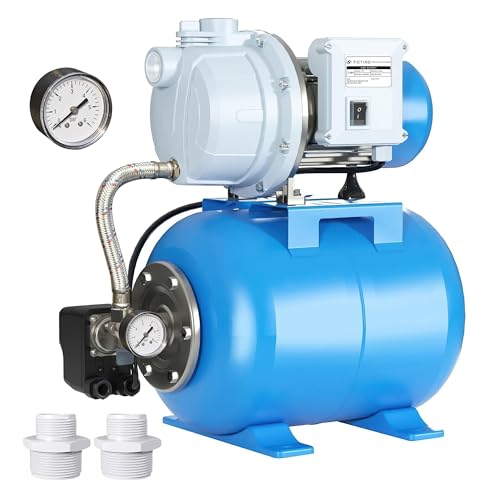
- 5-gallon tank with automatic pressure control
- 1,340 GPH flow and 164-foot maximum lift
- Overheat protection and three-year service
Best For: Home supply, irrigation, farms, and cabins
Best Tanked Booster
VEVOR 1.6 HP Shallow Well Pump
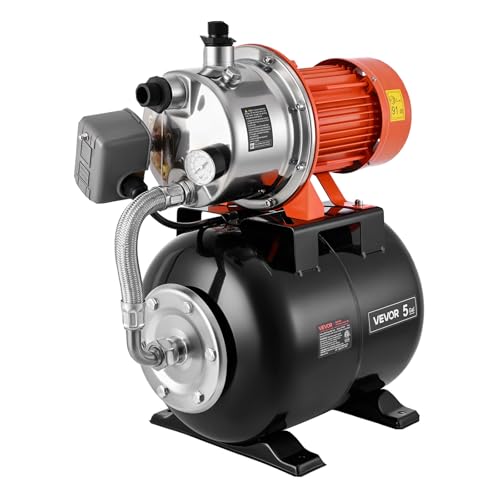
- 1,320 GPH flow and 164-foot maximum head
- 5-gallon tank with 20/40 PSI switching
- Stainless steel head and thermal protection
Best For: Tanked household and irrigation boosting
Best Compact Inline Option
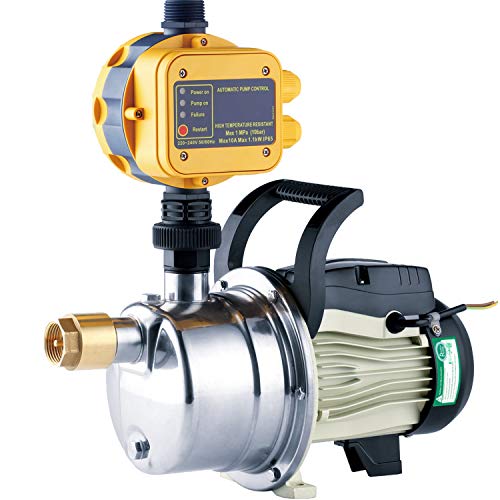
- 17 GPM flow and 131-foot maximum lift
- Automatic activation when water runs
- Works as a booster or shallow-well jet pump
Best For: Residential and garden water boosting
Best Integrated Constant-Pressure Option – Aquastrong Smart 45
For homeowners comparing water pressure booster pumps for well systems, the Aquastrong Smart 45 stands out as an integrated constant-pressure solution. Its variable-speed control automatically adjusts output based on demand, with adjustable pressure from 22 to 80 PSI and shallow-well support up to 26 feet.
Best For: Homes, apartments, shallow wells, tanks, and users who want steady pressure with automated controls.
Pros:
- Maintains constant pressure across household taps.
- Adjustable 22–80 PSI range, with up to 1,500 GPH flow and 150-foot maximum head.
- Quiet 55 dB(A) operation with dry-run, leak, overheating, and blockage protection.
- Integrated design includes a maintenance-free pressure tank and check valve.
Cons:
- Its shallow-well capability is limited to 26 feet.
- More specialized than a basic transfer or diaphragm pump.
The Smart 45 is a strong choice when consistent household pressure matters more than the simplest possible setup. Its automatic protections and variable-speed motor add convenience, while the integrated construction can help simplify installation.
Best Compact RV and Utility Pick – ECO-WORTHY 33-Series
The ECO-WORTHY 33-Series is a compact 110V diaphragm pump for buyers who need practical water pressure boosting without a marine battery. It delivers 4.0 GPM, turns on demand at a 50 PSI setting, and can self-prime up to 9.8 vertical feet.
Best For: RVs, boats, marine applications, garden irrigation, faucets, and compact utility installations.
Pros:
- Runs from standard 110V AC power and draws up to 1.3 amps.
- Automatic pressure switch starts and stops the pump as faucets open and close.
- Adjustable pressure range of 45–70 PSI.
- Includes thermal overload protection and garden hose adapters.
Cons:
- Its 9.8-foot self-priming limit is less suitable for deeper wells.
- Provides less flow than the larger 5.5 GPM ECO-WORTHY model.
This pump is best viewed as a compact on-demand booster rather than a full deep-well system. Its straightforward AC operation, automatic switching, and adaptable pressure range make it useful for mobile, recreational, and light irrigation needs.
Best Shallow-Well Pump Package – Aquastrong 1.6 HP Jet Pump
For shallow-well water pressure booster pumps for well systems, this Aquastrong package combines a 1.6 HP jet pump with a 5-gallon pressure tank. The stainless steel pump supports suction up to 26 feet, reaches a 164-foot maximum head, and is designed for domestic water supply and irrigation.
Best For: Homes, cabins, farms, lawn irrigation, and shallow wells requiring a traditional pressure-tank setup.
Pros:
- Stainless steel housing provides corrosion resistance and NSF certification for drinking-water applications.
- Pressure switch automatically starts at 20 PSI and stops at 40 PSI.
- Includes a 5-gallon pressure tank, pressure gauge, adapters, and PTFE tape.
- Features overload shutdown, a waterproof switch, and a two-year warranty.
Cons:
- Limited to shallow-well suction up to 26 feet.
- The larger tank-and-pump assembly requires more installation space than compact boosters.
- The pump must be primed before startup and protected from freezing.
This is the most complete conventional well-pump package in the group. Its pressure tank, gauge, automatic switch, and included fittings make it a practical fit for buyers who prefer a familiar jet-pump arrangement for household or irrigation use.
Best High-Flow On-Demand Booster – ECO-WORTHY 5.5 GPM
The ECO-WORTHY 5.5 GPM diaphragm pump is a useful option for water pressure booster pumps for well systems when higher flow and on-demand operation are priorities. Its 110V AC motor supplies up to 5.5 GPM, uses a 70 PSI pressure switch, and self-primes up to 9.8 vertical feet.
Best For: Garden irrigation, cleaning, outdoor projects, RV use, and applications needing more flow than a compact 4.0 GPM pump.
Pros:
- Provides up to 5.5 GPM for irrigation, spraying, and cleaning tasks.
- Automatic on-demand operation supplies water when a faucet opens and stops when it closes.
- 70 PSI pressure setting can be adjusted to suit the application.
- Thermal overload protection disconnects the circuit if the motor overheats.
Cons:
- Self-priming is limited to 9.8 vertical feet, so it is not intended for deep-well lifting.
- Its pressure-switch design is better suited to utility and outdoor tasks than precise whole-house constant pressure.
Choose this model when flow capacity is more important than a complete pressure-tank system. It is a compact, corded pump for outdoor water delivery, cleaning, and irrigation, with automatic switching to reduce unnecessary runtime.
Best Pressure-Tank System – 1.5HP Shallow Well Booster Pump
For homeowners comparing water pressure booster pumps for well systems, the FOTING combines a 1.5HP motor with a 5-gallon pressure tank for automated pressure management. Its 1,340 GPH flow rate, 23-foot suction capability, and 164-foot maximum lift suit domestic water supply and irrigation applications.
Best For: Home water boosting, lawn and garden irrigation, farms, and cabins needing a pressure-tank setup.
Pros:
- Pressure tank and automatic switch help maintain water pressure.
- 1.5HP motor delivers up to 1,340 GPH and 164 feet of lift.
- Overheat protection and corrosion-resistant construction support durability.
- Includes a pressure gauge, two adapters, and three-year after-sale service.
Cons:
- Requires priming with water before first use.
- Its 17-by-10.5-by-20-inch size may require dedicated installation space.
- Uses corded 115V power and 1-inch NPT connections.
This is the most complete choice for buyers who want automatic pressure storage rather than a pump-only design. Confirm the electrical supply, fittings, and installation space before purchase.
Best High-Flow Utility Option – 1.5HP Automatic Booster Pump
This 1.5HP model is a versatile contender among water pressure booster pumps for well systems, offering up to 1,600 GPH and a stated 120-foot maximum lift. Its mechanical pressure switch provides automatic start and stop operation without relying on complex electronic controls.
Best For: Shower and faucet boosting, irrigation, basement or rainwater drainage, pool circulation, and emergency water transfer.
Pros:
- High 1,600 GPH flow rate for household and utility tasks.
- Mechanical pressure switch automatically starts and stops the pump.
- Self-priming design is intended to simplify setup.
- Built-in overheat and dry-run protection help reduce motor damage risk.
Cons:
- Pressure settings cannot be custom adjusted.
- The supplied information gives different head figures in the listing title and bullets; verify the expected operating requirements.
- At about 7.19 kg, it is less portable than smaller utility pumps.
Choose this pump when automatic mechanical control and broad utility use matter more than adjustable pressure settings. Double-check the required head and installation configuration before ordering.
Best Adjustable Compact Choice – 1/2HP On-Demand Booster Pump
For smaller residential applications, this 1/2HP on-demand pump offers a practical approach to water pressure booster pumps for well systems. It supplies up to 14 GPM, automatically responds to water flow, and includes an adjustable pressure control for tailoring output to the system.
Best For: Home water pressure boosting, garden hose pressure support, lawn sprinklers, and emergency water supply.
Pros:
- 14 GPM flow rate and up to 105 feet of lift according to the product bullets.
- Automatic controller starts with water flow and shuts down during dry pumping.
- Built-in adjustment screw allows pressure fine-tuning.
- Standard 1-inch ports, 110V plug, and 6.5-foot cable support straightforward setup.
Cons:
- Inlet must use a reinforced suction hose; an ordinary soft garden hose may collapse.
- Its 1/2HP motor has less power than the two 1.5HP alternatives.
- Warranty coverage is 180 days.
This is a sensible fit when you need automatic operation and adjustable pressure in a smaller home or irrigation setup. The reinforced inlet hose requirement is essential for reliable suction and should be included in the installation plan.
Best Tanked Booster – VEVOR 1.6 HP Shallow Well Pump
For buyers comparing water pressure booster pumps for well systems, this VEVOR model stands out when you want an integrated pressure tank and substantial flow for irrigation or household water use. Its 1.6 HP motor delivers up to 1,320 GPH, while the 5-gallon tank helps reduce frequent cycling.
Best For: Home water boosting, lawn and garden irrigation, and small-farm water transfer where a tanked above-ground pump is suitable.
Pros:
- Up to 1,320 GPH flow and a 164-foot maximum head.
- Five-gallon pressure tank with automatic 20/40 PSI pressure switching.
- 304 stainless steel pump head resists corrosion and wear.
- Thermal overload protection helps protect the motor during abnormal heat or water shortages.
Cons:
- Designed for clean water only.
- Requires a foot valve and inlet filter screen; the manufacturer cautions against using a hose at the inlet.
- Its 31.3-pound, above-ground design may be more pump than smaller installations need.
The built-in tank and automatic pressure control make this a practical choice for users who want steadier operation and fewer pump starts. Proper inlet installation and regular line cleaning are important for maintaining pressure.
Best Compact Inline Option – 3/4 HP Automatic Booster Pump
This 3/4 HP model is a straightforward option among water pressure booster pumps for well systems, offering automatic activation when water runs. Its 17 GPM flow rating and 131-foot maximum lift suit residential water supply, garden irrigation, and shallow-well applications.
Best For: Homes, cottages, farms, gardens, and domestic wells needing an automatic inline booster or conventional shallow-well jet pump.
Pros:
- 17 GPM flow rating with a 131-foot maximum lifting height.
- Automatic activation when water demand begins.
- Stainless steel construction and easy priming.
- Includes a check valve, handle, and Teflon tape.
Cons:
- The controller does not automatically shut the pump off; manual unplugging is required to stop it.
- Inlet and outlet connections must be tightened properly to prevent O-ring leakage.
- Warranty coverage is listed as 180 days.
This pump offers useful versatility for residential boosting and shallow-well transfer, but its control behavior requires attention. Buyers should plan for manual power shutoff and carefully seal both water connections during installation.
Best Portable 1 HP Booster – TDRRICH Automatic Controller Pump
The TDRRICH combines a 1 HP motor with a detachable pressure controller, making it a flexible choice among water pressure booster pumps for well systems. It is rated for up to 1,080 GPH and a 150-foot maximum head, with features intended for household supply, shallow wells, and irrigation.
Best For: Portable household, garden, cottage, farm, and shallow-well applications that benefit from automatic control and a carry handle.
Pros:
- 1 HP copper-core motor with 1,080 GPH maximum flow and 150-foot head.
- Controller provides automatic operation, dry-run prevention, overcurrent protection, and thermal overload protection.
- Detachable controller supports flexible installation.
- Stainless steel pump head, aluminum body, carry handle, and waterproof on/off switch.
Cons:
- The supplied notes do not specify a flow-pressure curve or pressure-switch settings.
- It is intended for above-ground use rather than a submersible installation.
- The listed warranty is 180 days.
Its portable format and protective controller make this a well-rounded option when installation flexibility matters. The stated 140°F maximum operating temperature also supports warm-water circulation and irrigation uses, subject to appropriate system design.
How We Picked the Best Water Pressure Booster Pumps for Well Systems
We compared these pumps by rated pressure, flow, horsepower, voltage, pump style, automation, and intended use. We also considered whether each model is designed for whole-house boosting, shallow-well service, irrigation, transfer work, or mobile applications. A pump’s advertised maximum is not the same as its pressure at every fixture, so installation conditions and pipe size remain important.
Models with pressure tanks or automatic controllers can provide more convenient operation, while on-demand diaphragm pumps may suit smaller systems or intermittent water use. Stainless-steel construction, included adapters, self-priming operation, and thermal or dry-run protection can also affect long-term practicality.
Quick Comparison
- Whole-house pressure boosting: Look first at automatic variable-speed or controller-equipped pumps designed for continuous household demand.
- Shallow wells and irrigation: Jet pumps with pressure tanks are better suited to drawing and distributing water from shallow sources.
- Portable or RV use: Compact diaphragm pumps with hose adapters simplify temporary connections and moderate flow demands.
- High-flow outdoor use: Prioritize gallons per minute, maximum head, and duty-cycle ratings over pressure alone.
Key Buying Factors for Water Pressure Booster Pumps for Well Systems
Pressure, Flow, and Head
Pressure is measured in PSI, while flow is measured in gallons per minute. A pump rated for high PSI may not deliver that pressure at its maximum flow. Maximum head indicates how far the pump can move water vertically, but real performance is reduced by pipe friction, fittings, filters, elevation, and simultaneous usage.
Pump Type and System Compatibility
Inline booster pumps are useful when an existing water source already supplies water but lacks pressure. Shallow-well jet pumps are intended to lift water from relatively shallow sources and commonly pair with a pressure tank. Diaphragm pumps are compact and convenient for on-demand transfer or RV-style systems, but they may not replace a properly sized well pressure system.
Controls, Tank Size, and Installation
Automatic controllers can start and stop the pump as fixtures open and close. A pressure tank reduces cycling and can help extend pump life. Verify inlet and outlet sizes, electrical requirements, priming instructions, check-valve placement, and whether the pump is approved for potable water. Electrical installation should follow local codes and, when necessary, be completed by a qualified professional.
Who Should Buy Which Water Pressure Booster Pumps for Well Systems?
Choose an automatic whole-house booster for inconsistent household pressure or multiple fixtures operating at once. Select a shallow-well pump with a pressure tank for a home, garden, or irrigation setup drawing from a shallow water source. A compact diaphragm model is a practical choice for RVs, transfer tasks, and smaller intermittent applications. For lawn irrigation or demanding outdoor use, compare flow rate and maximum head carefully, and confirm that the pump can handle the required duty cycle.
Before ordering, measure your source depth, operating pressure, pipe connections, and available voltage. Proper sizing matters more than choosing the pump with the largest headline PSI or horsepower rating.