Choosing the right battery monitor can make the difference between guessing and knowing exactly how much power you have left. The best models do more than show voltage—they help you track current, state of charge, and real-time battery performance.
Below, we’ve rounded up 10 of the best battery monitors for 2026, with options for smart app control, high-amperage systems, and straightforward displays for everyday use.
Best 10 Battery Monitors Picks for 2026
Smart Shunt
Victron Energy SmartShunt 500A Bluetooth Battery Monitor

- Bluetooth app with instant battery data
- Accurate shunt readings for key metrics
- Works with other Victron smart devices
Best For: Connected off-grid, marine, and RV battery systems
Value Monitor
QWORK 8V-80V Battery Monitor with 13 ft Cable

- Real-time voltage, current, and SOC tracking
- Long cable helps flexible installs
- Backlit LCD for easier reading
Best For: RV, caravan, and off-grid users who want simple monitoring
Smart Display
Victron BMV-712 Bluetooth Battery Monitor
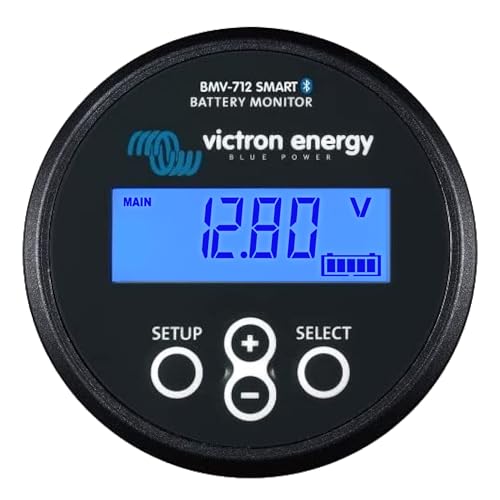
- Display plus Bluetooth monitoring
- Extra input for temp, midpoint, or second battery
- Charts and remote monitoring support
Best For: Users who want a display and app-connected battery monitor
Car Guard
ANCEL BM200 Bluetooth 12V Battery Monitor

- Tracks 12V lead-acid and lithium batteries
- Includes cranking and charging tests
- App alerts with trip history and records
Best For: Drivers wanting a Bluetooth battery checker for 12V vehicles
Bluetooth Smart Monitor
Victron BMV-712 Smart Battery Monitor

- Bluetooth monitoring with display and in-app insights
- Tracks SOC, voltage, current, and time remaining
- Additional input and programmable relay add flexibility
Best For: Boat, RV, and off-grid systems needing detailed monitoring
Bluetooth App Monitor
ANCEL BM300 Pro Battery Monitor
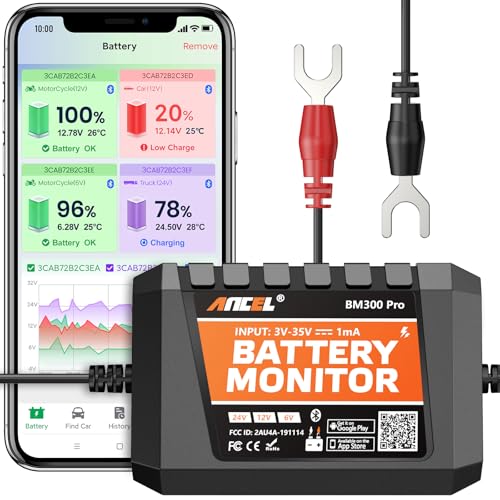
- Works with 6V, 12V, and 24V systems
- App shows voltage, SOC, temperature, and test results
- Stores 72 days of history and draws about 1mA
Best For: Drivers and DIY users wanting low-draw phone-based monitoring
Shunt Power Monitor
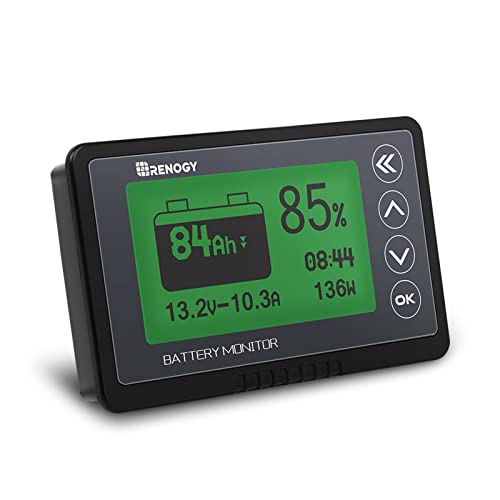
- Shunt-based design for accurate voltage and current readings
- Works with many battery types, including LiFePO4 and AGM
- Includes high/low alarms and a backlit display
Best For: 12V, 24V, and 48V systems needing accurate shunt monitoring
Bluetooth Smart Shunt

- Bluetooth app shows real-time battery data
- Adjustable alarms help protect the system
- Historical data supports troubleshooting
Best For: People who want app-based monitoring and data logs
LCD Shunt Monitor
AILI TR16 500A Battery Monitor

- Real-time SOC, voltage, current, and capacity
- Works with 8V-120V systems and many battery types
- Includes shunt, cable, and manual for DIY installs
Best For: DIY users needing a dependable shunt-based monitor
Smart Shunt – Victron Energy SmartShunt 500A Bluetooth Battery Monitor
If you want battery monitors that give detailed system insight without a bulky display panel, the Victron SmartShunt is a strong fit. It uses precision shunt technology and sends live battery data to the VictronConnect app, where you can check state of charge, voltage, current, amp hours, and more at a glance.
Best For: Off-grid, marine, automotive, and RV users who want app-based battery monitoring with smart integrations.
Pros:
- Bluetooth app shows detailed battery data instantly on your phone.
- Accurate shunt-based readings include state of charge, time remaining, and charge cycles.
- Can share battery data with other Victron devices through VE.Smart Networking.
- Aux connection can support a second battery, midpoint monitoring, or a temperature sensor.
Cons:
- Requires use of the Victron app or other compatible system components for full value.
- No built-in screen, so phone access is important.
Overall, this is a versatile choice if you want one of the more capable battery monitors for connected systems. It is especially appealing when you care about remote visibility, smart charging coordination, and flexible installation.
Value Monitor – QWORK 8V-80V Battery Monitor with 13 ft Cable
For buyers comparing battery monitors on a budget, the QWORK unit focuses on the essentials: voltage, current, and state of charge in a compact panel-mount design. The external shunt and long 13 ft cable make it practical for RVs, caravans, motorhomes, and off-grid setups where the display and battery bank may be separated.
Best For: Practical high-current battery monitoring in RVs, mobile setups, and off-grid power systems.
Pros:
- Tracks voltage, charge/discharge current, and state of charge in real time.
- Includes a reinforced external shunt for demanding electrical systems.
- Long 13 ft cable helps with flexible installation.
- Backlit LCD makes values easier to read in low light.
Cons:
- Display and feature set are more basic than premium smart monitors.
- Current rating details in the listing are not as straightforward as the shunt’s stated capability.
This is a sensible pick if you want straightforward battery monitoring with a simple interface. It covers the core numbers well and is built for users who value practical installation over advanced smart-system integration.
Smart Display – Victron BMV-712 Bluetooth Battery Monitor
The Victron BMV-712 is one of the more feature-rich battery monitors if you want both a display and Bluetooth access. It tracks core battery data, shows historical charts in VictronConnect, and includes an extra programmable input for temperature, midpoint voltage, or a second battery.
Best For: Users who want a display-equipped battery monitor with Bluetooth, history, and programmable extra input.
Pros:
- Built-in display shows state of charge, voltage, current, and time remaining.
- Bluetooth support lets you monitor and view charts on phones and tablets.
- Additional input can measure temperature, midpoint voltage, or a second battery.
- Can connect to GX devices for broader remote monitoring via VRM.
Cons:
- Installation should be done carefully, and the listing warns that incorrect installation can be hazardous.
- More complex than a basic battery gauge.
For buyers who want a more complete monitoring setup, this model offers a strong mix of onboard visibility and app-based convenience. It is well suited to systems where you want detailed readings plus the option to expand what the monitor can track.
Car Guard – ANCEL BM200 Bluetooth 12V Battery Monitor
If you need battery monitors for a 12V vehicle, the ANCEL BM200 is aimed at everyday car and travel use. It combines battery status tracking with cranking and charging tests, plus app alerts and trip records, so you can catch problems before they turn into a no-start situation.
Best For: 12V car, motorcycle, truck, RV, and boat owners who want app-based battery and charging alerts.
Pros:
- Monitors 12V lead-acid and lithium batteries with real-time data.
- Includes cranking and charging system tests for vehicle checks.
- Bluetooth app supports alerts, trip records, and up to four devices.
- IP67 waterproof design with reverse polarity and short-circuit protection.
Cons:
- Designed specifically for 12V vehicles, so it is not a universal high-voltage monitor.
- Seek car location feature depends on GPS permissions.
This is a convenient choice if your main goal is to watch one or more 12V vehicles from your phone. It leans more toward vehicle health and alerting than multi-bank power-system management, which makes it a good fit for drivers who want simple, connected protection.
Bluetooth Smart Monitor – Victron BMV-712 Smart Battery Monitor
If you want battery monitors with detailed system insight, the Victron Energy BMV-712 is built for tracking voltage, state of charge, current, energy/time remaining, and historical trends. Its Bluetooth connectivity makes it easy to check readings from a phone or tablet, while the display and VE.Direct support add flexibility for more advanced setups.
Best For: Boat, RV, and off-grid users who want a feature-rich monitor with Bluetooth and a display.
Pros:
- Tracks state of charge, voltage, current, and time remaining on the display.
- Built-in Bluetooth lets you monitor batteries from smartphones and tablets.
- Additional input can measure temperature, midpoint voltage, or a second battery.
- Programmable relay can be used to control other devices.
Cons:
- Installation can be hazardous and should follow electrical codes.
- VE.Direct cable for GX device connection is sold separately.
The BMV-712 is a strong pick if you want more than a basic readout and value app-based monitoring alongside a physical display. It leans toward users who want deeper battery system data and flexible configuration.
Bluetooth App Monitor – ANCEL BM300 Pro Battery Monitor
The ANCEL BM300 Pro is one of the more practical battery monitors for drivers who want live app data without a complicated setup. It handles 6V, 12V, and 24V systems, shows voltage, estimated state of charge, and temperature, and can also record cranking and charging tests on supported 12V and 24V systems.
Best For: Vehicle owners who want a low-draw Bluetooth monitor for one battery or multiple vehicles.
Pros:
- Supports 6V, 12V, and 24V systems with app-based readings.
- Can store up to 72 days of history and sync when you reconnect.
- Very low average current draw of about 1mA for permanent installs.
- IP67 housing and reverse-polarity protection suit engine-bay use.
Cons:
- Bluetooth range is limited; it is not remote cellular monitoring.
- Cranking and charging tests are not supported on 6V systems.
This monitor makes sense if you want simple, long-term battery tracking from your phone and do not need Wi-Fi or cellular access. The ability to add up to four monitors in the app also makes it useful for users managing multiple batteries.
Shunt Power Monitor – Renogy 500A Battery Monitor
Among battery monitors, the Renogy 500A model is aimed at users who want a shunt-based system for more accurate current and voltage measurement. It displays voltage, current, consumed power, battery capacity, and degradation rate, and it adds programmable high and low capacity alarms to warn you before over-discharge becomes a problem.
Best For: Users who need accurate shunt-based monitoring for 12V, 24V, or 48V battery systems.
Pros:
- Shunt design provides more accurate real-time voltage and current readings.
- Compatible with Lead Acid, AGM, GEL, LiFePO4, lithium-ion, and NiMH batteries.
- Shows multiple parameters, including consumed power and battery capacity.
- Includes high and low capacity alarms with a backlit display.
Cons:
- Minimum operating voltage starts at 10V.
- Wired installation may take more effort than clip-on style monitors.
This is a strong choice for users who want a more complete electrical picture rather than just a quick voltage check. The included 20-foot shielded cable and shunt holder also make it easier to set up in larger battery compartments or remote display locations.
Bluetooth Smart Shunt – LiTime 500A Battery Monitor
If you want battery monitors that make it easier to track power use in real time, this LiTime smart shunt is built for app-based monitoring across a wide range of battery systems. It shows charge and discharge current, voltage, power, and state of charge, while also logging historical data for better planning and troubleshooting in RV, marine, and home backup setups.
Best For: Users who want Bluetooth app monitoring and history tracking for RV, marine, or backup batteries.
Pros:
- Bluetooth app displays current, voltage, power, and SOC in real time
- Adjustable alerts for low capacity, temperature, over-voltage, under-voltage, and over-current
- Historical data helps review discharge capacity, cycle counts, and voltage highs/lows
- Works with 8V-120V systems and many battery types, including lithium, LiFePO4, AGM, flooded, and gel
Cons:
- Requires use of a mobile app for full monitoring features
- More advanced than a basic screen-only battery monitor
This is a strong pick if you value remote visibility and data logging over a simple display. The combination of Bluetooth monitoring, alerts, and broad voltage compatibility makes it well suited to multi-purpose battery setups.
Color Screen RV Monitor – LNEX 500A Battery Monitor
For buyers comparing battery monitors for a clear dashboard-style readout, this LNEX model focuses on visibility and convenience. Its 3.5-inch color screen shows voltage, battery percentage, charging or discharging current, remaining time, and history charts, while the 16ft cable makes it easier to place the display where you can actually see it.
Best For: Users who want a large color display and a long cable for easy viewing in RVs, boats, or vehicles.
Pros:
- 3.5-inch backlit color screen is easy to read at a glance
- Stores the latest data during shutdown to avoid losing readings
- Programmable alarms and flashing backlight help warn against over-discharge
- 16ft shielded cable adds placement flexibility for remote monitoring
Cons:
- More focused on display clarity than app-based monitoring
- Large screen unit may be less compact than simpler monitors
This is a practical choice if you want an easy-to-read, hardwired battery monitor with helpful alerts and saved data. The adjustable brightness and broad battery compatibility make it especially useful for everyday installed systems.
LCD Shunt Monitor – AILI TR16 500A Battery Monitor
If you need battery monitors that work like a fuel gauge for a battery bank, the AILI TR16 gives you real-time state of charge, voltage, current, and remaining capacity. It uses a precision shunt for coulomb counting and supports a wide range of battery types and system voltages, making it a versatile fit for off-grid and mobile power setups.
Best For: DIY users who want a straightforward shunt monitor for RV, solar, marine, or backup battery banks.
Pros:
- Shows SOC, voltage, current, and remaining capacity in real time
- Supports 8V-120V systems and multiple battery chemistries
- Backlit LCD is easy to read and has ultra-low standby draw
- Includes shunt, extension cable, and manual for DIY installation
Cons:
- Wired display setup is less flexible than Bluetooth app monitoring
- Capacity settings may need manual programming for your battery bank
This model is a solid all-around option if you want accurate shunt-based readings without extra app complexity. Its low power draw, memory retention, and included installation parts make it practical for many everyday battery systems.
How We Picked These Battery Monitors
We focused on Battery Monitors that offer practical accuracy, useful display data, and compatibility with common 6V, 12V, 24V, and higher-voltage systems. We also looked for models with shunts rated for real-world loads, clear setup requirements, and features that matter to everyday buyers, such as Bluetooth connectivity, cable length, and state-of-charge tracking.
Quick Comparison: Which Type Fits Your Setup?
If you want app-based visibility and remote checking, Bluetooth smart shunt models are a strong fit. If you prefer a simple mounted display, a screen-based monitor can be easier to use on the dash, in an RV, or near a power cabinet. For automotive use, compact testers may be enough; for RV, marine, and off-grid systems, a full shunt-based monitor is usually the better choice.
Key Buying Factors for Battery Monitors
Voltage and System Compatibility
Make sure the monitor matches your battery bank voltage. Some Battery Monitors are built for 6V, 12V, or 24V systems, while others support a wider range. Mismatched voltage ratings can make the readings unreliable or the unit unusable.
Current Capacity and Shunt Rating
Check the maximum amperage the shunt can handle. A 500A battery monitor is common for RVs, boats, and solar installations, but smaller vehicle setups may not need that much capacity. Choosing enough headroom helps maintain accurate readings under load.
Display Style and Visibility
Some buyers want a color screen with live readings at a glance, while others prefer Bluetooth monitoring through a phone. Think about where the monitor will be installed and whether you’ll check it from inside the vehicle, at a panel, or remotely.
State-Of-Charge Accuracy
For meaningful battery monitoring, look for models that track amp-hours, current flow, and state of charge rather than voltage alone. This is especially important with LiFePO4 and other lithium batteries, where voltage can be less informative than a shunt-based readout.
Who Should Buy Which Battery Monitors?
RVers, boat owners, and off-grid solar users should usually prioritize shunt-based Battery Monitors with strong current capacity and clear state-of-charge data. Drivers who mainly want a quick battery health check may prefer a compact Bluetooth tester. If you want the easiest everyday visibility, choose a model with a built-in display; if you value flexibility and remote access, go Bluetooth. The best Battery Monitors are the ones matched to your system size, battery chemistry, and how you actually check power day to day.