The best camping stoves for backpacking balance low weight, reliable ignition, fuel efficiency, and enough cooking power for your meals. The right choice depends on whether you prioritize minimum pack weight, rapid boiling, wind resistance, or fuel flexibility.
We’ve selected 10 backpacking-friendly options spanning compact canister burners, integrated cooking systems, wood-burning designs, and larger portable stoves. Use the guide below to narrow the list by trip style, cookware, and fuel preference.
Best 10 Camping Stoves for Backpacking Picks for 2026
Ultralight Canister Pick

- 2.6-ounce compact folding design
- Boils 1 liter in about 3.5 minutes
- Adjustable flame and included case
Best For: Minimalist backpackers using threaded canisters
Easy-Ignition Value Pick

- 85-gram ultralight design
- Built-in piezo igniter and micro windshield
- Compact, fuel-efficient canister stove
Best For: Backpackers wanting lightweight ignition convenience
Natural-Fuel Pick

- Burns dry natural materials instead of canisters
- 6.8-ounce titanium construction
- Collapses to about 0.2 inches thick
Best For: Canister-free trips with available wood fuel
Dual-Fuel Emergency Pick
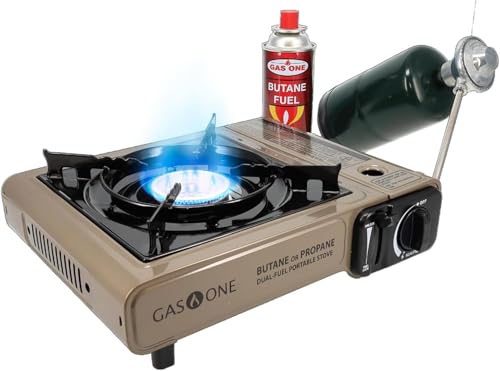
- Accepts butane or propane fuel
- Automatic piezo ignition
- Built-in butane safety mechanisms
Best For: Emergency kits and car-supported camping
Rugged Windproof Split Burner

- 15,000 BTU burner with separated 39.4-inch hose
- Supports cookware up to 55 pounds
- Folds into an included EVA protective case
Best For: Winter camping and heavy-cookware backcountry setups
Fast-Boil Integrated System

- Boils 16 ounces in about 2 minutes
- Turn-and-click automatic ignition
- 1-liter cup nests the stove components
Best For: Solo hikers focused on quick meals and hot drinks
Ultralight Canister Burner

- Weighs only 25 grams
- Produces 2700 watts of heat
- Nests with a 110-gram canister in a 750ml pot
Best For: Minimalist backpackers prioritizing the lowest possible weight
Ultralight Value Pick
Compact AOTU Backpacking Stove

- 3,000-watt output with adjustable flame control
- Wind-resistant aluminum burner with stable support
- 3.84-ounce design with included storage case
Best For: Solo hikers and small groups needing a lightweight stove
High-Power Windproof Pick

- 3,500-watt burner rated to boil 1 liter in about 3 minutes
- Windshield design improves performance in breezy conditions
- Folding build, piezo ignition, and two connector types
Best For: Campers wanting higher output and fuel flexibility
Simple Pocket-Sized Pick

- 0.24-pound aluminum stove with compact storage box
- 3,000-watt output and adjustable rotary valve
- Piezo ignition with cookware support up to 8 inches
Best For: Minimalist backpackers using small cooking pots
Ultralight Canister Pick – MSR PocketRocket 2
MSR PocketRocket 2 Ultralight Camping and Backpacking Stove | Backcountry super hero.
Check Price On AmazonFor backpackers who want compact, dependable cooking gear, the MSR PocketRocket 2 is a standout among camping stoves for backpacking. It weighs just 2.6 ounces, folds small, and boils a liter of water in about 3.5 minutes.
Best For: Minimalist backpackers, hikers, and travelers using threaded isobutane-propane canisters.
Pros:
- Very light at 2.6 ounces and compact when folded.
- Fast boiling with adjustable heat for simmering or boiling.
- Requires no priming, preheating, or pressurizing.
- Includes a protective hard-shell case.
Cons:
- Fuel canister is not included.
- Designed for threaded isobutane-propane fuel rather than wood or liquid fuel.
The PocketRocket 2 is a strong choice when low pack weight and quick setup matter most. Its folding pot supports and adjustable flame also give it useful flexibility for more than simple water boiling.
Easy-Ignition Value Pick – Fire-Maple Greenpeak 1
The Fire-Maple Greenpeak 1 combines low weight with convenient features, making it a practical option among camping stoves for backpacking. Its 85-gram design folds down compactly and includes a built-in piezo igniter and micro windshield.
Best For: Backpackers and outdoor users who want a lightweight gas stove with integrated ignition.
Pros:
- Lightweight 85-gram, 3-ounce construction.
- Built-in piezo ignition avoids carrying a separate lighter for normal startup.
- Fuel-efficient design and micro windshield support outdoor cooking.
- Folds to approximately 2.1 by 2.8 inches.
Cons:
- Fuel is not included.
- Not compatible with the Z1 adapter.
- Best paired with the G3 pot for the intended user experience.
Choose the Greenpeak 1 if convenience is a priority without giving up a compact pack size. Its EN417 valve and isobutane fuel type suit compatible canister-based backpacking setups.
Natural-Fuel Pick – Kuvik Titanium Wood Stove
The Kuvik Titanium Wood Stove offers a different approach to camping stoves for backpacking by burning available natural materials instead of carried canisters. Made from Grade-1 titanium, it weighs 6.8 ounces and collapses nearly flat for transport.
Best For: Backpackers and preparedness users who prefer burning dry twigs, sticks, grass, roots, or bark.
Pros:
- Uses organic fuel found around camp, eliminating fuel canisters.
- Ultralight titanium construction weighs about 6.8 ounces.
- Collapses to roughly 0.2 inches thick for efficient packing.
- Includes a carrying case to help contain soot.
Cons:
- Requires suitable dry natural fuel at the campsite.
- Needs assembly by fitting tabs into slots.
- Wood burning can be less convenient than a push-button canister stove.
This stove makes the most sense for trips where natural fuel is available and avoiding fuel canisters is valuable. Its flat-folding titanium design is particularly useful for ultralight packs, bug-out bags, and emergency kits.
Dual-Fuel Emergency Pick – Gas One GS-3400P
The Gas One GS-3400P is a portable dual-fuel option, but its 3.1-pound weight makes it better suited to car camping and emergency preparedness than lightweight backpacking. It accepts either butane or propane and includes automatic piezo ignition.
Best For: Emergency kits, base camps, and portable cooking where fuel flexibility matters more than pack weight.
Pros:
- Works with both butane cartridges and propane cylinders.
- Automatic piezo ignition eliminates the need for matches or a lighter.
- Adjustable heat dial supports straightforward cooking control.
- Includes pressure-sensing and gas-flow safety features for butane use.
Cons:
- At 3.1 pounds, it is heavy for backpacking.
- Fuel is not included.
- Larger than compact backpacking canister stoves.
For conventional backpacking, this stove is difficult to justify because of its size and weight. However, its dual-fuel compatibility, carrying case, and ignition system make it a practical choice for emergency preparedness or vehicle-supported outdoor cooking.
Rugged Windproof Split Burner – Heavy-Duty Backpacking Stove
For backpackers who need a more substantial cooking setup, this camping stove for backpacking combines a 15,000 BTU burner with a long separated hose and a carbon-steel support system. Its folding design, external igniter, and included EVA case make it practical for winter trips, motorcycle touring, and rugged transport.
Best For: Winter camping, high-altitude trips, and backpackers carrying larger or heavier cookware.
Pros:
- 39.4-inch hose keeps the fuel canister away from the burner’s heat.
- Carbon-steel stand supports cookware weighing up to 55 pounds.
- Includes an external igniter, butane adapter, small pot support, and protective EVA case.
Cons:
- At 1.5 pounds, it is considerably heavier than ultralight canister stoves.
- Its larger stand and hose are less streamlined for minimal-load backpacking.
This is a strong choice when stability, wind resistance, and cookware capacity matter more than shaving every ounce from your pack. The split design and sturdy materials make it especially suited to demanding conditions.
Fast-Boil Integrated System – Jetboil Flash 1.0L
The Jetboil Flash is a convenient camping stove for backpacking when fast boiling and simple operation are priorities. Its integrated 1-liter cook cup, automatic ignition, insulated cozy, and compact nesting design create an efficient setup for hot drinks and quick meals on the trail.
Best For: Solo backpackers and hikers who mainly boil water for meals, coffee, or hot drinks.
Pros:
- Boils 16 ounces of water in about 2 minutes.
- One-step turn-and-click ignition eliminates the need for a match or lighter.
- Burner components and a 100-gram fuel canister can pack inside the 1-liter cook cup.
Cons:
- The fuel canister is sold separately.
- The integrated 1-liter format is less versatile for cooking larger meals or using different cookware.
With a 13.12-ounce listed weight and an all-in-one format, the Flash offers a practical balance of speed, organization, and ease of use. It is particularly appealing for water-based trail meals rather than elaborate cooking.
Ultralight Canister Burner – BRS-3000T Titanium Mini Stove
At just 25 grams, the BRS-3000T is a compelling camping stove for backpacking when pack weight and packed size are the main concerns. This compact canister burner delivers 2,700 watts, offers smooth flame adjustment, and can nest with a 110-gram canister inside a 750-milliliter pot.
Best For: Ultralight backpackers who want a basic, compact burner for boiling water and simple meals.
Pros:
- Extremely light at only 25 grams.
- 2700-watt output can boil 1 liter of water in approximately 2 minutes 58 seconds.
- Folding pot supports and compact nesting help conserve pack space.
Cons:
- Its minimalist design prioritizes weight savings over additional convenience features.
- It requires careful attachment to the canister, with the control valve fully closed before twisting it on.
This stove is best viewed as a functional ultralight burner rather than a full-featured cooking system. It makes sense for experienced backpackers who value minimal weight and are comfortable with a straightforward setup.
Ultralight Value Pick – Compact AOTU Backpacking Stove
For hikers seeking compact camping stoves for backpacking, the AOTU offers a lightweight aluminum build, integrated wind-resistant design, and a 3,000-watt output. It folds into a small included storage case and works with compatible EN 417 threaded fuel canisters.
Best For: Solo hikers or small groups of one to three people who prioritize low weight and easy storage.
Pros:
- Very light at 3.84 ounces.
- Adjustable valve supports high heat and simmering.
- Wind-resistant burner design and four-dimensional pot support.
- Includes a compact plastic storage box.
Cons:
- Only compatible with 7/16-thread EN 417 butane or butane-propane canisters.
- The 9.5 cm cooking surface is intended for cookware up to about 20 cm in diameter.
The AOTU is a straightforward, highly portable choice when pack weight and compact storage matter most. Confirm your fuel-canister connection before heading out.
High-Power Windproof Pick – Odoland Portable Camp Stove
The Odoland is one of the more versatile camping stoves for backpacking, combining a windproof design, piezo ignition, flame control, and two connector options. Its 3,500-watt output is rated to boil 1 liter of water in about three minutes, depending on conditions and cookware.
Best For: Backpackers and campers who want stronger heat output and broader fuel-canister compatibility.
Pros:
- 3,500-watt output for fast cooking.
- Windshield design helps reduce wind interference and fuel waste.
- Folding aluminum and stainless-steel construction with carrying case.
- Includes piezo ignition, flame control, and two connector types.
Cons:
- At 0.41 kg, it is heavier than the other listed stoves.
- Boil time varies with weather, fuel, and cookware.
The Odoland makes a sensible choice for users willing to carry a little more weight for higher power and added connector flexibility. Its included case also helps keep the folding burner organized.
Simple Pocket-Sized Pick – YCDMLJC Hiking Stove
Among compact camping stoves for backpacking, the YCDMLJC stands out for its small 0.24-pound package and straightforward operation. It has piezo ignition, adjustable gas control, stable supports, and a 3,000-watt output for outdoor cooking.
Best For: Backpackers who want a very small stove with built-in ignition and support for cookware up to 8 inches.
Pros:
- Lightweight 0.24-pound design with orange storage box.
- Piezo ignition and rotary valve simplify setup and flame adjustment.
- High-temperature-resistant aluminum alloy construction.
- Supports cookware up to 8 inches in diameter.
Cons:
- Fuel compatibility is limited to 7/16-thread EN 417 canisters.
- The product notes advise repeated ignition attempts if the piezo igniter does not light immediately.
This YCDMLJC stove is a practical minimalist option for hikers who want an easy-to-pack burner without sacrificing adjustable heat. Its small cooking platform is best matched with backpacking-sized pots.
How We Picked the Best Camping Stoves for Backpacking
We focused on stove designs that are practical for hiking and camping, considering packability, advertised weight, ignition systems, burner output, pot support, fuel compatibility, and ease of setup. We also included different stove categories because a solo fast-boil system has very different strengths from a basic canister burner or wood stove.
Specifications can vary by configuration, fuel type, and retailer, so confirm the current manufacturer details before buying. For any stove, pair the burner with compatible fuel, cookware, and a stable cooking surface.
Quick Comparison
| Stove type | Best for | Main advantage | Potential trade-off |
|---|---|---|---|
| Compact canister burner | Solo or lightweight trips | Low weight and small packed size | Less stability with large pots |
| Integrated cooking system | Fast solo boiling | Excellent efficiency and speed | Less versatile for broad cookware |
| Wood-burning stove | Fuel-flexible trips | Can use found wood | Requires dry fuel and more tending |
| Dual-fuel or hose-mounted stove | Emergency and base camping | Fuel flexibility or larger cookware support | Usually heavier and bulkier |
Key Buying Factors for Camping Stoves for Backpacking
Weight and Packed Size
For long-distance hiking, every ounce matters. Titanium burners and compact canister stoves are generally easiest to carry, while integrated systems and hose-mounted models may add weight in exchange for speed, stability, or versatility. Check the packed dimensions, not only the burner’s listed weight.
Fuel Type and Availability
Isobutane canisters are convenient and clean-burning, but availability varies in smaller towns and cold conditions can reduce performance. Wood stoves avoid carrying liquid or canister fuel when suitable dry wood is available, though they may be restricted during fire bans. Dual-fuel models offer flexibility but are commonly better suited to car camping or emergency use than ultralight treks.
Boil Speed, Simmering, and Efficiency
A high BTU rating does not automatically mean faster real-world cooking. Wind protection, heat transfer, pot design, and fuel regulation also matter. Integrated systems excel at boiling water quickly, while a burner with a controllable flame is more useful for simmering meals.
Stability and Weather Protection
Look for sturdy pot supports, a wide base, and a design that shields the flame from wind. Small ultralight burners work well with appropriately sized pots but can feel unstable under oversized cookware. Always cook on a level, nonflammable surface and follow the stove’s safety instructions.
Who Should Buy Which Camping Stoves for Backpacking?
- Ultralight solo hikers: Choose a compact titanium or canister burner when minimum weight and pack size are the priorities.
- Fast-boil users: An integrated system such as the Jetboil Flash is a strong fit for hikers who mainly heat water for drinks or dehydrated meals.
- Budget-conscious campers: A basic piezo-equipped canister stove can provide useful performance without the cost of a complete cooking system.
- Fuel-flexible travelers: Consider a wood-burning model where regulations and fuel availability make it practical, or a dual-fuel stove for broader compatibility.
- Group or emergency campers: Larger, hose-mounted, or propane-compatible stoves offer better support for bigger cookware, but their added bulk is less suitable for long backpacking trips.
Before heading out, test the ignition, inspect seals and connections, confirm fuel compatibility, and pack a lighter as backup. In cold or windy conditions, allow extra fuel and time rather than relying solely on the advertised boil performance.