The best countertop water filter can make drinking water more convenient without requiring a full under-sink installation. These options range from simple gravity dispensers and filter pitchers to reverse osmosis systems designed for more thorough filtration.
We compared capacity, filtration technology, certifications, convenience features, maintenance needs, and installation requirements to help you choose a practical match for your kitchen, office, or rental home.
Best 10 Countertop Water Filter Picks for 2026
Best Reverse Osmosis Pick
DREO Countertop RO Water Filter

- Reverse-osmosis filtration with listed 99.9% contaminant reduction
- Built-in TDS meter, filter indicator, and self-cleaning function
- Installation-free design with autofill pitcher
Best For: Shoppers wanting advanced countertop RO filtration
Best Large-Capacity Dispenser
Brita X-Large 27-Cup Water Dispenser
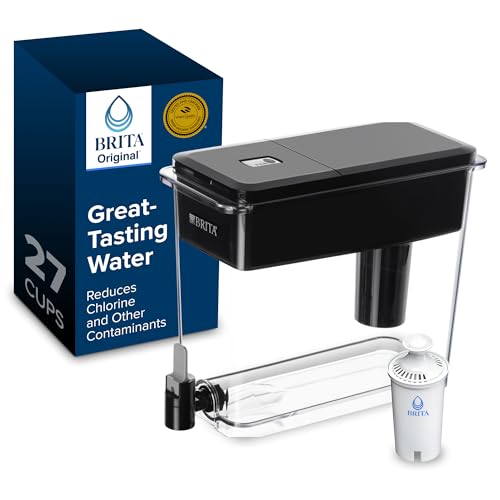
- 27-cup reservoir for fewer refills
- Fridge-friendly with locking lid and pour spigot
- Includes a Standard filter and supports Elite filters
Best For: Families needing convenient high-volume filtered water
Best Non-Electric Option
GLACIER FRESH PC04 Gravity Filter
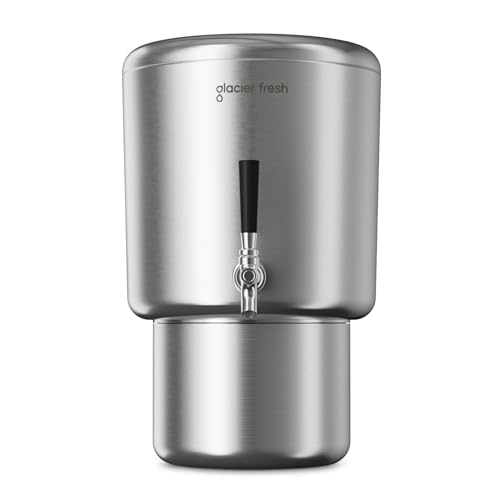
- 2.25-gallon stainless-steel gravity-fed design
- Requires no electricity, plumbing, or tools
- Listed to reduce heavy metals, PFOA, and PFOS
Best For: Families, camping, and emergency preparedness
Best Smart Filtration
Ninja HydraSense Intelligent System

- Reduces up to 80+ contaminants
- Fast one-touch dispensing
- Tracks usage and filter life
Best For: Automated, high-capacity countertop filtration
Best Countertop RO
Waterdrop C2SL Mineral RO System

- Seven-stage reverse osmosis filtration
- Adds minerals for balanced taste
- Autofills a 40-ounce glass pitcher
Best For: Small households wanting installation-free RO filtration
Best No-Power Option
Purewell 3-Stage Gravity Filter

- Electricity-free gravity filtration
- Stainless-steel 2.25-gallon design
- Includes two replaceable filters
Best For: Simple filtration without power or plumbing
High-Capacity RO Upgrade

- 600 GPD tankless reverse osmosis system
- NSF/ANSI certifications and smart TDS faucet
- 2:1 pure-to-drain ratio
Best For: High-volume under-sink filtration
Easy Faucet Filtration
Waterdrop CTF-01 Faucet Filter

- Tool-assisted faucet installation
- Five-stage filtration with high flow
- Up to 8,000 gallons or 12 months
Best For: Compatible standard faucets and rental homes
Portable RO Choice

- No plumbing or installation required
- Glass carafe with remineralization
- Filter-life and water-quality monitor
Best For: Portable countertop reverse osmosis
Best Reverse Osmosis Pick – DREO Countertop RO Water Filter
If you want a high-filtration countertop water filter without plumbing, the DREO RO system is a strong fit. Its reverse-osmosis design includes a built-in TDS meter, filter-life indicator, self-cleaning function, and an autofill pitcher.
Best For: Households seeking installation-free reverse-osmosis filtration and convenient water-quality monitoring.
Pros:
- Filters up to 99.9% of possible contaminants, including PFOA, PFOS, chlorine, and fluoride, according to the supplied product information.
- Tested by SGS against NSF/ANSI 58 standards.
- Offers a 3:1 pure-to-drain ratio, touch controls, and a built-in TDS meter.
- Supports source water with a maximum listed TDS level of 1,200 ppm.
Cons:
- Its 3-liter capacity is smaller than that of large gravity-fed dispensers.
- The filter is listed with a six-month life cycle, so replacement planning is still required.
- At 9.5 pounds, it is less portable than simpler pitcher-style filters.
The DREO is the most feature-rich option here for shoppers prioritizing broad contaminant reduction and RO filtration in a countertop format. Its compact capacity and more involved technology make it better suited to kitchens than high-volume emergency storage.
Best Large-Capacity Dispenser – Brita X-Large 27-Cup Water Dispenser
The Brita UltraMax is a practical countertop water filter for households that want a large reservoir and familiar replacement filters. Its 27-cup dispenser fits in the refrigerator and uses a precision-pour spigot for convenient serving.
Best For: Families and shared kitchens that need a high-capacity, fridge-friendly filtered-water dispenser.
Pros:
- Large 27-cup capacity reduces the need for frequent refilling.
- The included Standard filter helps reduce chlorine taste and odor, copper, mercury, and other impurities.
- Fridge-friendly design includes an easy-locking lid and precision-pour spigot.
- Compatible with both Standard and Elite Brita filters.
Cons:
- The included Standard filter should be changed about every two months or 40 gallons.
- It does not provide reverse-osmosis filtration or a built-in electronic water-quality display.
Choose the Brita when capacity, simplicity, and refrigerator storage matter more than maximum filtration. Its replaceable-filter system is straightforward, though shoppers should account for more frequent Standard-filter changes unless they switch to the compatible Elite option.
Best Non-Electric Option – GLACIER FRESH PC04 Gravity Filter
The GLACIER FRESH PC04 is a countertop water filter for shoppers who want high capacity without electricity or plumbing. Its stainless-steel gravity-fed design holds 2.25 gallons and is intended for kitchens, apartments, RVs, camping, and emergency use.
Best For: Families and emergency-preparedness buyers who want a large, non-electric countertop filtration system.
Pros:
- Gravity-fed operation works without electricity, plumbing, or tools.
- 2.25-gallon capacity is sized for households of up to four people, according to the supplied notes.
- Uses Elarisey electrosorption technology and is listed to reduce heavy metals, PFOA, and PFOS.
- Stainless-steel construction and a water inlet designed to minimize leftover water.
Cons:
- The filter cartridge is listed for up to 200 gallons or about three months, depending on water quality and use.
- The unit is larger than a typical pitcher and requires flushing with two gallons before first use.
- Gravity-fed filtration does not offer the powered, instant dispensing of an electric system.
The PC04 stands out when power independence and storage capacity are priorities. It is especially practical for backup water needs and larger households, provided you have room for its taller countertop footprint and are comfortable with gravity-fed dispensing.
Best Instant-Dispensing Pitcher – Waterdrop ED01W Electric Filter
The Waterdrop ED01W is a countertop water filter pitcher designed for fast, one-touch dispensing. Its rechargeable electric system delivers water in about one second and uses a 0.5-micron carbon-block filter for everyday kitchen use.
Best For: Apartments and kitchens where quick dispensing, compact pitcher storage, and simple operation are priorities.
Pros:
- One-touch dispensing provides filtered water in approximately one second.
- IAPMO-certified against NSF/ANSI 401, 53, 42, and 372 standards to reduce more than 45 contaminants, according to the supplied notes.
- One filter lasts up to 200 gallons or three months, depending on use and water quality.
- Rechargeable battery provides up to 30 days of standby time, with USB-C charging.
Cons:
- The rechargeable design requires charging, and the USB-C adapter is not included.
- It does not lower TDS.
- Its 3.5-liter capacity is smaller than the GLACIER FRESH and Brita dispenser capacities.
The ED01W is a convenient middle ground between a traditional pitcher and a powered dispenser. It is a good choice for fast serving and certified contaminant reduction, but shoppers specifically seeking lower TDS should consider a different Waterdrop model or an RO system.
Best Smart Filtration – Ninja HydraSense Intelligent System
The Ninja HydraSense is a convenient countertop water filter for households that want broad contaminant reduction without plumbing or installation. Its large reservoir, one-touch dispensing, and usage tracking make it especially practical for everyday drinking, cooking, coffee, and filling bottles.
Best For: Users who want highly automated filtration, fast dispensing, and reminders for filter replacement.
Pros:
- Certified to NSF/ANSI 42, 53, and 401, with reduction of up to 80+ contaminants according to the supplied product information.
- One-touch dispensing is designed to deliver filtered water up to six times faster than a standard Brita filter.
- Interactive display tracks water usage and filter status, while the 96-ounce reservoir reduces refill frequency.
- No plumbing is required, and the filter is rated for up to 120 gallons or six months.
Cons:
- It requires an electrical outlet, unlike a gravity-based system.
- The countertop footprint is relatively tall at 13.78 inches.
- Replacement timing and performance depend on usage and water conditions.
Choose the HydraSense if convenience and monitoring matter as much as filtration. It preserves natural minerals and electrolytes while offering a more automated experience than a basic pitcher-style filter.
Best Countertop RO – Waterdrop C2SL Mineral RO System
The Waterdrop C2SL is a countertop water filter built for shoppers who want reverse osmosis filtration without connecting to a faucet. Its seven-stage system, mineral-enhanced output, and autofill glass pitcher make it suited to daily drinking and kitchen use in smaller households.
Best For: One- or two-person households seeking strong RO filtration, reduced TDS, and a more balanced taste.
Pros:
- Uses a 0.0001-micron RO membrane and is tested to reduce contaminants including PFAS, microplastics, lead, chlorine, and fluoride.
- A mineral filter adds calcium, magnesium, potassium, and sodium to the filtered water.
- No plumbing, drilling, or faucet connection is required; the system uses a 108-ounce feed tank and autofills a detachable 40-ounce glass pitcher.
- Offers a 3:1 pure-to-drain ratio and filter life of up to 528 gallons or 12 months.
Cons:
- It needs electricity and produces some wastewater during RO filtration.
- The 40-ounce pitcher may require frequent serving or refilling for larger households.
- Actual filter life varies with water quality and usage.
The C2SL is a strong option when contaminant and TDS reduction are priorities but an under-sink installation is not practical. Its mineral stage helps address the flat taste some users associate with reverse osmosis.
Best No-Power Option – Purewell 3-Stage Gravity Filter
The Purewell 3-Stage system is a countertop water filter for shoppers who prefer simple, electricity-free operation. Its gravity-fed design, stainless-steel housing, and replaceable filters make it suitable for indoor use, backup water filtration, or locations without a nearby outlet.
Best For: Users who want a non-electric filter with a durable stainless-steel body and generous storage capacity.
Pros:
- Three-stage filtration combines activated carbon, silver ion treatment, and a 0.01-micron hollow-fiber UF membrane.
- The black carbon filter is NSF/ANSI 42 certified, and the system has NSF/ANSI 372 certification.
- Requires no electricity, plumbing, or installation and can be used indoors or outdoors.
- The 2.25-gallon system includes two filters, a stainless-steel spigot, and a non-slip stand.
Cons:
- It does not lower TDS, according to the supplied product notes.
- The 20-inch height may be difficult to fit beneath some cabinets.
- Filters should be replaced about every six months for optimum performance.
Consider the Purewell when dependable, low-maintenance gravity filtration is more important than TDS reduction or powered dispensing. Its large capacity and included accessories make it a practical choice for everyday use and emergency preparedness.
High-Capacity RO Upgrade – Tankless Waterdrop G3P600
If you want a countertop water filter alternative with robust contaminant reduction, the Waterdrop G3P600 is an under-sink reverse osmosis system built for high daily output. Its tankless design, smart display faucet, and 600-gallon-per-day capacity make it suited to households that use filtered water frequently.
Best For: Households seeking high-capacity reverse osmosis filtration and a space-saving under-sink setup.
Pros:
- NSF/ANSI 58 certified for TDS reduction and NSF/ANSI 372 certified for lead-free materials.
- Eight-stage filtration is tested to reduce a wide range of impurities, including PFAS, fluoride, arsenic, chlorine, and particles.
- Produces up to 600 gallons per day with a 2:1 pure-to-drain ratio.
- Smart display faucet tracks TDS and filter life.
Cons:
- Requires under-sink electricity.
- Installation is under the sink rather than on the countertop.
- Cabinet dimensions must accommodate its 18.12-by-5.67-by-17.72-inch size.
The G3P600 is a strong fit when filtration breadth and fast output matter more than portability. Confirm cabinet clearance and access to an electrical outlet before choosing it.
Easy Faucet Filtration – Waterdrop CTF-01 Faucet Filter
The Waterdrop CTF-01 is a practical countertop water filter for renters, apartments, and RVs because it connects directly to a compatible standard sink faucet without drilling or plumbing work. Its five-stage filtration system provides fast flow while preserving beneficial minerals.
Best For: Renters and households with compatible standard faucets that want simple, high-flow filtration.
Pros:
- Installs without drilling or calling a plumber and includes adapters and a wrench.
- Five-stage filtration reduces common impurities, including up to 99% of chlorine, according to third-party testing.
- Delivers flow rates of up to 1.6 gallons per minute.
- 304 food-grade stainless steel housing is brushed, BPA-free, and fingerprint-resistant.
Cons:
- Does not reduce TDS.
- Only fits standard sink faucets; it is not compatible with pull-out, handheld, spray-style, or sensor-activated faucets.
- Performance and filter life can vary with water quality.
The CTF-01 emphasizes convenience and speed rather than TDS reduction. Check faucet compatibility carefully, especially if your kitchen uses a pull-out or sensor-activated design.
Portable RO Choice – Bluevua ROPOT Countertop RO
The Bluevua ROPOT is a countertop water filter for shoppers who want reverse osmosis without plumbing or permanent installation. It uses a borosilicate glass carafe, five-stage filtration with remineralization, and a display that monitors water quality and filter life.
Best For: Portable countertop reverse osmosis with glass storage and remineralized water.
Pros:
- Requires no plumbing; plug it into a power source and fill the reservoir.
- Five-stage reverse osmosis filtration is designed to remove 99.9% of possible contaminants, according to the supplied product information.
- Borosilicate glass carafe helps avoid reliance on a traditional plastic water container.
- Uses a 2:1 pure-to-drain ratio and automatically enters power-saving standby mode.
Cons:
- Requires countertop space and electrical power.
- Its stated maximum flow rate is 0.26 liters per minute, so filling may take time.
- Does not provide the continuous high-volume output of a plumbed-in system.
The ROPOT is convenient when you want RO performance without installation. Its glass carafe and remineralization stage add appeal, while the slower flow makes it better for personal or moderate household use.
How We Picked the Best Countertop Water Filters
We evaluated these Countertop Water Filters by looking at the factors that matter most in daily use: filtration method, stated certifications, capacity, dispensing speed, countertop footprint, filter-replacement requirements, and overall convenience. The lineup includes gravity-fed systems, pitchers, faucet-connected filters, and reverse osmosis units, since no single design suits every household.
We also considered useful features such as TDS monitoring, filter-life indicators, automatic filling, mineral-remineralization stages, stainless steel construction, and the need for electricity or plumbing connections. Certifications and manufacturer claims should always be checked against the latest product documentation before purchase.
Quick Comparison
| Type | Best For | Main Advantage | Trade-Off |
|---|---|---|---|
| Filter pitcher or dispenser | Simple daily hydration | Lowest setup effort | Usually less comprehensive filtration |
| Gravity-fed system | Homes without plumbing access | No electricity required | Slower dispensing and larger footprint |
| Countertop reverse osmosis | Broad contaminant reduction | Multi-stage filtration | Higher cost and possible wastewater |
| Faucet-connected filter | On-demand filtered water | Compact and convenient | Requires a compatible faucet |
| Tankless RO system | High-volume kitchen use | Fast, continuous access | More installation complexity |
Key Buying Factors for a Countertop Water Filter
Filtration Technology
Choose the technology based on your water concerns. Carbon filters can improve taste and reduce some common impurities, while ultrafiltration and reverse osmosis systems typically provide broader filtration. If you want to reduce dissolved solids, compare RO models and review their stated recovery or pure-to-drain ratios.
Capacity and Speed
A small pitcher may suit one person, but families and frequent water drinkers may prefer a large dispenser or a unit with a refillable reservoir. Check both storage capacity and filtration rate; a large tank is less useful if filtered water takes too long to produce.
Installation and Countertop Space
Most countertop models avoid permanent plumbing, but some need a power outlet, faucet connection, or drain access. Measure the available depth and height, including room to open lids, replace filters, and remove reservoirs.
Maintenance and Operating Cost
Compare replacement-filter prices, recommended replacement intervals, cleaning requirements, and electricity use. RO systems may also require periodic membrane replacement and produce wastewater, whereas gravity and pitcher filters are generally simpler to maintain.
Certifications and Water Quality
Look for relevant NSF/ANSI certifications rather than relying only on broad marketing language. For specific contamination concerns, consult your local water-quality report or have your water tested before selecting a filter.
Who Should Buy Which Countertop Water Filter?
Choose a pitcher or dispenser if you want the simplest, least disruptive way to improve taste and keep chilled water available. A gravity-fed stainless steel system is a good fit for users who want a larger reserve without electricity or plumbing. Select a countertop RO model if reducing dissolved solids and using multi-stage filtration are top priorities.
For high-volume kitchens, a tankless RO system may be worth the added installation work. A faucet-connected filter suits renters or anyone who wants on-demand filtration while preserving countertop space. When comparing models, prioritize the contaminants you need to address, available space, expected household usage, and long-term filter costs over extra display features.