The right pressure tank can make a well-water system more consistent while reducing frequent pump cycling. The best choice depends on your household demand, pump settings, available space, and required tank capacity.
This roundup compares 10 diaphragm water pressure tanks, including compact models for smaller systems and larger vertical tanks designed for higher water demand. Use the buying guide below to narrow your options before checking connection sizes, pre-charge requirements, and installation compatibility.
Best 10 Diaphragm Water Pressure Tanks Picks for 2026
Residential Reliability
Amtrol WX-202 Well Pressure Tank
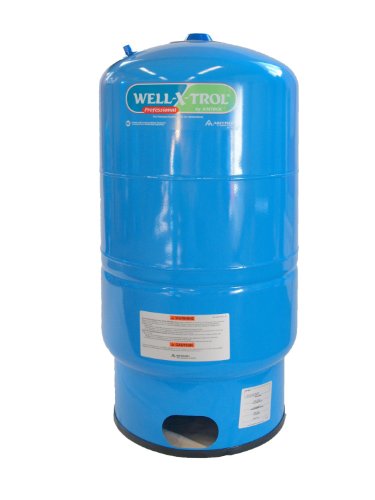
- 20-gallon residential well tank
- Steel shell with polypropylene liner
- 7-year manufacturer warranty
Best For: Home well water systems
Compact Corrosion Resistance

- 4.9-gallon tank capacity
- 38 PSI pre-charge and 125 PSI working pressure
- Stainless-steel system connection
Best For: Compact pressure systems
NSF-Listed Storage
WaterWorker 20-Gallon Vertical Well Tank
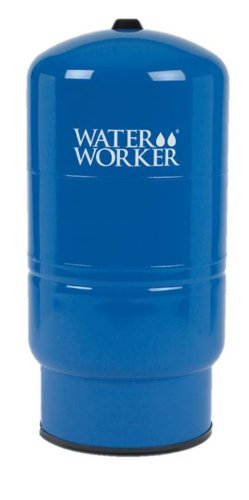
- 20-gallon vertical design
- ANSI/NSF Standard 61 listed
- Seamless butyl diaphragm
Best For: Well systems emphasizing NSF-listed materials
Multi-Purpose Outdoor Use
Reliance Pre-Charged Pressure Tank

- Steel tank with butyl diaphragm
- Listed for wells, RVs, irrigation, and lawn care
- Free-standing, pre-charged design
Best For: Versatile above-ground water systems
Best NSF-Rated Pick
WaterWorker HT-30B 30-Gallon Well Tank

- ANSI/NSF Standard 61 listed
- 26-gallon water capacity
- Five-year manufacturer warranty
Best For: Residential well systems prioritizing sanitary materials and durable construction
Simple Utility Choice
32-Gallon Pressurized Well Tank

- Nominal 32-gallon capacity
- Steel construction
- Air-pressure operation
Best For: Basic utility-focused well-water storage installations
Best Stainless-Steel Alternative

- 100L 304 stainless-steel body
- 42 psi operating-pressure rating
- Cleaning port and auto discharge
Best For: Home irrigation, agricultural sprinklers, and rural well-pump systems
Best Drinking-Water Pick

- Food-safe polypropylene drinking-water liner
- 145 PSI-rated steel shell with stable base
- 1-inch stainless steel port and 3-year warranty
Best For: Domestic well systems needing potable-water compatibility
Best Multi-Application Option
Heavy-Duty Carbon Steel Diaphragm Tank
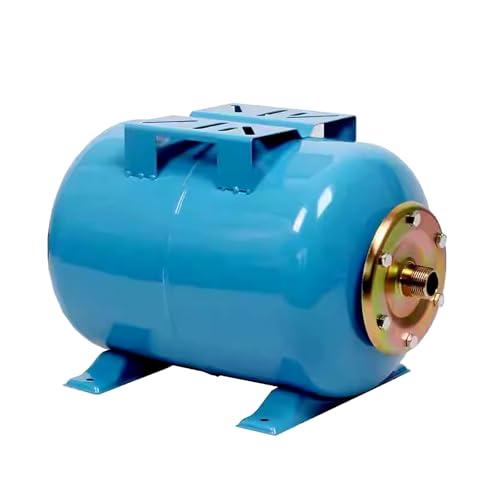
- Rubber airbag separates water and air chambers
- Multiple capacities from 19L to 100L
- Suitable for wells, irrigation, HVAC, and boilers
Best For: Versatile residential, irrigation, and mechanical systems
Best Large-Capacity Choice

- 30-gallon capacity for larger water systems
- 29 PSI pre-charge and 87 PSI maximum pressure
- 1-inch NPT connection for well and irrigation setups
Best For: Whole-house, farm, school, and irrigation applications
Residential Reliability – Amtrol WX-202 Well Pressure Tank
The Amtrol WX-202 is a 20-gallon option for residential water systems. Its steel shell, polypropylene liner, and sealed diaphragm design make it a practical choice when comparing diaphragm water pressure tanks for a home well setup.
Best For: Residential well water systems needing a 20-gallon tank with a durable, isolated water reservoir.
Pros:
- High-strength steel shell.
- Virgin polypropylene liner resists cracking, chipping, flaking, and peeling.
- Positive hoop ring seal secures the diaphragm and liner.
- Backed by a 7-year manufacturer warranty.
Cons:
- Its 15-by-15-by-31-inch size requires dedicated installation space.
- Designed specifically for residential water systems rather than broader stated applications.
The WX-202 combines a substantial 20-gallon capacity with construction features intended to support long-term residential use. Verify dimensions and system compatibility before installation.
Compact Corrosion Resistance – Goulds V15P HydroPro Tank
The Goulds V15P is a compact 4.9-gallon diaphragm tank with a 38 PSI pre-charge and 125 PSI working pressure. It is a focused option among diaphragm water pressure tanks for installations using a 3/4-inch NPTM connection.
Best For: Compact water pressure systems that need a corrosion-resistant connection and clearly specified pressure ratings.
Pros:
- Heavy-duty butyl diaphragm and rigid polypropylene liner.
- All-stainless-steel system connection helps resist corrosion.
- Polypropylene base is designed to eliminate corrosion.
- Compact 11-inch diameter and 14-3/4-inch height.
Cons:
- 4.9-gallon capacity is smaller than the other 20-gallon options in this roundup.
- Requires a compatible 3/4-inch NPTM connection.
With its compact footprint and defined pressure specifications, the V15P suits smaller or space-constrained systems. Confirm the pre-charge requirement and connection type match your installation.
NSF-Listed Storage – WaterWorker 20-Gallon Vertical Well Tank
The WaterWorker 25009 is a 20-gallon vertical well tank with a seamless butyl diaphragm and polypropylene water liner. Its NSF ANSI/NSF Standard 61 listing makes it a notable candidate when evaluating diaphragm water pressure tanks for well water use.
Best For: Well water systems where a 20-gallon vertical tank, NSF listing, and isolated water reservoir are priorities.
Pros:
- Listed under ANSI/NSF Standard 61.
- Seamless butyl diaphragm is designed to flex rather than stretch and crease.
- Polypropylene liner resists flaking, chipping, cracking, and peeling.
- Backed by a 5-year warranty.
Cons:
- Pre-charged to 25 PSI, but the correct setting should be checked against the manual.
- Its 15-by-15-by-32-inch dimensions require vertical installation space.
The WaterWorker offers useful material separation and a standards listing for residential well applications. Review the manual for the proper pre-charge setting before putting the tank into service.
Multi-Purpose Outdoor Use – Reliance Pre-Charged Pressure Tank
Reliance Pressure Tank - Pre-Charged, Free-Standing, Butyl Diaphragm - 20 Gal, 32.75 In - Steel
Check Price On AmazonThe Reliance pressure tank is a free-standing steel model with a butyl diaphragm and a stated 32.75-inch dimension. It is presented for well water, RV, garden irrigation, and lawn-care applications, offering a versatile angle for shoppers comparing diaphragm water pressure tanks.
Best For: Above-ground well, RV, garden irrigation, or lawn-care setups requiring a versatile steel pressure tank.
Pros:
- Pre-charged, free-standing design.
- Butyl diaphragm with steel construction.
- Compatible with pressure tank tee kits for installation.
- Listed for well water, RV, garden irrigation, and lawn care.
Cons:
- The supplied details contain conflicting capacity information: the title states 20 gallons, while a bullet states 128 gallons.
- Connection specifications and pressure ratings are not provided in the supplied notes.
- The listed 32.75-inch dimensions call for careful space planning.
This model stands out for its broad stated application range, but the conflicting capacity information should be resolved before purchase. Confirm the actual capacity, connections, and pressure specifications with the manufacturer or product documentation.
Best NSF-Rated Pick – WaterWorker HT-30B 30-Gallon Well Tank
WaterWorker HT-30B Vertical Pressure Well Tank, 30-gallon tank with 26-gallon capacity, Blue
Check Price On AmazonThe WaterWorker HT-30B is a practical diaphragm water pressure tank for residential well systems that need a durable, sanitary water reservoir. Its 26-gallon capacity, butyl diaphragm, and polypropylene liner are designed to keep stored water isolated from the steel shell.
Best For: Home well-water systems where NSF listing, corrosion protection, and a five-year tank warranty are priorities.
Pros:
- Listed under ANSI/NSF Standard 61 for potable-water applications.
- Seamless butyl diaphragm is designed to flex rather than stretch and crease.
- Polypropylene liner resists flaking, chipping, cracking, and peeling.
- Deep-drawn steel shell and high-gloss enamel finish provide added durability.
Cons:
- Its 26-gallon capacity is lower than the nominal 30-gallon tank size.
- Pre-charge is set to 25 psi, but the manual should be consulted for the correct system setting.
- At 39 inches tall and 41 pounds, installation requires adequate vertical space and support.
With potable-water certification, a water-isolating diaphragm and liner, and a stated five-year warranty, the HT-30B is a well-rounded choice for buyers who want a conventional vertical well tank with clearly documented construction features.
Simple Utility Choice – 32-Gallon Pressurized Well Tank
This 32-gallon pressurized well tank is a straightforward option for storing water in a well-water system. Its steel construction and air-pressure operation make it suitable for buyers seeking a basic diaphragm water pressure tank format without extensive feature claims.
Best For: Utility-focused well installations that need a 32-gallon pressurized steel tank for water storage.
Pros:
- Provides a nominal 32-gallon tank capacity.
- Steel construction suits an industrial, utilitarian installation.
- Uses air pressure as its power source for pressurized water storage.
Cons:
- The supplied specifications do not identify a warranty or NSF certification.
- Detailed diaphragm, liner, and pre-charge information is not provided.
- The listed dimensions and weight should be verified carefully before installation.
This model keeps the specification set simple: a 32-gallon pressurized steel tank intended for storing water. It may appeal to buyers who already know their system requirements and primarily need a basic utility tank.
Best Stainless-Steel Alternative – 100L Automatic Pressure Tank
This 100-liter stainless-steel pressure tank is designed for home water systems, irrigation, and rural well-pump setups. It differs from traditional diaphragm water pressure tanks because the supplied description identifies it as diaphragm-free, with a cleaning port and automatic discharge function for maintenance and pressure management.
Best For: Irrigation, agricultural sprinklers, and residential water systems needing a large stainless-steel tank with automatic pump-control features.
Pros:
- 100-liter, 304 stainless-steel construction is specified for temperatures from -60°C to 60°C.
- Top cleaning port and automatic discharge function support maintenance.
- Rated for 42 psi operating pressure with stated 0.12 MPa starting and 0.24 MPa stopping pressures.
- Includes 25 mm threaded inlet/outlet ports for standard well-pump plumbing.
Cons:
- It is diaphragm-free, so it does not provide the conventional diaphragm design some well systems require.
- The description states approximately 50% output efficiency, with 50–70% usable water volume.
- System compatibility should be confirmed because the supplied details do not provide complete installation specifications.
The RONI pressure tank stands out for its stainless-steel construction, large capacity, cleaning access, and automatic discharge. Its diaphragm-free design may reduce rubber-component concerns, but buyers should verify that its operating method matches their pump and plumbing setup.
Best Drinking-Water Pick – 14-Gallon Diaphragm Well Tank
For homeowners comparing diaphragm water pressure tanks, this 14-gallon vertical model stands out for its drinking-water-focused construction and compact footprint. Its pressurized storage helps reduce pump cycling and maintain steadier water pressure, while the 145 PSI-rated steel shell provides substantial pressure capacity.
Best For: Home well systems and domestic water supplies where a food-safe water liner and moderate tank size are priorities.
Pros:
- Food-safe polypropylene liner keeps water separated from the metal shell.
- 145 PSI-rated carbon-steel tank with powder-coated finish and plastic base.
- 304 stainless steel 1-inch FNPT port supports standard plumbing connections.
- Includes a 3-year warranty and pressure-tested construction.
Cons:
- Ships unpressurized, so it must be inflated after delivery.
- Its 14-gallon capacity may be limited for larger whole-house demands.
This is a practical choice when potable-water compatibility matters as much as pressure stability. Check the vertical dimensions and set the air charge about 2 PSI below your pressure-switch setting before use.
Best Multi-Application Option – Heavy-Duty Carbon Steel Diaphragm Tank
Among diaphragm water pressure tanks, this carbon-steel model is designed for flexible use across well-water, irrigation, HVAC, boiler, and solar-heating applications. Its rubber airbag separates the air and water chambers to absorb pressure changes and support steadier flow.
Best For: Well pumps, irrigation systems, and heating or HVAC setups that need a selectable tank size and broad operating range.
Pros:
- Carbon-steel shell and rubber airbag support pressure and temperature resistance.
- Available in several capacities from 19L through 100L.
- Stainless steel nozzles and an explosion-proof design are intended to improve safety.
- Smaller tanks of 24L and below can mount on pipes.
Cons:
- The supplied notes do not specify a drinking-water liner or potable-water rating.
- Air pressure should be checked annually for continued performance.
- Power-source information lists battery powered, which may be unclear for a passive pressure tank.
This model offers useful sizing flexibility for water and mechanical-system applications. Verify the selected capacity, connection requirements, and suitability for your specific installation before ordering.
Best Large-Capacity Choice – 30-Gallon Vertical Well Tank
For buyers who need more stored pressure volume, this 30-gallon vertical tank is a substantial option among diaphragm water pressure tanks. Its pre-charge helps reduce pump start-stop frequency, while the 1-inch NPT connector is designed for a secure connection in household, agricultural, and institutional systems.
Best For: Larger home, school, farm, and irrigation systems that need 30 gallons of pressurized storage rather than a compact tank.
Pros:
- 30-gallon capacity supports whole-house and larger water-use demands.
- Thickened 1.2 mm carbon-steel construction with 87 PSI maximum internal pressure.
- Pre-charged to 29 PSI and equipped with a 1-inch NPT connector.
- Vertical design is suitable for home, school, farm, and irrigation applications.
Cons:
- Not suitable for drinking water.
- Not frost-proof, so installation conditions require attention.
- A proper relief valve is required but is not included.
This tank makes sense when capacity and stable pressure are more important than potable-water use. Its 31.7-inch height and 16.93-inch width should be checked against the available installation space, and a suitable relief valve should be added.
How We Picked These Diaphragm Water Pressure Tanks
We focused on the specifications that most affect real-world well-system performance: usable water capacity, tank size, construction materials, maximum working pressure, connection type, pre-charge pressure, and installation format. The selection includes established well-water brands alongside larger-capacity and budget-oriented options, so shoppers can compare different approaches rather than choosing by gallon rating alone.
Because listed capacity is not the same as usable drawdown, we also considered whether each tank is intended for compact residential systems, standard household wells, irrigation, or higher-demand applications. Always confirm the manufacturer’s specifications before installation.
Quick Comparison
| Best suited for | What to prioritize | Typical choice |
|---|---|---|
| Small homes or supplemental systems | Compact dimensions and compatible connection | 4.9- to 20-gallon models |
| Average household well systems | Drawdown, pressure rating, and pump compatibility | 20- to 32-gallon vertical tanks |
| Higher water demand | Greater capacity, durable steel construction, and floor space | 30-gallon and larger tanks |
| Replacement installations | Matching pre-charge, fittings, and mounting layout | A tank with the same system specifications |
Key Buying Factors for Diaphragm Water Pressure Tanks
Tank Capacity and Drawdown
A larger tank generally provides more usable water between pump cycles, but the advertised gallon capacity is only the tank’s total volume. Drawdown depends on pressure-switch settings and pre-charge. Match the tank to your pump’s output and household demand rather than assuming the biggest model is automatically best.
Pressure Rating and Pre-Charge
Check the maximum working pressure and compare it with your well system’s pressure-switch range. The tank’s air pre-charge usually needs to be set according to the manufacturer’s instructions, commonly below the pump cut-in pressure. Incorrect settings can cause poor water delivery, rapid cycling, or premature component wear.
Materials, Diaphragm, and Liner
Carbon steel is common and cost-effective, while stainless steel can offer additional corrosion resistance in some environments. A durable diaphragm or bladder separates air from water and helps maintain pressure. For domestic drinking water, verify that the tank includes an appropriate potable-water liner or certification.
Fit and Installation
Measure height, diameter, clearance, and access to the plumbing connection before ordering. Confirm whether the tank is vertical, horizontal, or in-line, and check the NPT fitting size. A pressure tank is part of a pressurized system, so installation should follow local codes and, when necessary, be handled by a qualified professional.
Who Should Buy Which Diaphragm Water Pressure Tanks?
Choose a compact in-line or small tank when space is limited or the system has modest demand. For most average homes, a 20- to 32-gallon vertical tank offers a practical balance of capacity, footprint, and availability. Larger households, irrigation users, and systems with frequent pump cycling should consider a higher-capacity model, provided the pump and pressure controls can support it.
For a straightforward replacement, prioritize matching the existing tank’s dimensions, connection, pressure range, and pre-charge specifications. If water quality, corrosion, or drinking-water use is a concern, place greater emphasis on the tank’s liner, diaphragm materials, and certification than on price alone.