Finding electrical faults in a vehicle gets much easier when you have the right diagnostic tools. From circuit probes and test lights to multimeters, tracers, and battery testers, these tools help narrow problems fast.
This roundup of electrical test equipment for automotive repair focuses on practical choices for spotting open circuits, shorts, weak batteries, and charging issues without wasting time.
Best 10 Electrical Test Equipment for Automotive Repair Picks for 2026
All-in-One Circuit Diagnostic Pick
ANCEL PB60 Power Circuit Probe Tester
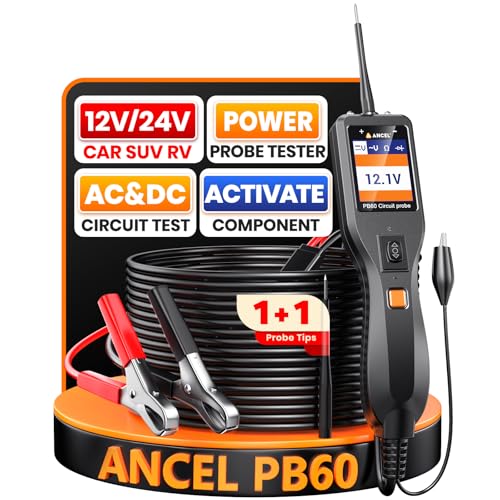
- Tests voltage, continuity, resistance, and diodes
- Activates components for direct fault checking
- Flashlight, LCD, and auto breaker add convenience
Best For: DIYers and techs who want an all-in-one probe tester
Budget Multimeter Workhorse
AstroAI Digital Multimeter Tester
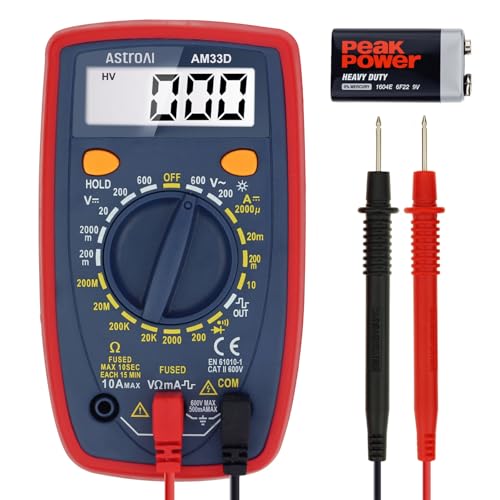
- Measures voltage, current, resistance, continuity, and diode
- Backlit display with data hold for easier reading
- Double fuses and silicone cover improve protection
Best For: Budget-minded users needing a basic automotive multimeter
Wire Fault Finder Choice
Automotive Circuit Tracer & Short Open Finder

- Traces open wires, shorts, and continuity faults
- LED bars plus sound help in noisy workspaces
- Three sensitivity levels aid harness diagnosis
Best For: Diagnosing open circuits, shorts, and broken wires
Quick Voltage Check Pick
Automotive Test Light with LED Display

- Shows voltage with a bright digital display
- Polarity lights help identify positive or negative
- Probe, spring wire, and clip suit quick checks
Best For: Fast voltage and polarity checks on vehicle circuits
Battery Health Checker
FOXWELL BT705 12V/24V Battery Tester
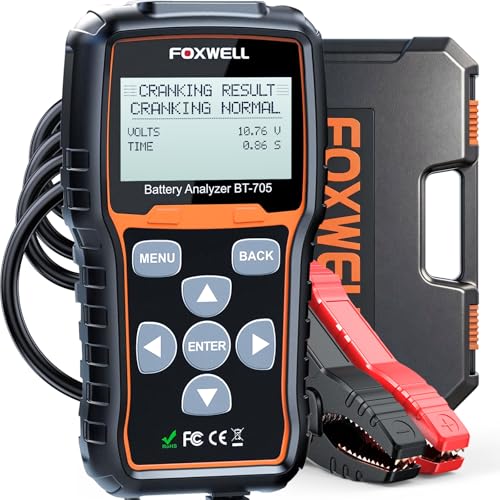
- Tests CCA, voltage, internal resistance, and SOH
- Guided prompts with clear GOOD/RECHARGE/REPLACE results
- Works on 12V and 24V lead-acid systems
Best For: Battery and alternator checks on cars, trucks, RVs, and boats
All-in-One Circuit Probe
V500 Pro Automotive Circuit Tester

- Finds open circuits, short circuits, and broken wires
- Combines oscilloscope, multimeter, wire tracing, and probe functions
- Adds injector, relay, fuse, and component activation testing
Best For: Advanced automotive wiring and circuit diagnostics
Back Probe Lead Set
Linkhood 31-Piece Automotive Test Leads

- 31-piece kit with probes, leads, and alligator clips
- Three probe angles help with tight connector access
- Wire piercing probes avoid stripping cables
Best For: Back probing sensors, injectors, and harness connectors
Power Probe Tester
6V-24V Test Light with 13ft Lead

- Checks polarity, continuity, and common circuit faults
- Can power or ground components directly for testing
- Includes overload protection and a 13-foot lead
Best For: Quick automotive circuit diagnosis and component activation
LCD Circuit Tester
6V/12V/24V Probe with LCD Display

- Backlit LCD shows voltage with claimed ±0.2V accuracy
- Tests continuity, polarity, and abnormal voltage
- 14.7-foot cord and built-in LED improve reach and visibility
Best For: Users who want readable voltage results and basic circuit diagnostics
All-in-One Circuit Diagnostic Pick – ANCEL PB60 Power Circuit Probe Tester
If you want electrical test equipment for automotive repair that can do more than just read voltage, the ANCEL PB60 is built for fast, hands-on diagnostics. It combines circuit probing, component activation, polarity checks, continuity, resistance, and AC/DC voltage testing in one tool, which makes it a practical choice for quick troubleshooting on 12V and 24V vehicle systems.
Best For: DIYers and techs who want an all-in-one probe tester for fast vehicle electrical diagnosis.
Pros:
- Handles DC voltage, AC voltage, resistance, diode, continuity, and polarity checks.
- Can activate components like injectors, fans, windows, and lights for direct testing.
- Built-in flashlight and sunlight-readable LCD help in dark or bright work areas.
- Auto circuit breaker adds a safety layer during overload or short-circuit events.
Cons:
- Focused on 12V/24V vehicle systems rather than broader bench electronics work.
- More specialized than a basic test light if you only need simple voltage checks.
- Feature-rich design may be more tool than necessary for very casual users.
The PB60 stands out when you want one compact probe tool to speed up vehicle diagnostics without juggling multiple meters and jumper leads. Its mix of testing modes and component activation makes it especially useful for practical repair workflows.
Budget Multimeter Workhorse – AstroAI Digital Multimeter Tester
For shoppers comparing electrical test equipment for automotive repair, this AstroAI digital multimeter covers the basics well and keeps things simple. It measures AC/DC voltage, DC current, resistance, continuity, and diode checks, making it a straightforward pick for battery, charging, and circuit troubleshooting in cars and trucks.
Best For: Budget-minded users who need a basic multimeter for automotive and household troubleshooting.
Pros:
- Measures AC/DC voltage, DC current, resistance, continuity, and diode.
- Backlit LCD and data hold help with dim garage work and quick readings.
- Double fuse protection and silicone cover add safety and durability.
- Includes test leads, battery, and user manual for immediate use.
Cons:
- Not designed to test all AC current, and it cannot test below 100mV AC voltage.
- Requires correct lead placement and rotary switch settings to get results.
- Less specialized for circuit tracing than dedicated automotive diagnostic tools.
This is a solid general-purpose meter if you need a dependable starter tool for vehicle electrical checks. It won’t replace specialized tracers or probe testers, but it gives you the core functions most repair jobs call for.
Wire Fault Finder Choice – Automotive Circuit Tracer & Short Open Finder
If your priority is tracking down hidden wiring faults, this circuit tracer is a strong piece of electrical test equipment for automotive repair. It is designed to trace open wires, locate shorts to ground, and check continuity on 6-42V DC systems, which makes it especially useful when you are chasing blown fuses, dead accessories, or harness problems behind panels.
Best For: Diagnosing open circuits, shorts, and broken wires in low-voltage vehicle wiring.
Pros:
- Uses both LED signal bars and audible feedback for clearer tracing in noisy shops.
- Supports OPEN, SHORT, and CONT modes for common wire-fault checks.
- Three sensitivity levels help isolate signals in bundled or hidden harnesses.
- Works on cars, motorcycles, trucks, RVs, trailers, boats, and accessory wiring.
Cons:
- Limited to 6-42V DC vehicle circuits and not for EV or hybrid high-voltage wiring.
- Not intended for AC power, airbags, or unidentified control-module circuits.
- More specialized for tracing than for general voltage or current measurement.
This tool is a better fit when you already know you have a wiring fault and need to pinpoint where it lives. The combination of visual and audible tracing signals should make it easier to work through complex automotive harnesses.
Quick Voltage Check Pick – Automotive Test Light with LED Display
For fast checks in 3V-48V systems, this automotive test light is a practical option in electrical test equipment for automotive repair. It combines a sharp probe, digital voltage display, and polarity indication, so you can quickly inspect batteries, charging systems, lights, fuse connections, and other common vehicle circuits.
Best For: Fast voltage and polarity checks on cars, trucks, SUVs, and boats.
Pros:
- Digital LED display gives clear voltage readings with 0.1V resolution.
- Red and green polarity indication makes positive and negative identification easy.
- Sharp stainless probe helps reach tight spots and pierce insulation when needed.
- 96-inch spring wire and alligator clip support flexible one-handed testing.
Cons:
- Limited to voltage-style testing rather than full multimeter functions.
- Best suited to 3V-48V systems, so it is not a universal electrical tester.
- More of a quick diagnostic pen than a deep-dive circuit analysis tool.
This is a handy pick if you want a simple, readable tester for everyday vehicle electrical checks. It is especially appealing when you need speed, visibility, and easy polarity feedback in one compact tool.
Battery Health Checker – FOXWELL BT705 12V/24V Battery Tester
If you’re comparing electrical test equipment for automotive repair, the FOXWELL BT705 is built for fast battery and charging-system checks on 12V and 24V vehicles. It tests CCA, voltage, internal resistance, and state of health, while the guided screen prompts help simplify the process for everyday diagnostics.
Best For: Car owners, home mechanics, and shops that need a straightforward battery and alternator tester for 12V/24V systems.
Pros:
- Checks battery health, cranking performance, and charging output with guided prompts.
- Shows clear result summaries like GOOD, RECHARGE, or REPLACE.
- Supports 100–2000 CCA and Flooded, AGM, GEL, and EFB lead-acid batteries.
- Long 5.9 ft cable helps one-person testing from the driver’s seat.
Cons:
- Focused on battery and charging diagnostics rather than broader circuit troubleshooting.
- Uses a screen-guided workflow, so it is less of a bare-bones analog tester.
For battery-related automotive repair work, the BT705 is a practical choice when you want readable results without a complicated setup. Its combination of 12V/24V coverage, clear pass-fail reporting, and durable carrying case makes it well suited to repeated use in garages or fleet maintenance.
All-in-One Circuit Probe – V500 Pro Automotive Circuit Tester
The V500 Pro is a more advanced option for electrical test equipment for automotive repair, combining circuit probing, wire tracing, oscilloscope, multimeter, injector testing, relay and fuse testing, and component activation in one tool. It is designed to help technicians find open circuits, short circuits, broken wires, and current leaks with less guesswork.
Best For: Technicians and DIY repairers who want one tool for deeper automotive electrical diagnosis.
Pros:
- Combines multiple functions including oscilloscope, multimeter, test light, and wire tracing.
- Helps locate open/short circuits and broken wires with audible tone feedback.
- Includes injector, relay, fuse, and component activation testing.
- Offers a 0–5V power supply for low-voltage circuit diagnosis and sensor debugging.
Cons:
- More complex than a simple test light or basic meter.
- Best suited to users who need advanced diagnostic features rather than occasional checks.
For shops that regularly chase wiring faults, the V500 Pro offers broad diagnostic capability in a single handheld unit. Its mix of probing, signal analysis, and component activation makes it a strong fit when the repair job goes beyond basic voltage checks.
Back Probe Lead Set – Linkhood 31-Piece Automotive Test Leads
If your electrical test equipment for automotive repair needs better access to connectors and sensors, the Linkhood 31-piece back probe kit is a useful support set. It includes back probe pins, banana-plug test leads, wire piercing probes, and alligator clips for automotive diagnostics and circuit testing.
Best For: Diagnosing sensors, fuel injectors, and harness connectors where back probing or wire piercing is needed.
Pros:
- Includes 31 pieces: back probes, test leads, wire piercing probes, and alligator clips.
- Back probes come in 3 angles for easier access to tight connectors.
- Wire piercing probes can be used without stripping cables.
- Useful for automotive sensors, fuel injectors, harness connectors, and other test work.
Cons:
- It is an accessory kit, not a standalone diagnostic meter.
- Designed for use alongside other test equipment rather than replacing it.
This kit makes many electrical checks easier by giving you the right leads and probe styles for hard-to-reach spots. It is especially handy when you need cleaner access to automotive connectors without damaging insulation.
Open & Short Circuit Finder – V210 Wire Tracer
If you need electrical test equipment for automotive repair that can trace wires without cutting insulation, this V210 wire tracer is built for that job. It is designed for 6-42V DC systems and helps locate open connections, broken wires, current leaks, and breaker points with transmitter/receiver feedback and tone changes.
Best For: Tracing open and short circuits in low-voltage vehicle wiring.
Pros:
- Traces wires and helps locate open or short circuit points without damaging insulation.
- Receiver includes adjustable sensitivity and a flexible 7-inch probe.
- Built-in buzzer and LEDs help indicate signal changes while diagnosing faults.
- Covers 6-42V DC automotive electrical systems.
Cons:
- Designed for DC systems only, not higher-voltage applications.
- Signal strength can affect volume, so testing may take careful positioning.
- Accuracy can vary with resistance, shielding, and circuit complexity.
This is a practical tracer for diagnosing wiring faults where continuity alone is not enough. It is especially useful when you want to narrow down a problem area quickly in automotive cables and connectors.
Power Probe Tester – 6V-24V Test Light with 13ft Lead
For electrical test equipment for automotive repair that does more than a simple test light, this power circuit probe adds polarity checks, continuity testing, and component activation. It is made for 6V-24V DC vehicle systems and includes overload protection plus a long 13-foot lead for reaching across larger vehicles.
Best For: Fast circuit checks and powered component testing on cars, trucks, and other vehicles.
Pros:
- Checks polarity, continuity, switches, relays, diodes, fuses, and circuits.
- Can apply power or ground directly to test components without removing them.
- Overload protection disconnects the circuit above 7A and gives a buzzer alert.
- 13-foot extended test lead makes rear-to-front vehicle testing easier.
Cons:
- Limited to 6V-24V DC systems.
- Requires a corded setup rather than a fully cordless probe.
- Focused on testing and activation, not wire tracing depth like a dedicated toner.
This is a strong all-around diagnostic tool when you want one probe for quick checks and component activation. It suits technicians who need practical feedback and a long reach during routine electrical troubleshooting.
LCD Circuit Tester – 6V/12V/24V Probe with LCD Display
If you want electrical test equipment for automotive repair with a modern readout, this multifunctional circuit tester adds a backlit LCD screen to voltage and continuity work. It covers 6V-36V DC systems and is aimed at finding short circuits, open circuits, bad grounding, and abnormal voltage in everyday vehicle troubleshooting.
Best For: DIY and pro users who want visible voltage readings and broad basic diagnostics.
Pros:
- Backlit LCD shows real-time voltage readings with stated ±0.2V accuracy.
- Tests continuity, voltage status, polarity, and abnormal voltage conditions.
- Built-in LED light helps in dark or tight work areas.
- 14.7-foot extension cord improves reach across the vehicle.
Cons:
- Limited to 6V-36V DC vehicle systems.
- Performance still depends on correct clip hookup to the battery.
- Not a dedicated wire tracer for in-depth line tracing jobs.
This tester is a good pick if you prefer clear voltage feedback instead of relying on a basic test lamp. It balances simple operation with enough reach and functions to handle common automotive electrical checks.
How We Picked the Best Electrical Test Equipment for Automotive Repair
We focused on tools that solve common shop and driveway diagnostics: voltage checks, continuity testing, polarity identification, circuit tracing, battery health testing, and component activation. Priority went to clear displays, useful voltage ranges, dependable lead quality, and features that fit real automotive work rather than generic household use.
We also considered whether each tool is beginner-friendly or better suited to advanced diagnosis. For example, simple test lights are useful for fast confirmation work, while circuit probes, back-probe kits, and battery analyzers are better for deeper troubleshooting.
Quick Comparison: What Each Tool Type Does Best
Digital multimeters are the most versatile for measuring volts, ohms, and current. Test lights are faster for quick power-and-ground checks. Circuit tracers and breaker finders help locate broken wires, shorts, or specific runs in complex harnesses. Battery testers evaluate starting and charging performance, which is essential when electrical symptoms are intermittent or load-related.
Key Buying Factors for Electrical Test Equipment for Automotive Repair
Voltage Range and Vehicle Compatibility
Make sure the tool matches the systems you work on. Most passenger vehicles use 12V, but many tools here also support 24V systems and broader DC ranges. If you work on trucks, fleets, or mixed-voltage systems, that flexibility matters.
Measurement Depth
Basic test lights confirm power presence, but a multimeter or power probe gives more diagnostic detail. Look for continuity, resistance, diode test, and polarity indication if you need to isolate faults instead of only confirming them.
Lead and Probe Quality
Good leads, back probes, and piercing accessories make a big difference when working at connectors, terminals, and sealed harnesses. Poor accessories can slow diagnosis and create unreliable readings.
Display Clarity and Feedback
LED indicators, audible tones, and readable digital displays help you work faster in bright daylight or tight engine bays. If you diagnose frequently, easy-to-read feedback reduces mistakes.
Battery and Charging System Testing
If your symptoms include slow cranking, no-start complaints, or repeated low-voltage faults, a dedicated battery and alternator tester is worth having alongside general Electrical Test Equipment for Automotive Repair.
Who Should Buy Which Electrical Test Equipment for Automotive Repair?
DIY owners who want a simple starting point should choose a test light or basic multimeter. Technicians and serious hobbyists benefit more from a power circuit probe, back-probe set, and circuit tracer because they shorten diagnostic time. If you deal with dead batteries, charging faults, or starting complaints, add a battery and alternator tester. For the most complete setup, pair one general-purpose meter with one specialized diagnostic tool so you can verify readings and isolate faults efficiently.