The right sleeping pad can make a cold night outdoors far more comfortable. Insulated sleeping pads help reduce heat loss to the ground while adding cushioning for better rest in tents, shelters, and vehicles.
This roundup compares 10 options across lightweight backpacking mats, self-inflating designs, thick car-camping pads, and high-R-value models for colder conditions. Focus on warmth, packed size, comfort, and setup before choosing.
Best 10 Insulated Sleeping Pads Picks for 2026
Best All-Around Self-Inflating Pad
Oxylus 4.3 R-Value Insulated Sleeping Pad
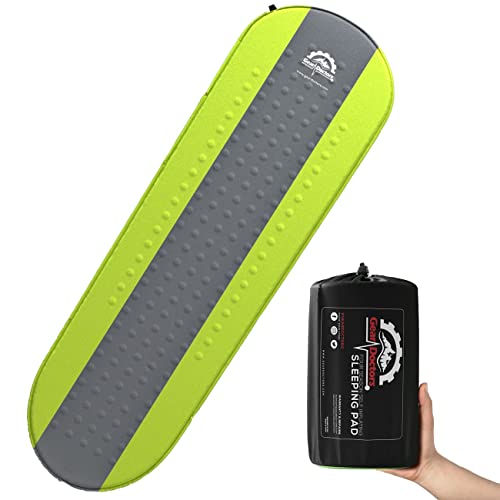
- 4.3 R-value hybrid foam-and-air construction
- Self-inflates with adjustable firmness
- Compact enough for backpacking and versatile camping
Best For: Campers wanting easy setup and balanced four-season versatility
Best Ultralight Insulation
Naturehike 4.6 R-Value Inflatable Pad

- 4.6 R-value with eight-layer aluminum insulation
- 3.2-inch thick and about 1.93 pounds
- Includes pumpsack and dual-vent valve
Best For: Backpackers seeking compact warmth at a moderate weight
Best Plush Comfort
OGERY 3-Inch Memory Foam Self-Inflating Pad

- 3-inch memory-foam and air hybrid
- Built-in foot pump for easy firmness control
- Quiet, insulated, and equipped with a non-slip base
Best For: Car campers and sleepers who prioritize plush, stable cushioning
Best Cold-Weather Performance
Elegear CumbreX 9 R-Value Sleeping Pad

- Certified 9 R-value for demanding cold-weather use
- Four-inch profile cushions uneven ground
- About 2.2 pounds with included pumpsack
Best For: Four-season backpacking and cold-weather expeditions
Best Cold-Weather Value
Hikenture R6.2 Insulated Sleeping Pad

- ASTM-tested R-value of 6.2
- Lightweight at about 1.53 pounds
- 40L pump sack included
Best For: Lightweight backpacking in cool or cold conditions
Best All-Season Comfort

- 7.2 R-value for all-season insulation
- 4-inch thick and 24 inches wide
- Supports up to 330 pounds
Best For: Side and back sleepers wanting a spacious, supportive pad
Best for Winter Insulation
OGERY R9.0 Insulated Sleeping Pad

- Highest listed R-value at 9.0
- Extra-thick 4.7-inch air-cell design
- Pump bag included for inflation
Best For: Winter camping, snow camping, and alpine adventures
Best Inflatable Comfort
FUN PAC 3-Inch Camping Sleeping Pad

- Built-in foot pump inflates the pad in about 30–60 seconds.
- Wide 78-by-27-inch surface with a built-in pillow.
- 1.5-pound nylon and TPU design connects to a second pad.
Best For: Campers wanting cushioned comfort with convenient built-in inflation.
Best Ultra-Light Ground Insulation

- Reflective aluminum foil and EPE foam help insulate from cold ground.
- Weighs about 160 grams and folds into the included carry pack.
- Large waterproof surface can cover a tent floor or act as a thermal blanket.
Best For: Ultralight trips where insulation and coverage matter more than cushioning.
Best No-Inflation Insulation
Featherstone El Cordion Foam Pad
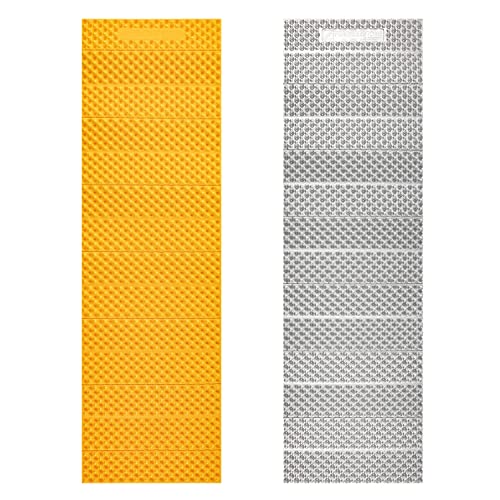
- ASTM F3340-rated R-value of 2.1 with reflective thermal film.
- Closed-cell foam will not deflate or require inflation.
- Hexagonal nodes increase coverage and support over traditional designs.
Best For: Backpackers wanting reliable, no-inflation foam insulation.
Best All-Around Self-Inflating Pad – Oxylus 4.3 R-Value Insulated Sleeping Pad
The Gear Doctors Oxylus is one of the more versatile insulated sleeping pads for campers who want foam cushioning, reliable warmth, and a relatively straightforward setup. Its 4.3 R-value, 1.5-inch thickness, and self-inflating design suit backpacking, car camping, and four-season use.
Best For: Campers and hikers who want a hybrid foam-and-air pad with easy self-inflation and broad seasonal versatility.
Pros:
- 4.3 R-value provides insulation for cooler ground conditions.
- Self-inflates after unrolling and opening the valve, with firmness adjustable by adding air.
- Packs to approximately 8 x 12 inches and weighs about 35.2 ounces.
- 75D coated polyester shell is designed to resist moisture, abrasion, and UV exposure.
Cons:
- At 1.5 inches thick, it offers less cushioning than several thicker air pads.
- Its nearly 2.2-pound weight may be substantial for ultralight backpackers.
- Self-inflation still requires setup time and may need additional breaths for preferred firmness.
The Oxylus is a practical compromise between compact air-pad portability and foam-supported comfort. It makes the most sense for users who value simple inflation and dependable insulation more than minimizing every ounce.
Best Ultralight Insulation – Naturehike 4.6 R-Value Inflatable Pad
The Naturehike Ultralight is a strong option among insulated sleeping pads for backpackers who prioritize warmth without carrying a bulky mattress. Its 4.6 R-value, eight-layer aluminum insulation structure, and 3.2-inch thickness provide a useful blend of cold-ground protection and sleeping comfort.
Best For: Lightweight backpacking, hiking, and camping where high insulation and compact packed size matter.
Pros:
- 4.6 R-value is designed for use in temperatures above -4°F/-20°C.
- Eight-layer aluminum molding helps reduce heat loss and limits convection.
- Weighs about 1.93 pounds and packs to roughly 5.1 x 8.66 inches.
- Includes a pumpsack, dual-vent valve, straps, and repair allowance.
Cons:
- Requires inflation with the included pumpsack rather than self-inflating.
- Air-filled support requires careful pressure adjustment and should not be over-inflated.
- The lightweight 20D nylon construction may require more care around abrasive surfaces.
With its relatively low weight, thick profile, and high stated insulation, this Naturehike pad is aimed at hikers who want a warmer sleep system without moving to a heavier foam mattress. The pumpsack and quick-deflation valve also help streamline camp setup and breakdown.
Best Plush Comfort – OGERY 3-Inch Memory Foam Self-Inflating Pad
The OGERY is a comfort-focused choice among insulated sleeping pads, using a 3-inch memory-foam and air hybrid to provide stable cushioning without the pronounced bounce of some air-only designs. Its built-in foot pump makes firmness adjustments possible without blowing into the pad or carrying a separate pump.
Best For: Car campers, tent campers, and backpackers who prioritize thick, quiet cushioning and easy firmness adjustment.
Pros:
- 3-inch hybrid foam construction supports side, back, and stomach sleepers.
- Built-in foot pump allows firmness adjustments without mouth inflation or a separate pump.
- Textured underside helps reduce sliding on tent floors, car trunks, and cots.
- Foam interior helps reduce ground heat loss and movement noise.
Cons:
- At about 6 pounds, it is considerably heavier than ultralight inflatable pads.
- Its larger 77 x 27-inch format may be less suitable for minimalist backpacking.
- The supplied notes list a one-year manufacturer warranty rather than lifetime coverage.
The OGERY favors residential-style comfort over low pack weight. Its thickness, memory foam, and built-in pump make it especially practical for vehicle-supported camping, while the insulated interior adds useful comfort on cooler nights.
Best Cold-Weather Performance – Elegear CumbreX 9 R-Value Sleeping Pad
The Elegear CumbreX stands out among insulated sleeping pads for its stated 9 R-value and four-inch thickness. It is designed for cold-weather and year-round use, while its 2.2-pound weight, compact design, and included pumpsack keep it viable for backpacking.
Best For: Cold-weather backpackers and mountaineers who need substantial insulation and cushioning without carrying a heavy self-inflating pad.
Pros:
- SGS-tested and ASTM F3340-22 certified 9 R-value is designed for extreme cold.
- Four-inch thickness and support cells help cushion uneven or rocky ground.
- Weighs about 2.2 pounds and inflates in approximately four to six pumps with the included sack.
- 20D tear-resistant nylon with reinforced TPU is designed to resist moisture, abrasion, and punctures.
Cons:
- The mummy shape may provide less usable surface area than a rectangular pad.
- It requires a pumpsack because it does not have a built-in pump.
- High insulation and four-inch thickness may be more than needed for warm-weather campers.
The CumbreX is the most cold-oriented option in this group. Its high stated R-value and thick, supportive profile make it a compelling choice for snowy or high-altitude trips, while the included inflation accessories preserve its backpacking practicality.
Best Cold-Weather Value – Hikenture R6.2 Insulated Sleeping Pad
The Hikenture R6.2 is one of the more balanced insulated sleeping pads for campers who want strong cold-ground protection without carrying a bulky mattress. Its ASTM-tested R-value of 6.2, 3.2-inch thickness, and included pump sack make it a practical option for three-season and colder-weather trips.
Best For: Backpackers and campers seeking a lightweight, warm pad with convenient inflation.
Pros:
- ASTM F3340-22-tested R-value of 6.2 for substantial insulation.
- Weighs about 1.53 pounds and packs compactly.
- Included storage bag doubles as a 40L pump sack.
- 3.2-inch air structure helps reduce bottoming out.
Cons:
- Its 3.2-inch thickness is less than some competing pads.
- The listed dimensions describe the packed item rather than the inflated sleeping surface.
Hikenture stands out when warmth, low carry weight, and easy inflation matter most. The 12-month warranty and included repair patches add useful reassurance for regular outdoor use.
Best All-Season Comfort – Trekology UL R7 Sleeping Pad
The Trekology UL R7 is a spacious choice among insulated sleeping pads, combining a 7.2 R-value with a generous 4-inch profile. It suits campers who prioritize cushioning and ground insulation while still wanting a pad that packs to roughly the size of a water bottle.
Best For: Hikers and backpackers who want a wide, thick pad for year-round use.
Pros:
- SGS-certified 7.2 R-value provides strong all-season insulation.
- 4-inch thickness and 24-inch width offer supportive cushioning.
- 40D ripstop nylon with TPU coating is water-resistant and tear-resistant.
- Supports up to 330 pounds.
Cons:
- At 2 pounds, it is heavier than the Hikenture option.
- A pump bag is not included, so inflation is by mouth or with a separate pump bag.
- The listed length is best suited to sleepers up to 5 feet 11 inches.
This pad is a strong fit for side and back sleepers who value thickness and space. Its main trade-off is the missing pump bag, but the insulation, capacity, and compact packed size make it versatile for varied trips.
Best for Winter Insulation – OGERY R9.0 Insulated Sleeping Pad
For demanding cold-weather trips, the OGERY R9.0 is among the most heavily insulated sleeping pads in this roundup. Its 9.0 R-value, 4.7-inch thickness, and multilayer reflective construction are designed for winter camping, snow camping, and alpine conditions.
Best For: Winter campers and backpackers who need maximum listed insulation and substantial cushioning.
Pros:
- R-value of 9.0 is the highest among these options.
- 4.7-inch air-cell construction provides substantial separation from uneven ground.
- Includes a pump bag to speed inflation and limit moisture entering the pad.
- 40D nylon with TPU coating supports outdoor durability.
Cons:
- At 2.5 pounds, it is heavier than the other two pads.
- Its 200-kilogram weight capacity is lower than the Trekology’s stated 330-pound capacity.
- The medium firmness may feel less stable to campers who prefer a firm pad.
OGERY is the most cold-focused choice here, especially for snow and alpine outings. The added thickness and pump bag improve comfort and setup, while the higher weight is the clearest compromise for backpackers counting every ounce.
Best Inflatable Comfort – FUN PAC 3-Inch Camping Sleeping Pad
For campers who want cushioning without a bulky pack, this FUN PAC model is one of the more comfortable insulated sleeping pads in this roundup. Its inflatable design combines a built-in pillow, wide sleeping surface, and integrated foot pump, making it practical for camping, backpacking, and travel.
Best For: Campers who prioritize a wide, cushioned sleeping surface and convenient inflation.
Pros:
- Inflates in approximately 30–60 seconds with the built-in foot pump.
- 78-by-27-inch design with a stated 3-inch thickness and built-in pillow.
- Lightweight 1.5-pound construction packs compactly and can connect to another pad.
- 40D nylon and TPU construction is waterproof and easy to clean.
Cons:
- Requires inflation and deflation rather than offering the simplicity of a foam mat.
- Air-filled construction can be less inherently fail-safe than closed-cell foam.
The FUN PAC is a strong choice when sleep comfort, width, and fast setup matter more than having the simplest possible pad. Its integrated pillow and pump reduce the amount of extra gear you need to carry.
Best Ultra-Light Ground Insulation – Aluminum Reflective Foam Mat
This simple aluminum-and-foam option is among the lightest insulated sleeping pads here. At about 5.65 ounces, it adds a reflective barrier against cold ground while folding easily for tent trips, hiking, picnics, or use as a thermal blanket.
Best For: Ultralight campers who need basic ground insulation and a large, foldable surface.
Pros:
- Double-sided aluminum foil helps reflect heat, with EPE foam inside.
- Very light at approximately 160 grams and includes a carry pack.
- Large 78.7-by-59-inch format can cover a tent floor or serve as a thermal blanket.
- Waterproof, foldable, and easy to clean.
Cons:
- Approximately 0.07 inches thick, so it provides limited cushioning.
- Does not offer a stated R-value or the plush support of a thicker pad.
This mat works best as a lightweight insulation layer rather than a comfort-focused mattress. It is especially useful for minimizing packed weight while creating a barrier between a sleeping bag and cold ground.
Best No-Inflation Insulation – Featherstone El Cordion Foam Pad
The Featherstone El Cordion is a dependable closed-cell choice for backpackers who do not want to worry about leaks or inflation. Its ASTM F3340-rated R-value of 2.1, heat-reflective film, and raised hexagonal nodes make it one of the more purpose-built insulated sleeping pads for lightweight backcountry use.
Best For: Ultralight backpackers and thru-hikers who prefer durable, no-inflation foam insulation.
Pros:
- ASTM F3340-rated R-value of 2.1 provides a stated insulation benchmark.
- Closed-cell foam will not deflate during the night.
- Hexagonal nodes provide 40% more coverage and height than traditional egg-crate designs.
- Backed by a limited lifetime manufacturing warranty.
Cons:
- At 455 grams, it weighs more than the aluminum mat in this roundup.
- Listed as not water resistant.
- Foam construction may pack less compactly than an inflatable pad.
The El Cordion is a practical pick for hikers who value predictable performance and easy setup. Its tested insulation rating and puncture-proof closed-cell construction make it especially appealing for rugged trips where reliability matters.
How We Picked These Insulated Sleeping Pads
We selected pads that cover a broad range of camping needs, from ultralight closed-cell foam mats to thick inflatable and self-inflating models. Our comparison emphasizes stated R-value, thickness, packed portability, inflation method, insulation type, and intended use. We also considered practical details such as included pump sacks, built-in pumps, durability-oriented materials, and whether a pad is better suited to backpacking, car camping, or cold-weather trips.
R-values are useful for comparing warmth, but they are not the only factor. Actual comfort also depends on sleeping position, ground conditions, shelter, sleeping bag or quilt, and clothing.
Quick Comparison
| Type | Best For | Main Advantage | Trade-Off |
|---|---|---|---|
| Closed-cell foam | Ultralight trips and backup use | Simple, puncture-proof construction | Less cushioning and bulkier packed shape |
| Self-inflating | Comfort-focused camping | Foam core balances insulation and support | Usually heavier than air pads |
| Inflatable air pad | Backpacking and compact packing | High comfort-to-weight ratio | Requires careful inflation and puncture protection |
| High-R-value pad | Cold-weather camping | Greater resistance to ground heat loss | Can cost more or weigh more |
Key Buying Factors for Insulated Sleeping Pads
R-Value and Season
For mild three-season camping, a moderate R-value may be sufficient. Colder ground calls for more insulation, and winter campers should prioritize a genuinely high R-value rather than relying on thickness alone. A warmer pad can also complement a sleeping bag in shoulder-season conditions.
Thickness, Shape, and Comfort
Thicker pads generally provide more cushioning and make side sleeping easier, but they may be heavier and less stable for some sleepers. Check the inflated dimensions, especially shoulder and hip width, instead of judging comfort by thickness alone.
Weight, Packed Size, and Inflation
Backpackers should compare total packed weight, including the pump sack, repair kit, and stuff sack. Built-in foot pumps are convenient at camp, while pump sacks can reduce moisture entering an inflatable pad. Self-inflating pads simplify setup but commonly take more pack space.
Durability and Care
Inflatable pads need a clean tent floor and protection from sharp rocks, thorns, and rough surfaces. Ripstop fabrics can improve confidence, but no air pad is puncture-proof. Foam pads are the simplest option for rugged use or as an emergency backup.
Who Should Buy Which Insulated Sleeping Pads?
- Ultralight backpackers: Choose a compact inflatable pad or closed-cell foam mat, prioritizing low weight and packability.
- Cold-weather campers: Look for a high-R-value model with enough thickness to insulate and cushion uneven ground.
- Side sleepers: Favor a thicker pad with a stable shape and adequate width for your shoulders and hips.
- Car campers: A heavy, thick self-inflating or inflatable mattress can be worthwhile when comfort matters more than pack weight.
- Budget-conscious or backup users: A foam sleeping mat is dependable, quick to deploy, and resistant to punctures.
Before buying, match the pad’s warmth rating and packed dimensions to your expected temperatures, sleeping style, and transportation. The best choice is the one that provides enough insulation and comfort without adding unnecessary bulk to your kit.