Choosing the right isolation transformer for medical equipment helps protect sensitive devices, reduce electrical noise, and support safer operation in clinical settings.
Below, we’ve narrowed the field to 10 practical picks for hospitals, labs, and specialized workstations, with an eye on capacity, outlet count, and compliance-minded features.
Best 10 Isolation Transformer for Medical Equipment Picks for 2026
Medical-Grade Power Isolation

- 1000W capacity with four hospital-grade outlets
- Complete line isolation plus noise filtering and surge suppression
- Leakage less than 100 microamps
Best For: Medical and lab equipment needing isolated, hospital-grade power
Benchtop Isolation Value
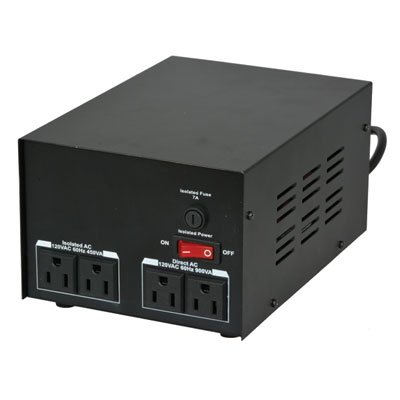
- Compact benchtop transformer with 450VA isolated output
- 110 VAC input and output with included AC power cord
- Small footprint fits tight work areas
Best For: Bench-top setups and smaller devices needing basic isolation
Compact Medical Surge Isolation

- 250W medical surge isolation transformer
- Two outlets with upright tower or wall-mount options
- Compact choice for smaller loads
Best For: Smaller medical devices and tight-space installs
High-Power Galvanic Isolation
Victron Energy 2000W Transformer

- Up to 2000W output for demanding loads
- Toroidal winding for low noise and high efficiency
- Soft start circuitry helps prevent breaker trips
Best For: High-demand systems needing galvanic isolation and quiet operation
Medical-Grade Surge Isolation
Tripp Lite IS1800HG 1800W 120V

- 1800W corded isolation transformer
- Six outlets for multi-device setups
- Rack-mount design with UL/RoHS compliance
Best For: Fixed medical or lab installations that need rack-mount power isolation
High-Power Dual-Voltage Isolation

- Up to 3600W at 115V or 230V
- Soft-start circuitry helps reduce breaker trips
- Galvanic isolation for demanding environments
Best For: High-power dual-voltage installations needing quiet, continuous-duty isolation
Safety Isolation for Equipment

- 220V to 220V single-phase isolation
- Pure copper windings for stable performance
- Overload and short-circuit protection
Best For: 220V equipment setups that need basic safety isolation and protection
Portable Power Conditioning Pick
Tripp Lite IS250 250W Isolation Transformer

- 250W, 120V unit with 2.1A current rating
- 680 joules of surge protection
- Two outlets with 6-foot cord and wall-mount design
Best For: small medical devices or bench setups needing basic isolation and surge protection
Compact Chassis-Mount Choice
Hammond 171A Isolation Transformer

- Chassis-mount transformer rated at 1A
- Supports 50 to 60 hertz operation
- Compact 6.5-pound build with RoHS spec
Best For: integrated medical or electronic builds that need a small mounted transformer
High-Voltage Flange Mount Option
N-51X 35VA Isolation Transformer
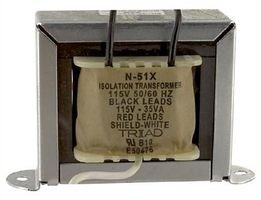
- 1500Vrms, 35VA transformer with 4 terminals
- Wire-lead flange-mount design
- RoHS specification listed
Best For: fixed assemblies needing a flange-mounted transformer with higher voltage isolation
Medical-Grade Power Isolation – Tripp Lite IS1000HG 1000W
If you’re comparing an isolation transformer for medical equipment, the Tripp Lite IS1000HG is built for setups that need complete line isolation, noise filtering, and surge suppression in one unit. It delivers 1000 watts of capacity, four hospital-grade outlets, and a low-impedance isolation transformer with a Faraday shield for 100% isolation from the input AC line.
Best For: Medical and lab equipment that benefits from isolated, hospital-grade AC power with multiple outlets.
Pros:
- 1000W capacity supports a broader range of sensitive devices.
- Four 5-15R-HG hospital-grade outlets provide multiple connections.
- Internal low-impedance isolation transformer with Faraday shield offers 100% isolation from the input AC line.
- Leakage is less than 100 microamps, which is useful for sensitive equipment.
Cons:
- At 37.2 pounds, it is relatively heavy.
- Wall-mount design may not suit every workspace.
- Large 30″D x 8″W x 6″H footprint needs dedicated space.
This is a strong fit when you want a medical-grade isolation transformer with multiple outlets and built-in protection features. Its focus is on clean, isolated power rather than portability.
Benchtop Isolation Value – Jameco GRP-1200 450VA
For a compact isolation transformer for medical equipment or other sensitive bench setups, the Jameco Valuepro GRP-1200 offers a straightforward 120 VAC isolation design in a small benchtop form factor. It provides isolated 110 VAC output, a 450VA isolated rating, and includes an AC power cord for simple setup.
Best For: Bench-top test areas and smaller devices that need basic isolated AC power in a compact unit.
Pros:
- Compact benchtop size at 8.86″L x 6.10″W x 4.33″H.
- Isolated output is rated at 450VA.
- Input and output are both listed at 110 VAC, which keeps the setup simple.
- AC power cord is included.
Cons:
- Lower 4A current rating limits larger loads.
- Only one isolation zone is specified in the notes.
- No hospital-grade outlet details are listed.
This model makes sense if you want a small, practical isolation transformer without paying for extra capacity or medical-grade outlet features. It is best matched to lighter-duty bench use where size matters.
Compact Medical Surge Isolation – Tripp Lite IS250HG 250W
Tripp Lite IS250HG Isolation Transformer 250W Medical Surge 120V 2 Outlet TAA GSA
Check Price On AmazonIf you need a smaller isolation transformer for medical equipment, the Tripp Lite IS250HG focuses on compact protected power with two outlets and a 250W rating. It is designed as a medical surge isolation transformer and can be mounted upright or on a wall, which makes it easier to place in tight spaces.
Best For: Smaller medical devices and limited-space installs where compact isolation is the priority.
Pros:
- Compact 250W design for smaller loads.
- Two outlets keep the unit simple and focused.
- Mounting options include upright tower or wall mount.
- Listed as a medical surge isolation transformer.
Cons:
- 250W output is much lower than larger isolation transformers.
- Only two outlets are available.
- Item weight and dimensions still require dedicated space.
This is a good pick when you need medical-grade isolation in a smaller package and do not need high wattage. It trades capacity for a simpler footprint and easier placement.
High-Power Galvanic Isolation – Victron Energy 2000W Transformer
For buyers looking at an isolation transformer for medical equipment in a high-power format, the Victron Energy 2000W unit emphasizes complete isolation, quiet operation, and efficient continuous use. Its toroidal wound technology is designed for low noise and high energy efficiency, while soft start circuitry helps prevent breaker trips during power-up.
Best For: High-demand electrical systems that need galvanic isolation, low noise, and soft-start protection.
Pros:
- Up to 2000W output supports demanding continuous loads.
- Toroidal wound technology is designed for low noise and high efficiency.
- Soft start circuitry helps reduce inrush-related breaker trips.
- Galvanic isolation helps prevent electrolytic corrosion.
Cons:
- No outlet count is listed in the supplied details.
- Floor-mount design may not suit compact medical carts or benches.
- Not described as hospital-grade in the notes.
This model stands out when the priority is higher power delivery with isolation rather than a compact medical-power form factor. It is more of a rugged continuous-use transformer than a specialized hospital outlet unit.
Medical-Grade Surge Isolation – Tripp Lite IS1800HG 1800W 120V
Tripp Lite IS1800HG Isolation Transformer 1800W Medical Surge 120V 6 Outlet TAA GSA
Check Price On AmazonIf you need an isolation transformer for medical equipment with a straightforward 120V setup, the Tripp Lite IS1800HG is built around a 1800W corded design and UL/RoHS compliance. Its rack-mount format and six outlets make it a practical choice for fixed installations where power conditioning and isolation both matter.
Best For: Medical or lab setups that want a rack-mount isolation transformer with multiple outlets and documented compliance.
Pros:
- 1800W capacity supports a solid range of connected equipment.
- Six outlets help simplify multi-device installations.
- Rack-mount form factor suits organized, permanent setups.
- Includes a replacement plug and user manual with warranty information.
Cons:
- Heavy at 55.2 pounds, so installation is more involved.
- Designed for 120V, which limits flexibility versus dual-voltage models.
- Single-unit corded design may not suit portable use.
This model makes the most sense when you want a medically oriented isolation transformer for equipment in a fixed rack environment. It emphasizes practical compliance, outlet count, and dependable installation over portability.
High-Power Dual-Voltage Isolation – Victron Energy 3600W 115/230V
The Victron Energy isolation transformer is a high-capacity option for buyers who need 115V or 230V support and a rugged build. While it’s not specifically a medical device listing, it can suit systems that need galvanic isolation, quiet operation, and continuous-duty performance in demanding environments.
Best For: Users who need a powerful dual-voltage isolation transformer with soft-start protection and continuous operation in rugged setups.
Pros:
- Delivers up to 3600W at either 115V or 230V.
- Toroidal wound technology is designed for low noise and high efficiency.
- Soft-start circuitry helps prevent shore breaker trips on startup.
- Galvanic isolation helps protect onboard electrical systems.
Cons:
- Heavier than typical portable units at 22,174 g.
- Primarily positioned for continuous-duty demanding environments, not medical-specific use.
- Rack-mount style may require more planned installation.
For shoppers prioritizing raw output and electrical isolation, this transformer stands out for its power range and protection features. It is best viewed as a heavy-duty isolation solution rather than a medical-specialty model.
Safety Isolation for Equipment – BK-2000VA 220V to 220V
For buyers comparing an isolation transformer for medical equipment, the BK-2000VA focuses on single-phase 220V to 220V isolation with durable construction and basic safety protections. The listing also emphasizes pure copper windings, low heat generation, and stable performance for equipment-oriented use.
Best For: Equipment setups that need a 220V isolation transformer with overload and short-circuit protection.
Pros:
- 220V to 220V single-phase isolation suits specific equipment needs.
- Pure copper windings are designed for low power consumption and minimal heat.
- Includes overload and short-circuit protection.
- UL listed, which adds a helpful compliance signal.
Cons:
- Listing is broad and not specifically focused on medical-device applications.
- No outlet count, mounting style, or portability details provided.
- Voltage range is fixed at 220V to 220V, limiting versatility.
This is a straightforward safety isolation option for buyers who need stable 220V equipment support and protection features. If your setup is built around that voltage, it offers a practical, no-frills approach.
Portable Power Conditioning Pick – Tripp Lite IS250 250W Isolation Transformer
If you need an isolation transformer for medical equipment, the Tripp Lite IS250 is a compact, corded power conditioner built around a 250W, 120V design. It includes 680 joules of surge protection, two outlets, and a 6-foot cord, making it a practical option when you need a simple line-conditioning setup with wall-mount placement.
Best For: Small medical devices or bench setups that need basic isolation, surge protection, and two-outlet convenience.
Pros:
- 250W, 120V design with 2.1A current rating.
- Includes 680 joules of surge protection.
- Two outlets and a 6-foot cord add flexibility.
- Wall-mountable and NEMA specification noted.
Cons:
- Limited to 250W, so it is not for higher-power equipment.
- Only two outlets are included.
- Built as a corded unit, which may not suit all installation needs.
This is a straightforward choice when your priority is a modest-capacity isolation transformer for medical equipment with added surge protection. It is better suited to lighter-duty use than to larger clinical systems.
Compact Chassis-Mount Choice – Hammond 171A Isolation Transformer
The Hammond 171A is an isolation transformer for medical equipment and other corded applications that call for a chassis-mount format. It is rated at 1A, supports 50 to 60 hertz operation, and carries a RoHS specification, so it fits best in builds where a compact mounted transformer is preferred.
Best For: Chassis-mounted projects or equipment builds that need a 1A isolation transformer with 50/60 Hz support.
Pros:
- Chassis-mount design for integrated installations.
- Rated 1A with 50 to 60 hertz support.
- Compact 6.5-pound unit.
- RoHS specification listed.
Cons:
- Only rated for 1A, so capacity is limited.
- No outlet count or cord length is listed.
- Best for built-in applications rather than plug-and-play use.
If your priority is a mounted isolation transformer for medical equipment rather than a finished external conditioner, the 171A is the most installation-focused option here. Its strength is compact integration, not accessory features.
High-Voltage Flange Mount Option – N-51X 35VA Isolation Transformer
The N-51X is an isolation transformer for medical equipment-style applications where a flange-mounted part and higher voltage rating matter more than plug-in convenience. Its notes list a 1500Vrms, 35VA design with 4 terminals, wire leads, and a flange mount, making it a fit for built-in electrical assemblies.
Best For: Flange-mounted assemblies that need a 1500Vrms, 35VA isolation transformer with wire leads.
Pros:
- 1500Vrms rating for higher-voltage isolation needs.
- 35VA capacity with 4 terminals and wire leads.
- Flange-mount design suits fixed installations.
- RoHS specification is listed.
Cons:
- No plug-in outlets or corded convenience are listed.
- Best suited to custom assemblies, not ready-to-use setups.
- Lower VA rating may limit use to smaller loads.
This model stands out when you need a built-in isolation transformer for medical equipment or related electronics and care more about mounting style and voltage isolation than external features. It is a component-level choice for structured installations.
How We Picked the Best Isolation Transformer for Medical Equipment
Our shortlist focuses on the factors that matter most in real-world use: electrical ratings, outlet configuration, form factor, and safety-oriented design. For an Isolation Transformer for Medical Equipment, the best option is not simply the largest or most expensive one—it’s the unit that matches your device load, voltage needs, and workspace constraints.
We also favored products with medical-grade or industrial-grade positioning, practical cord and outlet setups, and clear specifications that make sizing easier for buyers.
Quick Comparison: What Stands Out
Some models are better suited to low-power benchtop devices, while others are built for higher-demand carts, diagnostic stations, or multiple-device setups. Compact 250W units may fit single instruments or test benches, while 1000W to 2000W models offer more headroom for broader use. Higher-capacity Victron and 220V options are more relevant where larger loads or different electrical standards come into play.
Key Buying Factors for an Isolation Transformer for Medical Equipment
Power Rating and Load Headroom
Start by adding up the wattage or VA draw of the devices you plan to power. Choose a transformer with comfortable overhead so it does not run near its limit during startup or sustained use. Extra capacity helps with reliability and thermal performance.
Input and Output Voltage
Match the transformer to your local supply and the equipment’s required voltage. Many medical settings use 120V devices, but some applications call for 115V/230V or 220V configurations. A mismatch can cause malfunction or safety issues.
Outlet Count and Physical Fit
If you need to power multiple devices from one source, outlet count matters. Also consider enclosure size, mounting options, cord length, and whether the transformer will live on a cart, bench, shelf, or floor location.
Compliance and Safety Features
Look for hospital-grade outlets, surge protection, and compliance language that fits your environment. In regulated or procurement-heavy settings, these details can be just as important as the electrical specs.
Who Should Buy Which Isolation Transformer for Medical Equipment?
If you need a compact solution for a single instrument or bench setup, a lower-wattage model may be enough. If you are supporting multiple medical devices, larger stations, or higher-load equipment, step up to a higher-capacity transformer with more outlets and better thermal margin. Buyers working across different regions or with mixed-voltage gear should pay especially close attention to voltage compatibility and conversion requirements.
In short, the best Isolation Transformer for Medical Equipment is the one that safely fits your load, matches your voltage, and supports your workflow without unnecessary complexity.