If you’re troubleshooting, repairing, or calibrating electronics, the right isolation transformer for test bench use can make your setup safer and easier to work with. It helps reduce shock risk and can simplify probing live circuits.
Below, we focus on practical buying factors like power rating, outlet count, size, and build quality so you can choose a unit that fits your bench and workload.
Best 10 Isolation Transformer for Test Bench Picks for 2026
Bench-Ready Conditioner
Tripp Lite IS250 Isolation Transformer Power Conditioner

- 250W isolation transformer with 680J surge protection
- Two outlets for light bench use
- Wall-mountable corded 120V design
Best For: Small test benches needing isolation and surge protection
Benchtop Workhorse
Jameco Valuepro GRP-1200 Benchtop Isolation Transformer
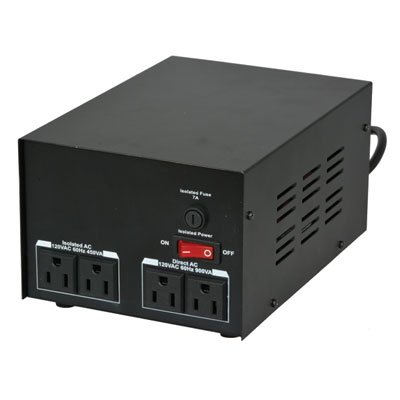
- 450VA isolated output for bench use
- Two isolated AC outlets included
- Compact benchtop design with AC cord
Best For: Bench-top electronics needing isolated 120V power
Protection-Focused Pick
AFT-500W 120V to 120V Isolation Transformer

- 500W 120V-to-120V isolation transformer
- LCD display with two output sockets
- Six listed protection functions
Best For: Bench and equipment setups needing extra protection features
Compact Chassis Option
Hammond 171A Isolation Transformer

- Chassis-mount isolation transformer
- Supports 50 to 60 Hz operation
- Lightweight 6.5-pound design
Best For: Custom bench builds and integrated chassis installs
Bench-Grade Power Isolation
2000W 120V to 120V with HD Display

- 2000W, 120V to 120V isolation
- Filters harmonics and reduces noise
- LCD display plus six protection functions
Best For: Test benches and bench setups needing isolated, monitored power
High-Power Isolation
Victron 3600W 115/230V Transformer

- 3600W with 115V or 230V support
- Toroidal design for low noise and efficiency
- Soft-start and galvanic isolation
Best For: High-load or continuous-duty test benches
Compact Test Bench Isolation
2000W Audio Isolation Transformer
- 2000W, 120V to 120V output
- Noise reduction with HD status display
- Protection against overload, temperature, and shorts
Best For: Smaller test benches and basic isolated-power setups
Medical-Grade Bench Isolation

- 100% AC line isolation with Faraday shield
- 4 hospital-grade outlets for connected gear
- Noise filtering, surge suppression, low leakage
Best For: Sensitive test benches and medical-grade equipment
High-Power Galvanic Isolation

- Up to 2000W at 115V or 230V
- Toroidal design for low noise and efficiency
- Soft start plus galvanic isolation
Best For: High-power continuous-duty isolation needs
Compact Noise-Filtering Isolation

- 120V-to-120V isolation with noise filtering
- LCD display shows operating status
- Six built-in protection functions
Best For: Small benches and light-duty isolated power
Bench-Ready Conditioner – Tripp Lite IS250 Isolation Transformer Power Conditioner
If you want an isolation transformer for test bench use with built-in conditioning, the Tripp Lite IS250 is a compact corded unit that combines isolation, surge protection, and a 120V output setup. Its 250W rating and two outlets make it a practical choice for lighter bench tasks where clean, isolated power matters more than high output capacity.
Best For: Small test benches and light-duty setups that need isolation plus surge protection in a wall-mountable unit.
Pros:
- Isolation transformer system with 680 joules of surge protection
- Two outlets for connecting multiple low-power devices
- Compact 120V corded design with wall-mount support
- Includes instruction manual and warranty information
Cons:
- 250W / 2.1A rating limits use to lower-power equipment
- Larger and heavier than a simple plug-in adapter
- Not the best fit for benches that need high output capacity
Overall, this model fits best when you need bench isolation and extra protection in a straightforward package rather than maximum power. It is better suited to modest test gear than demanding tools or multi-device setups.
Benchtop Workhorse – Jameco Valuepro GRP-1200 Benchtop Isolation Transformer
The Jameco Valuepro GRP-1200 is a benchtop isolation transformer for test bench setups that need a more straightforward power source with isolated output. With 450VA on the isolated side, two isolated AC outlets, and a bench-top form factor, it is aimed at practical electronics work where isolated 120V power is the priority.
Best For: Bench-top electronics work that needs isolated 120V output and a compact footprint.
Pros:
- Benchtop isolation transformer with 450VA isolated output
- Two isolated AC outlets for bench equipment
- Compact size fits smaller work areas
- Includes AC power cord and support for 50 to 60 Hz input
Cons:
- 4A current rating means it is not for heavy loads
- Primary side and isolated side details can take a moment to sort out
- No extra conditioning features beyond isolation are listed
This is a solid choice when you want a dedicated isolation transformer for test bench work without unnecessary complexity. It focuses on isolated output and usable bench power in a compact package.
Protection-Focused Pick – AFT-500W 120V to 120V Isolation Transformer
ZHENGXI Isolation Transformer 120V to 120V,500W Transformer Voltage Converter, 2 Output Sockets
Check Price On AmazonThis 500W isolation transformer is aimed at users who want an isolation transformer for test bench or power-sensitive setups with extra monitoring and protection features. It offers 120V to 120V conversion, two output sockets, an LCD display, and multiple protection functions, which makes it more feature-rich than a basic transformer.
Best For: Users who want isolation plus display and protection features in a 120V bench or equipment setup.
Pros:
- 500W capacity with 120V to 120V isolation
- Two output sockets for connecting equipment
- LCD display shows working status
- Includes over-voltage, under-voltage, overload, over-temperature, delay, and short-circuit protection
Cons:
- Minimum frequency is listed at 50 Hz, so it is less specific than some bench units
- Product notes focus on protection features more than bench layout details
- Not as compactly described for tight bench mounting as dedicated benchtop models
If your priority is a more actively protected isolation transformer for test bench-style use, this model stands out for its display and safeguards. It is a good fit when monitoring and protective behavior matter alongside isolation.
Compact Chassis Option – Hammond 171A Isolation Transformer
The Hammond 171A is a chassis-mount isolation transformer that works well when you need a more permanent installation in a test bench or enclosure. Its 1A current rating and 50 to 60 Hz support suggest a compact utility role rather than a high-power bench supply.
Best For: Chassis-mounted applications and compact test bench builds that need a basic isolation transformer.
Pros:
- Chassis mount design suits integrated bench or enclosure installs
- Supports 50 to 60 Hz operation
- Lightweight at 6.5 pounds
- RoHS compliant
Cons:
- 1A current rating is very limited for bench equipment
- No outlet count or conditioning features are listed
- Less plug-and-play than benchtop transformer units
This is the most installation-oriented option in the group, so it makes sense when the transformer is going into a built system rather than sitting loose on a bench. It is best viewed as a compact isolation component for custom setups.
Bench-Grade Power Isolation – 2000W 120V to 120V with HD Display
If you need an isolation transformer for test bench use, this 2000W 120V-to-120V unit is built around cleaner power delivery and electrical separation. It is designed to filter harmonics, reduce noise, and keep the output insulated from earth, while the LCD display and protection features make it easier to monitor during routine bench work.
Best For: Test benches, audio/electronics work, and setups that need isolated 120V output with built-in monitoring.
Pros:
- 2000W capacity with 120V to 120V isolation
- Filters harmonics and helps reduce noise and distortion
- Output is insulated from earth for safer isolation
- HD LCD display shows working status
Cons:
- Only two output sockets
- Designed for corded electric use, so it is not portable
- Safety features help, but it is still a bench power device that needs proper setup
For a bench that benefits from isolated power plus status monitoring, this model covers the basics well. Its six protection functions and ETL listing add practical reassurance, especially when you want cleaner output and visible operating feedback.
High-Power Isolation – Victron 3600W 115/230V Transformer
For a more demanding isolation transformer for test bench or workshop-style use, this Victron unit stands out for its 3600W rating and support for either 115V or 230V. The toroidal wound design is intended for low noise and high efficiency, and the soft-start circuitry helps manage inrush current during power-up.
Best For: High-load benches, continuous operation, and setups that need galvanic isolation with soft-start protection.
Pros:
- Up to 3600W output at 115V or 230V
- Toroidal wound design for low noise and efficiency
- Soft-start circuitry helps prevent breaker trips
- Galvanic isolation for electrical protection
Cons:
- Very heavy at 22174 g
- Rack mount format may not suit every bench layout
- More transformer than many small test benches need
This is the strongest option in the group if your bench demands sustained power and robust isolation. It is less about compact convenience and more about durable, continuous-duty performance in demanding environments.
Compact Test Bench Isolation – 2000W Audio Isolation Transformer
This 2000W isolation transformer for test bench setups focuses on cleaner output, monitoring, and basic protection in a straightforward 120V-to-120V format. It is described as an audio isolation transformer, but the core features also suit bench use where you want noise reduction, distortion control, and visible operating status.
Best For: Smaller benches and electronics work where a simple 2000W isolated 120V supply is enough.
Pros:
- 2000W 120V to 120V isolation
- Helps filter noise and reduce distortion
- Intelligent HD display shows working status
- Includes over-voltage, overload, over-temperature, and short-circuit protection
Cons:
- Fewer listed details than the other 2000W model
- No earth-isolation wording in the supplied notes
- Only one included unit count, with no extra accessories noted
If you want a simpler bench transformer with the same 2000W / 120V-to-120V core idea, this model is easy to compare. Its CE listing and protection set make it a practical pick when you mainly need isolated power and status visibility.
Medical-Grade Bench Isolation – Tripp Lite 1000W
If you need an isolation transformer for test bench work, this Tripp Lite unit is aimed at sensitive gear that benefits from complete line isolation, noise filtering, and surge suppression. With 1000 watts and four hospital-grade outlets, it suits lab-style setups where cleaner power and safer isolation matter.
Best For: Test benches, medical-grade setups, and sensitive equipment that needs isolated AC power.
Pros:
- Internal low-impedance isolation transformer with Faraday shield provides 100% isolation from the input AC line.
- Noise filtering and surge suppression help protect sensitive equipment.
- Four 5-15R-HG hospital-grade outlets support multiple devices.
- Leakage is listed at less than 100 microamps.
Cons:
- At 37.2 pounds, it is relatively heavy for bench repositioning.
- Wall-mount form factor may not suit every test bench layout.
- 1000W capacity may be limiting for larger loads.
Overall, this is a strong choice when isolation and clean power are the priority over compact size. The hospital-grade design and low leakage make it especially relevant for professional or sensitive bench environments.
High-Power Galvanic Isolation – Victron 2000W
For a higher-capacity isolation transformer for test bench-style power needs, this Victron unit offers up to 2000W at 115V or 230V. Its toroidal wound design focuses on low noise and efficiency, while galvanic isolation helps separate circuits and support reliable continuous operation.
Best For: High-power isolation needs, continuous-duty setups, and environments that value quiet operation.
Pros:
- Delivers up to 2000W at either 115V or 230V.
- Toroidal wound technology is designed for low noise and high efficiency.
- Soft start circuitry helps prevent shore circuit breaker trips during power-up.
- Galvanic isolation helps protect onboard electrical systems.
Cons:
- Floor-mount design may be less convenient for compact bench setups.
- More specialized than a basic bench transformer.
- Information provided does not list outlet count or bench-specific features.
This model makes sense when you need more power headroom and continuous-duty reliability. It is less bench-oriented than some smaller units, but its quiet operation and isolation features are well suited to demanding electrical environments.
Compact Noise-Filtering Isolation – GBK 500W
If you want a compact isolation transformer for test bench or audio-adjacent work, this 120V-to-120V 500W model is built to reduce noise and improve power quality. It adds an HD display and multiple protection functions, making it a practical pick for smaller setups that still need isolated output.
Best For: Smaller benches, audio equipment, and users who want display feedback plus protective shutdowns.
Pros:
- 500W 120V-to-120V isolation helps filter noise and improve sound quality.
- LCD display shows working status clearly.
- Six protection functions include over-voltage, under-voltage, overload, over-temperature, delay, and short-circuit protection.
- Two output sockets add basic convenience for light setups.
Cons:
- 500W capacity is modest for heavier bench loads.
- Product positioning is more audio-focused than industrial or medical.
- Details do not mention hospital-grade outlets or surge suppression.
As a smaller isolation transformer, this one is best when clean power and built-in protection matter more than high wattage. It fits light-duty bench work well, especially if you value the display and safeguard features.
How We Picked the Best Isolation Transformer for Test Bench
We looked for an Isolation Transformer for Test Bench applications that balances safety, output capacity, and day-to-day usability. Priority went to units with clear watt or VA ratings, useful outlet layouts, and a form factor that suits bench or workshop placement. We also considered whether the model is better suited for light electronics repair, general-purpose bench work, or heavier equipment testing.
Quick Comparison
For small benches and routine electronics service, lower-power benchtop models are usually the most practical choice. If you need to power larger instruments, multiple devices, or higher-draw gear, step up to a higher-wattage unit with enough headroom to avoid nuisance shutdowns or overheating. Medical-grade and rugged branded options tend to offer stronger build quality, while audio-style and display-equipped units may appeal if noise or monitoring matters in your workflow.
Key Buying Factors for an Isolation Transformer for Test Bench
Power Rating
Match the transformer’s wattage or VA rating to the equipment you actually plan to run. Leave margin for startup surges and avoid operating near the limit for long periods.
Output and Connectivity
Check how many outlets you need and whether they are standard or hospital-grade. A bench setup often benefits from multiple outlets, but only if the total load stays within spec.
Voltage and Frequency Compatibility
Confirm the input and output voltage match your region and equipment. Most bench users want 120V-to-120V isolation, but international or mixed-voltage environments may call for broader compatibility.
Size, Noise, and Heat
A compact enclosure is easier to place on or under a bench. Also consider fan noise, transformer hum, and ventilation, especially if you work in a quiet lab or audio-sensitive space.
Safety and Build Quality
Look for grounded construction, solid connectors, and reputable warranty support. For an Isolation Transformer for Test Bench use, dependable thermal behavior and stable performance matter more than extra features.
Who Should Buy Which Isolation Transformer for Test Bench?
If you do light repair, prototyping, or occasional troubleshooting, a smaller benchtop transformer is usually enough. If you service larger consumer electronics, lab gear, or multiple devices at once, choose a mid- to high-capacity model with more output headroom. Buyers who prioritize compliance, durability, or clinical-style build standards should look at medical-grade or branded industrial options. If your work is audio-related or noise-sensitive, favor models with lower audible noise and clear monitoring features.
In short, the best Isolation Transformer for Test Bench work is the one that safely matches your load, fits your workspace, and gives you enough capacity to work without constant compromise.