Choosing the right sander can make curved cuts, inside radii, and template work dramatically easier. The best oscillating spindle sanders help you clean up edges quickly while keeping control on tricky shapes.
Below, we’ve narrowed the field to 10 standout options for different shop sizes, power needs, and budgets.
Best 10 Oscillating Spindle Sanders Picks for 2026
Shop-Ready Value
WEN 6510T 3.5 Amp Oscillating Spindle Sander
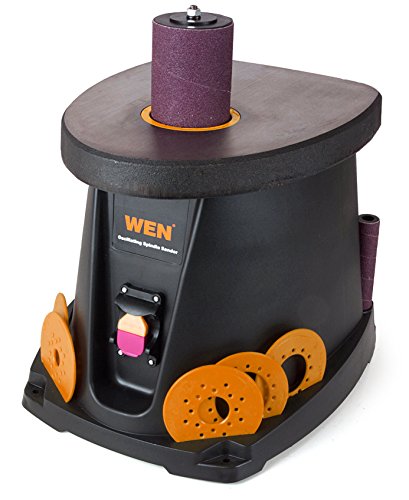
- 3.5 amp motor with 58 OPM and 2000 RPM
- Onboard storage plus dust collection port
- 30.2-pound benchtop design
Best For: Home shops that want a simple, capable spindle sander
Cast-Iron Stability
Triton TSPS450 Oscillating Spindle Sander

- Cast iron top for a stable benchtop feel
- 3.5A motor with 2000 RPM and 58 OPM
- Includes 6 sleeves, drums, and table inserts
Best For: Woodworkers sanding curves and irregular shapes
Two-in-One Flexibility
WEN 6524 Oscillating Belt and Spindle Sander
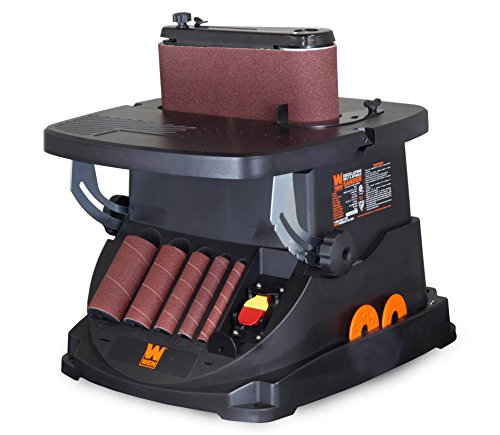
- Spindle and belt sanding in one machine
- Five spindle sizes plus 4 x 24 inch belt
- Up to 2000 RPM spindle speed and 1575 FPM belt speed
Best For: Shops that need both spindle and belt sanding
Heavy-Duty Shop Pick
JET JBOS-5 Benchtop Oscillating Spindle Sander
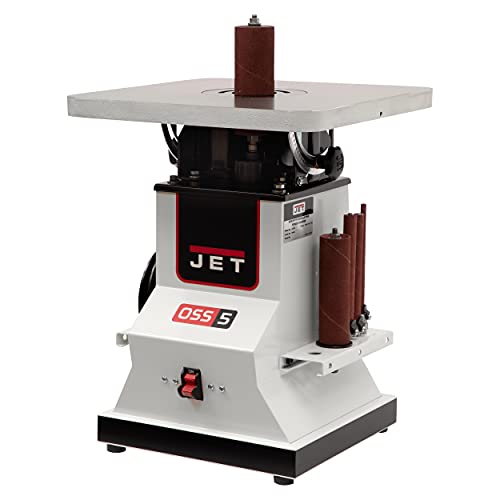
- Precision ball bearings and worm-and-gear oscillation
- 14-1/2 inch cast iron table tilts to 45 degrees
- Includes multiple spindle assemblies and inserts
Best For: Users wanting a heavier-duty benchtop sander with bevel sanding
Portable Dual-Use
WEN HA5932 5-Amp Portable Oscillating Spindle Sander
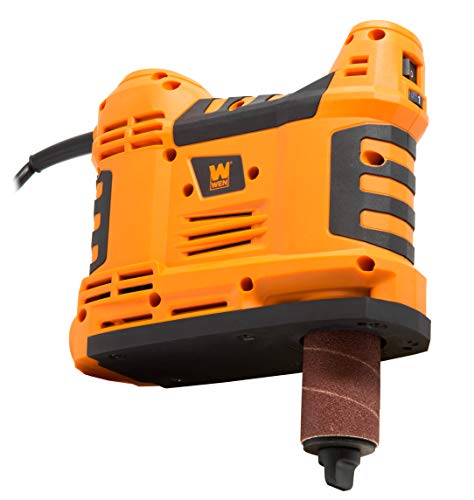
- Lightweight handheld design reaches tight spots
- Clamps to a bench for stationary use
- Variable speed with 4 spindle sizes and dust port
Best For: Woodworkers needing a portable sander with benchtop versatility
Large Benchtop Workspace
VEVOR 2400RPM Oscillating Spindle Sander with Wide Table

- 2400 RPM motor with 5/8-inch stroke
- Wide cast iron worktable for stable support
- 6 sleeves, 6 inserts, and dust port for cleaner sanding
Best For: Shop users who want a roomy benchtop sander for larger projects
Compact Heavy-Duty Control
Woodskil Variable Speed Oscillating Spindle Sander

- 2/3HP 4A motor for tougher sanding jobs
- Variable speed from 1000 to 1800 RPM
- Compact 26-pound design with 6 sleeves and dust port
Best For: Users who need a compact benchtop sander with adjustable speed
Large-table benchtop pick
Rikon Benchtop Oscillating Spindle Sander

- 12-5/8" x 12" work surface
- 1/2 HP corded motor
- Includes 5 spindles and 6 inserts
Best For: Woodworkers who want a roomy benchtop sander with onboard storage
Wide-table angled sanding pick
WEN AT6535 3.5-Amp Oscillating Spindle Sander
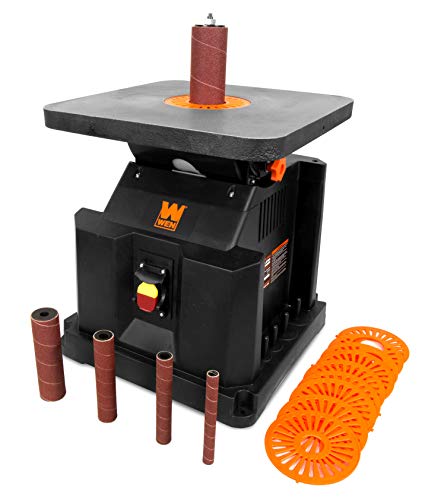
- Five sleeve sizes from 1/2" to 2"
- 14-1/2" x 14-1/2" table
- Bevels up to 45 degrees
Best For: Users who need a spacious table and angled sanding capability
Shop-Ready Value – WEN 6510T 3.5 Amp Oscillating Spindle Sander
If you want a straightforward oscillating spindle sander for shaping curves and smoothing irregular edges, the WEN 6510T covers the essentials without overcomplicating the setup. Its 3.5 amp motor delivers 58 OPM and up to 2000 RPM, while onboard storage and a dust collection port help keep the workspace organized.
Best For: Home users and small shops that want a capable benchtop sander with useful storage and dust control.
Pros:
- 3.5 amp motor provides 58 OPM and 2000 RPM for common contour-sanding tasks
- Onboard storage keeps accessories close at hand
- Dust collection port supports cleaner sanding sessions
- Compact benchtop design at 30.2 pounds
Cons:
- Only the included spindle sander components are listed in the package
- No table-tilt feature is mentioned in the supplied details
This is a practical pick if you want a focused oscillating spindle sander with solid speed specs and a clean, storage-friendly layout.
Cast-Iron Stability – Triton TSPS450 Oscillating Spindle Sander
The Triton TSPS450 is built for sanding contours, arcs, curves, and other irregular shapes, making it a solid fit when you need an oscillating spindle sander for more detailed edge work. Its 3.5A motor runs at 2000 RPM with 58 OPM oscillation, and the cast iron top adds a sturdy feel for bench use.
Best For: Woodworkers who want a stable benchtop sander for curved and irregular profiles.
Pros:
- Designed for contours, arcs, curves, and irregular shapes
- 3.5A motor with 2000 RPM and 58 OPM for efficient sanding
- Cast iron top adds stability
- Includes 6 sanding sleeves with matching rubber drums and table inserts
Cons:
- Sleeve range is listed as 1/2 to 3 inches, so very small work may need another solution
- No dust port is mentioned in the supplied notes
If you want a stable spindle sander with a more substantial top and a useful starter accessory set, the TSPS450 is easy to place on the short list.
Two-in-One Flexibility – WEN 6524 Oscillating Belt and Spindle Sander
If your projects call for both spindle work and belt sanding, this WEN 6524 gives you more versatility than a standard oscillating spindle sander. It offers multiple drum sizes, a 4 x 24 inch belt, and a 3.5-amp motor that drives both sanding modes at up to 2000 RPM or 1575 FPM for the belt.
Best For: Users who want one benchtop tool for curved spindle sanding and straight belt-sanding tasks.
Pros:
- Combines oscillating spindle sanding with a 4 x 24 inch belt
- Multiple spindle sizes from 1/2 inch to 2 inches
- 3.5-amp motor with spindle speeds up to 2000 RPM and belt speed up to 1575 FPM
- Includes work table, throat plates, drums, and 80-grit paper
Cons:
- Heavier and larger than a spindle-only unit at 27 pounds and 18.5 x 16.5 x 18 inches
- No dust port is mentioned in the supplied details
This is the best fit here if you want a more flexible sander that can handle both contour work and belt-sanding jobs in one machine.
Heavy-Duty Shop Pick – JET JBOS-5 Benchtop Oscillating Spindle Sander
The JET JBOS-5 is a more substantial oscillating spindle sander for users who want a serious benchtop machine with stable hardware and a larger work surface. It uses precision ball bearings and a worm-and-gear oscillation mechanism, and its 14-1/2 inch cast iron table tilts to 45 degrees for bevel sanding projects.
Best For: Woodworkers who want a heavier-duty benchtop sander with cast iron stability and bevel capability.
Pros:
- Precision ball bearings and worm-and-gear oscillation mechanism for consistent operation
- 14-1/2 inch cast iron table tilts to 45 degrees
- Includes multiple spindle assemblies and table inserts
- 1 inch oscillating action is designed to reduce friction heat and protect sleeves
Cons:
- At 75.6 pounds, it is much heavier than compact benchtop models
- 1725 RPM top speed is lower than some 2000 RPM competitors
If you value build quality, a cast iron table, and bevel-sanding flexibility, the JBOS-5 stands out as the most robust option in this group.
Portable Dual-Use – WEN HA5932 5-Amp Portable Oscillating Spindle Sander
If you want oscillating spindle sanders that can move from the bench to the workpiece, this WEN model is built for flexibility. Its lightweight, handheld design helps reach hard-to-sand spots, and the included mounting hardware lets you clamp it down as a stationary benchtop unit when you need more control.
Best For: Woodworkers who want a portable spindle sander that can also function as a benchtop setup.
Pros:
- Lightweight portable design for sanding in hard-to-reach places
- Can be clamped to a workbench for benchtop use
- Variable speed motor runs from 1800 to 3200 rotations and 50 to 90 oscillations per minute
- Includes four spindle diameters plus dust port, clamps, guide plate, and sanding accessories
Cons:
- Smaller handheld format may not suit users seeking a full-size stationary machine only
- Work setup depends on using the included clamps for benchtop operation
For buyers comparing oscillating spindle sanders, this WEN stands out for its dual-purpose design and broad accessory package. It is a practical pick when you need both portability and the option to secure the tool at the bench.
Large Benchtop Workspace – VEVOR 2400RPM Oscillating Spindle Sander with Wide Table
This VEVOR model is aimed at buyers who want oscillating spindle sanders with a roomy stationary setup. The 2400 RPM motor, 5/8-inch stroke, and wide cast iron worktable are designed to support smooth sanding on flat, curved, and contoured pieces during furniture finishing, crafts sanding, and DIY woodworking.
Best For: Users who want a spacious benchtop spindle sander for furniture, crafts, and general workshop use.
Pros:
- 2400 RPM rotation for efficient sanding on flat, curved, and contoured surfaces
- Includes 6 sanding sleeves and 6 table inserts for different workpiece sizes
- Wide 15.4 x 16.3-inch cast iron worktable provides stable support
- Built-in dust port connects to a vacuum hose for cleaner operation
Cons:
- Benchtop design is less portable than compact handheld alternatives
- Heavier 37.5-pound build may be less convenient to move frequently
If your priority is workspace stability and size, this VEVOR is a strong option among oscillating spindle sanders. It offers a broad sanding range and organized storage, making it a practical fit for regular shop use.
Compact Heavy-Duty Control – Woodskil Variable Speed Oscillating Spindle Sander
For woodworkers comparing oscillating spindle sanders that balance power and control, this Woodskil model offers a compact stationary setup with variable speed. Its 2/3HP 4A motor is meant for tougher sanding jobs, while the 1000 to 1800 RPM range gives you more precise control on delicate curves, larger surfaces, and detail work.
Best For: Users who want a compact spindle sander with adjustable speed for heavier sanding tasks.
Pros:
- 2/3HP 4A motor provides added power for hardwood and larger projects
- Variable speed from 1000 to 1800 RPM supports more precise control
- Includes 6 sanding sleeves from 1/2 inch to 3 inch for flexible use
- Compact 26-pound design is easier to store in smaller workshops
Cons:
- Maximum rotational speed is lower than some higher-RPM competitors
- Built for stationary use rather than portable handheld sanding
This Woodskil is a sensible pick if you want a more compact workshop machine without giving up sanding range or dust collection support. It is especially appealing for users who need adjustable speed for a variety of curved and contoured edges.
Large-table benchtop pick – Rikon Benchtop Oscillating Spindle Sander
If you want an oscillating spindle sander built around a generous work area, the Rikon benchtop model is aimed at steady shop use. Its 12-5/8″ x 12″ table, 1/2 HP motor, and included inserts and spindles make it a practical pick for shaping curves, edges, and small parts with less setup hassle.
Best For: Woodworkers who want a compact benchtop sander with a large table and organized accessory storage.
Pros:
- Large 12-5/8″ x 12″ work surface gives you room for supporting workpieces.
- 1/2 HP corded motor provides dedicated sanding power for bench tasks.
- Includes 5 spindles and 6 table inserts for a range of diameters.
- 1-1/2″ dust port and onboard storage help keep the workstation cleaner and organized.
Cons:
- It is a dedicated benchtop machine, so it is not built for portability.
- Supplied notes do not mention variable speed or tilt features.
This Rikon fits buyers who value a roomy table and a straightforward oscillating spindle sander setup. The included accessories and dust port make it easier to get started, especially if you want one machine ready for regular contour sanding.
Wide-table angled sanding pick – WEN AT6535 3.5-Amp Oscillating Spindle Sander
WEN AT6535 3.5-Amp Oscillating Spindle Sander with Extra Large Beveling Table Top
Check Price On AmazonThe WEN AT6535 is an oscillating spindle sander built for users who want size, range, and straightforward bench features. It pairs five sleeve sizes with a 14-1/2″ x 14-1/2″ table that bevels up to 45 degrees, making it a practical option for sanding angled parts and curved profiles.
Best For: Shops and DIYers who want a spacious table and a wide sleeve range for angled or contoured work.
Pros:
- Five sanding sleeve sizes cover common spindle diameters from 1/2″ to 2″.
- Large 14-1/2″ x 14-1/2″ table supports bigger workpieces.
- Table bevels up to 45 degrees for angled sanding tasks.
- Onboard storage helps keep sleeves and accessories organized.
Cons:
- Heavier 33.2-pound design is better suited to a fixed shop spot.
- 3.5-amp motor may be less powerful than higher-wattage alternatives.
For buyers comparing oscillating spindle sanders by usable table area and accessory range, the AT6535 covers a lot of ground. It is especially appealing if you frequently move between straight, curved, and angled sanding work.
2-in-1 versatility pick – 500W Oscillating Spindle Belt Sander
This oscillating spindle sander goes beyond a standard benchtop design by combining spindle and belt sanding in one machine. With a 500W motor, variable speed control from 1000 to 2000 RPM, and a 0-45 degree tilting table, it is built for users who want one tool for both flat edges and detailed contours.
Best For: Woodworkers who want one compact machine for both belt sanding and spindle sanding.
Pros:
- 2-in-1 design combines a 4×24 belt sander with spindle sanding.
- Variable speed control from 1000-2000 RPM helps match the task and material.
- 0-45 degree tilting table and 14.5″ x 14.5″ surface support angled work.
- Includes multiple spindle sizes and a dust collection port for cleaner operation.
Cons:
- Larger 16″ x 16″ x 17″ footprint may take up bench space.
- The product details list a 120-volt corded setup, so it is not a battery tool.
If you need the flexibility of both belt and spindle sanding in one footprint, this model stands out. The variable speed and tilting table make it a versatile choice for curves, edges, and detailed woodworking tasks.
How We Picked the Best Oscillating Spindle Sanders
Our selection focused on the features that matter most in real woodworking use: spindle and belt versatility, motor strength, table size, speed control, build quality, dust collection, and value for the money. We also looked for models that suit different users, from occasional DIY sanding to frequent shop work.
Because Oscillating Spindle Sanders are often used for fine shaping rather than heavy stock removal, consistency and control matter as much as raw power. A stable base, usable accessories, and easy abrasive changes can make a big difference in day-to-day results.
Quick Comparison: What Stands Out Across the Group
This roundup includes compact benchtop units, variable-speed models, and combination machines that add belt sanding capability. Some options are better for small workshops and occasional projects, while others are aimed at users who want a more durable, higher-capacity tool for repeat use.
If you need versatility, a combo sander may be appealing. If you want a dedicated curve-sanding tool with a simpler setup, a standard spindle sander is usually the better fit.
Key Buying Factors for Oscillating Spindle Sanders
Motor Power and Speed Control
More power helps maintain sanding speed on harder woods and larger workpieces, but variable speed is often more useful than a higher wattage number alone. Adjustable speed lets you better match the abrasive to the material and reduce burning.
Spindle and Belt Range
Check the included sleeve sizes and whether the machine supports belt sanding as well as spindle sanding. A wider range gives you more flexibility for small curves, inside cutouts, and larger profiles.
Table Size and Stability
A larger table can improve support for panels, cabinet parts, and routed pieces. Look for solid construction and minimal vibration, especially if you plan to sand many repetitive parts.
Dust Collection and Abrasive Access
Good dust collection keeps the work area cleaner and helps you see your layout lines. Easy sleeve changes and accessible storage for accessories also save time during projects.
Who Should Buy Which Oscillating Spindle Sanders?
DIY users and occasional hobbyists should prioritize ease of use, affordability, and a compact footprint. Woodworkers who handle more frequent shaping work will likely appreciate stronger motors, variable speed, and better table support. If you want one machine for both curves and flat sanding, a combination model can be the most practical choice.
For best results, choose the sander that matches your typical projects rather than the most powerful model on paper. The right fit will feel smoother, safer, and more efficient in the shop.