Portable spindle sanders are built for one job: making curved edges, contours, and inside radii smoother, faster, and more consistent. If you work with furniture parts, cabinet pieces, templates, or decorative cutouts, the right sander can save time and improve your finish.
Below, we’ve narrowed the options to 10 standout picks with a focus on control, oscillation, sleeve size, dust handling, and overall value for different workshop needs.
Best 10 Portable Spindle Sanders Picks for 2026
Best Dual-Use Portable Option
WEN HA5932 portable oscillating spindle sander
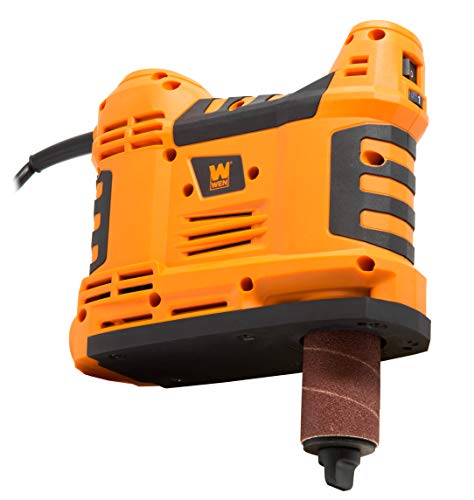
- Lightweight handheld design
- Clamps to workbench with included hardware
- 5-amp variable speed motor with 4 spindle sizes
Best For: Users who want handheld portability and occasional benchtop stability
Best Drill Attachment Pick
Hand-held drill spindle sander kit
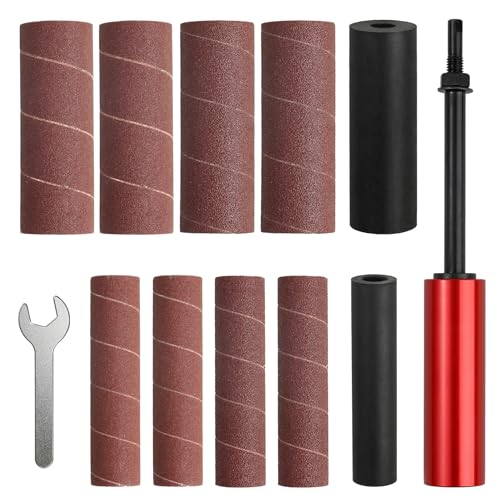
- Turns a standard drill into a sanding tool
- Includes 2 rubber drums and 8 sleeves
- Light 1.8-pound handheld design
Best For: Users who want a low-cost sanding attachment for an existing drill
Best Stationary Shop Model
WEN 6510T benchtop oscillating spindle sander
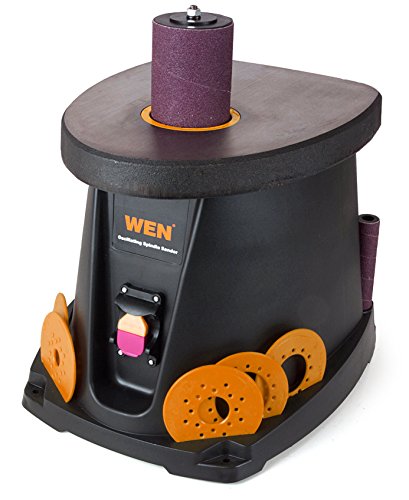
- 3.5 amp motor with 58 OPM and 2000 RPM
- Onboard accessory storage
- Dust collection port for easier cleanup
Best For: Shops that want a dedicated benchtop sander with dust control
Best All-Around Portable Kit
Triton TSPSP650 portable oscillating spindle sander

- Handheld and bench-mount capable
- 650W motor with variable speed and oscillation
- Quick-change system plus edge guide and dust adaptor
Best For: Users who want the most versatile portable sander setup
Heavy-Duty Variable-Speed Pick
Woodskil Variable Speed Oscillating Spindle Sander

- 2/3HP 4A motor for tougher sanding tasks
- 1000-1800 RPM variable speed control
- 6 sleeves from 1/2" to 3" plus dust port
Best For: Woodworkers and DIYers needing power and control for hardwood and curves
High-Speed Benchtop Value
VEVOR Oscillating Spindle Sander, 2000RPM

- 2000RPM output for efficient sanding
- 12.5 x 11.5-inch cast aluminum table
- 6 sleeves, 6 inserts, and dust port
Best For: Furniture finishing and DIY sanding that benefits from a larger stable table
Dual-Function Workshop Pick
WEN 6524 Oscillating Belt and Spindle Sander
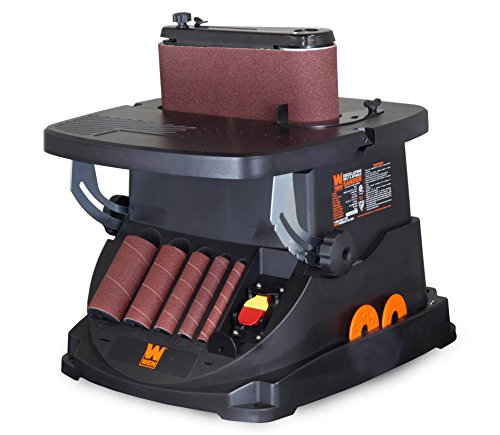
- Adds both belt and spindle sanding in one machine
- Spindle speeds up to 2000 RPM; belt up to 1575 FPM
- Onboard storage and beveling work table
Best For: Woodworkers who want belt and spindle sanding in a single benchtop tool
Space-Saving Benchtop Pick
Rikon 50-320 Oscillating Spindle Sander

- 12-5/8" x 12" work surface
- 1-1/2" dust port and onboard storage
- Includes 5 spindles and 6 table inserts
Best For: Small shops and hobby users
Heavy-Duty Workshop Choice
Rikon 50-300 Oscillating Spindle Sander

- All-steel build with metal housing
- ½ HP motor with oscillating action
- 5 spindle diameters and 6 inserts included
Best For: Serious woodworkers wanting a rigid benchtop machine
Compact Value Bench Model
Shop Fox W1846 Oscillating Spindle Sander

- 18" cast-iron table
- 1" stroke oscillates at 30 SPM
- Compact 50-pound bench design
Best For: Budget-minded users with limited shop space
Best Dual-Use Portable Option – WEN HA5932 portable oscillating spindle sander
If you want portable spindle sanders that can do double duty, the WEN HA5932 is built for both handheld sanding and bench-style work. Its lightweight design helps reach tight spots, while the included mounting hardware lets you clamp it down when you want a more stable setup.
Best For: Woodworkers who want one portable spindle sander for both hand use and temporary benchtop sanding.
Pros:
- Lightweight handheld design for hard-to-reach areas
- Can be clamped to a workbench with included hardware
- Variable speed motor runs from 1800 to 3200 RPM and 50 to 90 OPM
- Comes with four spindle diameters, dust port, guide plate, clamps, and sleeves
Cons:
- Portable format may not feel as rigid as a dedicated benchtop machine
- Requires clamping setup for stationary use
This model stands out if flexibility matters most, since it can move from handheld detail work to a more anchored sanding setup without changing tools. The included spindle sizes and accessories make it easy to start using right away.
Best Drill Attachment Pick – Hand-held drill spindle sander kit
Hand-Held Drum Spindle Sander For Woodworking, Red | Rubber Sanding Drum, For Drill
Check Price On AmazonAmong portable spindle sanders, this drill-driven kit is a simple way to turn a standard electric drill into a sanding tool for curves, contours, and surface finishing. It is aimed at detail work and comes with the drums, sleeves, and wrench needed for quick setup.
Best For: DIY woodworkers who already own a drill and want a compact sanding attachment kit for detailed shaping.
Pros:
- Converts a standard electric drill into a spindle sander
- Useful for curve sanding, polishing, contour finishing, and material removal
- Includes 2 rubber drums and 8 sanding sleeves in multiple grits and sizes
- Lightweight at 1.8 pounds for easy handling
Cons:
- Depends on a separate drill for power
- Less of a full standalone sander than bench or dedicated portable units
This is the most stripped-down option here, but that also makes it easy to keep on hand for occasional projects. If you mainly need a compact way to sand small shapes and edges, the included parts cover the basics well.
Best Stationary Shop Model – WEN 6510T benchtop oscillating spindle sander
If you are comparing portable spindle sanders but want more of a dedicated shop machine, the WEN 6510T is the heavier benchtop option in this group. It is built around a 3.5 amp motor, onboard accessory storage, and dust collection support for cleaner day-to-day sanding.
Best For: Woodworkers who want a stationary oscillating spindle sander with built-in storage and dust collection support.
Pros:
- Powerful 3.5 amp motor with 58 OPM and 2000 RPM
- Onboard storage keeps accessories organized
- Dust collection port helps reduce cleanup
- Stable benchtop format suits regular shop use
Cons:
- Not as portable as handheld or drill-driven options
- Heavier 30.2-pound design limits easy transport
For buyers who care more about workspace convenience than jobsite mobility, this model is the most shop-oriented choice. It makes sense when you want a dedicated spindle sander that stays put and handles repeat work efficiently.
Best All-Around Portable Kit – Triton TSPSP650 portable oscillating spindle sander
The Triton TSPSP650 is one of the more versatile portable spindle sanders because it combines handheld flexibility with bench-mount capability. Its quick-change system, variable speed motor, and included edge guide make it practical for cabinetry, sign making, sink openings, and general woodworking.
Best For: Woodworkers who want a portable oscillating spindle sander that can also be set up for bench-mounted precision.
Pros:
- Portable handheld design with bench-mounting capability
- 650W motor offers 1800 to 3200 RPM and 50 to 90 OPM
- Quick-change spindle system is tool-free
- Includes multiple drum sizes, dust port adaptor, and adjustable edge guide
Cons:
- More setup-focused than a simple single-purpose sander
- Plastic construction may not feel as robust as heavier shop machines
This model is a strong pick if you want one tool that can move between worksite flexibility and more controlled bench work. The included accessories and speed range make it a well-rounded option for detail sanding tasks.
Heavy-Duty Variable-Speed Pick – Woodskil Variable Speed Oscillating Spindle Sander
If you want portable spindle sanders that can handle tougher sanding jobs, this Woodskil model is built for more demanding work. The 4A motor, variable 1000-1800 RPM range, and six sleeve sizes give you flexibility for curved edges, contours, slots, and detail sanding while still staying compact enough for a small workshop.
Best For: Woodworkers and DIY users who need extra power plus speed control for hardwood, curves, and mixed-size projects.
Pros:
- 2/3HP 4A motor provides extra power for heavier-duty sanding.
- Variable speed from 1000-1800 RPM offers more control than fixed-speed units.
- Includes 6 sanding sleeves from 1/2″ to 3″ for a wide range of work.
- Dust port supports vacuum connection for cleaner sanding.
Cons:
- It is corded, so it is not for cordless portability.
- At 26 pounds, it is compact but not ultra-light.
This is a practical choice if your priority is controlled sanding power rather than the smallest possible footprint. It balances performance, sleeve variety, and dust collection in a compact benchtop design.
High-Speed Benchtop Value – VEVOR Oscillating Spindle Sander, 2000RPM
Among portable spindle sanders, this VEVOR benchtop model stands out for speed and workspace size. It runs at 2000 RPM, includes six sleeve sizes and matching table inserts, and adds a 12.5 x 11.5-inch cast aluminum table with a 0.59-inch stroke for smoother sanding across flat, curved, and contoured surfaces.
Best For: Furniture finishing, crafts sanding, and DIY woodworking where a larger table and fast sanding matter.
Pros:
- 2000 RPM speed helps make sanding more efficient.
- 6 sleeve sizes and 6 table inserts add flexibility for different workpieces.
- 12.5 x 11.5-inch cast aluminum table provides stable support.
- Dust port connects to a vacuum hose for cleaner operation.
Cons:
- It is still a benchtop corded tool, not a handheld portable sander.
- At 19.8 pounds, it is compact but still needs dedicated setup space.
If you want a straightforward spindle sander with a larger work area and fast performance, this one makes sense. The organized storage for sleeves and inserts is a useful touch for keeping the workflow tidy.
Dual-Function Workshop Pick – WEN 6524 Oscillating Belt and Spindle Sander
If you want portable spindle sanders with more versatility, this WEN model adds a belt sander alongside the spindle setup. It offers spindle speeds up to 2000 RPM, belt speeds up to 1575 FPM, and oscillation for both sanding modes, making it a practical all-in-one option for shops that need flexibility.
Best For: Buyers who want both belt and spindle sanding in one corded benchtop machine.
Pros:
- Combines a belt sander and oscillating spindle sander in one unit.
- Spindle speeds reach up to 2000 RPM, with belt speeds up to 1575 FPM.
- 3.5-amp motor with 5/8-inch stroke supports oscillating sanding.
- Onboard storage helps keep accessories organized.
Cons:
- At 27 pounds, it is the heaviest of the three models here.
- The included spindle sizes top out at 2 inches, so it is less flexible than 3-inch sleeve units.
This is the best pick if you want one machine that can do more than spindle sanding alone. The tradeoff is extra size and weight, but the added belt capability makes it a strong workshop multi-tasker.
Space-Saving Benchtop Pick – Rikon 50-320 Oscillating Spindle Sander
If you want portable spindle sanders for a small shop, the Rikon 50-320 is a practical benchtop option with a 12-5/8″ x 12″ work surface and a compact corded design. It includes multiple inserts, onboard storage, and a 1-1/2″ dust port, making it a straightforward choice for sanding curved edges and keeping accessories organized.
Best For: Small shops, hobbyists, and buyers who want a benchtop spindle sander with built-in storage and dust collection.
Pros:
- 12-5/8″ x 12″ work surface provides a practical sanding area for benchtop use.
- 1-1/2″ dust port helps connect dust collection.
- Onboard storage keeps included parts close at hand.
- Includes 5 spindles and 6 table inserts.
Cons:
- Corded electric design is not ideal if you need true cordless portability.
- 1/2 HP motor is modest compared with heavier-duty shop machines.
Overall, this Rikon model makes sense if you want a compact oscillating spindle sander with useful extras rather than a larger industrial unit. It is built around convenience and repeatable curved-edge sanding for everyday shop tasks.
Heavy-Duty Workshop Choice – Rikon 50-300 Oscillating Spindle Sander
The Rikon 50-300 is one of the more substantial portable spindle sanders in this group, built with all-steel construction and a cast-iron tilting table. Its oscillating action and included spindle sizes are aimed at fast, accurate sanding of curved board edges in a serious workshop setting.
Best For: Woodworkers who want an all-steel benchtop spindle sander with a heavier build and multiple spindle sizes.
Pros:
- All-steel construction with metal housing and all steel gearing.
- ½ HP motor and oscillating action support efficient curved-edge sanding.
- Includes 5 spindle diameters from ½” to 2″ plus 6 table inserts.
- Cast-iron tilting table adds stability for workshop use.
Cons:
- Weighs about 76 to 80 pounds, so it is not easy to move frequently.
- Corded benchtop design limits true jobsite portability.
If you need a sturdier oscillating spindle sander for regular shop work, this Rikon is built more like a workshop tool than a lightweight portable unit. The tradeoff is weight, but the payoff is a rigid feel and broad spindle coverage.
Compact Value Bench Model – Shop Fox W1846 Oscillating Spindle Sander
For buyers comparing portable spindle sanders, the Shop Fox W1846 offers a compact benchtop setup with a 1/4 HP motor, 18″ cast-iron table, and 1″ spindle stroke. It is a simple, corded machine designed for sanding curved edges at a smaller scale, with a safety switch that includes a locking tab.
Best For: Smaller shops and budget-minded users who want a straightforward benchtop oscillating spindle sander.
Pros:
- 18″ cast-iron table gives it a solid work surface.
- 1″ spindle stroke oscillates at 30 SPM for curved-edge sanding.
- Toggle on/off safety switch includes a locking tab.
- Compact 50-pound bench design is easier to position than larger shop machines.
Cons:
- 1/4 HP motor is the lightest option in this group.
- Single spindle speed and basic feature set limit versatility.
The W1846 is best viewed as a no-frills spindle sander for occasional to moderate bench use. It covers the essentials well, but buyers who need more power or more accessories may want to step up.
How We Picked the Best Portable Spindle Sanders
We focused on the features that matter most when sanding curves and shaped workpieces: motor power, oscillation speed, stroke length, sleeve availability, stability, and dust collection. We also looked for models that balance control with enough sanding capacity for common woodworking tasks.
Because Portable Spindle Sanders can vary a lot in form factor, we included both handheld and benchtop-style options where they make sense. That gives buyers a practical mix of mobility, workspace convenience, and finishing performance.
Quick Comparison
If you want maximum flexibility, look at variable-speed models. If you do repeat curved sanding on a bench, a heavier benchtop machine is usually easier to control. For quick touch-ups or small projects, a more compact portable unit may be the better fit. Dust ports and sleeve range can also make a big difference in day-to-day usability.
Key Buying Factors for Portable Spindle Sanders
Power and Speed Control
More power helps maintain consistent sanding on hardwoods and larger surfaces. Variable speed is especially useful because softer woods, tighter curves, and detail work often need a gentler setting.
Oscillation and Stroke
Oscillation reduces burn marks and helps distribute wear on the sanding sleeve. A longer stroke can improve sanding efficiency, while a shorter stroke may feel more controlled for delicate shaping.
Sleeve Sizes and Compatibility
Check which drum diameters are included and whether replacement sleeves are easy to find. The best Portable Spindle Sanders give you enough size range to handle both small inside curves and broader arcs without constant swapping or improvisation.
Dust Collection
Curved sanding creates fine dust quickly, so a good dust port matters. Better dust management improves visibility, reduces cleanup, and can help extend sleeve life.
Stability and Ergonomics
Benchtop machines benefit from a solid base and low vibration. Handheld units should feel balanced and easy to guide without fighting the tool.
Who Should Buy Which Portable Spindle Sanders?
Choose a variable-speed model if you want more control across different materials and project types. Pick a benchtop spindle sander if you do regular furniture, cabinet, or template work and want more repeatability. Go with a compact or handheld option if you need portability, work in a smaller shop, or mainly need a sanding solution for occasional curved edges.
In short, the best choice depends on how often you sand curves, how much workspace you have, and whether you value mobility or bench-mounted consistency more.