The right sleeping pad can make the difference between a restorative night outdoors and a restless one. This roundup compares 10 sleeping pads for backpacking, including compact foam, inflatable, and self-inflating designs.
We focused on insulation, packed size, weight, durability, comfort, and useful features such as built-in pumps and integrated pillows so you can choose a pad that fits your route and sleeping style.
Best 10 Sleeping Pads for Backpacking Picks for 2026
Classic Ultralight

- 14-ounce closed-cell foam construction
- Accordion-fold design packs easily
- R-value 1.7 for mild conditions
Best For: Minimalist backpackers wanting a durable, no-inflation pad
Warm Inflatable Value
Naturehike Insulated Sleeping Pad

- 4.6 R-value for stronger insulation
- 3.2-inch thickness adds cushioning
- Includes pump sack and dual-vent valve
Best For: Comfort-focused backpackers needing insulation and packability
Budget Foam Pick

- Lightweight at about 396 grams
- Waterproof foldable foam construction
- Aluminum backing with 2.1 insulation rating
Best For: Budget-minded backpackers taking moderate-weather trips
Four-Season Insulation

- Certified R-value of 9
- Four-inch thickness cushions uneven ground
- Includes pump sack and repair patch
Best For: Cold-weather backpackers and mountaineers seeking maximum insulation
Quick-Setup Pick
Amazon Basics Foot-Pump Sleeping Pad

- Inflates in under 60 seconds with a built-in foot pump
- 1.4-pound design packs down compactly
- Water-resistant and 2.2 inches thick
Best For: Backpackers who want fast, gear-free inflation
All-Season Comfort Pick

- 7.2 R-value and 4-inch thickness add warmth and support
- Supports up to 330 pounds
- Packs compactly but weighs 2 pounds
Best For: Backpackers prioritizing insulation and cushioning
Cold-Weather Value Pick

- ASTM 6.2 R-value supports cold-weather insulation
- Lightweight 1.53-pound design
- 40L storage bag doubles as a pump sack
Best For: Lightweight cold-weather backpacking
Quick-Inflate Comfort

- Wide 78-by-27-inch surface
- Built-in foot pump and pillow
- Connectable for a wider bed
Best For: Comfort-focused backpackers who want quick setup
Four-Season Support
Gear Doctors Oxylus 4.3 R-Value Pad
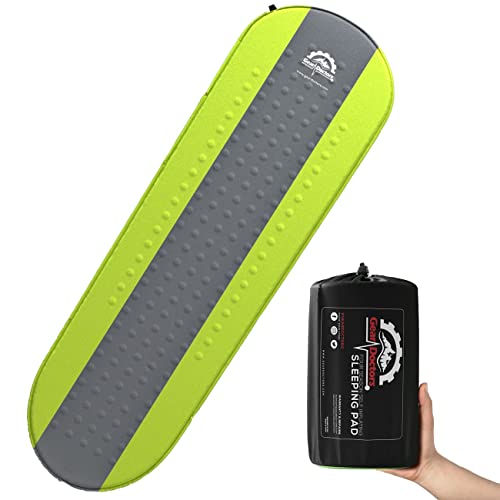
- 4.3 R-value insulated core
- Self-inflating hybrid foam design
- Durable 75D outer shell
Best For: Cool-weather campers who prioritize insulation and durability
Ultralight Air Comfort

- Only 17.5 ounces
- Detachable foot pump sack
- 2 R-value for spring and summer
Best For: Ultralight warm-weather backpackers and side sleepers
Classic Ultralight – Therm-a-Rest Z Lite Original
For hikers seeking dependable sleeping pads for backpacking, the Therm-a-Rest Z Lite Original is a straightforward closed-cell foam option. Its accordion-fold design is durable, economical, and easy to pack, while the dimpled surface helps retain warmth.
Best For: Backpackers who prioritize simplicity, low weight, durability, and quick setup.
Pros:
- Lightweight 14-ounce closed-cell foam construction
- Folds compactly for easy packing
- Durable, water-resistant design with a limited lifetime warranty
- R-value of 1.7 and dual-density foam for insulation and comfort
Cons:
- Only 0.75 inches thick, so cushioning is limited compared with inflatable pads
- R-value 1.7 is better suited to milder conditions than cold-weather trips
The Z Lite Original is a reliable choice when you want a pad that cannot deflate and requires no inflation routine. Its compact folding format and modest weight make it particularly practical for minimalist three-season trips.
Warm Inflatable Value – Naturehike Insulated Sleeping Pad
The Naturehike Insulated Sleeping Pad combines a 4.6 R-value with an 8-centimeter thickness, making it a comfortable option among sleeping pads for backpacking. Its included pump sack, reflective insulation, and compact packed size add practical value for longer trips.
Best For: Backpackers wanting substantial cushioning and insulation without carrying a full-size bulky mattress.
Pros:
- 4.6 R-value provides increased insulation for colder conditions
- Approximately 3.2 inches thick for cushioned support
- Includes a pump sack, straps, repair allowance, and dual-vent valve
- 20D nylon and TPU construction weighs about 1.93 pounds
Cons:
- Inflatable construction requires care to avoid over-inflation and punctures
- Heavier than a simple closed-cell foam pad
With its generous rectangular dimensions and supportive air-filled design, this Naturehike pad favors comfort while remaining reasonably packable. The 4.6 R-value makes it a more versatile choice than basic foam for cool-weather backpacking.
Budget Foam Pick – Foldable IXPE Camping Pad
This foldable IXPE foam mat is a practical entry-level choice for sleeping pads for backpacking. It offers a roomy 72.8-by-23.6-inch sleeping surface, waterproof construction, and an aluminum film backing designed to reflect body heat.
Best For: Budget-conscious hikers and campers who want a lightweight, foldable pad for moderate conditions.
Pros:
- Lightweight design weighs about 396 grams
- Folds to approximately 23.6 by 5.5 by 5.5 inches
- Waterproof, moisture-resistant, and corrosion-resistant materials
- Aluminum film backing and listed insulation rating of 2.1
Cons:
- 0.7-inch thickness provides less cushioning than thicker inflatable pads
- No accessories are included
- Its 2.1 insulation rating is more limited than higher-R-value options
The pad’s foam construction keeps setup simple and eliminates concerns about air leaks. It is a sensible choice for warm- to moderate-weather trips where low cost, water resistance, and easy portability matter most.
Four-Season Insulation – Elegear CumbreX 4-Inch Pad
For cold-weather sleeping pads for backpacking, the Elegear CumbreX emphasizes insulation, thickness, and stability. Its certified R-value of 9, four-inch profile, pump sack, and waterproof ripstop construction are designed for year-round outdoor use.
Best For: Four-season backpackers and mountaineers who need substantial insulation and cushioning in demanding conditions.
Pros:
- Certified R-value of 9 for strong ground insulation
- Four-inch thickness and support cells help reduce bottoming out
- Includes a pump sack, repair patch, storage bag, and user guide
- 20D tear-resistant nylon with reinforced TPU is waterproof and abrasion resistant
Cons:
- At 2.2 pounds, it is heavier than ultralight foam alternatives
- Inflatable construction requires attention to puncture prevention and repair
- Its mummy shape provides less width than a rectangular pad
The CumbreX is built for users who value warmth and sleeping comfort over the lowest possible pack weight. Its high R-value and thick inflatable structure make it the most cold-weather-focused option in this group.
Quick-Setup Pick – Amazon Basics Foot-Pump Sleeping Pad
For backpackers who value simple setup, this Amazon Basics sleeping pad uses a built-in foot pump to inflate in under 60 seconds. It offers a 75-inch length, 2.2-inch thickness, water-resistant construction, and a compact packed size for trail or campsite use.
Best For: Backpackers who want an ultralight pad with an integrated inflation system.
Pros:
- Built-in foot pump eliminates the need for separate inflation gear.
- Weighs 1.4 pounds and packs to about 12 x 4 x 4 inches.
- Water-resistant 190T polyester construction helps handle moisture.
Cons:
- Its 2.2-inch thickness provides less cushioning than thicker pads.
- It is rated for a maximum weight of 220 pounds.
This is a practical choice for hikers seeking quick inflation and low pack weight. However, shoppers prioritizing maximum loft or cold-weather insulation may prefer a thicker, explicitly insulated model.
All-Season Comfort Pick – Trekology UL R7 Sleeping Pad
The Trekology UL R7 is a strong option among sleeping pads for backpacking when insulation and cushioning matter. Its 7.2 R-value, 4-inch thickness, 330-pound capacity, and 2-pound packed weight balance warmth and trail portability.
Best For: Backpackers seeking substantial cushioning and year-round ground insulation.
Pros:
- 7.2 R-value helps insulate against cold ground in varied conditions.
- Four-inch thickness supports side and back sleepers and helps prevent bottoming out.
- 40D ripstop nylon with TPU coating is water-resistant and tear-resistant.
- Packs to approximately the size of a water bottle.
Cons:
- At 2 pounds, it is heavier than some ultralight sleeping pads.
- It requires mouth inflation or a separate pump bag, which is not included.
- The 70.8-inch length is best suited to sleepers up to about 5 feet 11 inches.
Choose this model when warmth and plush support take priority over the lowest possible pack weight. Its high insulation rating is especially useful for backpackers expecting cool or changing conditions.
Cold-Weather Value Pick – Hikenture R6.2 Insulated Pad
For backpackers planning colder trips, the Hikenture R6.2 combines ASTM-tested insulation with a lightweight 1.53-pound build. Its 3.2-inch thickness, reflective aluminum film, and included 40L pump-sack storage bag provide a useful mix of warmth, comfort, and efficient setup.
Best For: Cold-weather backpackers who want high insulation without a heavy sleeping pad.
Pros:
- ASTM 6.2 R-value and aluminum film construction help reflect heat.
- Weighs about 1.53 pounds for its insulation level.
- Included storage bag doubles as a pump sack and inflates the pad in about three pumps.
- Includes two repair patches and a 12-month warranty.
Cons:
- At 3.2 inches thick, it has less loft than some 4-inch alternatives.
- The supplied notes do not specify the inflated length or width.
This pad stands out for shoppers who need cold-ground protection while keeping pack weight controlled. The pump-sack design also reduces the need to carry separate inflation equipment.
Quick-Inflate Comfort – FUN PAC Camping Sleeping Pad
For backpackers who want a roomy sleeping surface without carrying a separate pillow or pump, the FUN PAC is a practical option among sleeping pads for backpacking. Its built-in foot pump, integrated pillow, and 3-inch air construction make setup and overnight comfort its main priorities.
Best For: Backpackers and campers who value extra width, quick inflation, and an integrated pillow.
Pros:
- Extra-wide 78-by-27-inch sleeping area with 3-inch thickness.
- Built-in foot pump inflates the pad in about 30–60 seconds.
- Integrated pillow reduces the need to pack a separate one.
- Side buttons allow two pads to be connected into a wider sleeping surface.
Cons:
- At 1.5 pounds, it is not the lightest option for weight-focused trips.
- Its listed R-value is not provided, so cold-weather insulation is difficult to assess.
- The integrated pillow may not suit sleepers who prefer a separate pillow.
The FUN PAC stands out for comfort-oriented backpackers who want a wide, thick pad and simple inflation. It is a particularly convenient choice for casual hiking, camping, and travel where a few extra ounces are acceptable.
Four-Season Support – Gear Doctors Oxylus 4.3 R-Value Pad
The Oxylus is a self-inflating foam-and-air pad designed for hikers who need more insulation and cushioning than a minimalist air mattress provides. Its 4.3 R-value, durable shell, and self-inflating setup make it one of the more versatile sleeping pads for backpacking and cool-weather camping.
Best For: Backpackers, families, and campers looking for a warmer self-inflating pad for varied terrain and seasons.
Pros:
- 4.3 R-value core provides added insulation on cold ground.
- Self-inflates after unrolling and opening the valve, with pressure adjustable by breath.
- 75D coated polyester shell is described as water-resistant and abrasion-resistant.
- Compresses to approximately 8 by 12 inches and weighs 35.2 ounces.
Cons:
- At 35.2 ounces, it is substantially heavier than ultralight air pads.
- The 1.5-inch thickness may feel less plush than thicker inflatable designs.
- Self-inflation can take up to five minutes before final adjustment.
The Oxylus favors warmth, durability, and straightforward setup over minimum pack weight. Choose it when insulation and foam-supported comfort matter more than keeping a backpacking sleep system exceptionally light.
Ultralight Air Comfort – Gear Doctors Ether 17.5oz Pad
Weighing just 17.5 ounces, the Gear Doctors Ether is built for hikers who count every ounce while still wanting a cushioned sleeping surface. Its detachable foot-pump sack, contoured design, and compact packed size make it a compelling choice among sleeping pads for backpacking in spring and summer.
Best For: Ultralight backpackers, side sleepers, and back sleepers traveling in milder conditions.
Pros:
- Very light at 17.5 ounces and packs to about 8.6 by 3.1 inches.
- Detachable foot pump inflates the pad without using your lungs in under 90 seconds.
- ErgoCushion contours provide thicker edges and a supportive, hugging shape.
- Supports up to 440 pounds and includes a repair kit.
Cons:
- Its 2 R-value is intended for spring and summer rather than colder trips.
- The 20D nylon construction may require more care around abrasive surfaces than heavier shells.
- The foot pump sack is detachable, so it is another component to keep track of.
The Ether is the weight-saving specialist of this group. It makes the most sense for warm-season backpacking when a compact, lung-free setup and contoured comfort are more important than high insulation.
How We Picked the Best Sleeping Pads for Backpacking
We evaluated these pads around the factors that matter most on the trail: weight, packed volume, insulation, sleeping surface, construction, inflation method, and expected durability. The selection includes simple closed-cell foam pads, ultralight air mattresses, thick comfort-focused models, and higher-R-value options for three- or four-season use.
Because backpacking conditions vary widely, there is no single best design for everyone. A minimalist summer hiker may prioritize low weight and instant setup, while a cold-weather camper needs reliable insulation and enough thickness to separate their body from the ground.
Quick Comparison
- Lightest and simplest: Closed-cell foam pads are dependable, puncture-resistant, and quick to deploy.
- Best comfort-to-weight potential: Inflatable pads generally offer greater thickness and a smaller packed size.
- Best for colder trips: Choose a model with a higher R-value and enough insulation for the ground temperatures you expect.
- Best for convenience: Built-in foot pumps or pump sacks can reduce breath moisture inside the pad and simplify inflation.
- Best all-around versatility: A moderate-weight insulated inflatable or self-inflating pad suits many three-season trips.
Key Buying Factors for Sleeping Pads for Backpacking
Weight and Packed Size
Every ounce matters when carrying a pack, but the lightest pad is not automatically the best choice. Compare both trail weight and packed dimensions, especially if your backpack has limited space.
Warmth and R-Value
R-value measures resistance to heat loss through the ground. Higher values generally provide better insulation. For mild summer conditions, a lower-R-value pad may be sufficient; shoulder-season and winter trips call for more insulation. Remember that your sleeping bag or quilt cannot fully compensate for a pad that is too cold underneath.
Thickness and Sleeping Comfort
Thicker inflatable pads can cushion hips and shoulders more effectively and help smooth uneven ground. Side sleepers often benefit from extra height, while stomach and back sleepers may prefer a stable, lower-profile surface.
Durability and Repairability
Air pads are comfortable and compact but can puncture, so inspect the fabric, use a groundsheet when needed, and carry the included repair materials. Foam pads are less vulnerable to campsite hazards and can double as seat insulation or pack padding.
Inflation and Noise
Built-in pumps and pump sacks make setup easier and help keep moisture out of the insulation. Consider valve design, inflation time, and whether the pad’s fabric may feel noisy when you move during the night.
Who Should Buy Which Sleeping Pads for Backpacking?
Ultralight summer backpackers should consider a compact air pad or closed-cell foam model, depending on whether minimum weight or maximum reliability matters more. Side sleepers and comfort-focused campers will usually prefer a thicker inflatable pad. Cold-weather backpackers should prioritize a high R-value over minor weight savings. New backpackers may appreciate an affordable pad with a straightforward valve or built-in pump. Rough-use campers and thru-hikers should consider closed-cell foam or a durable hybrid design that can tolerate frequent setup and breakdown.
Before buying, match the pad’s dimensions to your height and sleeping position, verify its temperature suitability, and check the packed size against your backpack. A well-matched sleeping pad improves warmth, comfort, and recovery without adding unnecessary bulk.