When tiny joints, lifted pads, and crowded boards leave no room for guesswork, a good soldering setup with magnification can make all the difference.
This roundup of the best soldering stations with microscope options for 2026 focuses on clear viewing, practical adjustability, and repair-friendly features that help you work faster and more accurately.
Best 10 Soldering Stations with Microscope Picks for 2026
Three-Lens Power for Repair
Andonstar AD246S-M 3 Lens Digital Microscope

- 3-lens design covers soldering, wider inspection, and slides.
- 2160P recording plus HDMI output for larger-screen viewing.
- Adjustable metal boom arm is built for electronics repair.
Best For: Electronics repair users who need a versatile, stand-mounted microscope
Auto-Focus Upgrade
Elikliv EM4K-AF 4K Soldering Microscope

- Auto-focus helps keep the image sharp with less manual tweaking.
- 4K UHD video and 52MP imaging improve close-up detail.
- 8-inch IPS screen plus HDMI/USB outputs for flexible viewing.
Best For: People who want fast focusing and a built-in screen for repair work
Large-Screen Soldering View
Andonstar AD249S-M 10.1 Inch Microscope

- 10.1-inch screen gives you a more comfortable built-in view.
- 3-lens setup covers soldering, coins, and slide observation.
- 2160P recording and HDMI output support external displays.
Best For: Users who want a bigger integrated screen for repair bench work
Compact Bench Helper
5" LCD Digital Soldering Microscope with C-Clamp

- 5-inch IPS screen supports hands-free soldering checks.
- C-clamp and flexible arm fit tight bench setups.
- Plug-and-play PC viewing works on Windows and Mac.
Best For: Hobbyists who want a compact, easy-to-use PCB inspection microscope
Top Pick for Multi-Task Bench Use
Andonstar AD246S-M Plus 2160P 7'' HDMI Microscope

- 3-lens microscope covers soldering, inspection, and slides
- Upgraded stand adds storage boxes, tool holder, and helping hands
- 2160P HDMI output with 32GB card and remote included
Best For: bench users who want an all-in-one soldering and inspection station
Best for 3D Viewing
TOMLOV TM3K-3D 7" Magnetic Dual Lens Scope
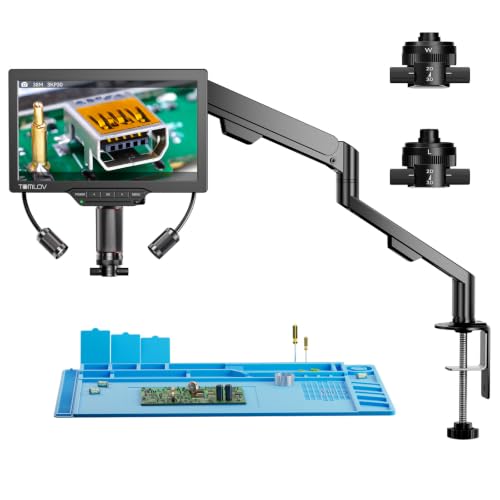
- 3D side-viewing and 360° rotation aid detailed inspection
- Magnetic dual lenses switch fast between wide and long-distance views
- Flexible arm stand and gooseneck spotlight support bench use
Best For: repair users who need side-view inspection and angle control
Best Large-Screen Setup
Andonstar AD210 10.1 Inch LCD Microscope

- Large 10.1-inch IPS screen is easier to view at the bench
- Metal stand offers vertical movement and height adjustment
- Three LED lighting modes support soldering and other tasks
Best For: buyers who want a bigger display and a versatile bench microscope
Flexible Bench View
TOMLOV DM602 Flex 10.1" HDMI Microscope

- Flexible arm with 360° base rotation and wide movement
- 10.1-inch IPS screen with HDMI and USB connectivity
- Includes bright ring light and heat-resistant soldering mat
Best For: Users who want a flexible, large-screen microscope for soldering and inspection
Three-Lens Power for Repair – Andonstar AD246S-M 3 Lens Digital Microscope
If you want soldering stations with microscope functionality that can also pull double duty for coins, slides, and general inspection, the Andonstar AD246S-M is a flexible pick. Its 3-lens system gives you a dedicated soldering lens plus broader-view and higher-magnification options, while the pro boom arm is built for hot work and larger work envelopes.
Best For: Electronics repair users who want a versatile microscope with a sturdy boom stand and multiple viewing modes.
Pros:
- 3-lens setup includes a soldering/repair lens, a wider observation lens, and a biological slide lens.
- 2160P recording with HDMI output for viewing on a larger screen.
- Upgraded metal boom arm is adjustable and suited to high-temperature soldering environments.
- Includes remote control, adjustable LED lighting, and Micro SD storage.
Cons:
- Manual lens swapping is required instead of auto-focus.
- Best magnification depends on the lens and display setup, so it’s not a one-size-fits-all view.
This is a strong all-purpose option if you want one microscope for solder joints, board repair, and occasional inspection work beyond electronics. It is especially appealing if you value a sturdy stand and flexible viewing setups more than fully automated focusing.
Auto-Focus Upgrade – Elikliv EM4K-AF 4K Soldering Microscope
Among soldering stations with microscope setups, the Elikliv EM4K-AF stands out for one big reason: auto-focus. If you spend time moving between joints, parts, and close-up details, this 4K digital microscope is designed to reduce constant manual adjustments while still giving you a high-resolution view on its built-in screen or an external monitor.
Best For: Users who want fast focusing, a built-in display, and 4K imaging for repair or inspection work.
Pros:
- Auto-focus system is designed to continuously refocus and assess image clarity.
- 4K UHD video and 52MP imaging for detailed views.
- 8-inch IPS screen with a 178-degree viewing angle.
- Includes HDMI/USB output, freeze, split-screen, and a smart controller.
Cons:
- Auto-focus may be more than you need if you only do occasional simple inspections.
- Its broad feature set may feel overbuilt for basic bench use.
If you want a microscope that minimizes fiddling and keeps the image sharp while you work, this model is a very practical upgrade. It blends a larger screen, external display support, and automation in a way that suits repeat repair tasks well.
Large-Screen Soldering View – Andonstar AD249S-M 10.1 Inch Microscope
If your priority is a bigger on-device display for soldering stations with microscope use, the Andonstar AD249S-M gives you a 10.1-inch HDMI digital microscope format with the same multi-lens versatility found in the line. It’s built for electronics repair, but it also works for coins and biological slides, making it a practical bench companion when you want more screen space.
Best For: Buyers who want a larger built-in screen and a boom-arm microscope for electronics repair.
Pros:
- 10.1-inch display gives you a larger built-in viewing area.
- 3-lens system supports soldering, coin viewing, and biological observation.
- 2160P video recording with HDMI output for external monitors.
- Adjustable pro boom arm is made for larger work envelopes and soldering conditions.
Cons:
- Lens changes are manual rather than automatic.
- Its bigger body may take up more bench space than compact screen models.
This model is a smart pick if you prefer a larger screen right on the microscope instead of relying on a separate monitor. It keeps the repair-focused boom stand and multi-lens flexibility, which makes it useful for both bench work and general close inspection.
Compact Bench Helper – 5" LCD Digital Soldering Microscope with C-Clamp
For smaller soldering stations with microscope needs, this 5-inch LCD model focuses on the basics: a built-in display, a flexible arm, and simple PC viewing. It is aimed at PCB repair and close inspection, with a C-clamp design that helps keep both hands free while you work at the bench.
Best For: Hobbyists and repair users who want a compact, hands-free microscope for PCB and solder joint checks.
Pros:
- 5-inch IPS display helps reduce neck and eye strain during long sessions.
- C-clamp and flexible goose-neck arm support hands-free bench use.
- Plug-and-play PC connection works without driver downloads on Windows or Mac.
- Supports up to 1000X digital magnification for close inspection.
Cons:
- It is not auto-focus, so you’ll need to adjust distance and the focus wheel manually.
- Micro SD card is required for recording and is not included.
This is a straightforward choice if you want a smaller microscope that stays out of the way on a crowded bench. It emphasizes practicality over advanced automation, which can be exactly what you need for everyday PCB checks and soldering verification.
Top Pick for Multi-Task Bench Use – Andonstar AD246S-M Plus 2160P 7'' HDMI Microscope
If you want soldering stations with microscope features that also cover inspection, repair, and teaching, the Andonstar AD246S-M Plus is built around flexibility. Its 7-inch HDMI microscope monitor, 3-lens setup, and upgraded boom-arm station make it easier to work on PCB repairs while still having room for tools, helping hands, and parts storage at the bench.
Best For: Users who want an all-in-one microscope station for soldering, repair, and general inspection work.
Pros:
- Three lenses support soldering, all-purpose inspection, and biological slides.
- Upgraded boom-arm stand adds an extension base, storage boxes, and a tool holder.
- Helping hands with rotatable clamps make repair work more manageable.
- Includes HDMI output, 32GB SD card, remote control, and adjustable LED lighting.
Cons:
- Plastic extension base may feel less premium than metal parts.
- Feature-rich setup may be more than needed for basic solder-only users.
Overall, this is a strong pick if you want one workstation that combines microscope viewing with practical bench accessories. It is especially appealing when you need room to solder, organize tools, and switch between close-up tasks without rebuilding your setup.
Best for 3D Viewing – TOMLOV TM3K-3D 7" Magnetic Dual Lens Scope
Among soldering stations with microscope options, the TOMLOV TM3K-3D stands out for its 3D side-viewing and rotating imaging. The magnetic dual-lens design makes it quick to switch between a wide-angle view and a long-distance view, while the 7-inch IPS screen, HDMI, and USB outputs support inspection on the bench or on a larger display.
Best For: Electronics repair users who want side-view inspection and flexible viewing angles.
Pros:
- 3D side-viewing and 360° rotation help inspect components from multiple angles.
- Magnetic dual lenses switch quickly without tools.
- W lens and L lens support both wide-field viewing and PCB soldering work.
- Flexible arm stand and adjustable gooseneck spotlight improve positioning and lighting.
Cons:
- Smaller 7-inch screen may feel compact for users who prefer larger displays.
- Focused on inspection and repair rather than a full integrated soldering bench.
This model makes sense if your priority is seeing solder joints and small parts from more than one angle. It is a practical choice for repair work where viewing flexibility matters as much as magnification.
Best Large-Screen Setup – Andonstar AD210 10.1 Inch LCD Microscope
If you want soldering stations with microscope features and a bigger display, the Andonstar AD210 is built around a 10.1-inch IPS screen for easier viewing. It pairs that screen with a strong stand, adjustable working distance, and three types of LED illumination, making it a versatile option for soldering, coin viewing, and slide observation.
Best For: Buyers who want a larger screen and a versatile microscope for soldering and general bench work.
Pros:
- 10.1-inch IPS display gives a larger, clearer viewing area.
- Upgraded metal stand supports direct vertical movement and height adjustment.
- Three lighting types with adjustable brightness suit different tasks.
- Includes 32GB card, card reader, remote control, and bottom light stage.
Cons:
- Not as compact as smaller microscope setups.
- Best results depend on having enough bench space for the larger stand and screen.
The AD210 is a solid choice if you value screen size and general-purpose versatility over a minimal footprint. It works well for users who want one microscope setup that can move between soldering, coin inspection, and slides.
Flexible Bench View – TOMLOV DM602 Flex 10.1" HDMI Microscope
If you want soldering stations with microscope support that also leave room for broader inspection work, the TOMLOV DM602 Flex is built around flexibility and visibility. Its adjustable arm, bright ring light, and 10.1-inch IPS screen make it easier to position the view over a bench while checking solder joints, small parts, or even coins and samples.
Best For: Electronics repairers and hobbyists who want a flexible, large-screen microscope for soldering plus general inspection tasks.
Pros:
- Flexible arm offers 360° base rotation, 135° horizontal extension, and 180° vertical movement.
- 10.1-inch IPS display provides a wide 178-degree viewing angle and clear live viewing.
- Brighter ring light and included heat-resistant silicone mat support more comfortable soldering work.
- HDMI and USB connectivity make it easy to connect to a PC or TV.
Cons:
- Magnification varies by lens, so it is not a single-purpose solder-only setup.
- At 1623 g, it is not the lightest option for frequent moving.
The DM602 Flex is a strong pick if you want a microscope that can adapt to different bench setups without sacrificing screen size or lighting. It is especially appealing for users who value adjustable positioning and a bundled soldering mat.
Extra-Reach Inspection – Andonstar AD109 10.1" Long-Arm Microscope
Among soldering stations with microscope setups, the Andonstar AD109 stands out for its long boom arm and large 10.1-inch screen. The extra reach makes it easier to work over bigger boards or multi-tool benches, while the 1080p image and dual lighting system help keep details visible during inspection and repair.
Best For: Users who need maximum reach over larger work areas for soldering, PCB inspection, or detailed electronics work.
Pros:
- Boom arm extends up to 27.56 inches and rotates 360 degrees with a 170° tilt range.
- 10.1-inch IPS screen shows 1080p video and 12MP photos with wide viewing comfort.
- 8+56 LED lighting system is designed to add adjustable brightness and 3D-style relief.
- USB-C connectivity supports plug-and-play use on Mac and Windows.
Cons:
- Maximum magnification is listed at 260x, which is lower than some microscope-focused models.
- It is more of a full-workspace inspection tool than a compact bench microscope.
The AD109 is a practical choice if your main challenge is reach and workspace clearance rather than extreme magnification. It looks especially useful for larger PCBs, repair benches, and users who want a broad, unobstructed setup.
Tool-Clearance Repair – Aikokkl MK7 7" LCD Soldering Microscope
If you need soldering stations with microscope features that stay out of the way of tools, the Aikokkl MK7 is designed around clearance and control. Its adjustable-height stand, 7-inch IPS screen, and side auxiliary lights make it a solid fit for precision microsoldering and close PCB inspection without crowding the work area.
Best For: Repair work on logic boards and small SMD components where tool clearance and glare control matter most.
Pros:
- High-clearance stand leaves room for soldering irons and tweezers.
- 7-inch IPS screen delivers lag-free 1080P feedback with true-color viewing.
- Dual flexible gooseneck lights help reduce hotspots and shadows on reflective boards.
- Remote control lets you capture photos, record video, and zoom without touching the unit.
Cons:
- The 7-inch display is smaller than the 10.1-inch options in this roundup.
- Battery-powered design and plastic enclosure may feel less substantial than bench-mounted alternatives.
The MK7 is a sensible option for users who value workspace access and low-glare inspection over a larger display. It is especially well matched to delicate soldering jobs where minimizing vibration and keeping tools clear of the stand matters.
How We Picked These Soldering Stations with Microscope Setups
We looked for models that make bench repair easier in real-world use: sharp enough image quality to inspect small joints, stable stands or mounts, responsive focus controls, and screens large enough to reduce eye strain. We also favored options that are practical for PCB work, not just general viewing.
Quick Comparison: What Matters Most
When comparing Soldering Stations with Microscope setups, the biggest differences usually come down to display size, camera resolution, working distance, lens flexibility, and lighting. A larger screen can improve comfort, while higher resolution helps when checking solder bridges, cracked traces, and micro-components.
Key Buying Factors for Soldering Stations with Microscope
Magnification and Image Clarity
Choose enough magnification to inspect pads and solder joints without making the image unstable or hard to navigate. For most electronics work, clarity matters more than extreme zoom numbers.
Screen Size and Viewing Comfort
Integrated displays are useful because they keep your posture more natural during long sessions. If you rework boards often, a larger LCD can reduce fatigue and make alignment easier.
Focus, Working Distance, and Flexibility
Look for autofocus or easy manual focus if you move between board sizes often. Good working distance matters too, especially if you need to fit tools, hot air, or a soldering iron under the lens.
Lighting and Stability
Built-in side lights can help reveal solder texture and component edges, but they should not create harsh glare. A stable base, clamp, or arm is equally important so the image stays steady while you work.
Who Should Buy Which Soldering Stations with Microscope?
If you repair phones, laptops, game consoles, or small PCBs, a higher-resolution digital microscope with a larger screen is usually the best choice. Hobbyists may prefer compact models that are easy to mount and move around a bench. For frequent rework, prioritize stable positioning, generous screen size, and autofocus or flexible lens options over headline magnification.
In short, the best Soldering Stations with Microscope features are the ones that match your workspace, your board size, and how often you need to inspect fine details. Focus on usability first, and the rest of your soldering workflow gets easier.