If you work with curves, inside cuts, and shaped edges, the right spindle sander can save time and improve consistency. These tools are built to smooth templates, refine profiles, and finish hard-to-reach areas that handheld sanders struggle with.
Below, we focus on the best options for home shops and serious DIY users, from compact benchtop units to more versatile belt-and-spindle combinations.
Best 10 Spindle Sanders Picks for 2026
Compact Shop Pick
WEN 6510T 3.5 Amp Oscillating Spindle Sander
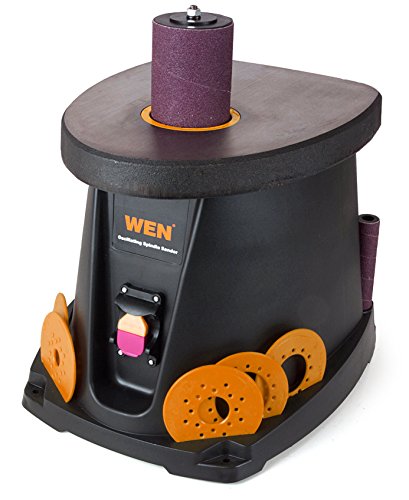
- 3.5 amp motor with 58 OPM and 2000 RPM
- Onboard storage for accessories
- Dust collection port for easier cleanup
Best For: Compact, no-frills contour sanding
Cast-Iron Stability Pick
Triton TSPS450 Oscillating Spindle Sander

- Rotating and oscillating action for curved work
- 3.5A motor with 2000 RPM and 58 OPM
- Includes 6 sleeves, drums, and table inserts
Best For: Curved-edge sanding with a stable work surface
Two-in-One Workshop Pick
WEN 6524 Oscillating Belt and Spindle Sander
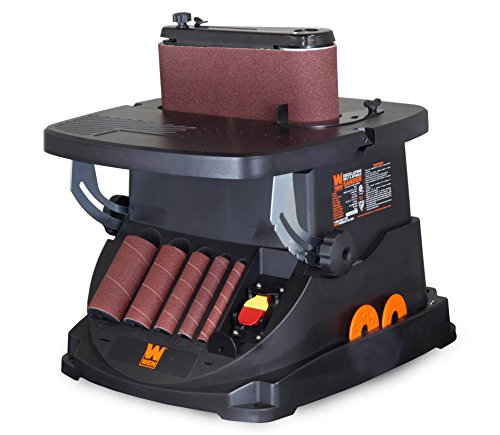
- Belt and spindle sanding in one machine
- Up to 1575 FPM belt speed and 2000 RPM spindle speed
- Includes throat plates, drums, belt attachment, and sandpaper
Best For: Mixed sanding tasks in a single compact setup
Variable-Speed Power Pick
Woodskil 4A Variable-Speed Oscillating Spindle Sander

- 4A motor for heavier sanding tasks
- Variable speed from 1000 to 1800 RPM
- Dust port and 6 sleeves from 1/2 to 3 inches
Best For: Tougher sanding jobs that need adjustable speed
Heavy-Duty Benchtop Pick
VEVOR 2400RPM Oscillating Spindle Sander

- 2400RPM motor for smooth sanding
- 6 sleeves and 6 table inserts included
- Large cast iron worktable with dust port
Best For: Stable bench sanding with broad sleeve coverage
Portable Shop Option
WEN HA5932 Variable Speed Oscillating Sander
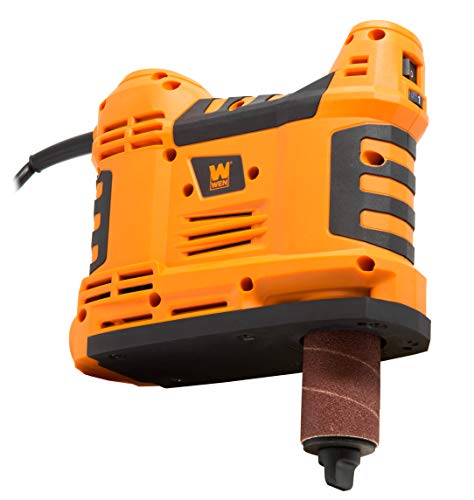
- Handheld or bench-mounted use
- 5-amp variable speed motor
- Includes clamps, sleeves, and dust port
Best For: Portable sanding with the option to bench-mount
Compact Benchtop Value
VEVOR 2000RPM Oscillating Spindle Sander

- 2000RPM benchtop motor
- 6 sleeves and 6 table inserts
- Compact cast aluminum table with dust port
Best For: Smaller shops needing compact benchtop sanding
Benchtop Control
Rikon Oscillating Spindle Sander

- 12-5/8" x 12" work surface
- Includes 5 spindles and 6 inserts
- 1-1/2" dust port with onboard storage
Best For: Compact shop use with a roomy table and organized accessories
Combo Flexibility
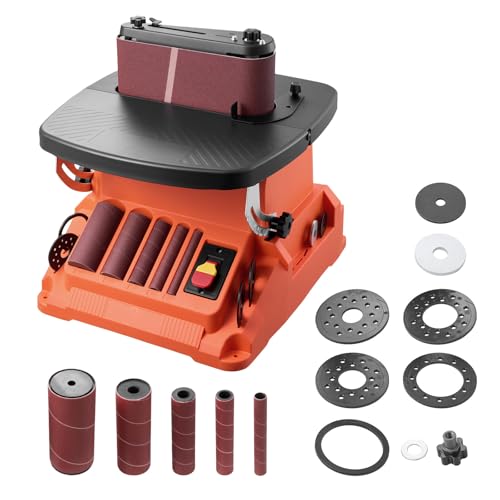
- 2400 RPM with 5/8" stroke
- Includes spindle sleeves and a sanding belt
- 0-45° tilting worktable with storage
Best For: All-in-one sanding for curved, flat, and angled woodworking tasks
Wide Table Choice
VEVOR Oscillating Spindle Sander

- Large 15.4 x 16.3-inch cast iron table
- Six sleeve sizes from 1/2" to 3"
- 2400 RPM with 5/8-inch stroke
Best For: Stable sanding support with broad sleeve coverage for larger work
Compact Shop Pick – WEN 6510T 3.5 Amp Oscillating Spindle Sander
The WEN 6510T is a straightforward oscillating spindle sander for shaping curves, contours, and other irregular edges with less handwork. Its 3.5 amp motor, 58 OPM oscillation, and 2000 RPM spindle speed give it the basics most small-shop users need for routine sanding tasks.
Best For: Woodworkers who want a compact, no-frills spindle sander with onboard storage and dust hookup support.
Pros:
- 3.5 amp motor delivers 58 OPM and up to 2000 RPM
- Onboard storage helps keep accessories organized
- Dust collection port supports cleaner sanding sessions
Cons:
- Single-speed setup offers less flexibility than variable-speed models
- Included grit is 80, so finer or coarser options may need to be added
Overall, this WEN spindle sander is a practical pick if you want a simple machine for contour sanding and easier cleanup. It covers the essentials without adding extra complexity.
Cast-Iron Stability Pick – Triton TSPS450 Oscillating Spindle Sander
The Triton TSPS450 is built for sanding contours, arcs, curves, and other irregular shapes with rotating and oscillating action. Its 3.5A motor, 2000 RPM no-load speed, and 58 OPM oscillation make it a solid choice for users who want efficient shaping and a precision finish.
Best For: Woodworkers who want a cast-iron-top spindle sander for regular curved-edge work.
Pros:
- Rotating and oscillating action supports faster, smoother sanding
- 3.5A motor runs at 2000 RPM with 58 OPM oscillation
- Includes 6 sanding sleeves, matching rubber drums, and table inserts
- On-board storage keeps accessories close at hand
Cons:
- Sleeve range is limited to 1/2 to 3 inches
- Only the supplied accessories are listed, so expansion may be limited
If you want a spindle sander focused on curved and irregular work, the Triton offers a balanced mix of power, speed, and included accessories. The cast iron top adds a more substantial feel for shop use.
Two-in-One Workshop Pick – WEN 6524 Oscillating Belt and Spindle Sander
The WEN 6524 adds versatility by combining an oscillating belt sander with a spindle sander in one machine. It handles sanding drums from 1/2 inch to 2 inches, plus a 4 x 24 inch belt, making it a practical option when you need more than one sanding setup in a single tool.
Best For: DIYers and small shops that want both belt and spindle sanding in one machine.
Pros:
- Combines belt sanding and spindle sanding in one unit
- 3.5 amp motor delivers up to 1575 FPM belt speed and 2000 RPM spindle speed
- Oscillates 58 times per minute with a 5/8-inch stroke
- Includes multiple throat plates, rubber drums, belt attachment, and 80-grit sandpaper
Cons:
- Heavier setup may take more bench space than a spindle-only model
- Voltage details in the supplied notes are inconsistent
This is a smart pick if your sanding tasks vary and you want one tool to handle both belt and spindle jobs. It is especially useful in a shop where flexibility matters more than having separate machines.
Variable-Speed Power Pick – Woodskil 4A Variable-Speed Oscillating Spindle Sander
The Woodskil variable speed oscillating spindle sander is aimed at heavier sanding jobs where control matters. With a 4A motor, 1000 to 1800 RPM adjustable speed range, and six sleeve sizes from 1/2 inch to 3 inches, it gives you more flexibility for different curves and detail work.
Best For: Woodworkers who want adjustable speed and extra power for tougher sanding tasks.
Pros:
- 4A motor provides extra power for heavy-duty sanding
- Variable speed range from 1000 to 1800 RPM adds control
- Includes 6 sanding sleeves from 1/2 inch to 3 inches
- Dust port supports connection to a vacuum system
Cons:
- Maximum speed is lower than 2000 RPM models
- Only 1 grit number is listed, so sanding options may be limited out of the box
For buyers who want more control than a fixed-speed machine can offer, this Woodskil model stands out. The variable speed and larger motor make it a strong option for hardwoods, larger projects, and general shop use.
Heavy-Duty Benchtop Pick – VEVOR 2400RPM Oscillating Spindle Sander
If you want spindle sanders that focus on bench stability and broad sanding versatility, this VEVOR model is built around a 2400RPM motor, a large cast iron worktable, and six sleeve sizes for curved or contoured parts. It is a practical choice for furniture finishing, crafts sanding, and DIY woodworking where consistent support matters.
Best For: Woodworkers who want a stable benchtop spindle sander with a wide workspace and multiple sleeve sizes.
Pros:
- 2400RPM output supports smooth sanding on flat, curved, and contoured surfaces
- Includes 6 sanding sleeves and 6 table inserts for a range of workpiece sizes
- 5/8-inch stroke and 15.6 x 11.6-inch cast iron worktable add useful support
- Dust port is designed for easy vacuum connection and cleaner shop conditions
Cons:
- Benchtop design is less portable than handheld options
- Designed around 110V corded operation, so it needs a suitable power setup
This is a straightforward spindle sander pick for buyers who value workspace, sleeve variety, and dust collection over portability. The organized storage slots are a nice bonus if you want a tidier sanding station.
Portable Shop Option – WEN HA5932 Variable Speed Oscillating Sander
Among spindle sanders, this WEN model stands out for portability because it can be used handheld or clamped to a workbench as a stationary unit. The 5-amp variable-speed motor and included accessories make it a flexible option for reaching awkward spots or setting up a compact sanding station.
Best For: Buyers who want a portable spindle sander that can also be used as a benchtop setup.
Pros:
- Lightweight handheld design helps reach hard-to-access sanding areas
- Can be clamped to a workbench for stationary use
- 5-amp variable speed ranges from 1800 to 3200 RPM and 50 to 90 oscillations per minute
- Includes multiple spindle diameters, sanding sleeves, clamps, and a dust port
Cons:
- Smaller 1/4-inch stroke is more limited than larger benchtop models
- Only four spindle diameters are included, so size range is narrower than some rivals
This is a practical pick if you need flexibility more than a large stationary footprint. It gives you the portability of a handheld tool with enough hardware to anchor it on the bench when the job calls for it.
Compact Benchtop Value – VEVOR 2000RPM Oscillating Spindle Sander
If you are comparing spindle sanders for a smaller workspace, this VEVOR version keeps the same six-sleeve versatility but with a lighter 2000RPM setup and a compact cast aluminum table. It is aimed at furniture finishing, crafts sanding, and DIY woodworking when you want a practical benchtop machine without the larger footprint of heavier models.
Best For: Woodworkers who want a compact benchtop spindle sander with multiple sleeve sizes and a lighter table.
Pros:
- 2000RPM motor handles flat, curved, and contoured sanding tasks
- Comes with 6 sanding sleeves and 6 table inserts for different workpiece sizes
- 0.59-inch stroke helps adapt to thin and thick workpieces
- Dust port supports vacuum hookup for cleaner sanding sessions
Cons:
- 2000RPM is slower than the brand’s 2400RPM version
- Smaller 12.5 x 11.5-inch worktable offers less surface area than larger benchtop units
This model makes sense if you want the same sleeve variety as larger spindle sanders but in a more compact package. It is a sensible pick for smaller shops where easier handling and a lighter table matter.
Benchtop Control – Rikon Oscillating Spindle Sander
If you want a straightforward spindle sander for smaller shop work, the Rikon benchtop oscillating model focuses on a large work area and practical setup. The 12-5/8″ x 12″ table gives you room to support parts while the included spindles, table inserts, and onboard storage help keep sanding tasks organized.
Best For: Woodworkers who want a compact benchtop spindle sander with a roomy table and built-in storage.
Pros:
- Large 12-5/8″ x 12″ work surface for added support
- Includes 5 spindles and 6 table inserts
- 1-1/2″ dust port helps with dust collection
- Onboard storage keeps accessories close at hand
Cons:
- 1/2 HP motor is better suited to lighter-duty shop use
- Corded electric design limits placement to outlet access
Overall, this Rikon spindle sander is built around convenience and a generous table rather than heavy-duty power. It makes the most sense if you want a simple benchtop machine for shaping and smoothing curved workpieces with organized accessory storage.
Combo Flexibility – VEVOR Belt and Spindle Sander
This VEVOR spindle sander adds a sanding belt option, making it a flexible pick for woodworking, furniture finishing, and DIY projects. With 2400 RPM, a 5/8″ stroke, and multiple sleeves plus table inserts, it is built to handle flat, curved, and contoured surfaces without constant accessory swapping.
Best For: Buyers who want a benchtop spindle sander with both spindle and belt sanding in one machine.
Pros:
- Combines oscillating spindle sanding with a 24″ x 3.86″ sanding belt
- Five sanding sleeves cover 1/2″ to 2″ work
- 0-45° tilting worktable adds angle adjustment
- Integrated storage helps keep sleeves and inserts organized
Cons:
- The 35mm/38.6mm dust port sizing may require checking hose compatibility
- At 37.5 pounds, it is not a lightweight portable option
For users who want more than a basic spindle sander, this VEVOR model offers useful range and shop flexibility. The belt attachment and included accessories make it a practical all-in-one choice for sanding different shapes and sizes.
Wide Table Choice – VEVOR Oscillating Spindle Sander
If your priority is workspace and support, this VEVOR spindle sander stands out with a large 15.4 x 16.3-inch cast iron worktable. It runs at 2400 RPM with a 5/8-inch stroke and includes six sleeves and six inserts, giving you a broad range for furniture finishing, crafts sanding, and general DIY woodworking.
Best For: Woodworkers who want a large, stable worktable and a wide sleeve range.
Pros:
- Large 15.4 x 16.3-inch cast iron worktable
- Six sleeve sizes from 1/2″ to 3″
- 2400 RPM speed with a 5/8-inch stroke
- Large dust port supports easier dust collection
Cons:
- Benchtop design still requires dedicated shop space
- Like other corded units, it needs nearby power access
This model is a strong fit if you want more support under larger workpieces and more sanding sleeve coverage than a basic machine. The wide cast iron table should appeal to users who value stability when finishing curves and contours.
How We Picked These Spindle Sanders
We prioritized sanding performance, stroke quality, table stability, dust collection, sleeve range, and overall value. For Spindle Sanders, the details matter: a stable base and smooth oscillation often make a bigger difference than raw motor power alone.
We also looked for models that suit different shop sizes and budgets, including dedicated benchtop sanders and combo machines for users who want more flexibility.
Quick Comparison
In this roundup, the most compact picks are best for light hobby use and occasional curve work, while heavier benchtop machines are better if you sand parts often or need better support for larger workpieces. Combo belt-and-spindle models are the most versatile, but they usually take up more space.
Best for Small Shops
Choose a compact benchtop unit if you need a dedicated curve-sanding tool and have limited bench space.
Best for Versatility
Choose a belt-and-spindle combination if you switch between straight-edge cleanup and curved profiles often.
Key Buying Factors for Spindle Sanders
Motor and speed control: More power helps under load, but variable speed is often more useful than peak wattage. It lets you match sanding speed to wood species, sleeve grit, and part size.
Stroke and oscillation: A longer stroke helps distribute wear on the sleeve and can improve finish quality. Smooth oscillation reduces burn marks and keeps sanding more consistent.
Table size and stability: A wider, flatter worktable makes it easier to control larger or awkward parts. Cast iron or similarly rigid tops tend to improve accuracy and reduce chatter.
Sleeve sizes and accessories: A good set of sleeve diameters increases the range of curves you can sand. Look for easy sleeve changes and available replacements so the tool stays useful over time.
Dust collection: Spindle Sanders create fine dust quickly. A strong dust port or shop-vac connection helps visibility, cleanup, and finish quality.
Who Should Buy Which Spindle Sanders?
Occasional DIY users: A basic benchtop spindle sander is usually enough for cabinet parts, toys, trim, and small woodworking projects.
Frequent woodworkers: Consider a more robust model with better table support, variable speed, and stronger dust extraction for repeated use.
Multi-purpose shops: A combo belt-and-spindle sander makes sense if you want one machine to handle both curves and general edge work.
Space-conscious buyers: If bench space is tight, focus on compact Spindle Sanders with a footprint that fits your workflow instead of chasing maximum size.
In the end, the best choice depends on how often you sand curves, how much space you have, and whether you want a dedicated tool or a more versatile station.