Finding a hidden leak early can save thousands in repairs, but the damage often starts long before it becomes visible. A thermal imaging camera for water leak detection helps you spot temperature differences that may point to plumbing problems, moisture intrusion, or insulation gaps.
In this roundup, we focused on practical, buyer-friendly options that balance image clarity, ease of use, and temperature range for home inspection, HVAC, and plumbing work.
Best 10 Thermal Imaging Camera for Water Leak Detection Picks for 2026
Smartphone Plug-In Pick
GOYOJO USB-C Thermal Imager for iPhone/Android

- USB-C plug-and-play with no pairing
- 192x192 IR resolution for leak checks
- 50° FOV for faster wall and ceiling scans
Best For: Phone users who want a pocket-size leak detection camera
Mini Runtime Pick
TOPDON TC004 Mini Thermal Camera

- 240x240 TISR-enhanced image detail
- 15-hour battery life for long jobs
- High/low alerts with auto photo capture
Best For: Inspectors who want a compact camera with long runtime
Dual-Camera Detail Pick
F2VW Super Resolution Thermal Imager

- 256x192 native IR with 640x480 enhancement
- Built-in visual camera and 4 modes
- Wi-Fi sharing for quick image transfer
Best For: Users who want more visual context and sharper thermal detail
Field Analysis Pick
FOXWELL RT280 Thermal Imaging Camera

- 240x180 TISR-enhanced imaging
- Windows PC analysis with 2D/3D reports
- 8GB storage for over 20,000 images
Best For: Pros who need inspection records and report-ready analysis
Smart Scene Detection
HP96 3.5" Touchscreen Thermal Camera
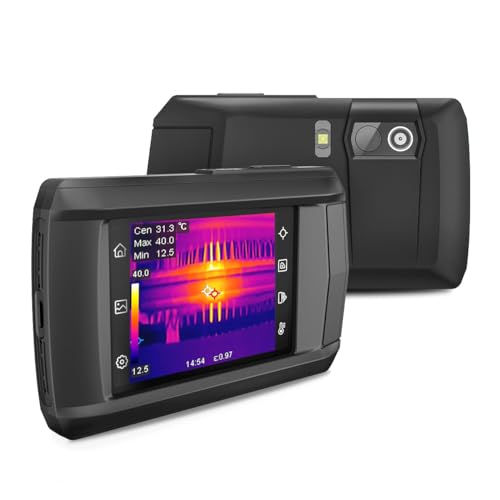
- IntellFault scene recognition targets leaks and insulation gaps
- 240 x 240 super resolution with 96 x 96 IR sensor
- 3.5" touchscreen plus built-in recording and storage
Best For: fast thermal screening for water leaks and insulation gaps
Dual-Light Inspection Tool

- Dual-light fusion combines thermal and real visual images
- 240 x 240 TISR resolution with <40mK sensitivity
- Water pipe and HVAC scene modes simplify inspections
Best For: home inspections where visual context matters as much as heat patterns
Portable Leak Scanner
YXI96 240x240 Handheld Thermal Camera

- 240 x 240 super-resolution imaging for clearer details
- Temperature alarm highlights abnormal high and low readings
- IP54 protection and 6.6 ft drop resistance
Best For: portable leak and temperature checks with simple operation
High-Detail Leak Inspector
GH340 Thermal Imaging Camera 640x480

- 640x480 super IR resolution offers the most detailed imaging here.
- Dual-camera setup and 3 image modes improve inspection flexibility.
- Temperature tracking and alarms help identify abnormal cold spots.
Best For: Buyers who want the highest image detail for leak-related inspections.
Compact Leak Checker
GH192 Thermal Imaging Camera 240x240
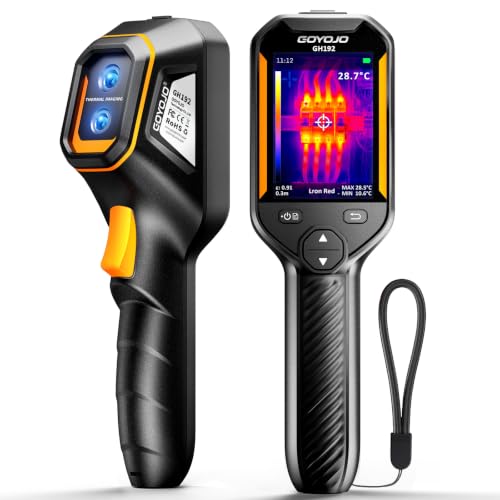
- 240x240 super IR imaging with fusion view aids basic leak checks.
- 2MP visual camera and 3-point tracking help outline problem areas.
- Compact 9.2-ounce body is easy to carry for home inspections.
Best For: Homeowners who want a lightweight thermal imager for basic leak searches.
Smartphone Plug-In Pick – GOYOJO USB-C Thermal Imager for iPhone/Android
If you want a thermal imaging camera for water leak detection that lives in your pocket, this GOYOJO model is built around smartphone convenience. It plugs into compatible USB-C phones with no batteries or pairing, then delivers 192×192 infrared resolution for checking plumbing leaks, insulation gaps, and other hidden temperature issues.
Best For: Android and iPhone users who want a compact, plug-and-play leak detection tool for home, HVAC, and DIY inspections.
Pros:
- USB-C plug-and-play design with no pairing or extra batteries
- 192×192 IR resolution for clearer leak and hotspot spotting
- Wide 50° field of view helps scan walls, ceilings, and floors efficiently
- Broad temperature range supports plumbing, electrical, and HVAC work
Cons:
- Requires a compatible smartphone to operate
- Smaller pocket form factor may be less convenient than a standalone handheld unit
This is a practical choice if portability matters more than standalone controls. For quick leak checks around the house or job site, it gives you a simple way to turn a phone into a thermal inspection tool.
Mini Runtime Pick – TOPDON TC004 Mini Thermal Camera
The TOPDON TC004 Mini is a strong option if you want a thermal imaging camera for water leak detection with a balance of portability and useful alert features. It starts at 128×128 thermal imaging and uses TISR to enhance detail to 240×240, while its 25Hz refresh rate and 40° x 30° field of view support smooth inspection work.
Best For: Users who want a compact handheld thermal camera with long battery life and automatic temperature alerts.
Pros:
- Enhanced 240×240 TISR detail from a 128×128 thermal base
- 15-hour battery life supports longer inspection sessions
- High/low temperature alerts and auto photo capture help document anomalies
- Mini design is pocket-friendly and rated IP54 for daily use
Cons:
- Lower native resolution than larger standalone models
- Charging head is not included
For leak detection, the automatic warnings and compact body make this model easy to carry from room to room. It is a sensible pick when you need a small camera that can keep up through long inspections.
Dual-Camera Detail Pick – F2VW Super Resolution Thermal Imager
If you need a thermal imaging camera for water leak detection with richer scene detail, the F2VW stands out for its 256×192 native IR sensor and AI super resolution that boosts imaging to 640×480. The built-in visual camera, 3.2-inch screen, and four image modes make it easier to compare heat patterns with the real-world surface around them.
Best For: Users who want dual-camera viewing and stronger image detail for demanding inspections.
Pros:
- AI super resolution enhances thermal output to 640×480
- Built-in visual camera plus Thermal/Fusion/PIP modes improve troubleshooting
- 25Hz frame rate and below-40 mK sensitivity support smooth, detailed viewing
- Wi-Fi sharing makes it easier to move images to a smartphone or tablet
Cons:
- Larger and heavier than compact pocket models
- More advanced feature set may be more than casual DIY users need
This model is well suited to people who want more context around a suspected leak, not just a heat spot. The dual-camera setup and higher apparent detail can make it easier to interpret what you are seeing.
Field Analysis Pick – FOXWELL RT280 Thermal Imaging Camera
The FOXWELL RT280 is a practical thermal imaging camera for water leak detection when you also want reporting and on-site analysis tools. It uses a 320×240 LCD with TISR-enhanced thermal clarity, supports a wide 50° x 38° field of view, and adds PC software for 2D/3D analysis and report generation.
Best For: Professionals who need a rugged handheld camera with software analysis and inspection documentation.
Pros:
- TISR-enhanced 240×180 effective resolution for clearer thermal viewing
- PC analysis software supports point, line, area, and 2D/3D inspection review
- 8GB eMMC storage holds over 20,000 images and videos
- Laser pointer, LED light, and temperature alarms help in tight or dark spaces
Cons:
- PC analysis is Windows-only, not Mac compatible
- Bulkier than smartphone-style thermal cameras
For leak detection work, the RT280 is strongest when you need to capture, store, and explain what you found afterward. It is a good fit for users who want a more complete inspection workflow, not just a quick visual check.
Smart Scene Detection – HP96 3.5" Touchscreen Thermal Camera
If you want a thermal imaging camera for water leak detection that can speed up the first pass, the HP96 stands out for its IntellFault scene recognition. It is designed to identify water leaks and insulation gaps quickly, while the 3.5″ touchscreen and multiple viewing modes make day-to-day inspections easier to manage.
Best For: Inspectors and homeowners who want automated scene detection for faster leak and insulation checks.
Pros:
- IntellFault scene recognition is built to identify water leaks and insulation gaps.
- 240 x 240 super resolution improves viewing detail over the base 96 x 96 IR sensor.
- 3.5″ touchscreen, built-in storage, and audio/video recording simplify field use.
- Five imaging modes and eight color palettes add flexibility for different inspections.
Cons:
- No moisture readings, so it only supports thermal screening.
- Best results depend on firmware updates and selecting the Scene setting.
Overall, the HP96 is a practical pick if you want smart thermal screening with clear usability features. It is especially appealing when you need leak detection help without giving up general-purpose inspection tools.
Dual-Light Inspection Tool – 240×240 Fusion Thermal Camera
This thermal imaging camera for water leak detection is built around dual-light fusion, so you can compare heat patterns with real visual edges while inspecting pipes, walls, ducts, and outlets. With 240 x 240 TISR resolution and smart scene modes, it is aimed at making leak checks and other home diagnostics easier to interpret.
Best For: Home inspectors, plumbers, and DIY users who want clear thermal plus visual context during leak checks.
Pros:
- Dual-light fusion shows both infrared heat maps and real visual images.
- 240 x 240 TISR resolution helps reveal clearer thermal details.
- Scene presets for water pipe, HVAC, electrical, floor heating, and pet modes simplify setup.
- 25Hz refresh, <40mK sensitivity, and alerts help catch subtle temperature changes.
Cons:
- Some users may not need the extra scene modes if they only want basic leak screening.
- PC analysis software is useful, but it adds another step for report-making.
For buyers who want thermal data with visual context, this model is a strong all-around option. It balances clearer imaging, useful presets, and rugged build features for regular inspection work.
Portable Leak Scanner – YXI96 240×240 Handheld Thermal Camera
If you need a thermal imaging camera for water leak detection that stays simple, the YXI96 focuses on the essentials. Its 240 x 240 super-resolution imaging, 50° field of view, and temperature alarm features make it a straightforward handheld option for spotting abnormal heat patterns in home inspection work.
Best For: Buyers who want a portable, easy-to-carry thermal camera for basic leak and temperature checks.
Pros:
- 240 x 240 super-resolution enhancement gives clearer inspection images.
- Temperature alarm helps flag abnormal high and low readings quickly.
- 50° FOV and 25Hz refresh rate support efficient scanning.
- IP54 protection and 6.6 ft drop resistance improve durability.
Cons:
- Does not include the dual visual-camera setup found on some other models.
- Fewer advanced workflow features than scene-based or fusion-focused options.
This is a sensible choice if you value portability and fast thermal checks over extra software-style features. It should fit well for users who want dependable leak screening in a compact handheld form.
AI Water Leak Finder – HF96 Thermal Camera with AI Scene Detection
If you want a thermal imaging camera for water leak detection that can also help with general home and HVAC checks, the HF96 focuses on simple anomaly finding. Its AI scene recognition is designed to identify cold spots linked to water leaks and insulation gaps, while the live super-resolution display helps you scan with more clarity.
Best For: Users who want automated cold-spot detection for leak searches plus a practical all-around inspection tool.
Pros:
- AI Scene Recognition is built to detect water leaks and insulation gaps.
- Live super resolution boosts images to 240×240 for clearer viewing.
- Cold spot, hot spot, and center spot tracking reduce guesswork.
- 11-hour runtime and IP54/drops-tested design support longer job use.
Cons:
- No moisture readings, so it is thermal-only for leak finding.
- Lower 240×240 class resolution than the higher-end 640×480 model.
- Best results still depend on correct emissivity and distance setup.
Overall, the HF96 is a smart pick if your priority is spotting temperature patterns that may indicate leaks, not measuring moisture directly. It brings helpful automation and strong runtime in a compact, user-friendly format.
High-Detail Leak Inspector – GH340 Thermal Imaging Camera 640×480
For buyers comparing a thermal imaging camera for water leak detection, the GH340 stands out for its 640×480 super resolution and dual-camera setup. The visible-light camera plus infrared imaging can make it easier to outline targets, while temperature tracking and alarms help flag abnormal cold areas during inspections.
Best For: Users who want higher-detail thermal imaging for home inspection, pipe checks, and leak-related troubleshooting.
Pros:
- 640×480 super IR resolution provides the most detailed view in this group.
- 3-point temperature tracking and alarms help spot abnormal temperature zones.
- Dual-camera design and three image modes add inspection flexibility.
- 8-hour runtime, USB-C charging, IP54 rating, and drop resistance support portability.
Cons:
- Heavier than the smallest handheld option at 1.15 pounds.
- No AI leak-specific scene detection like the HF96 offers.
- Accuracy is listed at ±2°C, so careful setup still matters.
In practical terms, this is the strongest choice if image detail is your priority and you want a more advanced thermal view for tracing suspected leak areas. It is especially appealing for users who value resolution and temperature tracking over automation.
Compact Leak Checker – GH192 Thermal Imaging Camera 240×240
If you need a thermal imaging camera for water leak detection in a small, easy-to-carry body, the GH192 keeps things simple. It combines 240×240 super IR imaging with fusion viewing, temperature tracking, and alarms to help you inspect pipes, walls, and other suspect areas without extra complexity.
Best For: Homeowners and maintenance users who want a compact, straightforward thermal imager for basic leak searches.
Pros:
- 240×240 super IR resolution is a solid step up from basic entry-level tools.
- Fusion imaging with a 2MP visual camera helps outline targets clearly.
- 3-point temperature tracking and alarms support anomaly detection.
- Compact 9.2-ounce design with 8-hour runtime makes it easy to carry.
Cons:
- Less detailed than the GH340’s 640×480 imaging.
- No AI-based leak recognition or automated scene detection.
- Best suited to basic inspections rather than the most demanding diagnostics.
The GH192 is a practical middle-ground choice when portability matters and you still want useful thermal tools for leak hunting. It delivers the essential features most homeowners need without adding much bulk.
How We Picked the Best Thermal Imaging Camera for Water Leak Detection
We prioritized tools that are useful for real-world leak hunting: clear thermal resolution, stable refresh rates, dependable temperature measurement, and features that make tracing cold spots easier, such as visual cameras, fusion modes, alarms, and laser pointers. Since leak detection often happens in tight spaces or low-light areas, we also considered portability, screen usability, and battery life.
Quick Comparison
For fast decision-making, think of these cameras in three groups: compact phone-connected models for light-duty inspections, mid-range handheld units for most homeowners and contractors, and higher-resolution dual-camera models for more detailed diagnostics. If you need to scan walls, ceilings, bathrooms, or around appliances, a sharper display and stronger thermal resolution usually make the biggest difference.
Key Buying Factors for a Thermal Imaging Camera for Water Leak Detection
Thermal Resolution
Higher resolution helps reveal subtle temperature changes that can indicate moisture or escaping water. For general leak detection, 240 x 240-class devices are a solid baseline, while 320 x 240 or higher can provide more confidence when inspecting large surfaces or small problem areas.
Temperature Range and Sensitivity
Look for a wide temperature range so the camera can handle both cold water lines and hot plumbing. Sensitivity matters too: better thermal sensitivity makes faint leak signatures easier to distinguish from normal building noise.
Refresh Rate and Responsiveness
A 25Hz refresh rate is helpful because it keeps the image smooth while you pan across walls, floors, and mechanical equipment. That makes it easier to track a suspicious cold spot without lag.
Visual Assist Features
Dual-light designs, fusion imaging, and visual cameras can make the thermal image easier to interpret. These features are especially useful when you need to confirm whether a suspicious area is actually tied to plumbing or just a draft, shadow, or appliance.
Screen, Battery, and Workflow
A larger screen improves readability, while long battery life matters during whole-house inspections. If you’ll be working on-site for extended periods, choose a model that feels comfortable in hand and supports quick review of captured images or video.
Who Should Buy Which Thermal Imaging Camera for Water Leak Detection?
Homeowners who want occasional leak checks can usually start with a compact, easy-to-use model. HVAC and plumbing pros should lean toward handheld cameras with stronger resolution, longer battery life, and better on-device analysis. If you want the most detail for complex inspections, choose a higher-resolution thermal imaging camera with a visual camera and fusion support.
In short, the best choice depends on how often you inspect, how much detail you need, and whether portability or diagnostic depth matters more for your work.