When engine assembly depends on exact fastener tension, the right torque wrench is not optional. Small errors can mean leaks, warped components, or stripped hardware.
This roundup of torque wrenches for engine building focuses on accuracy, usable torque ranges, and the mix of drive sizes most builders need for careful work.
Best 10 Torque Wrenches for Engine Building Picks for 2026
Multi-Drive Kit
3-size click torque set with adapters

- Includes 1/4", 3/8", and 1/2" wrenches
- ±3% accuracy with calibration certificate
- Six adapters and extensions in a portable case
Best For: Engine builders who want one versatile kit
Heavy-Duty Socket Kit
1/2" click wrench with sockets and breaker bar
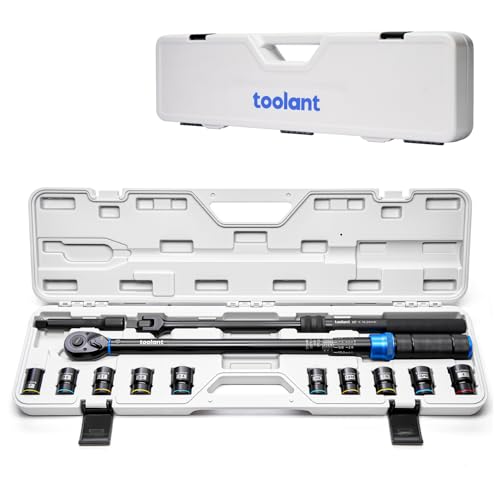
- ±3% accuracy with laser-engraved scale
- Includes 10 deep sockets plus breaker bar
- Best for larger bolts and lug-nut style work
Best For: People who need a heavy-duty 1/2" kit
Three-Size Torque Set
1/2, 3/8, and 1/4 click wrench trio

- Three drive sizes for mixed torque ranges
- ±3% accuracy with dual scales
- Includes matching extension bars
Best For: Engine builders wanting one versatile three-wrench set
Precision Pick
LEXIVON 3/8-Inch Click Torque Wrench (10-80 Ft-Lb)
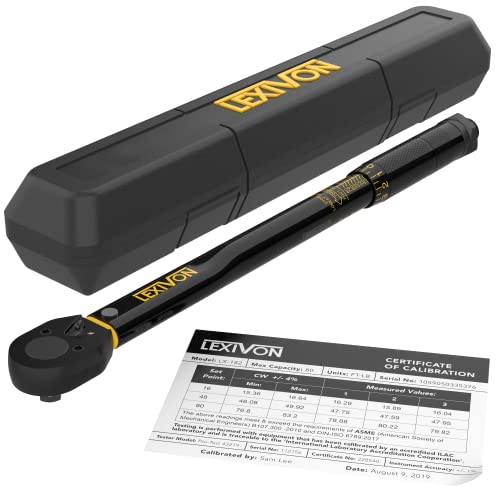
- Pre-calibrated to +/- 4% accuracy
- 3/8-inch drive covers 10-80 ft-lb
- High-contrast dual-range scale
Best For: Engine builders needing a dependable mid-range click wrench
Compact Budget Choice
SUERCUP 3/8" Click Torque Wrench (5-45 Ft-Lb)
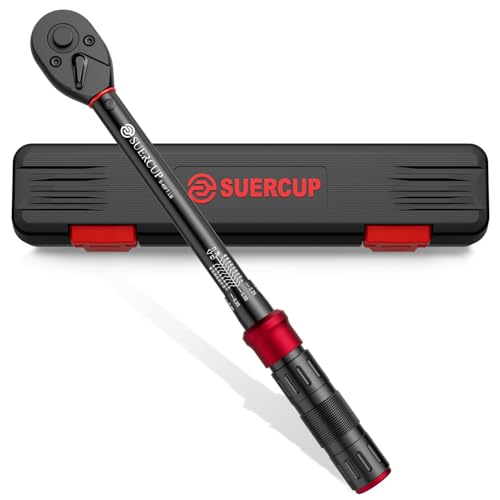
- 5-45 ft-lb range for lighter tasks
- Around 3% calibration error after testing
- Includes storage case and certificate
Best For: Lighter engine torque tasks and spark plug service
Low-Torque Specialist
LEXIVON Inch-Pound Torque Wrench (20-200 in-lb)
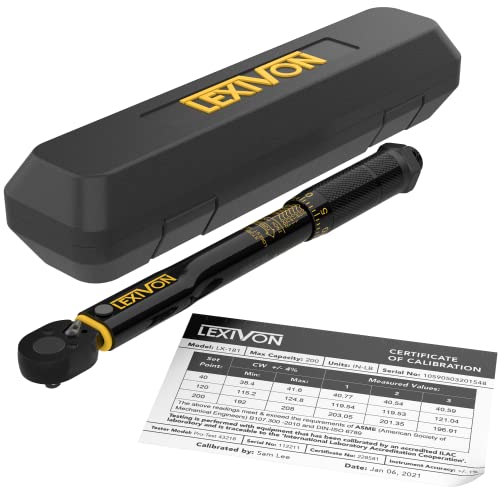
- 20-200 in-lb range for fine adjustments
- Pre-calibrated to +/- 4% accuracy
- 1/4-inch drive for smaller fasteners
Best For: Small engine fasteners and low-torque assembly
Compact Precision Kit
LEXIVON 1/4-Inch 15-Piece Torque Wrench

- 2–26 Nm range with 0.2 Nm adjustments
- Pre-calibrated, dual-direction click wrench
- Includes hex and Torx bits, extension, adapter
Best For: Low-torque precision work with a compact 1/4-inch drive
Heavy-Duty Drive Pick
EPAuto 1/2-Inch Click Torque Wrench

- 10–150 ft/lb range for heavier fasteners
- Pre-calibrated to ±4% accuracy
- 1/2-inch drive with extension bar included
Best For: Larger fasteners and broader torque needs
Low-Range Metric Option
VANPO 1/4-Inch Click Torque Wrench

- 20–240 in.lb / 2.3–27.1 Nm range
- Click feedback and locking knob for easy setting
- Includes adapter and extension bar
Best For: Light-duty precision work with inch-pound settings
Multi-Drive Kit – 3-size click torque set with adapters
If you want torque wrenches for engine building that cover more than one fastener size, this 9-piece set gives you 1/4″, 3/8″, and 1/2″ click wrenches in one portable case. The included adapters and extensions make it easier to move between small engine hardware, accessory bolts, and larger assembly work without grabbing a second kit.
Best For: Builders who want one compact kit with multiple drive sizes, adapters, and broad torque coverage.
Pros:
- Includes 1/4″, 3/8″, and 1/2″ click torque wrenches
- Factory-calibrated to ±3% accuracy with a certificate
- 72-tooth ratchet head offers a tight 5° swing for confined spaces
- Covers a wide range from 10 in-lb up to 170 ft-lb
Cons:
- Not a dedicated engine-building-only kit; includes extra adapters and accessories
- Largest wrench may be more tool than needed for very small fasteners
Overall, this is the most flexible option in the group if you need multiple torque ranges in a single purchase. It is especially practical when your engine work overlaps with general automotive or motorcycle maintenance.
Heavy-Duty Socket Kit – 1/2" click wrench with sockets and breaker bar
For torque wrenches for engine building where larger fasteners and stubborn hardware are part of the job, this 13-piece 1/2″ set leans toward heavy-duty use. The click wrench, breaker bar, extension, and deep sockets make it a practical all-in-one option when you also need strong socket coverage for bigger automotive tasks.
Best For: Users who want a 1/2″ torque wrench kit with sockets and a breaker bar for larger fasteners.
Pros:
- ±3% click torque wrench with laser-engraved scale
- Includes 10 deep sockets, a 5″ extension, and a breaker bar
- 72-tooth ratchet head with quick-release and locking ring
- Designed as an all-in-one kit for tough tire and bolt work
Cons:
- Single 1/2″ wrench size is less suited to very small engine fasteners
- Bulkier kit than a dedicated compact wrench-only option
This set makes the most sense when your project includes larger torque values and you want extra leverage tools in the same box. It is less of a precision-only engine assembly pick and more of a heavy utility kit.
Three-Size Torque Set – 1/2, 3/8, and 1/4 click wrench trio
This three-piece set is a strong fit if you want torque wrenches for engine building across multiple fastener sizes without buying separate tools one at a time. With 1/2″, 3/8″, and 1/4″ click wrenches, it covers small, medium, and larger torque jobs while keeping the scales readable and the handles light.
Best For: Buyers who want a full-size trio for mixed engine, bike, and automotive torque work.
Pros:
- Three wrench sizes: 1/2″, 3/8″, and 1/4″
- ±3% accuracy after fatigue testing
- Dual-scale layout with laser-printed markings
- Includes extension bars for added reach
Cons:
- Set is broader than a dedicated single-size engine assembly tool
- Listed as a 3-piece wrench set, so accessories are limited to extensions
For many builders, this is the easiest way to cover the most common torque ranges in one purchase. It balances versatility, readable scales, and a straightforward click-style design well.
Compact Precision Pick – Mini 1/4" inch-pound torque wrench
When torque wrenches for engine building need to handle smaller fasteners and tighter access, this mini 1/4″ model is the most compact option here. Its inch-pound range, ±3% calibration, and 72-tooth reversible head make it a practical fit for delicate work where over-tightening can be costly.
Best For: Small fasteners and precision jobs that need a compact inch-pound wrench.
Pros:
- ±3% calibrated accuracy for repeatable tightening
- Very compact 1/4″ design for tight spaces
- Loud click plus handle vibration for clear feedback
- Dual scales in Ft-Lb and Nm with a reversible 72-tooth head
Cons:
- Single 1/4″ wrench only, so it won’t cover larger engine fasteners
- Short 3.9-inch length may feel too small for some users
This is the most specialized pick of the group and the best match for smaller torque jobs. If your engine work centers on precise low-range fastening, it delivers the right size and feedback in a very small package.
Precision Pick – LEXIVON 3/8-Inch Click Torque Wrench (10-80 Ft-Lb)
If you’re shopping for torque wrenches for engine building, this LEXIVON 3/8-inch click wrench is a practical choice for general fastener work where a clear torque range and verified accuracy matter. It arrives pre-calibrated to +/- 4% with a traceable certificate, and the dual-range scale is easy to read when you’re working in tight or dim engine bays.
Best For: Engine builders who want a dependable 3/8-inch click wrench for medium-range torque tasks.
Pros:
- Pre-calibrated to +/- 4% accuracy with a calibration certificate.
- 3/8-inch drive covers 10-80 ft-lb, useful for many engine fasteners.
- Hardened Chrome Vanadium ratchet head for durability.
- High-contrast dual-range scale is easier to read in low light.
Cons:
- Measures torque in a clockwise direction only.
- Not ideal if you need inch-pound-level precision for smaller engine components.
This is a solid all-around click torque wrench for engine work when you need a straightforward tool with visible markings and a trustworthy calibration baseline.
Compact Budget Choice – SUERCUP 3/8" Click Torque Wrench (5-45 Ft-Lb)
For torque wrenches for engine building, this SUERCUP 3/8-inch click wrench stands out as a smaller-range option for lighter fasteners and service jobs like spark plugs and engine repair. It offers a dual-range scale, around 3% calibration error after extensive testing, and a click signal that helps reduce the chance of over-tightening.
Best For: Lighter engine-related torque tasks where a compact 3/8-inch wrench is a better fit.
Pros:
- 5-45 ft-lb range suits lighter engine and spark plug work.
- Dual-direction ratchet head and click alert improve control.
- Reported calibration error is around 3% after testing.
- Includes a storage box, precision report certificate, and user manual.
Cons:
- Lower maximum torque than full mid-range engine-building wrenches.
- Best suited to lighter-duty jobs rather than broad engine assembly use.
If your engine work leans toward smaller fasteners and you want an easy-to-handle wrench, this model keeps the essentials in a compact package.
Low-Torque Specialist – LEXIVON Inch-Pound Torque Wrench (20-200 in-lb)
LEXIVON Inch Pound Torque Wrench 1/4-Inch Drive | 20~200 in-lb/2.26~22.6 Nm (LX-181)
Check Price On AmazonWhen you need torque wrenches for engine building at the low end of the scale, this 1/4-inch LEXIVON is built for smaller fasteners and finer adjustments. It is pre-calibrated to +/- 4%, includes a traceable calibration certificate, and uses a clear dual-range scale that helps you set inch-pound values with confidence.
Best For: Small engine fasteners and low-torque assembly where inch-pound precision matters.
Pros:
- 20-200 in-lb range is suited to lower-torque engine work.
- Pre-calibrated to +/- 4% with a traceable certificate.
- 1/4-inch drive is useful for smaller fasteners and tighter spaces.
- High-contrast dual-range scale is easy to read.
Cons:
- Not intended for higher ft-lb engine fasteners.
- Measures torque in a clockwise direction only.
This is the most specialized option here for precision low-torque engine tasks, especially when a full ft-lb wrench would be too large for the job.
Compact Precision Kit – LEXIVON 1/4-Inch 15-Piece Torque Wrench
For torque wrenches for engine building where smaller fasteners and repeatable low-torque settings matter, this LEXIVON 1/4-inch click wrench is built around precision. Its 2–26 Nm range, 0.2 Nm micro-adjustments, and included bit sockets make it a practical choice when you need controlled tightening on delicate components rather than brute force.
Best For: Low-torque work where metric precision, a compact 1/4-inch drive, and included bits matter.
Pros:
- 2–26 Nm range with micro-adjustments to 0.2 Nm for fine setting control
- Pre-calibrated and rated for CW (+/- 4%) and CCW (+/- 6%) use
- Includes 15 pieces: hex and Torx bits, extension bar, and 1/4-inch adapter
- 72-tooth ratchet head and quick-release button for smoother socket changes
Cons:
- Lower torque range means it is not the right tool for heavier engine fasteners
- Designed around bike-style bit work, so it may be less versatile for larger sockets
This is a solid pick when your priority is accurate, compact torque control in a lower range. The included accessories and dual-direction calibration make it especially useful for small fasteners that demand consistency.
Heavy-Duty Drive Pick – EPAuto 1/2-Inch Click Torque Wrench
For torque wrenches for engine building that call for a larger drive and broader torque coverage, the EPAuto 1/2-inch click wrench is built to handle more demanding tightening jobs. Its 10–150 ft/lb range and pre-calibrated ±4% accuracy give it the kind of straightforward setup many DIY mechanics want when working with larger fasteners.
Best For: Bigger fasteners and general shop use where a 1/2-inch drive and wide torque range are useful.
Pros:
- 10–150 ft/lb range covers a wide spread of heavier-duty applications
- Pre-calibrated to ±4% for repeatable torque setting
- 1/2-inch drive with included 5-inch extension bar
- Knurled handle, high-contrast scale, and click indication for simple use
Cons:
- SAE-focused range may be less convenient if you prefer metric-first tooling
- Larger size and 3.5-pound weight make it less compact than 1/4-inch options
Overall, this is the more heavy-duty option in the group. If your work leans toward larger fasteners and you want a simple click-style wrench with a broad torque window, it fits that role well.
Low-Range Metric Option – VANPO 1/4-Inch Click Torque Wrench
When torque wrenches for engine building need a smaller drive and a low-to-mid inch-pound range, the VANPO 1/4-inch click wrench is aimed at precise light-duty tightening. Its 20–240 in.lb / 2.3–27.1 Nm range, locking knob, and included adapter make it a practical fit for controlled work on smaller fasteners and components.
Best For: Light-duty precision tasks where inch-pound readings and a compact 1/4-inch drive are preferred.
Pros:
- 20–240 in.lb / 2.3–27.1 Nm dual-range scale for precise low-torque work
- Click feedback helps signal when preset torque is reached
- Includes 1/4″ to 3/8″ adapter and 10cm extension bar
- Aluminum shaft and Cr-Mo steel handle are built for durability and rust resistance
Cons:
- Lower torque ceiling limits use on larger engine fasteners
- Shorter, light-duty form factor is less suited to high-torque jobs
This is a straightforward choice for users who need fine control in a compact package. It makes the most sense where accuracy at lower torque values is more important than maximum reach or torque capacity.
How We Picked the Best Torque Wrenches for Engine Building
We prioritized accuracy, torque range, drive-size coverage, and practical build quality for engine work. For Torque Wrenches for Engine Building, the best options are the ones that match fastener size closely and offer repeatable click feedback, readable scales, and a comfortable grip for controlled pulls.
We also looked for models that cover both low-torque applications, such as valve cover bolts and intake hardware, and higher-torque jobs like cylinder heads, main caps, and suspension-related engine bay fasteners where applicable.
Quick Comparison
Use 1/4-inch drive for delicate inch-pound work, 3/8-inch drive for mid-range engine fasteners, and 1/2-inch drive for higher torque needs. Many builders benefit from owning at least two: one low-range wrench for precision assembly and one mid- or high-range wrench for larger fasteners.
If you want one setup for a broad garage, a kit with multiple drive sizes is the most flexible. If you are focused on detailed internal engine work, an inch-pound wrench should be the priority.
Key Buying Factors for Torque Wrenches for Engine Building
Accuracy and Repeatability
Look for a stated accuracy rating, ideally within ±3%. Consistency matters as much as the number on the scale because fasteners should clamp the same way every time during assembly.
Torque Range
Choose a wrench that places your target torque near the middle of its range whenever possible. That improves control and helps you avoid using a tool too close to its minimum or maximum limit.
Drive Size and Fastener Type
1/4-inch drive tools are best for small bolts and lower torque values. 3/8-inch drive models suit many engine components in the midrange. 1/2-inch drive wrenches are better for larger hardware and jobs requiring more leverage.
Click Feel, Readability, and Storage
A clear click signal helps reduce over-tightening, while an easy-to-read scale speeds setup. A sturdy case also matters if you plan to store multiple wrenches together or transport them between jobs.
Who Should Buy Which Torque Wrenches for Engine Building?
Choose a low-range inch-pound wrench if you are building small engines, working on motorcycles, or handling delicate aluminum components. Choose a 3/8-inch model if you want the most versatile single wrench for typical engine assembly. Choose a 1/2-inch wrench if you regularly handle higher-torque fasteners or want broader garage use.
For most enthusiasts, the best value comes from pairing a 1/4-inch precision wrench with a 3/8-inch or 1/2-inch model. That combination covers the widest range of engine tasks without forcing one tool to do everything.