Choosing among variable speed wood lathes can feel overwhelming, especially when the specs start to blur together. The right machine depends on what you want to turn, how much space you have, and how much control you need at the spindle.
In this roundup, we focused on machines that balance speed range, bed length, swing capacity, build quality, and ease of use so you can narrow the field fast.
Best 10 Variable Speed Wood Lathes Picks for 2026
14" x 20" Benchtop Capacity
WEN 34035 Variable Speed Wood Lathe
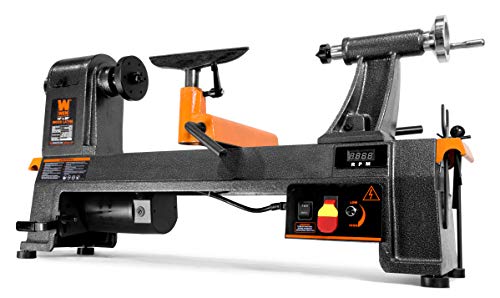
- Up to 20" length and 14" width capacity
- 250 to 3550 RPM variable speed range
- Includes faceplate, centers, and 8" tool rest
Best For: Turners needing extra benchtop capacity for bowls, cups, and larger projects
Premium 12" x 21" Turning Range
JET JWL-1221VS Variable-Speed Lathe

- 1 HP motor with 60 to 3600 RPM in three ranges
- Forward/reverse, spindle lock, and 24-position indexing
- Heavy cast-alloy construction with included supports
Best For: Serious hobbyists who want power, precision, and workshop-grade features
Compact Mini Project Lathe
WEN LA3421 Mini Variable Speed Lathe

- 8" swing and 13" between centers
- 750 to 3200 RPM variable speed range
- Soft-start motor with faceplate and two tool rests
Best For: Beginners and small-project turners working on pens, bowls, and chess pieces
Cast-Iron Benchtop Performer
JET JWL-1015VS Variable Speed Wood Lathe
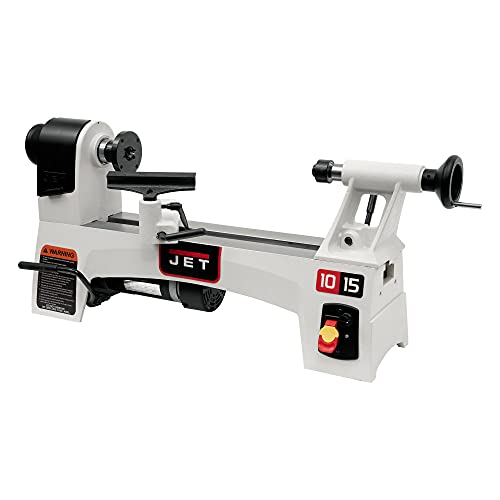
- Three speed ranges from 200 to 3600 RPM
- Cast-iron bed, headstock, and tailstock reduce vibration
- Includes live center, spur center, tool support, and faceplate
Best For: Bench turners who want sturdy construction and broad speed control
Mini Benchtop Starter
WEN 3421 3.2-Amp 8" x 12" Variable Speed Lathe
- 3.2-amp motor for small turning jobs
- 750 to 3200 RPM variable speed
- Fits workpieces up to 12" long and 8" wide
Best For: Beginners and hobbyists making small projects
Heavy-Duty Shop Lathe
JET 14" x 40" Variable Speed Woodworking Lathe

- 14" x 40" capacity for larger projects
- 400 to 3,000 RPM variable speed
- Sliding headstock with 7 locking positions
Best For: Woodturners needing larger capacity and flexible setup
Brushless Benchtop Performer
VEVOR 12" x 18" Variable Speed Wood Lathe

- Brushless DC motor with low-maintenance design
- 150 to 3800 RPM variable speed
- Cast iron body and metal handwheels for stability
Best For: Beginners and DIY users wanting stable small-project turning
Premium Full-Size Turning Power
JET 16" x 40" EVS Variable Speed Woodworking Lathe
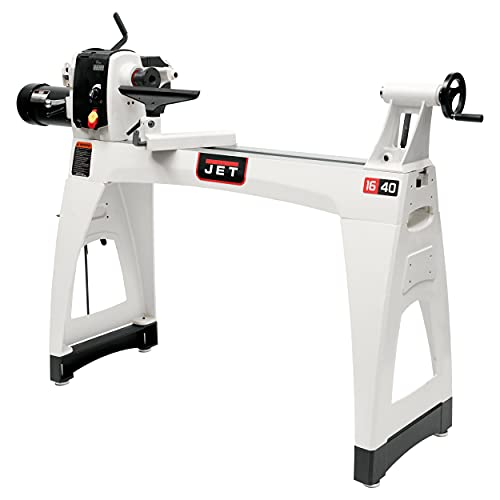
- 40 to 3200 RPM electronic variable speed
- 16" x 40" capacity with reversible operation
- 36-position indexing and heavy cast iron/steel build
Best For: Shop users needing a full-size lathe with broad speed control
Compact Beginner Pick
VEVOR 8" x 13" Mini Benchtop Wood Lathe

- 150 to 3200 RPM variable speed control
- 8" x 13" size for small projects
- Metal frame and overcurrent protection
Best For: Beginners and hobbyists making small woodturning projects
Precision Mid-Size Choice
12" x 16-1/2" Variable-Speed Wood Lathe

- 250 to 3200 RPM digital variable speed
- 24-position indexing for repeatable work
- 3/4 HP DC motor with cast iron stability
Best For: Woodworkers needing a precise mid-size lathe for small and medium projects
14" x 20" Benchtop Capacity – WEN 34035 Variable Speed Wood Lathe
If you want a variable speed wood lathe with a larger benchtop footprint, the WEN 34035 gives you room to work on longer and wider projects without stepping up to a full-size floor machine. Its 250 to 3550 RPM range, 6-amp motor, and included faceplate make it a practical choice for turning bowls, cups, and other common woodturning projects.
Best For: Turners who want a versatile benchtop lathe with extra capacity for larger workpieces.
Pros:
- Accommodates workpieces up to 20 inches long and 14 inches wide
- Variable speed range from 250 to 3550 RPM for different turning tasks
- Includes 4-inch faceplate, MT2 spur center, MT2 live center, and 8-inch tool rest
- MT2 tapers and 1″-8 spindle thread help with accessory compatibility
Cons:
- Benchtop design still limits you compared with a full-size lathe
- Not as purpose-built for very small work as a dedicated mini lathe
Overall, this model stands out if you need a variable speed wood lathe that can handle a broader range of project sizes while staying compact enough for bench mounting. The included accessories add immediate value for starting common spindle and faceplate work.
Premium 12" x 21" Turning Range – JET JWL-1221VS Variable-Speed Lathe
The JET JWL-1221VS is a heavier-duty variable speed wood lathe built for turners who want refined control and a broad speed setup. With three optimized speed ranges, a 1 HP motor, and features like forward/reverse, indexing, and a spindle lock, it suits users who expect smooth operation across many turning tasks.
Best For: Woodworkers who want a feature-rich lathe with strong power and fine speed control.
Pros:
- Three speed ranges cover low to high RPM work, from 60 to 3600 RPM
- 1 HP motor provides strong power for a benchtop machine
- Includes forward/reverse, larger DRO, recessed power switch, and spindle lock
- 24 integrated indexing positions add flexibility for detailed work
Cons:
- Heavier 121-pound build is less portable than lighter benchtop lathes
- Higher-end feature set may be more than casual users need
This model is a strong fit if you want a variable speed wood lathe that emphasizes control, stability, and workshop-ready features. The included accessories and long warranty help round out the package for serious turning sessions.
Compact Mini Project Lathe – WEN LA3421 Mini Variable Speed Lathe
For small-scale turning, this variable speed wood lathe is aimed at pens, bowls, cups, chess pieces, and other compact projects. The WEN LA3421 uses a soft-start 3.2-amp motor and a 750 to 3200 RPM range, making it a straightforward pick for beginners or anyone who mainly works on smaller workpieces.
Best For: Makers focused on small turning projects and beginner-friendly setup.
Pros:
- Compact 8-inch swing and 13-inch distance between centers
- Variable speed from 750 to 3200 RPM for small projects
- Soft-start motor helps the machine start gradually
- Includes faceplate, MT1 taper, two tool rests, and a two-year warranty
Cons:
- Limited size is not meant for larger turning projects
- Lower power rating than larger benchtop lathes
This is a sensible choice if you want a compact variable speed wood lathe for smaller items and don’t need a large turning capacity. Its included accessories and soft-start design make it especially approachable for home shops and first-time turners.
Cast-Iron Benchtop Performer – JET JWL-1015VS Variable Speed Wood Lathe
The JET JWL-1015VS is a compact variable speed wood lathe designed for pen turning, bowls, and spindle work on the bench. Its three-range electronic speed control, cast-iron construction, and included accessories make it a solid option if you want a stable machine that can handle a range of small-to-medium turning tasks.
Best For: Woodturners who want a rigid benchtop lathe with flexible speed ranges.
Pros:
- Three belt-selected speed ranges with electronic fine-tuning from 200 to 3600 RPM
- Cast iron bed, headstock, and tailstock help reduce vibration
- 10-inch swing and 15-1/2-inch between centers fit common bench projects
- Includes live center, spur center, tool support, faceplate, and knockout rod
Cons:
- Limited between-centers capacity compared with larger lathes
- Best suited to bench work rather than long-stock production turning
For buyers comparing variable speed wood lathes, this JET stands out for its rigid cast-iron build and practical speed flexibility. It is a well-rounded bench machine for turners who want dependable control without moving up to a larger floor-standing unit.
Mini Benchtop Starter – WEN 3421 3.2-Amp 8" x 12" Variable Speed Lathe
If you’re comparing variable speed wood lathes for small projects, the WEN 3421 is built around compact turning work like pens, bowls, cups, and chess pieces. Its 8″ x 12″ capacity and soft-start speed range make it a practical entry-level choice for hobbyists who want straightforward control in a benchtop footprint.
Best For: Beginners and hobbyists turning small workpieces on a compact, easy-to-manage lathe.
Pros:
- 3.2-amp motor offers more power than many 8-inch lathes
- Variable speed adjusts from 750 to 3200 RPM
- Fits workpieces up to 12 inches long and 8 inches wide
- Includes a 2.3-inch face plate plus MT1 spindle and tailstock taper
Cons:
- Designed for smaller projects rather than large turning jobs
- Benchtop size may be limiting for bigger stock
The WEN 3421 is a sensible pick if you want variable speed control without moving up to a large floor-standing machine. It focuses on core turning tasks and a compact setup, which makes it especially appealing for small-shop use.
Heavy-Duty Shop Lathe – JET 14" x 40" Variable Speed Woodworking Lathe
Among variable speed wood lathes, the JET JWL-1440VS stands out for its larger turning capacity and serious shop features. With a 14″ x 40″ working range, a 1 HP motor, and variable speed from 400 to 3,000 RPM, it is aimed at woodworkers who need more room, more control, and more flexibility at the bench.
Best For: Woodturners who want a larger-capacity lathe with flexible headstock positioning and shop-ready features.
Pros:
- 14″ x 40″ capacity suits larger turning projects
- Variable speed range from 400 to 3,000 RPM
- Sliding headstock pivots 360 degrees with 7 locking positions
- Easy-to-read RPM display and optional extension bed
Cons:
- 220-pound machine is heavy and takes up substantial space
- More machine than most casual beginners need
This JET lathe is best viewed as a serious turning platform rather than a compact starter tool. If your projects are getting larger and you want more capacity and setup flexibility, it offers a strong blend of size and control.
Brushless Benchtop Performer – VEVOR 12" x 18" Variable Speed Wood Lathe
If you want variable speed wood lathes with a modern motor and a compact work area, this VEVOR benchtop model is built for small-scale turning. Its 12″ x 18″ capacity, brushless DC motor, and 150 to 3800 RPM range make it a flexible option for beginners, DIY users, and classroom settings.
Best For: Beginners, DIY enthusiasts, and classroom users who want a stable benchtop lathe with wide speed control.
Pros:
- Brushless DC motor means no carbon brushes to replace
- Variable speed from 150 to 3800 RPM
- 12″ x 18″ work area handles bowls, pens, cups, and small carvings
- Cast iron body and metal handwheels help reduce vibration
Cons:
- Best suited to small projects rather than larger turning stock
- Benchtop form factor limits overall capacity
This VEVOR lathe leans into ease of use, stable construction, and a broad speed range. For users who want a ready-to-use machine for small turning projects, it offers a well-rounded mix of features.
Premium Full-Size Turning Power – JET 16" x 40" EVS Variable Speed Woodworking Lathe
If you’re comparing variable speed wood lathes for larger projects, this JET model stands out with its 16″ x 40″ capacity and electronic infinitely-variable speed from 40 to 3200 RPM. The cast iron and steel build, reversible operation, and integrated indexing make it a strong fit for serious turning work where stability and control matter.
Best For: Woodturners who want a full-size lathe with high capacity, wide speed control, and shop-grade construction.
Pros:
- Infinitely variable speed range from 40 to 3200 RPM
- Reversible function plus 36 integrated indexing positions
- Extended spindle nose, improved quill lock, and upgraded banjo design
- Heavy cast iron and steel construction with enclosed inverter protection
Cons:
- Large 377-pound footprint will need dedicated shop space
- 115V corded power may limit some workshop setups
- More machine than casual beginners typically need
This is a capable choice for woodturners who want a feature-rich lathe for bigger bowls, spindles, and repeatable work. Its size and added controls make it best for users ready to prioritize capacity and precision over portability.
Compact Beginner Pick – VEVOR 8" x 13" Mini Benchtop Wood Lathe
This VEVOR option is aimed at hobbyists looking for variable speed wood lathes in a smaller, easier-to-manage format. With an 8″ x 13″ capacity, 150 to 3200 RPM speed control, and a 1/3 HP motor, it is set up for small projects, practice pieces, and detailed work.
Best For: Beginners and DIY woodworkers making small crafts and learning woodturning basics.
Pros:
- Compact benchtop size fits small workshops
- 150 to 3200 RPM variable speed range
- Overcurrent protection adds a safety-focused touch
- Metal frame helps reduce vibration during use
Cons:
- 1/3 HP motor is best suited to lighter-duty work
- 8″ x 13″ capacity limits larger turning projects
- Benchtop form is less suited to heavy production needs
For small projects and first-time woodturners, this model keeps the learning curve manageable while still offering useful speed adjustment. It is a practical starter lathe when you want basic capability without moving into a full-size machine.
Precision Mid-Size Choice – 12" x 16-1/2" Variable-Speed Wood Lathe
For buyers comparing variable speed wood lathes in the mid-size range, this 12″ x 16-1/2″ machine offers a strong mix of control and versatility. Its 250 to 3200 RPM digital speed readout, cast iron construction, and 24-position indexing make it well suited to detailed turning and repeatable setups.
Best For: Woodworkers who want a compact but capable lathe for bowls, pens, cups, and detailed projects.
Pros:
- Digital variable speed control from 250 to 3200 RPM
- 24-position indexing for repeatable alignment
- 3/4 HP DC motor offers solid performance for its size
- Cast iron build and manual braking handwheel add control
Cons:
- 12″ x 16-1/2″ size limits larger turning work
- Listed as bare tool, so accessories may be minimal
- Not as heavy-duty as larger full-size lathes
This lathe is a good middle-ground option for users who want more control than a basic mini lathe without jumping to a full-size machine. The speed ranges and indexing support precise work across a wide range of small and medium projects.
How We Picked These Variable Speed Wood Lathes
We compared each lathe for practical turning performance, not just headline specs. That means looking at speed control, motor power, swing over bed, distance between centers, tool-rest support, and overall stability. We also considered whether the machine makes sense for first-time turners, bowl makers, spindle turners, or users who want a more capable benchtop or floor-standing setup.
Quick Comparison: What Matters Most
If you want a compact starter machine, mini benchtop models are best for pens, small spindle work, and learning basic technique. Mid-size benchtop lathes are the sweet spot for many hobbyists because they offer more swing and bed length without taking over the shop. Larger machines are the better choice when you need more capacity, heavier castings, and smoother turning for longer or wider projects.
Key Buying Factors for Variable Speed Wood Lathes
Speed Range and Control
Variable Speed Wood Lathes should let you slow down for roughing and sanding, then speed up for finer finishing. A wide RPM range is useful, but smooth and predictable adjustment matters just as much. Digital readouts and electronic controls can make repeatable setup easier.
Capacity and Size
Check both swing and distance between centers. Swing determines the largest diameter you can turn, while bed length affects spindle work and longer projects. Mini lathes are space-saving, but larger benches or floor units are more versatile if you plan to grow into the hobby.
Motor Power and Stability
More power helps when turning larger blanks or dense hardwoods. Heavier cast iron construction can reduce vibration, which improves finish quality and user confidence. For many buyers, stability is just as important as horsepower.
Convenience Features
Look for easy belt changes, reversing capability, sturdy tool rests, and straightforward maintenance. Features like brushless motors, digital speed displays, and reversible operation can make a real difference in day-to-day use.
Who Should Buy Which Variable Speed Wood Lathes?
Beginners and casual makers should lean toward mini or smaller benchtop Variable Speed Wood Lathes that are easy to set up and less intimidating to run. Intermediate hobbyists who want more project flexibility should target mid-size lathes with stronger motors and better capacity. Experienced turners, or anyone planning bowls, platters, or larger spindle work, should focus on heavier machines with more mass, more power, and a wider usable speed range.
If you are unsure where to start, choose the largest, most stable lathe you can comfortably fit in your shop and budget. That usually delivers the best long-term value.