Low water pressure can make showers, faucets, RV systems, and reverse-osmosis filters frustrating to use. The best water pressure booster pumps under $100 can improve flow without the cost or complexity of a whole-house installation.
This roundup compares 10 budget-friendly options by pressure, flow rate, power source, pump style, and intended use so you can choose a compatible solution for your setup.
Best 10 Water Pressure Booster Pumps Under 100 Picks for 2026
Best Adjustable RV & Garden Booster
5.5 GPM Self-Priming Diaphragm Pump

- Adjustable 30–75 PSI pressure
- 5.5 GPM flow and 160-foot lift
- Automatic start-stop operation
Best For: RV, marine, home, and garden water transfer
Best RO System Booster
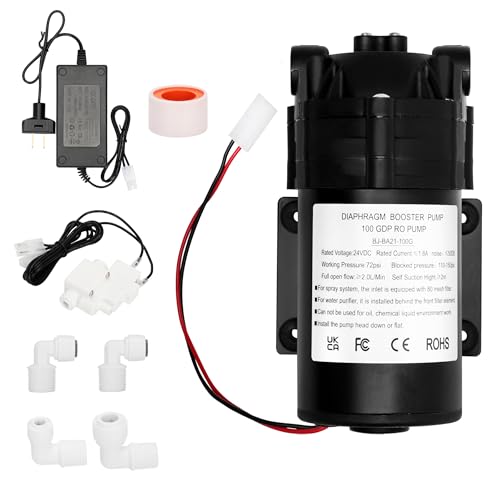
- Raises RO pressure to 60–80 PSI
- Fits residential systems under 100 GPD
- Includes automatic pressure switch
Best For: Compatible household reverse osmosis systems
Best Protected Diaphragm Pump

- 5.5 GPM flow with self-priming
- Automatic start-stop faucet control
- Includes filter and installation accessories
Best For: RV, marine, household, and garden water boosting
Best Variable-Speed Household Booster

- Up to 7.93 GPM flow
- Demand-responsive 100W motor
- Stainless housing with IP67 protection
Best For: Indoor residential plumbing and multiple fixtures
Best RV & Marine Pick
4.0 GPM 45 PSI AC Booster Pump

- 4 GPM flow with 45 PSI preset
- Self-priming and dry-run capable
- Includes strainer, fittings, and plug
Best For: RV, marine, and utility water systems
Best Compact Smart Pick
100W Variable-Speed Pressure Booster

- Automatic or manual operating modes
- Quiet 40 dB variable-speed motor
- IP67 body with stainless wetted parts
Best For: Compact household and apartment boosting
Best Quiet Smart Booster

- Up to 550 GPH and 25.6 PSI
- Zero-pressure automatic start mode
- Under-45 dB operation with installation kit
Best For: Quiet indoor household water-pressure boosting
Best Heavy-Duty Pick

- Includes pump, switch, fittings, tubing, and adapter
- Boosts RO pressure to about 80–100 PSI
- Plug-and-play quick-connect design
Best For: RO systems up to 200 GPD
Best Adjustable RV & Garden Booster – 5.5 GPM Self-Priming Diaphragm Pump
For shoppers comparing water pressure booster pumps under 100, this TDRRICH model offers a flexible option for RVs, homes, boats, and garden systems. Its adjustable 30–75 PSI range, 5.5 GPM flow rate, and automatic start-stop operation make it practical for on-demand fresh-water use.
Best For: RV, marine, home, and garden water-transfer applications needing adjustable pressure.
Pros:
- Adjustable pressure from 30 to 75 PSI.
- 5.5 GPM flow rate with a maximum 160-foot lift.
- Self-priming design with automatic faucet-controlled operation.
- Includes multiple connectors, a power cord, and a galvanized mounting base.
Cons:
- Fresh-water use only.
- Requires a 110V corded electrical connection.
- Warranty coverage is limited to 180 days.
This is a versatile pick when installation flexibility and adjustable pressure matter more than a specialized filtration setup. Check the included fitting sizes and available power before installation.
Best RO System Booster – 6800 100 GPD Booster Pump Kit
Among water pressure booster pumps under 100, this 6800 kit is designed specifically for residential reverse osmosis systems. It raises input pressure from 30–40 PSI to 60–80 PSI and includes a pressure switch for automatic operation as the storage tank fills.
Best For: Household reverse osmosis systems rated below 100 GPD.
Pros:
- Designed to boost RO input pressure to 60–80 PSI.
- Compatible with residential RO systems under 100 GPD.
- Automatic pressure switch turns the pump on or off based on tank pressure.
- Includes a pump, switch, fittings, adapter, and instruction manual.
Cons:
- Specialized for RO systems rather than whole-home plumbing.
- Limited to a listed 2 GPM flow rate.
- Uses a 24V AC power supply, so installation compatibility should be checked.
This is the most focused choice in the group for improving pressure in a compatible under-sink RO setup. Confirm your system’s capacity, connections, and power requirements before buying.
Best Protected Diaphragm Pump – 5.5 GPM 110V RV Water Booster
This 110V diaphragm model is a strong contender among water pressure booster pumps under 100 for kitchens, bathrooms, RVs, boats, and garden uses. It combines 5.5 GPM flow, a factory-set 70 PSI pressure, self-priming operation, and built-in protective features.
Best For: Users needing an on-demand booster for RV, marine, household, or lawn applications.
Pros:
- Provides up to 5.5 GPM flow and a listed 164-foot lift.
- Automatically starts and stops with faucet use.
- Includes overload, overheat, and dry-run protection.
- Package includes a filter, fittings, tools, tape, and manual.
Cons:
- Pressure is factory-set at 70 PSI, although it can be adjusted.
- Requires a 110V AC connection.
- The listed maximum lift varies between the product details and description.
With its included accessories and motor protection, this pump suits buyers looking for a ready-to-install general-purpose booster. Verify the lift specification and connection requirements for your setup.
Best Variable-Speed Household Booster – 7.93 GPM Automatic Pump
For residential shoppers seeking water pressure booster pumps under 100, this compact stainless-steel pump emphasizes automatic, demand-responsive operation. Its variable-speed 100W motor can provide up to 7.93 GPM, while 3/4-inch NPT connections and a 75-foot maximum head support indoor plumbing installations.
Best For: Indoor residential fixtures such as showers, sinks, water heaters, washing machines, and smart toilets.
Pros:
- Maximum flow of 7.93 GPM.
- Variable-speed motor adjusts to water demand.
- Stainless-steel housing and IP67 waterproof protection.
- Automatic start-stop operation for multiple household fixtures.
Cons:
- Maximum pressure is listed at 32.5 PSI.
- Maximum head is 75 feet.
- Intended for indoor residential applications rather than RV or marine use.
This model is appealing when high stated flow and responsive household operation are priorities. Its relatively modest pressure rating makes it better suited to pressure support than demanding high-pressure transfer tasks.
Best RV & Marine Pick – 4.0 GPM 45 PSI AC Booster Pump
For shoppers comparing water pressure booster pumps under 100, this 115V diaphragm pump offers a practical mix of automatic operation, useful flow, and broad installation flexibility. It delivers 4 GPM at a preset 45 PSI and starts or stops when a faucet opens or closes.
Best For: RVs, boats, yachts, garden sprayers, hose bibs, and other fresh-water transfer applications.
Pros:
- Provides 4 GPM with a 45 PSI pressure-switch setting.
- Self-primes, can run dry without damage, and includes thermal overload and ignition protection.
- Includes a strainer, power plug, fittings, and aluminum mounting base.
- Uses standard 115V AC power and supports automatic on-demand operation.
Cons:
- Requires careful mounting with the pump head facing down or horizontally to help prevent leakage into the rotor.
- Designed for fresh-water applications; installation connections must be secured to avoid leaks.
This is a well-rounded choice when you want a plug-in booster for an RV, marine system, or utility setup. Its 45 PSI setting and included strainer make it especially practical for replacing a common on-demand pump.
Best Compact Smart Pick – 100W Variable-Speed Pressure Booster
Among water pressure booster pumps under 100, this compact 100-watt model stands out for variable-speed control and automatic pressure management. Its rated performance is 264 GPH at 17 PSI, while maximum lab-tested output reaches 480 GPH and 32.7 PSI.
Best For: Showers, kitchens, water heaters, apartments, and installations where quiet, compact operation matters.
Pros:
- Variable-frequency motor is designed to use over 50% less energy than regular pumps.
- Automatic mode adjusts pressure and flow in real time and provides auto start-stop.
- 304 stainless-steel wetted parts, IP67 waterproofing, and 40 dB operation support durable, quiet use.
- Includes adapters, installation hardware, a mounting bracket, and two operating modes.
Cons:
- Rated daily performance is lower than the advertised maximum laboratory specifications.
- Its 32.7 PSI maximum pressure is lower than some higher-output booster pumps.
This model is a strong fit for household point-of-use boosting when you prefer a small, quiet pump with automatic control. Check the rated 17 PSI and 264 GPH figures against your plumbing needs rather than relying only on the maximum specifications.
Best High-Flow Pick – 5.5 GPM 75 PSI Transfer Pump
If you need stronger flow from water pressure booster pumps under 100, this 110V on-demand diaphragm pump is built for demanding transfer and washdown tasks. It provides 5.5 GPM, reaches up to 75 PSI, and has a maximum lifting height of 160 feet.
Best For: Boats, RVs, garden hoses, home water transfer, washdown systems, and fresh-water circulation.
Pros:
- Delivers 5.5 GPM with up to 75 PSI maximum pressure.
- Self-primes and operates on demand for convenient water delivery.
- Offers a maximum lifting height of 160 feet.
- Includes a 50-mesh inlet strainer plus multiple inlet and outlet connection options.
Cons:
- Its 170W motor and 6.6-pound weight make it less compact than lower-power options.
- Should be used with fresh water; solid particles and corrosive liquids may damage the diaphragm.
- The supplied warranty is 180 days.
This is the option to consider when flow and lifting capability are more important than compact size. The included strainer helps protect the pump, but the system still needs clean, non-corrosive water and properly matched plumbing connections.
Best Quiet Smart Booster – CrestWave 85W Automatic Pump
The CrestWave is a practical choice among water pressure booster pumps under 100 for household plumbing that needs steadier flow without excessive operating noise. Its three speed settings and three operating modes make it easier to match performance to different water-pressure conditions.
Best For: Indoor household boosting where quiet operation, adjustable output, and low-flow automatic starting are priorities.
Pros:
- Delivers up to 550 GPH, 25.6 PSI, and a 59-foot maximum head.
- Zero-Pressure Auto mode is designed to start and stop with flow below 1.2 L/min.
- Runs at under 45 dB and includes adapters, mounting hardware, and sealing rings.
Cons:
- Standard Auto mode requires at least 1.2 L/min inlet flow to start automatically.
- The 85W, 24V setup is intended for household boosting rather than the highest-demand transfer jobs.
Its low-flow mode is the standout feature for homes where conventional automatic pumps may struggle to activate. Check the included port adapters and your plumbing requirements before installation.
Best Heavy-Duty Pick – Complete RO Booster Pump Kit
This complete kit is a specialized pick among water pressure booster pumps under 100 for reverse osmosis systems. It combines the pump, pressure switch, quick-connect fittings, tubing, and power adapter for a plug-and-play installation approach.
Best For: Home RO systems up to 200 GPD that need higher inlet pressure and automatic pump control.
Pros:
- Includes the RO pump, high-pressure switch, 1/4-inch tubing, fittings, wiring, and 24V adapter.
- Designed to raise incoming pressure from 40 PSI to approximately 80–100 PSI.
- Automatic start/stop operation responds to insufficient pressure and the preset pressure level.
Cons:
- Its intended use is RO water purification, so it is not a general household booster pump.
- Compatibility should be checked against your specific RO system and connections.
For an RO installation, the included components can reduce the need to source separate parts. Its value is highest when your system matches the stated flow and connection requirements.
Best High-Flow Utility Pump – 110V 75 PSI Diaphragm Pump
For demanding transfer and boosting tasks, this 110V diaphragm model is one of the higher-output options among water pressure booster pumps under 100. It combines a 5.5 GPM flow rate with an automatic pressure switch, self-priming capability, and protection features for varied residential and outdoor uses.
Best For: RV and marine use, garden irrigation, household boosting, and other applications requiring higher flow and adjustable pressure.
Pros:
- Produces up to 5.5 GPM and is factory-set to 75 PSI with adjustable pressure.
- Automatic start/stop operation activates when a tap opens and stops when it closes.
- Includes overload and thermal protection, a strainer, hose fittings, tape, and a spanner.
- Anti-vibration mounting and rubber feet help reduce noise and movement.
Cons:
- It uses 110V AC power, so installation requires an appropriate electrical supply.
- The supplied specifications list a 9.8-foot vertical self-priming capability, which may limit placement options.
- A 180-day warranty is shorter than some long-term coverage options.
This pump is a strong fit when flow matters more than compact low-voltage operation. Its automatic control and included accessories make it versatile, but verify the electrical setup and required lift before buying.
How We Picked the Best Water Pressure Booster Pumps Under 100
We focused on pumps priced below $100 and selected models covering the most common budget applications: RV water systems, kitchen and utility lines, washdown tasks, and reverse-osmosis filtration. We compared advertised gallons per minute (GPM), maximum pressure, wattage, self-priming capability, automatic pressure controls, included accessories, and installation style.
Because performance depends on plumbing layout, inlet supply, hose size, elevation, and restrictions, published specifications should be treated as a comparison starting point rather than a guarantee of real-world flow.
Quick Comparison: What to Look for
- Best general range: 4 to 5.5 GPM is suitable for many single-fixture, RV, and light utility applications.
- Higher-demand option: Models advertising around 7 to 8 GPM may suit larger flow requirements, provided the plumbing and water source can support them.
- RO applications: Dedicated booster kits are usually easier to connect to compatible reverse-osmosis systems than general-purpose transfer pumps.
- Pressure range: Pumps in this roundup advertise approximately 25 to 75 PSI. Confirm your equipment’s safe operating pressure before installation.
- Controls: Automatic pressure switches can start and stop the pump as water demand changes, while a manual setup may require a separate switch.
Key Buying Factors for Water Pressure Booster Pumps Under 100
Pressure and Flow
Pressure, measured in PSI, affects how forcefully water is delivered; flow, measured in GPM or GPH, indicates how much water the pump can move. Do not choose solely by the highest advertised number. Match the pump to the fixture, filter, hose, and source-water limitations.
Voltage and Installation
Many affordable models use 110V AC power and include a plug, but verify the outlet, cord arrangement, grounding, and indoor or outdoor suitability. Check inlet and outlet fittings carefully, especially when replacing an existing pump.
Self-Priming and Automatic Operation
Self-priming designs can simplify setup, but priming height and maximum lift still matter. An automatic pressure switch is useful for faucets, RV plumbing, and demand-based systems; a strainer can help protect the pump from debris.
System Compatibility
RO booster kits often use quick connections and pressure switches designed for filtration manifolds. General diaphragm pumps may be more versatile, but they can require adapters, tubing changes, or additional controls.
Who Should Buy Which Water Pressure Booster Pumps Under 100?
RV owners and mobile users should prioritize compact self-priming pumps with automatic demand operation, a suitable PSI rating, and compatible hose connections. Homeowners improving one low-pressure fixture should compare 4 to 5.5 GPM models and avoid oversizing the pump for small plumbing.
RO system owners should choose a dedicated booster kit when possible, particularly if it includes the correct fittings and high-pressure switch. Utility and washdown users may benefit from higher advertised flow, but should confirm duty cycle, water-source capacity, and power requirements first.
Before buying, identify the problem’s source: a clogged filter, partially closed valve, undersized pipe, or failing pressure regulator may need repair rather than a booster pump. Install a pressure gauge when practical, follow the manufacturer’s wiring and plumbing instructions, and never exceed the rated pressure of connected equipment.