Choosing the right energy monitor can make it easier to spot power hogs, reduce waste, and keep monthly bills under control. The best Wi-Fi energy meters give you real-time visibility without requiring guesswork.
In this roundup, we focus on models that balance accuracy, installation flexibility, app support, and smart home compatibility so you can pick the right monitor for your home or property.
Best 10 Wifi Energy Meters Picks for 2026
Whole-Home Monitoring Pick
Emporia Vue 3 Home Energy Monitor
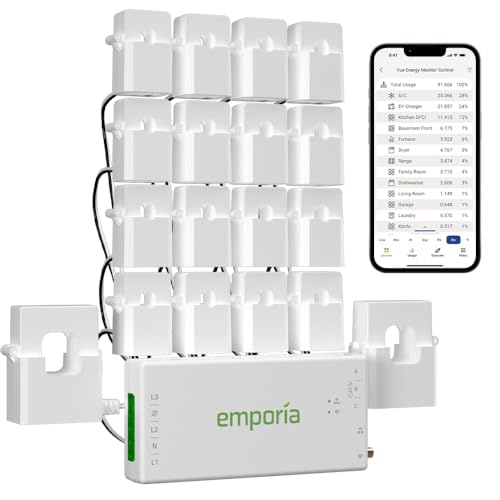
- UL Listed whole-home energy monitor
- Sixteen 50A branch sensors included
- 2.4 GHz WiFi with app and web access
Best For: Homeowners wanting panel-level monitoring with solar/net metering
3-Phase Utility Monitor
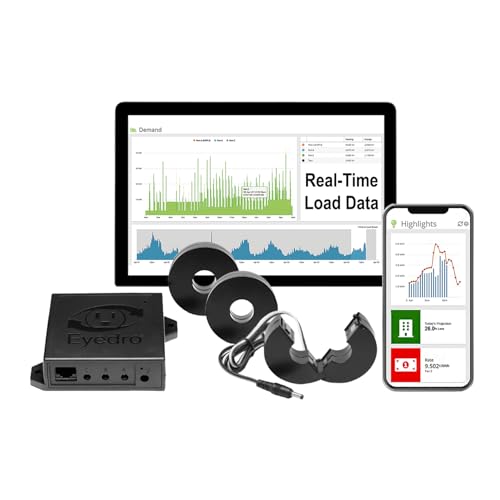
- WiFi or Ethernet connectivity
- Tracks usage, solar generation, and cost
- No subscription for cloud software
Best For: 3-phase installations needing detailed cost and solar monitoring
Rental-Friendly Circuit Tracker
Smart Home Energy Monitor with 16 Sensors

- Sixteen 50A sensors for circuit tracking
- 2.4 GHz WiFi plus MQTT/Home Assistant support
- Built for rental and shared-space billing
Best For: Rental homes and shared apartments needing circuit-level cost allocation
Single-Phase Safety Meter

- Leakage and overload protection built in
- Smart Life/Tuya with Alexa and Google Home
- Single-phase monitoring up to 63A
Best For: Single circuits needing monitoring plus automatic protection
Local-Control Solar Monitor
Refoss Smart Home Energy Monitor

- Local web UI, Open API, and MQTT
- Native Home Assistant integration
- Solar surplus automation for loads
Best For: Privacy-focused users with solar and Home Assistant
Bi-Directional Solar Tracker

- Tracks usage and grid export
- Class 1 accuracy for solar systems
- Smart Life app with automation scenes
Best For: Solar and battery homes needing bidirectional tracking
UL-Certified Whole-Home Monitor

- UL Listed with clamp-on sensors
- Solar and net metering support
- Up to 16 branch sensors supported
Best For: Families wanting safe whole-home monitoring with app access
Dual-Channel Home Monitoring
Smart Home Energy Monitor 2×80A

- Two 80A clamp sensors
- Real-time app monitoring
- Bi-directional tracking support
Best For: two-circuit monitoring for major appliances and solar or backup setups
UL-Certified Whole-Home Monitoring
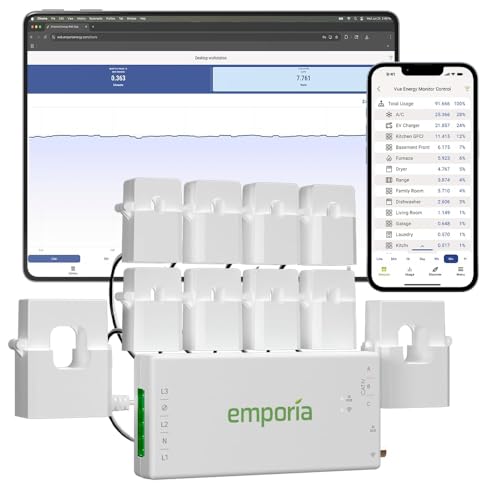
- UL listed for safety
- Supports solar and net metering
- App access on iPhone, Android, and web
Best For: whole-home energy tracking with certified safety and solar monitoring
High-Capacity Dual-Channel Monitoring
Smart Home Energy Monitor 2×120A
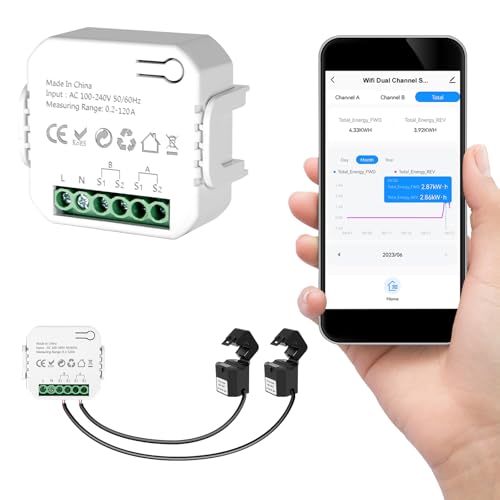
- Two 120A sensing channels
- Built for high-power appliances
- Bi-directional tracking with app control
Best For: larger households and heavy-load circuits like EV chargers and central HVAC
Whole-Home Monitoring Pick – Emporia Vue 3 Home Energy Monitor
If you want wifi energy meters for whole-home visibility, the Emporia Vue 3 is built for panel-level monitoring with strong safety credentials. It uses clamp-on sensors, supports solar and net metering, and gives you real-time app-based data so you can spot high-usage circuits and track savings opportunities.
Best For: Homeowners who want a UL-listed whole-home monitor with solar and net metering support.
Pros:
- UL Listed and CE Listed for added safety confidence
- Includes sixteen 50A branch sensors for appliance and circuit monitoring
- 2.4 GHz WiFi with iPhone, Android, and web app access
- Real-time, minute, and hour data with cloud export options
Cons:
- Requires 2.4 GHz WiFi and an internet connection
- Installation happens in the circuit panel, so it is not a simple plug-in device
The Vue 3 is a practical fit if you want detailed energy tracking without guesswork and value safety certifications. It is especially appealing for users who want to monitor solar output, net usage, and multiple household loads from one system.
3-Phase Utility Monitor – Eyedro 3-Phase Energy Meter
For buyers comparing wifi energy meters for commercial or complex electrical setups, the Eyedro 3-Phase Energy Meter stands out for its voltage flexibility and real-time reporting. It supports WiFi or Ethernet, tracks consumption and solar generation, and keeps 24/7 history in the MyEyedro platform without a subscription fee.
Best For: Facilities or homes with 3-phase power that need detailed usage, cost, and solar tracking.
Pros:
- Supports WiFi and wired Ethernet connections
- Real-time data includes kWh, watts, amps, volts, power factor, and cost
- No subscription required for cloud software, reports, and bill projections
- Non-invasive clamp-on installation with included 200A sensors
Cons:
- Designed for 3-phase systems, so it is not the simplest choice for basic single-phase homes
- Some net metering functions require a specific plugin setup
This is a strong option if you need a flexible meter for varied voltage setups and want both usage and solar visibility. Its combination of live data, rate support, and no-fee software makes it a serious monitoring tool rather than a basic smart meter.
Rental-Friendly Circuit Tracker – Smart Home Energy Monitor with 16 Sensors
If you need wifi energy meters for shared living spaces, this SEM-Meter model is aimed at detailed circuit-by-circuit allocation. It supports home and light commercial panels, works with 2.4 GHz WiFi, and can also run in a privacy-focused MQTT-only mode for Home Assistant users.
Best For: Rental homes, shared apartments, and multi-room properties that need fair electricity allocation.
Pros:
- Includes sixteen 50A sensors for multiple circuits and appliances
- Supports 2.4 GHz WiFi with app-based real-time monitoring
- Home Assistant and MQTT support for LAN-only operation
- Custom rate templates help calculate time-of-use electricity costs
Cons:
- Requires a compatible 2.4 GHz WiFi setup
- Panels with busbar-only access may need flexible sensors sold separately
This monitor is especially useful when you need transparent billing or want to see where each room or circuit is spending energy. Its privacy mode and per-circuit tracking make it more versatile than a basic household meter.
Single-Phase Safety Meter – eMylo 63A WiFi Energy Meter
For buyers looking at wifi energy meters for a single circuit, the eMylo 63A model adds monitoring plus protection features in one compact unit. It works with the Smart Life/Tuya app, supports Alexa and Google Home, and lets you view electrical data or manage the connected load remotely.
Best For: Single-phase circuits that need energy monitoring with leakage and overload protection.
Pros:
- Adjustable leakage and overload protection with automatic disconnect
- Works with Smart Life/Tuya, Alexa, and Google Home
- Displays voltage, current, power, energy use, and leakage current
- Includes timer and schedule controls for connected equipment
Cons:
- Supports 2.4 GHz WiFi only, not 5 GHz
- Rated for single-phase use up to 63A, so it is not meant for larger multi-circuit monitoring
This is a good choice if you want a smart meter that does more than measure electricity and can also cut power when thresholds are exceeded. It is best suited to a single load or circuit rather than whole-home monitoring.
Local-Control Solar Monitor – Refoss Smart Home Energy Monitor
If you want wifi energy meters that keep data in your home network, the Refoss EM16P is built around local control. It offers a built-in web UI, Open API, and MQTT support, plus native Home Assistant integration for users who want automation without depending on the cloud. It also adds circuit-level monitoring and solar-focused automation features to help shift usage into cheaper, cleaner daytime power.
Best For: Homeowners who want privacy-first energy monitoring with Home Assistant and solar automation.
Pros:
- Local access through web UI, Open API, and MQTT
- Native Home Assistant support with no firmware flashing required
- Solar surplus automation for EV chargers, washers, and water heaters
- Supports 2 main CTs and 16 branch sensors for circuit-level tracking
Cons:
- Installation is panel-based and may not suit renters
- Features are aimed at users comfortable with smart home setup
- Solar optimization is most useful if you already have solar generation
This is a strong pick if you value privacy, local automation, and detailed panel monitoring in one package. Its 5-year data storage, alerting, and ETL certification make it a practical long-term monitor for advanced home energy management.
Bi-Directional Solar Tracker – WiFi Home Energy Monitor
For shoppers comparing wifi energy meters, this Blindsmart unit is aimed at accurate whole-home tracking with solar and battery support. It measures voltage, current, power, and total energy consumption, and it can also track export to the grid with bi-directional monitoring. The Smart Life app integration and configurable reporting intervals make it a flexible option for everyday energy visibility and automation.
Best For: Homes with solar or battery storage that need bidirectional energy tracking and app control.
Pros:
- Bi-directional monitoring for household use and grid export
- Class 1 accuracy for solar and battery systems
- Smart Life app support with alerts and automation scenes
- Pluggable terminals and split-core CTs simplify installation
Cons:
- Only two 120A CTs are included
- Best suited to single-phase 3-wire setups
- Feature set is narrower than more advanced whole-panel monitors
If you want a straightforward monitor for solar-aware energy management, this model covers the essentials well. Its DLB and zero grid export support are especially useful for homes trying to manage load, self-consumption, and electricity costs more efficiently.
UL-Certified Whole-Home Monitor – Emporia Vue 3
The Emporia Vue 3 is one of the more established wifi energy meters for whole-home monitoring, with UL certification and support for clamp-on panel installation. It’s designed to track real-time electricity use, solar, and net metering while connecting through 2.4 GHz WiFi and the Emporia Energy app. If you want a monitor built for everyday energy management and long-term cloud data access, this is a well-rounded choice.
Best For: Households that want a UL-listed whole-home monitor with solar and net metering support.
Pros:
- UL Listed and CE Listed for safety
- Supports solar and net metering monitoring
- Adds up to 16 branch sensors for appliance-level tracking
- App and web access with cloud-retained data
Cons:
- Requires 2.4 GHz WiFi and an internet connection
- Some data retention is cloud-based rather than fully local
- Additional sensors for branch circuits are sold separately
This monitor makes sense if safety certification and broad compatibility matter more than local-only control. Its real-time alerts, automation options, and appliance monitoring support make it a practical tool for reducing costs and spotting energy waste.
Dual-Channel Home Monitoring – Smart Home Energy Monitor 2×80A
If you want wifi energy meters for tracking a couple of major loads, this dual-channel monitor is built for straightforward home-level visibility. It uses two 80A clamp sensors, works with Tuya or Smart Life, and gives you real-time data on power, voltage, current, and power factor plus historical views by hour, day, month, or year.
Best For: Homes that need simple two-circuit monitoring for high-power appliances, solar setups, or backup power systems.
Pros:
- Two independent 80A sensing channels for monitoring separate household circuits
- Tracks real-time electrical data and historical usage trends in the app
- Supports bi-directional energy tracking for solar, backup power, and mixed loads
- Clamp-style sensors install externally without cutting wires
Cons:
- Requires a 2.4GHz Wi-Fi connection for setup and app use
- Limited to two monitored channels rather than whole-panel circuit coverage
This is a practical pick if you mainly want to watch a few big loads and see how energy moves in both directions. It keeps installation relatively simple while still offering useful app-based insights for everyday cost control.
UL-Certified Whole-Home Monitoring – Emporia Vue 3
Among wifi energy meters, the Emporia Vue 3 stands out if you want whole-home monitoring with a strong safety focus. It is UL listed, uses clamp-on sensors in the circuit panel, and provides real-time energy data through the Emporia app, with support for solar and net metering plus automated energy management features.
Best For: Households that want a UL-certified whole-home monitor with app-based tracking and solar or net metering support.
Pros:
- UL listed for safety, with CE and UL-listed components
- Monitors real-time usage and supports solar/net metering
- Works with iPhone, Android, and web app access
- Clamp-on installation for most homes with supported electrical systems
Cons:
- Requires 2.4GHz Wi-Fi with internet access
- Some electrical systems need an additional 200A sensor sold separately
This is a strong choice if safety certification and whole-home insight matter more than a minimal setup. The app features and data retention options make it especially useful for people who want to track usage patterns over time and spot savings opportunities.
High-Capacity Dual-Channel Monitoring – Smart Home Energy Monitor 2×120A
If you need wifi energy meters for heavier household loads, this 2×120A model is aimed at higher-capacity circuits like EV chargers, central air conditioners, water heaters, and electric dryers. It pairs with Tuya or Smart Life for real-time readings, historical usage charts, and bi-directional tracking for homes with solar or backup power.
Best For: Larger loads and higher-capacity residential circuits that need two-channel monitoring.
Pros:
- Two high-capacity 120A sensing channels for demanding circuits
- Tracks power, voltage, current, and power factor in real time
- Supports bi-directional monitoring for solar, backup, and mixed load setups
- Clamp-style installation avoids cutting or modifying wires
Cons:
- Requires 2.4GHz Wi-Fi and app setup through Tuya or Smart Life
- Limited to two monitored circuits rather than full-panel multi-circuit coverage
This model makes sense if your biggest concern is watching power-hungry equipment instead of every branch circuit. It offers the same app-based convenience as smaller monitors, with more headroom for demanding electrical loads.
How We Picked the Best Wifi Energy Meters
We looked for models that offer practical day-to-day value: dependable current sensing, clear app-based tracking, and features that match common household needs. We also favored options with flexible monitoring styles, from whole-home monitoring to circuit-level reporting and multi-phase support.
Quick Comparison
If you want whole-home visibility, a clamp-based monitor is usually the simplest path. If you need appliance-level or circuit-level insight, choose a model with multiple sensors. For larger properties or commercial-style electrical setups, three-phase support and higher amperage ratings matter more than extra app features.
Key Buying Factors for Wi-Fi Energy Meters
Monitoring Scope
Decide whether you need to track one main feed, multiple circuits, or a split/three-phase system. This is the biggest factor in choosing the right product.
Electrical Compatibility
Check amperage limits, phase support, and voltage ratings before buying. A meter should match your panel and service type to avoid installation issues.
Software and Ecosystem Support
Some Wifi Energy Meters work best in their own app, while others add value through Home Assistant, open APIs, or local-only operation. If privacy or automation matters, prioritize those integrations.
Installation and Sensor Count
More sensors can mean better visibility, but they also add complexity. Pick the simplest setup that still covers the loads you care about.
Solar and Cost Tracking
If you have solar or want better bill planning, look for net metering support, export tracking, and cost estimates. These features make the data more actionable.
Who Should Buy Which Wifi Energy Meters?
Homeowners who want broad, whole-house monitoring should lean toward easy-to-install clamp-based systems. Landlords and property managers may prefer circuit-level models for tenant-level or zone-level insight. Advanced users who value automation should look for Wifi Energy Meters with open APIs or Home Assistant support. If you need commercial or multi-phase monitoring, choose a system rated for your service type and load requirements.
For most buyers, the best choice is the monitor that fits your panel, supports the right number of circuits, and gives you the app or integrations you’ll actually use.