Choosing the right electrical test equipment for solar installation can save time, reduce guesswork, and improve commissioning accuracy on the jobsite.
Below, we’ve focused on practical tools for PV testing, power measurement, and safe diagnostics so you can match the meter to the work.
Best 10 Electrical Test Equipment for Solar Installation Picks for 2026
Solar Pro Tester
FT-2000W Solar Panel Tester MPPT Meter

- Measures Pmax, Voc, and Isc for PV validation
- CAT III 1000V / CAT IV 600V safety rating
- Backlit LCD, data hold, and auto-ranging
Best For: Field validation and troubleshooting of single solar panels
Budget Power Analyzer

- 200A watt meter for power and current monitoring
- Bright backlit LCD for easier reading
- Also functions as a battery monitor/analyzer
Best For: Battery-side monitoring and simple power analysis in small solar setups
Field PV Checker
LODESTAR LD673PV+ Solar Panel Tester

- Measures Pmax, Vmp, Voc, and Isc for single panels
- Up to 2000W, 150V, and 45A rating
- Includes MC4 disconnect tool and test leads
Best For: Single-panel commissioning and on-site PV troubleshooting
High-Voltage Clamp Meter
Fluke 393 FC Solar Clamp Meter
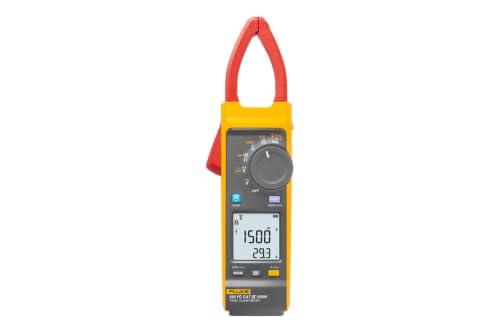
- CAT III 1500 V rating for high-voltage work
- Thin jaw for crowded combiner boxes
- IP54-rated with iFlex and Fluke Connect support
Best For: Safe clamp measurements in high-voltage solar installations
Compact Solar Site Tester
1600W MPPT Solar Panel Tester LCD

- Measures panels up to 1600W and 60V
- No battery required; solar-powered operation
- Large LCD designed for sunlight visibility
Best For: Daily solar panel inspection and quick field troubleshooting
Smart MPPT Workhorse
UNI-T UT673PV Solar Panel Tester

- Tests Pmax, Vmp, Imp, Voc, and Isc
- Manual and automatic MPPT modes with data hold
- Large screen displays multiple results at once
Best For: Broad PV testing on installation and maintenance jobs
High-Capacity Field Meter

- Measures Pmax, Voc, Isc, Vmp, and current
- Rechargeable battery lasts up to 15 hours
- Auto-save stores up to 30 test entries
Best For: Higher-capacity solar field testing with onboard data storage
Quick PV Meter

- Measures MPPT power, voltage, current, and Voc
- Auto and manual test modes
- Backlit LCD with solar-powered operation
Best For: Routine solar installation checks
Portable Field Tester
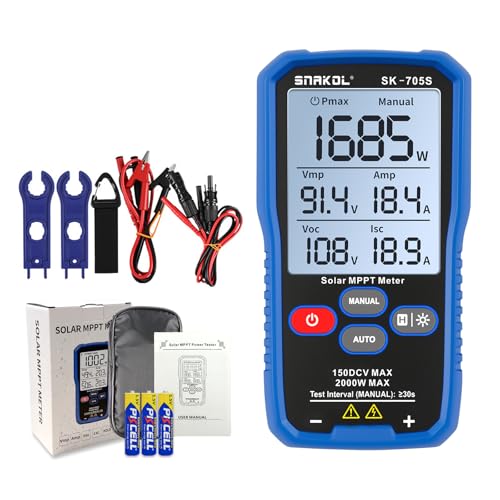
- Measures Pmax, Vmp, Imp, Voc, and Isc
- Auto/manual modes for commissioning and service
- 3.2-inch backlit LCD plus included accessories
Best For: Field commissioning and maintenance
Easy-Setup PV Tester

- Measures Pmax, Voc, and Isc with MPPT tracking
- MC4 plug-and-play setup
- Backlit 3.2-inch LCD with multi-protection
Best For: Beginners and routine solar installs
Solar Pro Tester – FT-2000W Solar Panel Tester MPPT Meter
If you need electrical test equipment for solar installation that can verify panel output in the field, the FT-2000W is built for direct PV checks. It measures Pmax up to 2000W, Voc from 12–150V, and Isc up to 35A, so it fits well for validating solar panel performance during commissioning, troubleshooting, and maintenance.
Best For: Solar technicians who need a portable PV tester for field validation, shading checks, and performance verification.
Pros:
- Measures Pmax, Voc, and Isc with stated ±0.8% accuracy
- CAT III 1000V / CAT IV 600V rating supports safer high-voltage PV work
- Backlit LCD, data hold, and auto-ranging help in rooftop and low-light conditions
- IP54 dust/water resistance adds durability for outdoor installs
Cons:
- Designed for solar professionals, so it may be more tool than casual users need
- Current limit tops out at 35A, which may not suit every larger array test
This is a focused PV testing tool rather than a general-purpose meter, and that makes it useful when you want fast, repeatable solar measurements. For installers and maintenance teams, it offers the core checks needed to confirm panel performance and spot issues like degradation or shading losses.
Budget Power Analyzer – Makerfire 200A Watt Meter
The Makerfire 200A Watt Meter is a practical pick if you want electrical test equipment for solar installation that can also serve as a power analyzer for battery-based systems. Its bright backlit LCD makes readings easier to see, and the unit is aimed at monitoring power use rather than high-voltage PV string testing.
Best For: Basic power monitoring and battery-side testing in solar, RC, or small renewable setups.
Pros:
- 200A watt meter design supports higher-current monitoring
- Backlit LCD improves visibility in dim environments
- Works as a watt meter, power analyzer, and battery monitor
Cons:
- Supplied notes do not list solar-specific PV measurement features like Voc or Isc
- Less specialized than dedicated panel testers for installation diagnostics
If your workflow is centered on battery monitoring or checking power flow in smaller solar-related systems, this meter is a straightforward option. It is less of a dedicated PV commissioning tool and more of a general power analyzer for current tracking and display-based monitoring.
Field PV Checker – LODESTAR LD673PV+ Solar Panel Tester
For installers who want electrical test equipment for solar installation focused on single-panel checks, the LODESTAR LD673PV+ covers the core PV readings. It measures Pmax, Vmp, Voc, and Isc up to 2000W, 150V, and 45A, and the backlit LCD makes it easier to read results on-site.
Best For: Single solar panel testing during installation, maintenance, and troubleshooting.
Pros:
- Supports up to 2000W, 150V, and 45A for common PV panels
- Measures Pmax, Vmp, Voc, and Isc in one portable unit
- Backlit LCD and data hold improve usability outdoors
- Includes MC4 disconnect tool, test leads, and storage pouch
Cons:
- Only for single solar panel testing, not series or parallel-connected panels
- Less versatile if you need broader system-level diagnostics
This tester is a strong fit when you need quick, direct panel verification without extra setup. The included MC4 disconnect tool and complete kit make it especially convenient for field work, while the measurement set stays tightly focused on PV performance checks.
High-Voltage Clamp Meter – Fluke 393 FC Solar Clamp Meter
The Fluke 393 FC is a premium choice for electrical test equipment for solar installation when you need safe clamp-meter access in high-voltage environments. With CAT III 1500 V rating, IP54 protection, thin jaw access, and DC power measurement, it is designed for work in crowded combiner boxes and outdoor solar sites.
Best For: High-voltage solar electrical checks where clamp access, safety rating, and durability matter most.
Pros:
- CAT III 1500 V rating supports high-voltage solar work
- Thin jaw helps access cables in tight combiner boxes
- IP54 rating makes it suitable for outdoor use
- Includes iFlex, test leads, case, and Fluke Connect software support
Cons:
- More specialized and likely pricier than basic meters
- Focused on clamp-meter measurements rather than panel-specific PV tester readings
If your priority is safe, efficient electrical measurement around solar arrays and combiner boxes, this meter brings the ruggedness and access features that field crews value. It is less about direct panel performance testing and more about dependable high-voltage circuit work in demanding conditions.
Compact Solar Site Tester – 1600W MPPT Solar Panel Tester LCD
If you need electrical test equipment for solar installation that is quick to carry and simple to use, this 1600W MPPT solar panel tester is built for daily photovoltaic inspection work. It measures panel voltage, current, and power, helps compare performance across panels, and can even assist in finding the best angle or placement for a solar panel setup.
Best For: Installers and technicians who want a portable solar panel troubleshooting tool for daily inspections and basic performance checks.
Pros:
- Measures solar panels up to 1600W and 60V
- Large LCD is designed to be readable under sunlight
- No battery required; powered directly by the solar panel
- Includes MC4 and alligator clip cables for flexible connection options
Cons:
- Cannot measure multiple solar panels connected in series
- Panels must be disconnected from other loads before testing
- Limited to systems within the stated 1600W and 60V range
This is a practical field tester for straightforward PV checks, especially when portability and sunlight visibility matter. It focuses on quick measurements and basic troubleshooting rather than advanced diagnostic features.
Smart MPPT Workhorse – UNI-T UT673PV Solar Panel Tester
For electrical test equipment for solar installation that covers more of the core PV checks, the UNI-T UT673PV is a strong all-in-one option. It tests maximum power, peak power voltage, peak power current, open circuit voltage, and short circuit current, while showing multiple results at once on a large screen for easier on-site verification.
Best For: Installers, manufacturers, and maintenance teams that want a portable PV tester with broad measurement coverage and clear result display.
Pros:
- Measures Pmax, Vmp, Imp, Voc, and Isc
- Automatic and manual MPPT test modes with data hold
- Large display shows multiple results simultaneously
- No batteries needed; powered by the solar panel
Cons:
- Maximum operating voltage is limited to 60V in the listed details
- Includes an MC4 lead, so it is optimized for compatible PV connections
- Heavier than some compact testers at 1.2 pounds
This model stands out if you want a more complete read on panel behavior during solar installation or maintenance. Its mix of automatic testing, multi-language support, and portable design makes it well suited to repeat field use.
High-Capacity Field Meter – 2000W Solar Panel Tester
When you need electrical test equipment for solar installation that can handle higher-output field checks, this 2000W solar panel tester is built for practical MPPT testing and fault diagnosis. It measures Pmax, Voc, Isc, Vmp, and current, and it adds auto data save so you can keep records from one job to the next without extra hassle.
Best For: Solar professionals who want a rugged, rechargeable tester with higher power capacity and built-in data storage.
Pros:
- Measures up to 2000W with MPPT support
- Built-in rechargeable 1250mAh battery lasts up to 15 hours
- Auto or manual measurement modes plus auto data save for up to 30 entries
- Includes overvoltage, overcurrent, reverse polarity, and overtemperature protection
Cons:
- Listed max voltage range is 3-90V, so it is not for high-voltage arrays
- No backlight or brightness adjustment on the display
- Solar panel must be disconnected from other devices or loads before testing
This tester is a sensible pick for installers who value battery power, saved readings, and extra protection features in the field. Its durable design and portable kit make it especially handy for repeat site visits and final inspection work.
Quick PV Meter – 1600W Solar DC/AC Tester
If you need electrical test equipment for solar installation that focuses on fast PV checks, this 1600W solar power meter is built for basic field testing. It measures maximum power point power, voltage, current, and open-circuit voltage, with auto and manual MPPT modes for straightforward commissioning work.
Best For: Installers who want a simple solar panel tester for routine MPPT and Voc checks.
Pros:
- Measures PV panel maximum power point power, voltage, and current
- Includes auto and manual measurement modes for flexible testing
- LCD display has backlight for easier reading outdoors
- Solar-powered operation avoids battery dependence
Cons:
- Designed around solar-panel testing rather than broader electrical diagnostics
- Power source requires a solar panel, which is not included
This is a practical choice if your main priority is getting quick MPPT and open-circuit readings during installation. It stays focused on core PV testing without adding extra complexity.
Portable Field Tester – 2000W MPPT PV Tester
For electrical test equipment for solar installation that needs more measurement depth, this portable MPPT tester is aimed at commissioning and maintenance work. It measures Pmax, Vmp, Imp, Voc, and Isc, and it supports both automatic and manual testing for controlled field checks.
Best For: Installers and technicians who want a portable PV tester with a larger display and broad MPPT measurements.
Pros:
- Measures Pmax, Vmp, Imp, Voc, and Isc for detailed PV checks
- Auto and manual modes suit both quick and controlled testing
- 3.2-inch backlit LCD improves readability outdoors
- Includes test leads, alligator clips, storage pouch, and manual
Cons:
- Powered by battery rather than solar
- Listed capacities and specification details should be matched to your panel setup
This model is a strong fit when you want a portable tester that covers the main PV performance values used during install and service work. The included accessories also make it easier to start using right away.
Easy-Setup PV Tester – 2000W MC4 Solar Panel Tester
This solar panel tester is a practical option if you want electrical test equipment for solar installation with simple plug-and-play operation. It measures Pmax, Voc, and Isc, supports auto and manual modes, and uses MC4 cables for quick setup in RV, home, and off-grid systems.
Best For: Beginners and installers who want an easy-to-use PV tester for everyday solar work.
Pros:
- Measures Pmax, Voc, and Isc with built-in MPPT tracking
- MC4 connection makes setup fast and straightforward
- Large 3.2-inch LCD is designed for sunlight readability
- Built-in protection against over-voltage, over-current, reverse polarity, and overheating
Cons:
- Battery-powered, so it is not self-powered by the panel
- Measurement range is focused on core PV testing rather than advanced diagnostics
If you want a tester that is easy to deploy in the field, this one keeps the process simple while still covering the core readings needed for panel checks. The protection features add confidence for outdoor use and troubleshooting.
How We Picked the Best Electrical Test Equipment for Solar Installation
We looked for tools that fit real-world solar work: accurate PV measurements, useful protection features, readable displays, and power ranges that match residential and small commercial systems. We also favored equipment that supports common field tasks such as Voc, Isc, Vmp, and Pmax testing, plus clamp-meter options for broader electrical checks.
Quick Comparison
Most buyers will fall into one of three buckets. PV meter testers are best for rapid module and string checks. Clamp meters like the Fluke 393 FC are better for electricians who need solar plus general electrical diagnostics. Lower-wattage or more compact testers can make sense for RV, off-grid, or lighter-duty maintenance work.
Key Buying Factors for Electrical Test Equipment for Solar Installation
Measurement Range and Compatibility
Check the maximum voltage, current, and wattage limits before buying. For larger arrays, choose a tester with enough headroom for string voltage and current so you are not forced to work around the meter’s ceiling.
What It Measures
The most useful solar tools measure Voc, Isc, Vmp, and Pmax. If your workflow also includes inverter input verification, fault finding, or general site service, a meter with DC power measurement and continuity functions can be more versatile.
Safety and Protection
Look for reverse polarity protection, overload protection, proper CAT ratings, and a design that suits outdoor work. For live Electrical Test Equipment for Solar Installation, safety features are not optional.
Display and Workflow
A bright backlit LCD, clear data hold, and fast automatic/manual MPPT modes can make a big difference in the field. Portable tools with simple menus are especially helpful when you are moving between rooftops, arrays, and service vehicles.
Build Quality and Accessories
Durable leads, MC4 support, and a compact carry form factor improve day-to-day usability. If you test often, small conveniences can matter as much as raw specs.
Who Should Buy Which Electrical Test Equipment for Solar Installation?
Solar installers and commissioning techs should prioritize MPPT-capable PV testers with wide voltage and current ranges. Electricians and service professionals may get more value from a clamp meter with solar-friendly DC functions. RV, off-grid, and light maintenance users can usually choose a simpler, lower-capacity tester that covers the basics without paying for oversized specs.
If you want the best fit, start with the measurements you actually need, then choose the safest tool that gives you enough margin for the systems you service most often.