Preparing raised-bed soil is easier when your tool matches the bed’s size, soil condition, and planting schedule. The best options range from lightweight handheld cordless tillers for small beds to manual cultivators that offer precise control without batteries or noise.
We compared these 10 garden tillers for maneuverability, tine design, working width, digging depth, power source, runtime considerations, and suitability for common raised-bed tasks such as loosening, mixing compost, and preparing reseeded soil.
Best 10 Garden Tillers for Raised Beds Picks for 2026
Lightest Cordless Pick

- 2.6-pound one-hand design
- Two 20V batteries included
- 4-inch width and depth
Best For: Small raised beds, containers, and narrow planting spaces
Manual Rotary Option

- Manual, battery-free operation
- Adjustable pole up to 57 inches
- Three interchangeable blade wheels
Best For: Soil mixing, aeration, lawn reseeding, and maintained beds
Fast Cordless Cultivator

- 4-inch width and 5-inch depth
- Two 21V batteries included
- 3-pound low-vibration design
Best For: Quick preparation of raised beds and narrow garden rows
Deep Manual Cultivator
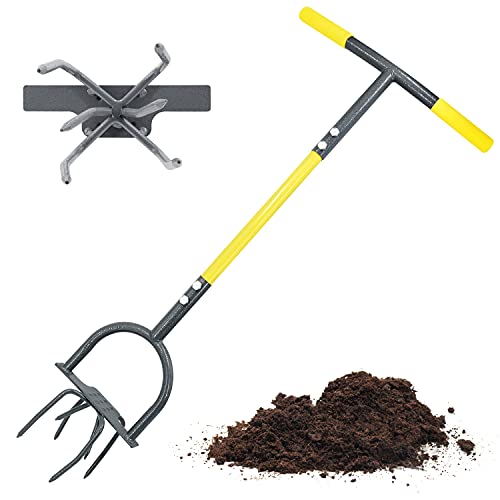
- Anti-slip foot plate for leverage
- Sharp tines for loosening and weeding
- Long curved handle reduces twisting
Best For: Small beds, flower boxes, and targeted soil aeration
Best Cordless Comfort
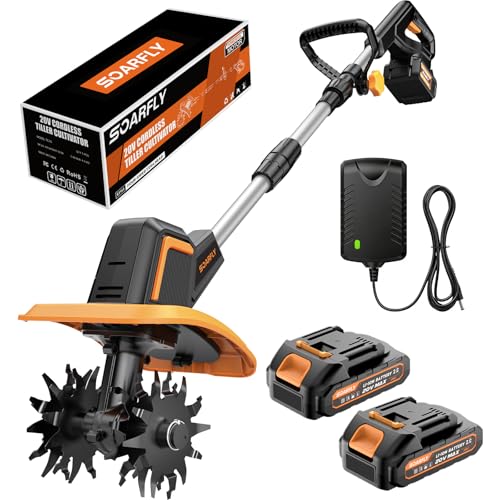
- Two 2.0Ah batteries included
- Adjustable handles for more comfortable use
- 48 steel tines with 360RPM motor
Best For: Small raised beds, flower beds, and cordless soil preparation
Best for DEWALT Battery Owners
20V-Compatible Electric Tiller

- Compatible with DEWALT 20V Max batteries
- 330RPM motor with 48 steel tines
- Telescoping shaft adjusts to user height
Best For: Raised beds and small-to-medium gardens for existing DEWALT users
Best Extended Runtime

- Two 4.0Ah batteries included
- 400RPM motor with 48 steel tines
- Adjustable length and debris shield
Best For: Extended cordless work in raised beds and vegetable gardens
Most Adaptable
21V Adjustable Cordless Tiller

- Compact and full-height configurations
- 9-inch width and 8.6-inch depth
- Two 4.0Ah batteries included
Best For: Raised beds and gardeners needing adjustable height
Lightest Cultivator

- Lightweight 2.02-kilogram design
- 240 RPM and 4-inch depth
- Two swappable 20V batteries
Best For: Small gardens and light soil cultivation
Best Coverage
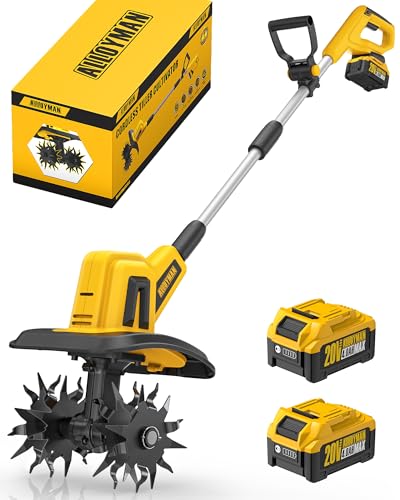
- Four tines reach 360 RPM
- 9-inch width and 6-inch depth
- Two 4.0Ah batteries included
Best For: Raised beds needing wider, deeper cultivation
Lightest Cordless Pick – Mini 20V Handheld Tiller
For gardeners comparing garden tillers for raised beds, this compact cordless model emphasizes easy handling and access to narrow planting areas. Its 300 RPM motor, 4-inch working width, and 4-inch depth suit light cultivation, compost mixing, and small weed removal.
Best For: Raised beds, containers, flower beds, and gardeners who want a very lightweight one-handed tool.
Pros:
- At 2.6 pounds, it is easy to lift and maneuver.
- Includes two 20V 2.0Ah batteries for cordless use and battery swapping.
- Compact 4-inch width reaches between plants and in tight rows.
- Stainless steel tines rinse clean and resist rust.
Cons:
- The 4-inch working depth is intended for smaller cultivation jobs.
- Its handheld format may require more control work than a long-handle cultivator.
This is a practical choice when low weight and tight-space access matter more than covering large areas. The safety lock and maintenance-free electric design add convenience for routine bed care.
Manual Rotary Option – Adjustable Pole Cultivator
This manual rotary cultivator is a straightforward option among garden tillers for raised beds, especially for gardeners who do not want batteries, cords, or fuel. Its adjustable stainless steel pole reaches up to 57 inches and works with interchangeable rotary blade wheels.
Best For: Manual soil aeration, reseeding lawns, soil mixing, and gardeners seeking an adjustable long-handle tool.
Pros:
- Manual operation avoids charging, fuel, and motor maintenance.
- Adjustable four-section pole lets you choose a comfortable working length.
- Three interchangeable rotary blade wheels support cultivation and weed removal.
- Aluminum tines and stainless steel poles are designed for durability and rust resistance.
Cons:
- The manufacturer advises against extremely hard or rocky soil.
- Screws should be inspected and tightened periodically.
- Manual operation requires physical effort.
Its adjustable reach can reduce bending during routine garden work, while the removable design helps with storage and transport. It is better suited to maintained soil than heavily compacted or rocky ground.
Fast Cordless Cultivator – 21V 330 RPM Tiller
Gardeners looking at garden tillers for raised beds may appreciate this 3-pound cordless model for quick soil preparation in confined spaces. Its 330 RPM motor tills a 4-inch width to a 5-inch depth, while two batteries are rated for up to 60 minutes of total runtime.
Best For: Raised beds, flower beds, narrow vegetable rows, greenhouses, and mixing compost or preparing seed rows.
Pros:
- 330 RPM motor and 5-inch depth support vigorous small-bed cultivation.
- Two 21V 2.0Ah batteries enable battery swapping during longer tasks.
- Three-pound design, ergonomic grip, and low-vibration motor help reduce fatigue.
- Safety lock, debris shield, and motor protection add practical safeguards.
Cons:
- The 4-inch working width is suited to narrow areas rather than broad plots.
- Runtime depends on conditions and the manufacturer’s stated total is up to 60 minutes.
With a deeper reach than many mini cultivators and a compact footprint, this model balances power and maneuverability. It is a strong fit for gardeners who want cordless convenience without moving up to a larger tiller.
Deep Manual Cultivator – Heavy-Duty Garden Claw
For gardeners who prefer hands-on tools, this manual twist cultivator is one of the garden tillers for raised beds designed to loosen and aerate smaller areas without batteries or fuel. Its sharp tines, foot plate, and curved long handle help apply body weight while reducing twisting effort.
Best For: Small raised beds, flower boxes, compacted soil, weeding, aeration, and mixing fertilizer or other amendments.
Pros:
- Anti-slip foot plate helps drive the tines into soil.
- Razor-sharp steel tines support loosening, deep tillage, and weed removal.
- Long curved handle is designed to reduce back and twisting strain.
- Powder-coated steel construction is intended for lasting strength.
Cons:
- Dry clay or rocky soil should be softened before use.
- At 2.12 kg, it is heavier than the small cordless handheld models here.
- Manual twisting requires physical effort.
This garden claw makes sense for targeted cultivation where control and simplicity are priorities. The foot plate is particularly useful when soil needs extra downward force, while the manual design eliminates charging and motor upkeep.
Best Cordless Comfort – SOARFLY 9-Inch Battery Tiller
For gardeners comparing garden tillers for raised beds, the SOARFLY combines cordless mobility with a compact 9-inch working width. Its dual batteries, adjustable handles, and 6.6-inch tilling depth make it suited to routine soil loosening, bed preparation, and weed removal.
Best For: Gardeners who want a portable cordless tiller with adjustable ergonomics and included batteries for small beds and flower gardens.
Pros:
- Includes two 2.0Ah batteries for up to 60 minutes of stated runtime.
- Adjustable handle height and auxiliary handle can help reduce fatigue.
- 48 steel tines and a 360RPM motor support soil aeration and cultivation.
- Dual safety controls help prevent accidental activation.
Cons:
- The stated 9-inch width is better suited to smaller areas than broad garden plots.
- Runtime varies with soil conditions and operating load.
The SOARFLY is a practical choice when convenience and maneuverability matter more than maximum coverage. The included battery pair also makes it a ready-to-use option for raised-bed maintenance.
Best for DEWALT Battery Owners – 20V-Compatible Electric Tiller
This electric model is one of the more convenient garden tillers for raised beds if you already use compatible DEWALT 20V Max batteries. It offers a 9-inch working width, 6.5-inch depth, telescoping shaft, and detachable gears for easier cleanup.
Best For: DEWALT 20V Max battery owners working in raised beds, flowerbeds, tight corners, and small-to-medium garden areas.
Pros:
- Designed to work with multiple DEWALT 20V Max lithium-ion batteries.
- 330RPM motor and 48 steel tines loosen, mix, and aerate soil.
- Telescoping shaft adjusts from 51.5 to 59.5 inches to reduce bending.
- Detachable gears can simplify removal of weeds and stuck debris.
Cons:
- Tool-only purchase; a compatible battery and charger are not included.
- Its 9-inch width may require additional passes in larger areas.
This tiller makes the most sense for users already invested in the DEWALT 20V battery platform. The adjustable shaft and cleanable gear assembly add useful convenience for recurring raised-bed work.
Best Extended Runtime – 20V Cordless 400RPM Tiller
For larger or repeated raised-bed tasks, this cordless cultivator emphasizes runtime and power. It includes two 4.0Ah batteries, reaches up to 400RPM, and uses a 9-inch tilling width with up to 6.7 inches of depth for soil preparation and cultivation.
Best For: Gardeners seeking extended cordless operation and strong performance for raised beds, vegetable gardens, and routine soil cultivation.
Pros:
- Two 4.0Ah batteries provide up to 120 minutes of stated continuous operation.
- 400RPM motor and 48 steel tines help break up compact soil.
- Detachable handle section adjusts the overall length from 55 to 36 inches.
- Dual-switch protection and a front debris shield add operational safety.
Cons:
- The 9-inch working width may be slower for broad, open areas.
- Battery runtime depends on soil conditions and workload.
With its larger battery set and higher stated speed, this model is suited to gardeners who want fewer charging interruptions. Its adjustable length and roughly 11-pound weight also support maneuvering around beds and pathways.
Most Adaptable – 21V Adjustable Cordless Tiller
For gardeners comparing garden tillers for raised beds, this Zericuf model stands out for its adjustable, detachable design. It offers a compact 37-inch configuration for raised planters and tight spaces, plus a 55-inch full-height mode for larger garden areas.
Best For: Raised beds, flower beds, greenhouses, and gardeners who want adjustable working height.
Pros:
- Two height configurations accommodate different users and spaces.
- 9-inch width and 8.6-inch depth provide substantial soil coverage.
- Includes two 4.0Ah batteries and a charger.
- Forward-motion assist, low vibration, and a 3-year warranty improve usability.
Cons:
- Its 10.4-pound weight may feel substantial for users seeking a handheld cultivator.
- Runtime can vary with hard or root-dense soil.
This is the most versatile choice of the three for raised-bed work because its compact mode, tool-free adjustments, and deep SK5 steel blades cover both tight planting areas and broader soil preparation.
Lightest Cultivator – 20V Cordless Tiller
If you want garden tillers for raised beds that are easy to maneuver, this 20V cordless cultivator offers a lightweight design with an ergonomic grip. Its cordless operation is useful in small gardens and tight outdoor spaces where power cords can be inconvenient.
Best For: Light soil loosening, small gardens, lawn aeration, and users prioritizing portability.
Pros:
- Lightweight 2.02-kilogram design helps reduce handling strain.
- Two steel tines rotate at up to 240 RPM and cultivate to 4 inches deep.
- Two 20V batteries can be swapped to reduce interruptions.
- Battery protection helps guard against overload and temperature issues.
Cons:
- Its 4-inch cultivating depth is less than the deeper models in this roundup.
- The notes do not specify a tilling width.
This model is a practical fit for raised beds that need routine loosening rather than deep, heavy-duty tilling. Its lighter build and interchangeable batteries make it especially approachable for smaller gardening tasks.
Best Coverage – Alloyman 20V Cordless Tiller
For shoppers seeking garden tillers for raised beds with broad coverage and useful depth, the Alloyman combines four steel tines with a 9-inch tilling width and up to 6 inches of depth. Its cordless design also makes it easier to work around beds, flower borders, and other areas without an outlet.
Best For: Raised beds, flower beds, small gardens, and general soil preparation with wider coverage.
Pros:
- Four steel tines reach up to 360 RPM for efficient cultivation.
- 9-inch width and 6-inch depth balance coverage with maneuverability.
- Two 4.0Ah batteries provide interchangeable power, with up to 45 minutes per battery.
- Adjustable auxiliary handle, safety switch, and detachable gears add convenience.
Cons:
- At 14.4 pounds, it is heavier than the compact 20V cultivator.
- The listed one-year warranty is shorter than the three-year warranty offered by the Zericuf model.
The Alloyman is a strong middle-ground option: it delivers more tine coverage and depth than a light cultivator while remaining cordless and suitable for raised beds. Its interchangeable batteries are helpful for longer sessions.
How We Picked the Best Garden Tillers for Raised Beds
We focused on tools that can work effectively in the confined space of a raised bed rather than treating every model like a full-size field tiller. Our comparison considers handling weight, tine construction, working width, advertised depth, power options, included batteries, and the degree of control each tool provides.
Compact cordless models can be useful for routine cultivation and breaking up moderately loose soil, while wider, deeper machines are better suited to larger beds or neglected soil. Manual tools remain valuable where precision, quiet operation, and minimal maintenance matter most.
Quick Comparison
| Type | Best For | Main Advantage | Potential Trade-Off |
|---|---|---|---|
| Mini cordless tiller | Small raised beds and containers | Lightweight, easy to maneuver | Limited width and runtime |
| Standard cordless tiller | Routine bed preparation | More coverage and digging power | Heavier and less precise in tight spaces |
| Manual twist or rotary cultivator | Spot cultivation and shallow mixing | No charging, low noise | Requires more physical effort |
| Wide/deep electric cultivator | Large beds and compacted soil | Faster coverage | May disturb nearby plants or bed edges |
Key Buying Factors for Garden Tillers for Raised Beds
Working Width and Maneuverability
A narrow head is easier to guide between established plants and along the inside edges of a raised bed. Wider models cover more ground per pass, but they need sufficient clearance and are better for empty beds before planting.
Depth and Soil Condition
Advertised tilling depth is a useful comparison point, but actual performance depends on soil moisture, roots, stones, and compaction. For routine mixing, shallow cultivation is often preferable because it reduces the risk of damaging plant roots or disturbing bed layers.
Battery, Runtime, and Weight
Check whether batteries and a charger are included or whether the tool is sold bare. Higher-capacity batteries can extend working time but add weight. For small beds, a lighter tool may be more useful than maximum runtime.
Tines and Control
Steel tines are desirable for durability, but tine count and rotation speed also affect how aggressively a cultivator works. Look for a comfortable grip, manageable balance, and controls that allow you to stop quickly near plants.
Who Should Buy Which Garden Tillers for Raised Beds?
Choose a mini cordless model if you maintain compact raised beds, balcony planters, or lightly worked soil and want the easiest handling. Pick a wider cordless tiller if you regularly prepare multiple beds or need faster coverage before planting.
A manual twist or rotary cultivator is the practical choice for gardeners who want quiet, maintenance-free operation or only need to loosen small areas. For hard, empty beds with significant compaction, choose the most powerful wider model that you can comfortably control, then work gradually rather than forcing the tool through wet or heavily rooted soil.