The right cable cutter makes tough wire and cable jobs faster, cleaner, and safer. This roundup compares 10 options for electricians, installers, mechanics, and DIY users.
We cover compact high-leverage pliers, ratcheting cutters, cable-railing tools, and long-handled models so you can match cutting capacity and comfort to your project.
Best 10 Cable Cutters Picks for 2026
American-Made Workhorse
Klein 63050 Heavy-Duty Cable Cutter
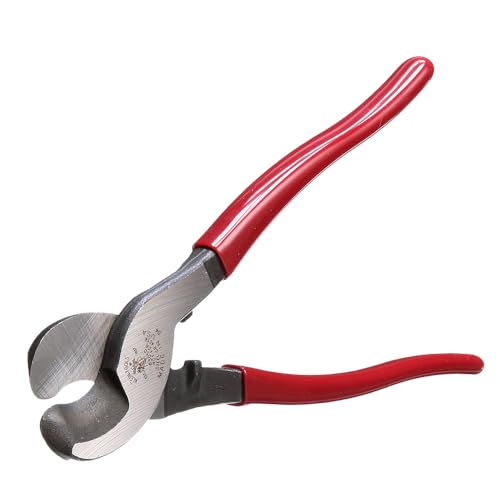
- Cuts 4/0 aluminum and 2/0 soft copper
- One-hand action with cable-gripping jaws
- Through-hardened, made-in-USA steel construction
Best For: Professional aluminum, copper, and communications cable work
DIY Wire-Rope Specialist
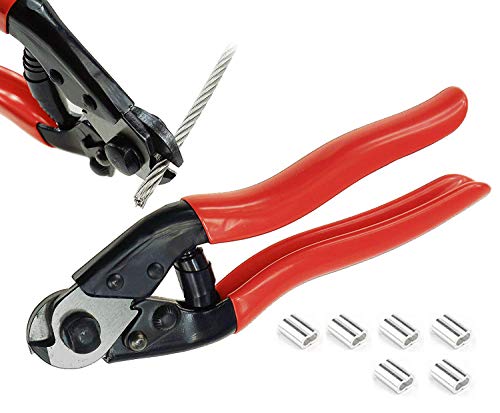
- Cuts wire rope up to 5/32 inch
- Hardened CR-V blade for clean cuts
- Includes safety lock and six ferrules
Best For: Cable railing, bicycle brake, and small DIY projects
High-Capacity Ratchet
Klein 63060 Ratcheting Cable Cutter
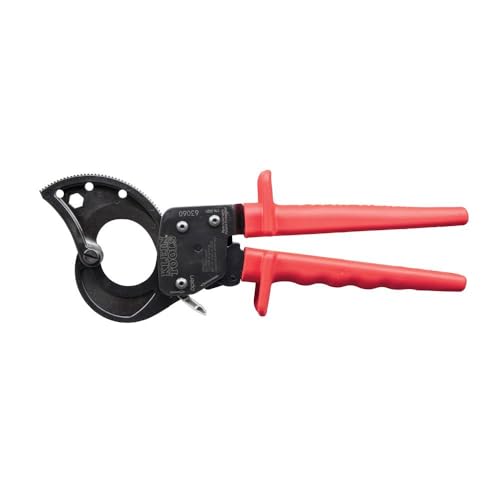
- Cuts up to 600 MCM copper
- Handles up to 750 MCM aluminum
- Two-step ratchet reduces hand force
Best For: Large-diameter electrical cable preparation
Compact High-Leverage Pick

- Cuts 4/0 aluminum and 2/0 soft copper
- 9-inch high-leverage design
- Made in USA for confined-space work
Best For: Portable professional cable cutting in the field
Heavy-Duty Pick
TOOLEAGUE 10-Inch Cable Cutter

- Cuts large aluminum, soft copper, and communications cable
- Forged chrome vanadium steel construction
- High leverage with a non-slip grip
Best For: Heavy-duty cable cutting requiring extra leverage
Compact USA-Made Pick
Klein Tools 63215 Cable Cutter

- Compact 6.5-inch design for tight spaces
- Cuts up to 1/0 AWG aluminum and copper cable
- Forged US-made tool steel construction
Best For: Professional cable work in confined areas
Clean-Cut Value
WORKPRO 9-1/4-Inch Cable Cutter

- Cuts large aluminum, soft copper, and communications cable
- Hardened blades aim for clean, low-distortion cuts
- Forged chrome vanadium steel with ergonomic grips
Best For: High-leverage cutting with clean results on non-steel cable
Maximum-Leverage Pick
AUPREX 24-Inch Heavy-Duty Cable Cutter

- 24-inch handles for high leverage
- Cuts copper and aluminum cable up to 2 inches
- Heat-treated carbon steel blades
Best For: Large copper or aluminum cable and demanding cutting jobs
Versatile Two-Jaw Pick
QUAXLENT 10-Inch High-Leverage Cable Cutter

- Cuts specified aluminum, copper, and communication cables
- Small jaw strips small-wire sheaths
- Heat-treated 55# steel construction
Best For: Electrical and telecom jobs needing cutting plus sheath stripping
Accessory-Included Pick
10-Inch Heavy-Duty Cable Cutter
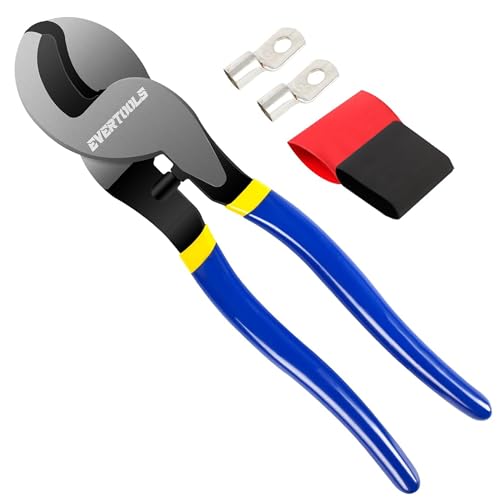
- Cuts specified copper, aluminum, coaxial, and communication cable
- High-leverage design helps reduce hand strain
- Includes ring terminals and heat-shrink tubes
Best For: Electrical, telecom, and automotive battery-cable work
American-Made Workhorse – Klein 63050 Heavy-Duty Cable Cutter
For professional cable-cutting jobs, the Klein Tools 63050 is a heavy-duty option with one-hand shearing action and cable-gripping jaws. It cuts up to 4/0 aluminum, 2/0 soft copper, and 100-pair 24 AWG communications cable while remaining compact enough for confined spaces and most tool pouches.
Best For: Electricians and professional users who need a durable cable cutter for aluminum, copper, and communications cable.
Pros:
- Handles substantial aluminum, copper, and communications cable sizes.
- One-hand shearing action is useful in confined spaces.
- Forged, through-hardened steel construction with beveled jaw tips.
- Made in the USA with an ergonomic, double-dipped handle.
Cons:
- Its 13-inch size may be more tool than occasional DIY users need.
- Designed for cable cutting rather than wire-rope applications.
The 63050 is a strong all-around pick when durability, professional capacity, and maneuverability matter more than a compact DIY form factor.
DIY Wire-Rope Specialist – Muzata CR12 Cable Cutter
The Muzata CR12 is a compact cable cutter for cable railing, bicycle brake repair, fencing, and other DIY projects. Its hardened chrome vanadium steel blade is designed to cut wire rope up to 5/32 inch cleanly, while the safety lock, non-slip grips, and included ferrules make it approachable for home users.
Best For: DIY cable-railing projects, bicycle repairs, and clean cuts on small wire rope.
Pros:
- Cuts wire rope and cable up to 5/32 inch.
- Hardened CR-V steel blade is designed to reduce fraying and smashing.
- Lightweight, portable design with one-hand operation and a safety lock.
- Includes six ferrules for project convenience.
Cons:
- Its capacity is limited compared with heavy-duty electrical cable cutters.
- Best suited to DIY and small wire-rope applications rather than large power cable.
Choose the CR12 when clean wire-rope cuts and easy handling are the priority; it is a more targeted tool than a general-purpose heavy-cable cutter.
High-Capacity Ratchet – Klein 63060 Ratcheting Cable Cutter
When standard cable cutters require too much hand force, the Klein Tools 63060 uses a two-step ratchet mechanism to make large-cable cutting easier. It cuts up to 600 MCM copper and 750 MCM aluminum, with a quick-release lever for removing cable before the cut is complete.
Best For: Electrical professionals preparing and cutting large-diameter copper or aluminum cable.
Pros:
- High capacity for cable up to 600 MCM copper and 750 MCM aluminum.
- Two-step ratchet design requires fewer strokes per cut.
- Quick-release lever allows cable removal from multiple cutting positions.
- Locking lever keeps the handles closed for transport.
Cons:
- At 1.3 pounds, it is heavier than compact hand cable cutters.
- Ratchet operation is more specialized than a simple one-hand shear tool.
The 63060 is the practical choice for large electrical cable when reduced hand effort and cutting capacity outweigh the appeal of a smaller, lighter tool.
Compact High-Leverage Pick – Klein 63225 Cable Cutter
The Klein Tools 63225 combines a 9-inch format with a high-leverage design for cutting aluminum, copper, and communications cable. Its one-hand shearing action and cable-gripping jaws are suited to confined spaces, while the compact length makes it convenient to carry in a tool pouch.
Best For: Professionals who want high leverage and a compact cable cutter for field work.
Pros:
- Cuts 4/0 aluminum, 2/0 soft copper, and 100-pair 24 AWG communications cable.
- High-leverage design supports strong cutting performance.
- One-hand shearing action and gripping jaws improve control.
- Made in the USA and sized for confined spaces and tool pouches.
Cons:
- It is intended for cable types and sizes specified by Klein, not every cable application.
- Less suitable for very large cable than a ratcheting cutter such as the 63060.
The 63225 is a well-balanced option for field technicians who need professional cutting capability in a shorter, more portable package.
Heavy-Duty Pick – TOOLEAGUE 10-Inch Cable Cutter
For demanding cable-cutting jobs, the TOOLEAGUE 10-inch cable cutter combines forged chrome vanadium steel with a high-leverage design. It is rated for large aluminum and soft copper cable, as well as communication cable, while its non-slip PVC grip helps make one-handed cutting more comfortable.
Best For: Heavy-duty aluminum, copper, and communications cable cutting where extra leverage is useful.
Pros:
- Cuts up to 4/0 aluminum, 2/0 soft copper, and 100-pair 24 AWG communications cable.
- Forged chrome vanadium steel construction offers high hardness and durability.
- High-leverage design and non-slip PVC handles support comfortable one-handed use.
Cons:
- The PVC-dipped handle is not insulated for live-wire work.
- Its 10-inch size may be less convenient in tight spaces.
This is a strong choice among cable cutters when cutting capacity and leverage matter most. Avoid using it on energized wires, and note that the supplied specifications do not list steel as a supported cable material.
Compact USA-Made Pick – Klein Tools 63215 Cable Cutter
The Klein Tools 63215 is a compact cable cutter designed for professional work in confined areas. Its forged US-made tool steel construction, hot-riveted joint, and high-leverage format support smooth cutting of aluminum, copper, and communication cables without taking much room in a tool bag.
Best For: Professional cable work in tight spaces and users who want a compact, USA-made tool.
Pros:
- Cuts up to 1/0 AWG aluminum and copper cable plus communication cable.
- Compact 6.5-inch design fits easily into tool bags and confined work areas.
- Forged US-made tool steel and a hot-riveted joint support durability and smooth operation.
Cons:
- Not intended for steel or ACSR cable.
- Its capacity is lower than the larger cutters in this roundup.
Choose this Klein cable cutter when portability and maneuverability are more important than maximum capacity. The compact design is especially practical for electricians and technicians working in restricted spaces.
Clean-Cut Value – WORKPRO 9-1/4-Inch Cable Cutter
The WORKPRO 9-1/4-inch cable cutter is built for clean, repeatable cuts through large aluminum, soft copper, and communications cable. Its forged chrome vanadium steel body, heat-treated edges, shear-type jaws, and long ergonomic handles provide a practical balance of cutting capacity, durability, and control.
Best For: Users who want a high-leverage cutter with sharp, low-distortion cuts on common non-steel cables.
Pros:
- Cuts 4/0 aluminum, 2/0 soft copper, and 100-pair 24 AWG communications cable.
- Precision-sharpened blades with HRC 63-65 hardness are designed for clean cuts with minimal distortion.
- Forged, heat-treated chrome vanadium steel and non-slip grips support durability and handling comfort.
Cons:
- Not suitable for cutting steel.
- The longer handles may be less convenient in confined spaces.
Among these cable cutters, the WORKPRO stands out for pairing substantial capacity with a blade design focused on clean results. It is a sensible option for regular aluminum, copper, and communications-cable work, provided steel cutting is not required.
Maximum-Leverage Pick – AUPREX 24-Inch Heavy-Duty Cable Cutter
For shoppers comparing cable cutters for large copper and aluminum cables, the AUPREX stands out for its 24-inch handles and claimed cutting capacity of up to 2 inches. Its long-arm design is aimed at reducing effort during demanding cuts.
Best For: DIY users, electricians, mechanics, and metalworkers handling large copper or aluminum cable.
Pros:
- 24-inch handles provide strong leverage for heavy-duty cutting.
- Designed for copper-core, aluminum-core, telecom, battery, welder, construction, and electrical cables.
- Heat-treated carbon steel construction and coated blades help resist wear and corrosion.
- Ergonomic, non-slip grips support more comfortable use.
Cons:
- Not suitable for cutting steel wire.
- At 2 kg, it is heavier than a compact cable cutter.
- The long 24-inch size may be less convenient in tight work areas.
This is the choice for users who prioritize maximum leverage and broad cable-cutting capability over portability. Confirm the cable material before use, since the tool is intended for copper and aluminum rather than steel wire.
Versatile Two-Jaw Pick – QUAXLENT 10-Inch High-Leverage Cable Cutter
This QUAXLENT cable cutter combines a 10-inch high-leverage handle with two jaw functions. It is designed for clean cuts on specified aluminum, soft copper, and communication cables, while the smaller jaw can strip the sheath from small wires.
Best For: Electrical and communication-cable work where cutting and small-wire sheath stripping are both useful.
Pros:
- Rated for 4/0 aluminum, 2/0 soft copper, and 100-pair 24 AWG communication cable.
- Two-jaw design adds a small-wire sheath-stripping function.
- Heat-treated 55# steel and high-frequency-quenched edges support clean cuts.
- Frosted ergonomic handles provide leverage and a non-slip grip.
Cons:
- Not suitable for steel wires.
- Its stated capacity is more limited than the 24-inch AUPREX model.
- The supplied dimensions list a 10-inch width, which may be less convenient for storage.
The QUAXLENT is a practical option when a cable cutter needs to do more than one job. Its combination of cable cutting and small-wire sheath stripping can reduce tool changes, provided your materials stay within the listed capacity.
Accessory-Included Pick – 10-Inch Heavy-Duty Cable Cutter
This 10-inch cable cutter is designed for electrical, telecom, wiring, and automotive battery-cable work. Its shear-style jaws are intended to make clean cuts on specified copper, aluminum, coaxial, and communication cables, and the package includes basic cable-finishing accessories.
Best For: Electrical or automotive users who want a compact high-leverage cutter with terminals and heat-shrink tubes included.
Pros:
- Cuts up to 4/0 aluminum, 2/0 soft copper, 7/8-inch coaxial, and 100-pair 24 AWG communication cable.
- High-leverage design helps reduce hand strain during repeated cuts.
- Heat-treated carbon steel with a protective coating helps resist rust and wear.
- Includes two ring terminals and two heat-shrink tubes for cable finishing.
Cons:
- Not intended for cutting steel wire.
- Its capacity is specified for particular cable types and sizes, so larger cables may exceed its range.
- The included terminals and tubes may not match every wiring project.
This model offers a useful balance of size, leverage, and included accessories. It is especially convenient for battery-cable and wiring tasks where clean cuts are followed by basic terminal or heat-shrink finishing.
How We Picked These Cable Cutters
We selected tools across several common use cases, including electrical cable preparation, communications cable, battery cable, wire rope, bicycle cable, and cable-railing installation. Our comparison emphasizes stated cutting capacity, handle design, leverage, portability, construction, and suitability for repeated work.
Because Cable Cutters are designed for specific materials and sizes, always verify the manufacturer’s limits before cutting. A tool intended for aluminum or soft copper cable may not be appropriate for hardened steel wire rope or live electrical work.
Quick Comparison
| Best For | Recommended Type | What to Prioritize |
|---|---|---|
| Routine electrical and communication work | Compact or high-leverage plier cutter | Clean cuts, comfortable grips, and suitable cable capacity |
| Large, stiff cable | Ratcheting cable cutter | Mechanical advantage and controlled cutting |
| Cable railing or bicycle cables | Dedicated wire-rope cutter | Precise cutting and compatibility with small cable diameters |
| Heavy-duty field work | Long-handled cutter | Extra leverage, durable steel, and manageable weight |
Key Buying Factors for Cable Cutters
Cutting Capacity and Material
Check both the maximum diameter and the material rating. Aluminum, soft copper, communications cable, and wire rope have different cutting requirements. Never assume a cutter rated for one material can safely handle another, especially hardened or multi-strand cable.
Leverage and Cutting Mechanism
Long handles and high-leverage jaws reduce hand effort on thick cable. Ratcheting models can make large cuts easier by applying force progressively, while standard plier-style cutters are usually faster and more portable for smaller work.
Handle Comfort and Control
Look for textured, non-slip grips and a handle length you can control comfortably. Oversized cutters may deliver more power but can be tiring in confined spaces. A compact model is often preferable for overhead, ladder, or panel work.
Build Quality and Maintenance
Forged or hardened steel construction generally supports repeated use. Keep cutting surfaces clean, inspect the pivot, and follow lubrication recommendations. Use eye protection and keep hands clear of the jaws during every cut.
Who Should Buy Which Cable Cutters?
Choose a compact high-leverage cutter for electricians and DIY users who mostly work with aluminum, copper, or communications cable. A ratcheting model is the better choice when thick cable makes standard handles difficult to close. For cable railing, bicycle work, and similar projects, select a dedicated wire-rope cutter sized for the cable you use.
Installers handling larger cable in workshops or field environments may benefit from a long-handled model, provided its capacity matches the material. If you regularly cut different cable types, prioritize a versatile tool from a manufacturer that clearly lists compatible materials and maximum sizes.