Choosing the right circuit breaker for solar system setups is about more than matching amps. You need the right DC voltage rating, pole count, mounting style, and enclosure protection for the job.
This roundup focuses on practical solar PV disconnects and DIN-rail breakers that fit common home, RV, battery, and outdoor installations, with an eye on safety, compatibility, and ease of installation.
Best 10 Circuit Breaker for Solar System Picks for 2026
High-Voltage DIN Rail Pick
2-Pole 63A 1000V DIN Rail Breaker

- 1000V DC, 63A rating
- Thermal-magnetic trip with arc support
- 35mm DIN rail, screw clamp wiring
Best For: Larger solar PV or DC systems needing panel-mounted isolation
Weatherproof Disconnect Box
IP65 32A Solar Disconnect Switch Box

- IP65 waterproof enclosure
- 32A for DC 12-500V and AC 90-500V
- Includes pre-wired cables and MC-4 connectors
Best For: Outdoor solar installs, rooftops, and RV setups
Low-Voltage DIN Rail Option
20A 2-Pole DC Breaker for 12-110V Systems

- 20A, 12-110V DC rating
- Arc-extinguishing magnetic field system
- 35mm DIN rail, 2-pole design
Best For: Small solar, battery, and RV DC circuits
High-Capacity Outdoor Choice
60A 1000V IP65 Solar Disconnect Switch

- 60A, 1000V DC rating
- IP65 waterproof and dustproof
- Over-voltage, overload, and lightning protection
Best For: Higher-power outdoor solar or battery disconnects
Compact Non-Polarized Solar Disconnect

- 30A 2-pole, DIN rail mount
- Non-polarized for easier wiring
- Works for solar, RV, AC/DC setups
Best For: Small to mid-size solar and RV systems needing a simple disconnect
High-Capacity PV Disconnect
63A 1000V DC Miniature Breaker
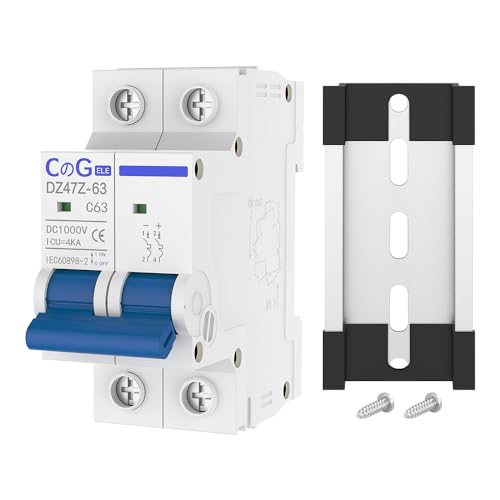
- 63A, 1000V DC rating
- Thermal magnetic trip protection
- Made for solar PV and DC systems
Best For: Higher-capacity solar PV and DC systems that need a DIN rail disconnect
Balanced Solar Isolator

- 40A, 1000V DC isolator
- Thermal magnetic trip response
- DIN rail mount with screw clamp wiring
Best For: Mid-range solar photovoltaic setups needing a compact DC isolator
Solar PV Protection Pick

- 1000V, 2-pole, 20A DC breaker
- Thermal magnetic instantaneous trip
- DIN rail mount with screw clamp wiring
Best For: Smaller solar PV or DC setups needing a 20A isolator
Higher-Current Solar Option

- 1000V, 2-pole, 32A DC breaker
- Thermal magnetic trip with DC arc extinguishing
- DIN rail mount for solar and DC systems
Best For: Solar PV or DC systems needing a 32A breaker
Bundle-Friendly PV Breaker

- Includes 35mm DIN rail and screws
- 2-pole, 32A, 1000V DC breaker
- Electromagnetic trip with DC arc support
Best For: Installers wanting a 32A breaker kit with mounting parts
High-Voltage DIN Rail Pick – 2-Pole 63A 1000V DIN Rail Breaker
If you need a circuit breaker for solar system wiring that can handle higher DC voltage, this 2-pole 63A unit is built for overload, short-circuit, and isolation duties. It uses a thermal-magnetic trip with magnetic arc assistance, which is important in DC setups where arc control is more demanding than AC.
Best For: Larger solar PV or other DC systems that need DIN-rail-mounted protection and isolation.
Pros:
- Rated for 1000V DC and 63A for higher-capacity systems
- 2-pole design with thermal-magnetic tripping and fast short-circuit response
- Built-in magnetic arc extinguishing support for DC use
- 35mm DIN rail mount with screw clamp wiring
Cons:
- No weatherproof enclosure included
- Requires DIN rail installation rather than plug-and-play wiring
This is a straightforward option when you want a compact DC breaker for solar PV protection and isolation. Its strengths are the high voltage rating, faster trip response, and simple panel mounting.
Weatherproof Disconnect Box – IP65 32A Solar Disconnect Switch Box
For a circuit breaker for solar system installs that need a sealed outdoor enclosure, this 32A disconnect switch adds IP65 protection and pre-wired MC-4 style connectivity. It is designed for isolation and overload protection, while the plug-and-play cables can make setup quicker and more organized.
Best For: Rooftop, RV, and outdoor solar installs that need a weather-resistant disconnect box.
Pros:
- IP65 waterproof and flame-retardant enclosure for outdoor use
- 32A breaker rated for DC 12-500V and AC 90-500V systems
- Includes pre-wired solar extension cables and MC-4 connectors
- Non-polarity design supports easier DC and AC wiring
Cons:
- Lower current rating than heavy-duty 60A or 63A options
- Bulkier than a simple DIN rail breaker
This model stands out if weather protection matters as much as electrical protection. The combination of a sealed box, connector hardware, and multi-system compatibility makes it practical for exposed solar locations.
Low-Voltage DIN Rail Option – 20A 2-Pole DC Breaker for 12-110V Systems
If your circuit breaker for solar system applications is on a lower-voltage DC setup, this 2-pole 20A miniature breaker is designed for battery power systems, RVs, and solar photovoltaic systems. It uses a DC arc-extinguishing magnetic field system and C-curve instantaneous tripping for safe, stable operation.
Best For: Smaller DC solar, battery, or RV circuits that need DIN rail protection.
Pros:
- 2-pole, 20A rating for 12-110V DC systems
- Built-in arc extinguishing magnetic field system
- C-curve instantaneous tripping for fast response
- 35mm DIN rail mount for standard panel installation
Cons:
- Only suitable for lower-voltage, lower-current circuits
- No weatherproof enclosure or plug-in connector set
This is a practical pick when you want a simple DIN rail breaker for smaller DC work. It focuses on basic protection and easy mounting rather than high-current or outdoor enclosure features.
High-Capacity Outdoor Choice – 60A 1000V IP65 Solar Disconnect Switch
When you want a circuit breaker for solar system protection with outdoor sealing and a higher current rating, this 60A disconnect switch is built for solar PV homes, battery setups, and other exposed installations. It includes over-voltage, overload, and lightning protection, plus an IP65 waterproof and dustproof enclosure for harsher environments.
Best For: Higher-power solar PV or battery systems that need a weather-resistant 60A disconnect.
Pros:
- 60A rating with 1000V DC operating voltage
- IP65 waterproof and dustproof construction
- Over-voltage, overload, and lightning protection functions
- Designed for quicker installation with plug-and-play connectors
Cons:
- More box-style hardware than a simple DIN rail breaker
- Product listing mixes in broad feature claims, so installation details matter
This is a strong fit if you need more capacity and outdoor durability in one unit. The sealed housing, high voltage rating, and integrated protection features make it especially useful for mounted solar disconnect locations.
Compact Non-Polarized Solar Disconnect – 30A 2-Pole DIN Rail Breaker
If you need a circuit breaker for solar system wiring that can also handle isolation duties, this 30A 2-pole unit is built for simple DIN rail installation and flexible AC/DC use. It supports photovoltaic arrays, charge controllers, batteries, inverters, and other 50/60Hz AC systems, making it a practical fit for mixed-use setups.
Best For: Small to mid-size solar and RV systems that need a non-polarized disconnect with easy installation.
Pros:
- Non-polarized design can be connected in either direction
- Built-in arc-squenching magnet for faster interruption on short circuits
- Includes DIN rail, screws, and copper crimp terminals for mounting and wiring
- Suitable for solar PV arrays, batteries, RV circuits, and AC applications
Cons:
- 30A rating may be too small for larger solar arrays
- Product notes list multiple voltage ranges, so application matching matters
This is a straightforward choice if you want a compact solar disconnect switch that prioritizes simplicity and broad application support. The non-polarized wiring and included mounting hardware make it easier to install than many DC-only options.
High-Capacity PV Disconnect – 63A 1000V DC Miniature Breaker
For a circuit breaker for solar system installations that need higher current capacity, this 63A 1000V DC disconnect is designed for solar PV systems and other DC power applications. It uses a thermal magnetic trip and a magnetic arc-extinguishing system, which are important features for DC protection and control.
Best For: Higher-capacity solar PV and DC systems that need a DIN rail-mounted disconnect.
Pros:
- 63A rating with 1000V DC capacity
- Thermal magnetic trip adds overload and short-circuit protection
- Magnetic arc extinguishing is built in for DC safety
- Includes 35mm DIN rail, sleeves, and screws
Cons:
- Higher capacity may be unnecessary for smaller systems
- Focused on DC applications, so it is less versatile than AC/DC models
This breaker makes sense when you need more headroom for a DC solar setup and want a product built specifically around PV use. The included mounting accessories and wide DC voltage rating make it a practical system component.
Balanced Solar Isolator – 40A 1000V DC 2-Pole Breaker
If you want a circuit breaker for solar system protection without jumping to a larger 63A model, this 40A 2-pole DC isolator offers a useful middle ground. It is designed for overload and short-circuit protection, and it also serves as a control and isolation device in solar PV and other DC systems.
Best For: Mid-range solar photovoltaic setups and other DC systems that need a compact isolator.
Pros:
- 40A, 1000V DC rating for solar and other DC environments
- Instantaneous electromagnetic trip for short-circuit response
- Magnetic arc-extinguishing system improves DC safety
- 35mm DIN rail mounting with screw clamp wiring for secure installation
Cons:
- Not the best fit if you need a higher current rating
- Product notes are focused on DC use rather than AC/DC versatility
This model is a solid pick when you need a solar disconnect that balances capacity, installation convenience, and DC-specific protection features. Its 2-pole DIN rail format keeps it compact and easy to integrate.
Solar PV Protection Pick – 20A 2-Pole DC Isolator
If you need a circuit breaker for solar system DC protection, this 1000V 2-pole 20A unit is aimed at overload and short-circuit defense while also working as a control and isolation device. It mounts on a 35mm DIN rail and uses screw clamp wiring, so it fits neatly into a practical PV installation.
Best For: Smaller solar PV or DC setups that need a 20A DIN rail isolator with fast short-circuit trip protection.
Pros:
- 20A rating with 1000V DC handling for solar PV and other DC environments
- Thermal magnetic trip provides instantaneous disconnection during short circuits
- Magnetic arc-extinguishing design is built for DC switching demands
- 35mm DIN rail mount with screw clamp wiring for straightforward installation
Cons:
- 20A capacity may be too low for larger PV strings or higher-load circuits
- Basic standard breaker design without extra features mentioned
This is a focused option if you want a compact DC disconnect switch that emphasizes safety, isolation, and simple DIN rail installation. It makes the most sense where the 20A rating matches the system design.
Higher-Current Solar Option – 32A 2-Pole DC Isolator
For a circuit breaker for solar system installs that need a bit more headroom, this 1000V 2-pole 32A DC isolator is built for overload and short-circuit protection plus control and isolation. It uses a thermal magnetic trip, supports 35mm DIN rail mounting, and is designed for DC applications where arc extinguishing is more demanding.
Best For: Solar PV or DC systems that need a 32A DIN rail breaker with fast trip protection and higher current capacity.
Pros:
- 32A current rating with 1000V DC support
- Thermal magnetic trip for immediate disconnection on short circuit
- Magnetic arc-extinguishing system designed for DC use
- DIN rail mounting with screw clamp wiring for quick installation
Cons:
- Higher current rating may be unnecessary for smaller solar circuits
- No extra accessories or advanced features are listed beyond the breaker itself
This model is a sensible step up when the circuit calls for 32A capacity and you still want the same DC-focused safety features. It stays practical and installation-friendly for solar and other DC environments.
Bundle-Friendly PV Breaker – 32A DC MCB Kit
If you want a circuit breaker for solar system use with a ready-to-install package, this 2-pole 32A 1000V DC breaker includes a 35mm DIN rail and screws in the box. It is intended for overload and short-circuit protection, and it also serves control and isolation roles in solar PV and other DC systems.
Best For: Installers who want a 32A solar PV breaker package that includes mounting hardware.
Pros:
- 2-pole 32A breaker rated for 1000V DC
- Package includes a 35mm DIN rail and screws for installation
- Electromagnetic trip helps disconnect quickly during short circuits
- Magnetic system supports DC arc extinguishing in solar and other DC systems
Cons:
- Product details are less polished and more limited than the others
- No additional accessory or performance specifications beyond the basic breaker package
This is the most install-ready option of the three if you value included mounting parts. It is straightforward, functional, and aimed squarely at DC protection in solar PV setups.
How We Picked the Best Circuit Breaker for Solar System
We prioritized solar-specific DC breakers and disconnect switches with clear voltage and current ratings, thermal-magnetic trip protection, and installation formats commonly used in PV and battery systems. We also looked for options that suit different use cases, from compact DIN-rail breakers to outdoor units with IP-rated enclosures.
Quick Comparison
In a typical Circuit Breaker for Solar System setup, the main decision points are voltage, amperage, and environment. Higher-voltage string systems often call for 1000V DC-rated units, while lower-voltage battery or RV setups may work better with 12V to 400V AC/DC-compatible models. Outdoor arrays generally benefit from weather-resistant boxes, while indoor panels usually favor standard DIN-rail mounting.
Key Buying Factors for Circuit Breaker for Solar System
DC Voltage Rating
Always match the breaker’s DC rating to your solar string or battery circuit. DC arcs are harder to interrupt than AC, so using an underrated device is a serious safety risk.
Amperage Match
Choose a breaker size that fits the expected current of the protected circuit. Oversizing reduces protection; undersizing can cause nuisance trips.
Pole Count and Polarity
Two-pole breakers are common in PV applications because they can disconnect both conductors. Non-polarized designs can simplify wiring in some battery and mixed-use systems.
Mounting and Enclosure
DIN-rail models are ideal for combiner boxes and control panels. For outdoor use, an IP65-rated enclosure adds protection against dust and water exposure.
System Type
Match the breaker to the application: PV strings, battery banks, RV systems, or general DC loads. A Circuit Breaker for Solar System use should be selected based on real electrical conditions, not just physical fit.
Who Should Buy Which Circuit Breaker for Solar System?
If you are building a rooftop PV string, a 1000V DC-rated two-pole breaker is usually the most relevant category. For lower-voltage battery storage, RVs, and portable systems, a compact 12V to 400V-compatible breaker may be the better fit. If your installation is outdoors, prioritize an enclosed disconnect switch with weather resistance. If you need the simplest panel integration, choose a DIN-rail mount model that matches your current and voltage requirements.
In short, the best choice depends on how the Circuit Breaker for Solar System protection will be used: high-voltage PV, low-voltage storage, or outdoor disconnect duty. The right match improves safety, reduces installation friction, and helps keep the system serviceable over time.