Cold-weather hammock camping is comfortable only when your insulation system is matched to the conditions. The right underquilt, cocoon, windsock, or integrated thermal layer can reduce heat loss without adding unnecessary bulk.
We selected 10 promising hammocks for cold weather and accessories for different camping styles, from lightweight backpacking to more protected winter setups. Use the guide below to compare construction, coverage, suspension, and expected temperature needs before buying.
Best 10 Hammocks for Cold Weather Picks for 2026
Best Ultralight Underquilt

- 24.7-ounce full-length underquilt
- DWR-coated ripstop nylon shell
- Includes compression sack and hardware
Best For: Lightweight three- to four-season hammock camping
Best Full-Coverage Cocoon
- Fully encases a single hammock
- Travelsoft insulated filling
- Full-length adjustable zipper
Best For: Sheltered single-person hammock camping
Best Value 4-Season Underquilt
- Full-length 7.9-by-4-foot coverage
- 1.7-pound packable design
- Quick-attach straps and bungee loops
Best For: Single-hammock camping in cool shoulder seasons
Best Wind Protection
Onewind Hammock Zipper Windsock

- Blocks wind, light rain, and snow
- 14-ounce breathable nylon cover
- Fits hammocks up to 12 feet
Best For: Adding windchill and weather protection to an existing setup
Deep-Winter Bottom Insulation
AYAMAYA Full-Length Underquilt

- Full-length coverage for standard hammocks
- Comfort range listed at 20°F–68°F
- Includes straps, carabiners, and stuff sack
Best For: Cold-weather campers prioritizing broad under-hammock insulation
Integrated Heat Retention

- Zipable inner thermal layer helps retain heat
- Mosquito net and durable 210T nylon construction
- Includes straps, carabiners, and guylines
Best For: Backpackers building an enclosed hammock system for cooler trips
Lightweight Shoulder-to-Foot Warmth

- Weighs 1.87 pounds and packs into a stuff sack
- Full-length coverage helps block cold drafts
- Listed comfort range is 41°F–68°F
Best For: Backpackers needing compact insulation for mild winter conditions
Warmth-Focused Pick

- 250gsm hollow-cotton insulation
- 8 x 3.6-foot full-length coverage
- Works as an underquilt, sleeping bag, or blanket
Best For: Night Cat hammock users camping in cool conditions
Wide-Coverage Pick
HIKERBRO Heavy-Duty Underquilt

- Fits most single and double hammocks
- 20D ripstop nylon shell
- Includes carabiners and shock cords
Best For: Campers prioritizing coverage and durable construction
Lightweight Pick
Wise Owl Outfitters Insulated Underquilt

- Weighs about 1.77 pounds
- Water-resistant 20D ripstop nylon
- Fits single and double hammocks
Best For: Backpackers wanting a compact quilt for cool nights
Best Ultralight Underquilt – OneTigris Night Protector
For hammocks for cold weather, the OneTigris Night Protector adds full-length insulation beneath your hammock without a bulky pack load. Its weather-resistant shell, polyester filling, and included compression sack make it a practical choice for extending hammock trips into cooler seasons.
Best For: Backpackers and campers who want lightweight, full-length underbody insulation for temperatures around 40°F to 68°F.
Pros:
- Lightweight 24.7-ounce design packs down into an included compression sack.
- Full-length, 7.9-by-3.9-foot construction fits standard-sized hammocks.
- 20D ripstop nylon shell has a DWR coating for water resistance and wind protection.
- Assembled bungee loops and carabiners simplify installation.
Cons:
- Its stated comfort range is aimed at cool rather than extremely cold conditions.
- Designed for standard-sized hammocks, so compatibility should be checked before purchase.
This is a strong value-oriented underquilt for three- to four-season hammock camping. It provides broad coverage and low weight, but colder-weather users may need additional insulation beyond its stated temperature range.
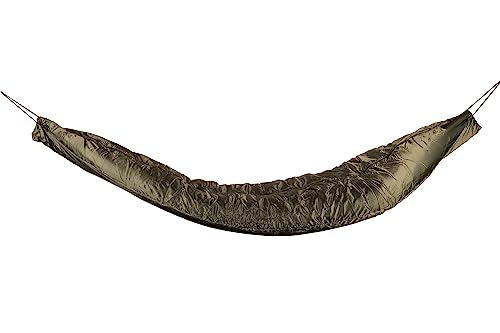
Best Full-Coverage Cocoon – Snugpak Hammock Cocoon
Snugpak Hammock Cocoon, Fully Encases the Hammock, Insulated with Travelsoft Filling - Olive
Check Price On AmazonThe Snugpak Hammock Cocoon is a fully enclosing insulation layer for hammocks for cold weather. Its Travelsoft filling and full-length zipper help retain warmth while letting you adjust how sheltered the hammock feels.
Best For: Single hammock campers who prioritize complete external coverage and adjustable shelter over ultralight weight.
Pros:
- Completely encases a single-person hammock to support heat retention.
- Full-length zipper allows easier entry and adjustable coverage.
- Travelsoft filling provides insulation in a relatively lightweight construction.
- Micro Diamond and Paratex treatments help repel water and control odors between washes.
Cons:
- At about 4.2 to 4.3 pounds, it is substantially heavier than the listed underquilts.
- It is not designed to be weight bearing.
- The single-person design limits its use to compatible hammock setups.
This cocoon offers more enclosed protection than a basic underquilt and may suit campers who want a warmer, more sheltered setup. Its heavier weight makes it less appealing for minimalist backpacking.
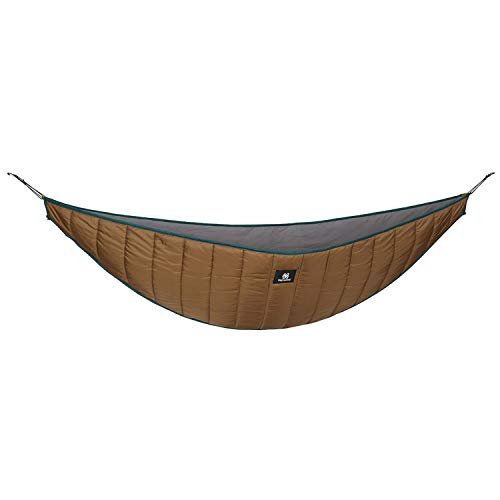
Best Value 4-Season Underquilt – OneTigris Hideout Underquilt
The OneTigris Hideout is a full-length underquilt designed to wrap around the sides and bottom of a hammock. For hammocks for cold weather, its 700-gram polyester-cotton filling and included suspension straps provide a straightforward way to add insulation without carrying a heavy system.
Best For: Single hammock campers seeking a lightweight, full-length underquilt for roughly 41°F to 68°F conditions.
Pros:
- Full-length 7.9-by-4-foot design covers the hammock from head to end.
- 700-gram filling, polyester pongee lining, and Terylene shell provide warmth and comfort.
- Elastic straps and bungee loops support quick setup and removal.
- Weighs 1.7 pounds and includes a compression stuff sack.
Cons:
- Its stated temperature range is better suited to cool conditions than severe winter cold.
- It is intended for single-hammock setups and standard-size compatibility.
The Hideout balances coverage, weight, and setup simplicity well. It is a practical add-on for extending hammock use into cooler weather, though campers facing temperatures below its listed range should plan supplemental insulation.
Best Wind Protection – Onewind Hammock Zipper Windsock
The Onewind Zipper Windsock protects the hammock and underquilt from wind, light rain, snow, and dirt. Unlike a standalone insulation layer, it works as an overcover and underquilt protector, creating an enclosed microclimate that can make hammocks for cold weather more comfortable.
Best For: Campers who already have a hammock and underquilt and want lightweight protection from windchill and light precipitation.
Pros:
- Wraparound sleeve blocks wind, light rain, snow, and dirt.
- Fully enclosed design helps trap warmth around the hammock and underquilt.
- Horizontal zipper, drawstring ends, and ridgeline setup make installation practical.
- Weighs 14 ounces and fits single or double hammocks up to 12 feet long.
Cons:
- It is a protector and wind blocker rather than a standalone insulated underquilt.
- Designed for light precipitation, not stated as protection against heavy rain or snow.
- The enclosed design requires attention to ventilation despite its mesh window.
This is a useful supplement for cold, windy outings, especially when paired with an underquilt. Its low weight and broad compatibility make it attractive for backpackers who need weather protection without replacing their existing hammock insulation.
Deep-Winter Bottom Insulation – AYAMAYA Full-Length Underquilt
For hammock campers seeking hammocks for cold weather, the AYAMAYA underquilt adds full-length insulation beneath the hammock to help limit heat loss. Its 20D ripstop nylon shell, DWR coating, soft lining, and 300g polyester filling are suited to chilly camping trips, including warmer winter conditions.
Best For: Campers who want substantial bottom insulation and a wide, full-length fit for standard single or double hammocks.
Pros:
- Full-length 98.4-inch design wraps around the hammock’s sides and bottom.
- Rated for a comfort range of 20°F to 68°F.
- Elastic straps, bungee loops, and included carabiners simplify setup.
- Compresses into a stuff sack for camping, backpacking, and hunting.
Cons:
- At 3.04 pounds, it is heavier than some backpacking-focused underquilts.
- Its insulation is intended for the hammock’s underside rather than full sleeping-bag coverage.
The AYAMAYA is a strong pick when warmth and broad coverage matter more than minimizing pack weight. It is especially practical for extending hammock trips into fall and milder winter weather.
Integrated Heat Retention – OneTigris KOMPOUND Hammock
The OneTigris KOMPOUND is a complete hammock system for people comparing hammocks for cold weather. Its zipable inner thermal layer helps retain heat and reduce frost from condensation, while the mosquito net, durable nylon fabric, and included tree-friendly straps support three-season and winter-ready setups when paired with a suitable underquilt.
Best For: Backpackers who want an enclosed hammock with built-in thermal protection, insect screening, and convenient suspension accessories.
Pros:
- Zipable internal cover helps keep blankets in place and retain warmth.
- Includes a high-density mosquito net for airflow and insect protection.
- Lightweight 2-pound design supports backpacking, hiking, and travel.
- Includes tree-friendly straps, carabiners, guylines, and an organizer pouch.
Cons:
- It does not include an underquilt; the manufacturer recommends adding one for extra winter warmth.
- The thermal layer is an inner cover, so it does not replace insulation beneath the hammock.
The KOMPOUND stands out for its integrated features rather than standalone insulation. Add a compatible underquilt for a more complete cold-weather sleep system, especially on frosty or windy nights.
Lightweight Shoulder-to-Foot Warmth – GEERTOP Hammock Underquilt
The GEERTOP underquilt is a practical option for hammocks for cold weather when packability matters. It creates a full-length insulated layer beneath the hammock, with a water-resistant 20D ripstop shell, soft pongee lining, synthetic insulation, and an integrated suspension system for quick positioning.
Best For: Backpackers, bikepackers, and campers who want lighter under-hammock insulation for spring, fall, and mild winter use.
Pros:
- Weighs 1.87 pounds for a relatively packable insulation option.
- Full-length 98.4-inch coverage helps reduce drafts from shoulders to feet.
- Elastic end straps and shock cords support quick, even installation.
- Designed to fit most single and double camping hammocks.
Cons:
- Its listed comfort range of 41°F to 68°F is narrower than the AYAMAYA’s.
- It is intended for mild winter conditions rather than the coldest temperatures.
The GEERTOP offers a useful balance of coverage, warmth, and low carry weight. Choose it for shoulder-season trips and mild winter outings where a compact underquilt is more important than maximum cold-weather insulation.
Warmth-Focused Pick – Night Cat 4-Season Underquilt
For shoppers comparing hammocks for cold weather, the Night Cat Underquilt combines a full-length design with 250gsm hollow-cotton insulation. Its 5–20°C range, soft lining, and hammock-compatible straps make it a practical choice for extending hammock camping into cooler conditions.
Best For: Night Cat hammock users and campers wanting an underquilt that can also serve as a sleeping bag or blanket.
Pros:
- Full 8 x 3.6-foot size fits most standard hammocks.
- 250gsm hollow-cotton filling is designed for warmth across four seasons.
- Elastic straps allow quick setup and fit adjustment.
- Compresses into a stuff sack and weighs 2.6 pounds.
Cons:
- Its stated 5–20°C range may not suit very cold winter conditions.
- Designed to hold one person and may be less convenient for ultralight backpacking than lighter quilts.
This is a versatile, warmth-oriented underquilt with useful secondary sleeping-bag functionality. It is especially appealing if you already use a Night Cat hammock and value straightforward setup.
Wide-Coverage Pick – HIKERBRO Heavy-Duty Underquilt
Among hammocks for cold weather, the HIKERBRO Underquilt stands out for its broad 94.5 x 51.2-inch coverage and durable 20D ripstop-nylon shell. It is designed for most single and double hammocks, with cotton insulation rated for approximately 40–68°F conditions.
Best For: Campers who want wide coverage, included attachment hardware, and a durable underquilt for backpacking or outdoor sleeping.
Pros:
- Large full-length design fits most single and double hammocks.
- 20D ripstop nylon helps resist tears and provides some wind weatherproofing.
- Includes carabiners and elastic shock cords for attachment and adjustment.
- Stores in a compact 5.5 x 2.7 x 15-inch stuff sack.
Cons:
- Not recommended for asymmetric hammocks.
- At 2.2 pounds, it is heavier than some lightweight hammock quilts.
- It is an underquilt only, not a hammock or load-bearing product.
The HIKERBRO is a sensible choice when coverage and durability matter more than minimum pack weight. Confirm your hammock shape before buying, particularly if you use an asymmetric model.
Lightweight Pick – Wise Owl Outfitters Insulated Underquilt
For hammock campers seeking a lighter option for cold weather, the Wise Owl Outfitters Underquilt weighs about 1.77 pounds and packs into a spacious stuff sack. Its synthetic insulation, water-resistant 20D ripstop nylon, and stated 40-degree rating provide practical protection for cool nights.
Best For: Backpackers and hammock campers who want a packable, water-resistant quilt compatible with both single and double hammocks.
Pros:
- Lightweight 1.77-pound design is convenient for backpacking.
- 20D ripstop nylon and reinforced stitching support durability.
- Water-resistant coating adds protection in damp conditions.
- Customizable tighteners fit camping hammocks of different shapes and sizes.
Cons:
- The stated 40-degree rating is better suited to cool conditions than severe winter cold.
- The supplied dimensions are listed as 1 x 1 inch, so buyers should verify the actual coverage before purchase.
- It may provide less cold-weather margin than a heavier, more insulated quilt.
The Wise Owl is a strong portability pick for three-season-style use and mild winter outings. Its water-resistant shell and adaptable fit add convenience, but colder trips may call for additional insulation.
How We Picked the Best Hammocks for Cold Weather
We focused on the features that matter most when sleeping off the ground in cool or windy conditions: insulation coverage, wind resistance, hammock compatibility, packed size, weight, suspension adjustability, and ease of setup. The selection includes standalone underquilts, full hammock enclosures, wind socks, and hammocks with integrated bug-net or thermal features.
Because temperature ratings are not standardized across brands, treat advertised seasons and temperature ranges as guidance rather than a guarantee. Your sleeping bag, top quilt, clothing, pad, wind exposure, humidity, and personal cold tolerance all affect real-world warmth.
Quick Comparison
| Type | Best For | Main Advantage | Watch For |
|---|---|---|---|
| Underquilt | Existing gathered-end hammocks | Insulates the underside without compressing beneath you | Needs a compatible fit and careful adjustment |
| Cocoon or enclosure | Maximum coverage and wind protection | Wraps around more of the hammock system | Can add weight and reduce ventilation |
| Windsock | Windy shoulder-season camping | Blocks drafts and improves heat retention | Does not replace adequate insulation |
| Integrated thermal hammock | Simple all-in-one setups | Fewer separate components to pack | Less flexible than modular gear |
Key Buying Factors for Hammocks for Cold Weather
Insulation and Coverage
Choose a full-length underquilt if you want consistent support from shoulders to feet. A shorter quilt can save weight, but it may require an insulated pad or extra clothing under your legs. Look for insulation that stays lofted when suspended and covers the hammock sides without large gaps.
Fit and Suspension
An underquilt should hug the hammock’s underside while remaining loose enough to retain loft. Adjustable shock cords and suspension systems make it easier to seal the head and foot ends. Confirm the product’s intended hammock length and shape before ordering, especially if you use a double or asymmetrical model.
Weather Protection
Insulation warms you, but it does not necessarily block rain or wind. Use a suitable tarp overhead, and consider a windsock or cocoon for exposed camps. Water-resistant fabric helps with condensation and light moisture, but it should not be treated as a substitute for a waterproof shelter.
Weight, Packability, and Temperature
Backpackers should compare total system weight, including suspension and storage sacks, rather than the quilt alone. For freezing conditions, prioritize coverage and adequate loft over minimal weight. Leave room for a safety margin instead of relying on the lowest advertised temperature.
Who Should Buy Which Hammocks for Cold Weather?
Choose a standalone underquilt if you already own a hammock and want the most versatile upgrade. This is usually the best starting point for three-season camping and modular packing.
Choose a cocoon or windsock if wind is your biggest problem or you camp in exposed locations. These products can improve comfort by reducing drafts, but pair them with sufficient bottom and top insulation.
Choose an integrated hammock system if you value quick setup and fewer separate pieces. It can suit newer hammock campers, casual trips, and backyard use, provided its insulation is appropriate for your expected temperatures.
For genuinely cold trips, build the system around a properly fitted full-length underquilt, then add top insulation and wind protection as conditions require. Always test the setup at home before relying on it overnight.